Equipment basics guide
The Largest Wheel Loaders Ever Built: How Big Do They Get?
Quick answer
The largest wheel loaders ever built are ultra-class mining loaders, machines with tires taller than a person and buckets that can load a haul truck in a few passes. The record holder uses diesel-electric drive. Most jobs use far smaller wheel loaders, which are the more practical size for yards and quarries.
Shopping for this now? Get a fit-checked, delivered quote.
Key takeaways
- The biggest wheel loaders are mining machines built to load very large haul trucks.
- The record holder uses diesel-electric propulsion instead of a conventional mechanical drivetrain.
- Size is set by the haul trucks and the material: bigger is only better with matching trucks and a big pit.
- For yards, farms and contractors, a compact or mid-size loader is a better match than a giant.
People searching for the largest wheel loader usually want a number and a photo. The machines are real: ultra-class mining loaders that dwarf anything you see on a construction site. This guide explains how they are built, why they are so big, and what that tells you about picking a loader for your own work. We do not list brand names, because specs change by model year, but the pattern is consistent.
What is a wheel loader?
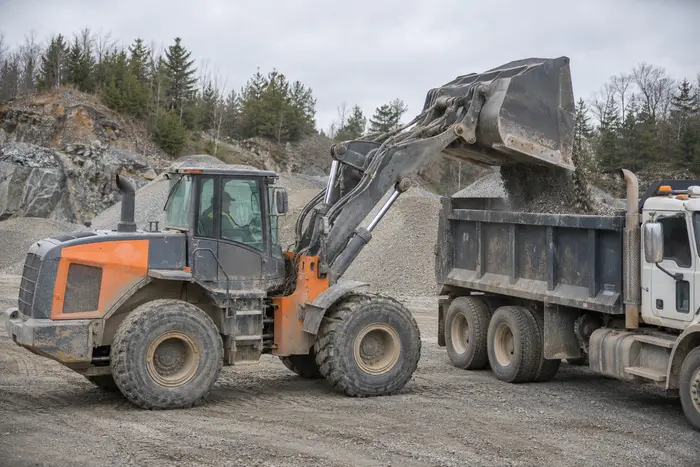
A wheel loader is a four-wheel machine with a front-mounted bucket on lift arms, an articulated frame, and a rear engine. It scoops material, lifts it and dumps it into a truck or hopper. Articulated steering means the front and rear halves pivot at the center rather than steering the wheels alone. Wheel loaders are bigger than skid steers and compact track loaders, and they move more material per pass. See our explainer on what a wheel loader is.
What is the largest wheel loader in the world?
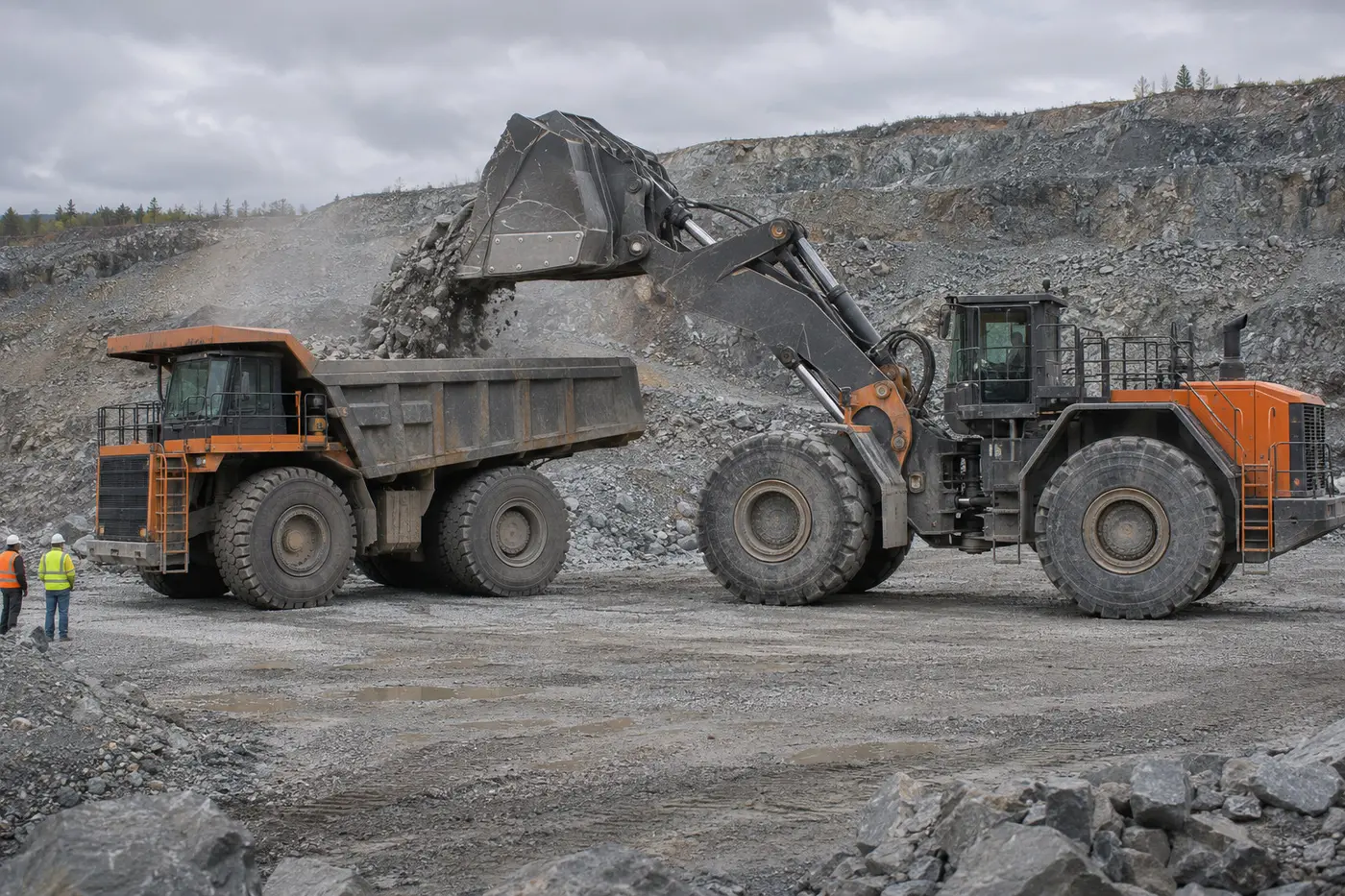
The record holders are ultra-class mining loaders built to feed the largest haul trucks in open pit mines and quarries. Reference sources identify one such machine as the largest loader in the world, and note that it uses a diesel-electric propulsion system, like the systems used on diesel-electric locomotives, instead of a conventional mechanical drivetrain. In that design, the engine drives a generator and electric motors at the wheels do the work, which avoids a huge mechanical driveline. Other large mining loaders still use mechanical drivetrains.
Specific figures such as weight, bucket volume and tire size vary by model and change as new machines come out. If you need a current number, check the maker's published specification for that model.
Size classes of wheel loaders
| Class | Typical work | Why that size |
|---|---|---|
| Compact | Landscaping supply, farms, small yards | Fits tight sites; easy to haul |
| Mid-size | Aggregate yards, municipal work, construction | Balances bucket size and mobility |
| Large production | Quarries, large stockpiles, mines | Loads trucks quickly |
| Ultra-class | Open-pit mining | Matched to the biggest haul trucks |
The class labels vary from maker to maker. Think of them as a ladder: each rung moves more material per pass, but needs a bigger site, a bigger truck and more support.
Why are the biggest loaders so big?
Because they have to match the trucks. A mine's haul trucks are huge, and a loader that fills a truck in two or three passes beats one that needs ten. Fewer passes mean less truck waiting time and lower cost per ton of material. Loader size is set by three things:
- Truck size. The loader's bucket should fill the truck in a small number of passes.
- Material density. Heavy rock needs a stronger machine than light material.
- Pit layout. A big machine needs wide benches and haul roads.
Beyond that scale, extra size adds cost and complexity without matching gain.
How do giant loaders differ from everyday loaders?
- Drive. Diesel-electric on some of the largest machines, mechanical or hydrostatic on most others.
- Tires. Tires on mining loaders are specialized and expensive, and tire life is a major cost.
- Transport. Giant loaders are shipped in pieces and assembled on site.
- Service. They need on-site maintenance crews, special tools and cranes.
- Cab and access. Cab sits high, with stairs or ladders and many cameras.
Does bigger always mean better?
No. A giant loader makes sense only with a giant operation. For most contractors, farms and landscape yards, a mid-size wheel loader or a large skid steer is the sensible limit. A machine that is too large cannot fit the site, cannot be hauled on a normal trailer, and burns more fuel and money than the job needs. Choose the smallest machine that does the work in a reasonable cycle time.
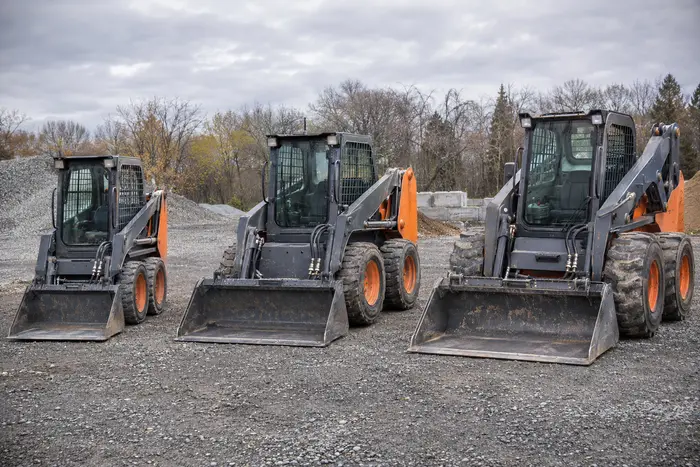
If your work is closer to a yard or a farm than a mine, look at skid steers and track loaders. Our guide to skid steer sizes and frame classes shows how the small end of the range is sorted, and the largest excavators makes the same point on the digger side.
How to pick the right size loader for your work
- Write down the heaviest material you move and the volume per day.
- Check the height and reach you need to dump into a truck or hopper.
- Note site limits: gate width, ground strength and trailer size.
- Compare cycle time and fuel use for each class.
- Choose attachments: a bucket, forks, a grapple or a snow pusher change the machine's value.
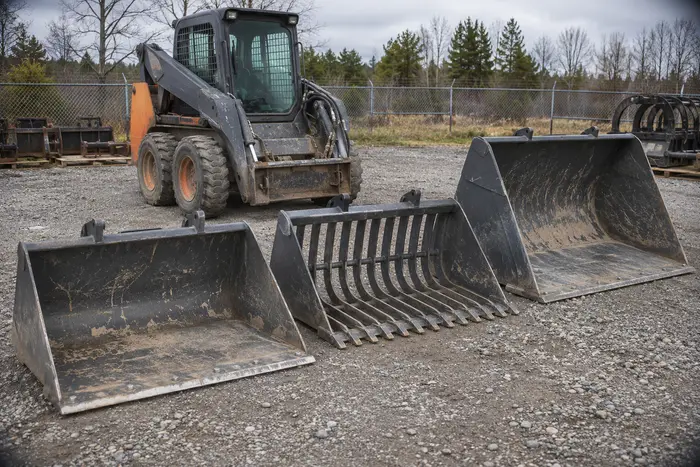
Our skid steer buckets, pallet forks and snow pushers cover many yard jobs with machines far smaller than a mining loader.
How a wheel loader works
A wheel loader works in a repeating cycle: drive into the pile, fill the bucket, raise the arms, drive to the truck, dump, and return. The articulated frame lets the front bucket stay lined up with the pile while the rear steers the path. Hydraulic cylinders raise the lift arms and tilt the bucket. The weight of the machine and the rear counterweight keep it from tipping forward while carrying a load. The bigger the loader, the more important the ground condition and the pile height become.
Wheel loader vs track loader vs skid steer
| Machine | Strength | Best site |
|---|---|---|
| Wheel loader | High production, fast travel on firm ground | Yards, quarries, mines, large stockpiles |
| Compact track loader | Flotation and traction on soft ground | Construction, landscaping, mud and snow |
| Skid steer | Compact, maneuverable, many attachments | Tight sites, farms, small contractors |
Wheel loaders move more per pass but need space and firm ground. A track loader or skid steer gives up bucket size for flexibility. That trade-off is why smaller machines dominate attachment-heavy work.
Safety lessons that scale up
The bigger the machine, the larger the blind spots and the longer the stopping distance. Operators of any size of loader should keep these habits.
- Walk around before you start and check the area behind and beside the machine.
- Carry the bucket low, and tilt it back while traveling.
- Never carry people in the bucket or on the arms.
- Keep bystanders and ground crew out of the swing and travel path.
- Follow the operator manual and the site's traffic rules.
What the giant loaders teach about buying equipment
The lesson from the biggest machines is about fit, not size. A loader earns its keep when it matches the trucks, the material and the site. The same logic applies at a smaller scale. A skid steer that is too small for your attachment struggles. A skid steer that is too big for your gate never gets used. Start with the work, size the machine to it, and then look for the attachments that fit your hydraulics and your mount.
Get the right fit the first time
If you run a skid steer, track loader or telehandler and want the right tool for the work, send us the make, model and year. A person checks the fit against the maker's specs, you approve a delivered price before paying, and the supplier ships direct. Get a fit-checked quote.
Questions buyers ask
What is the largest wheel loader in the world?
It is an ultra-class mining loader built to feed the largest haul trucks in open pit mines. Reference sources note it uses a diesel-electric propulsion system. Exact weights and bucket sizes depend on the model, so check the maker's current specifications.
Why do the biggest wheel loaders use diesel-electric drive?
Not all of them do, but the record holder does. A diesel-electric system uses an engine to generate power for electric motors at the wheels, which gives high torque and fine control without a huge mechanical driveline. The same idea is used on diesel-electric locomotives. Other large mining loaders still use mechanical drivetrains.
How is a wheel loader different from a skid steer?
A wheel loader is larger, has articulated steering and moves more material per pass. A skid steer is smaller, steers by driving each side at a different speed, and turns in place. Skid steers take many more attachments and fit tighter sites.
What size wheel loader do most businesses need?
Most yards, farms and contractors do well with a compact or mid-size loader, or even a large skid steer. A bigger machine needs bigger trucks, wider roads and more support. Choose the smallest machine that fills your trucks and trailers quickly.
Is the largest wheel loader the same as the largest front end loader?
The terms are used interchangeably. Wheel loader, front end loader and bucket loader all describe a machine with a front bucket on lift arms. Searches for the largest ones lead to the same ultra-class mining machines.