Landscaping guide
How to Remove Rocks from a Field or Yard
Quick answer
The best way to remove rocks from a field depends on rock size. Rake small stones into rows, pick fist-size and larger rocks with a rock picker or tined bucket, and move boulders with a grapple or excavator. Rake first, pick second, haul last, and expect more stones to rise after frost.
Shopping for this now? Get a fit-checked, delivered quote.
Key takeaways
- Match the tool to rock size.
- Rake first, pick second, haul last.
- Frost heaving brings new stones to the surface.
- Rock rakes and pickers work as a pair.
- Plan where the rocks will go before you start.
The best way to remove rocks from a field depends on the rock size. Small stones come out with a rake or a rock picker. Fist-size and larger rocks need a picker or a bucket with a grapple or a thumb. Boulders need a loader or excavator and a plan for where they go. Rake first, pick second, haul last.
Why remove rocks from a field?
Stones left on the surface damage equipment. Surface stones and large rocks, often left from plowing, can damage a hay baler, the header or knives on a combine, and the blades on a rotary mower. Land with rock in place of fine soil is also less useful for crops. People remove stones from farm fields, pastures and lawns to protect machines, improve soil, and prepare a clean surface for seeding, a lawn or a sports field.
Why do rocks keep coming back?
Frost heaving is a main reason. When soil freezes, growing ice lenses push the soil upward, in severe cases by a foot or more, and stones in that layer move up with it. Over winters, buried rocks can work to the surface. Cultivating can also bring rocks up. So a field that was clean last year may need another pass. Clearing stones is a very old job. Clearance cairns, heaps of fieldstones removed from farmland and pasture, are found in farming regions around the world.
Match the method to the rock size
| Rock size | Best methods | Tools |
|---|---|---|
| Pebbles and gravel | Rake and screen the surface | Landscape rake, power rake |
| Fist to football size | Windrow with a rock rake, then pick up | Rock rake, stone picker, bucket with tines |
| Larger stones | Lift with a grapple or thumb, load and haul | Grapple, skeleton or rock bucket |
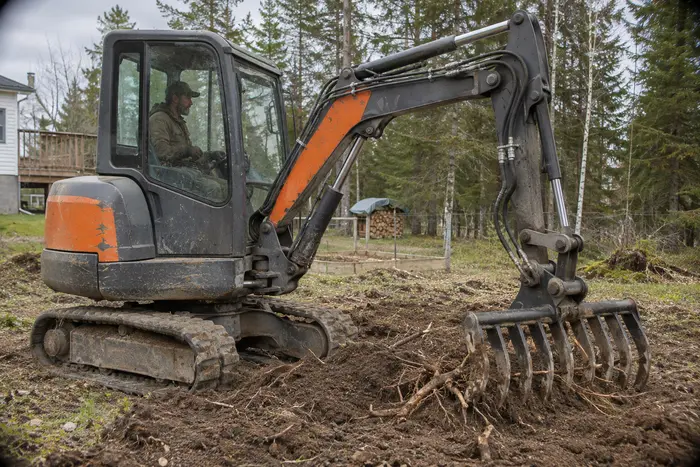
| Boulders | Dig around, lever out, move with a loader or excavator | Excavator with thumb, root rake, chains and a strap |
What is a stone picker?
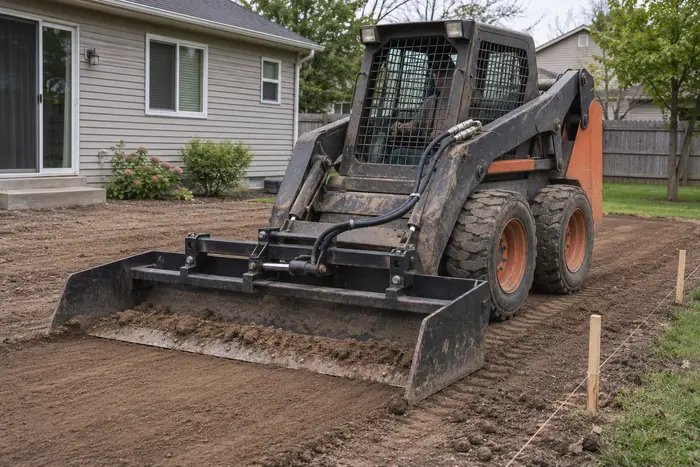
A stone picker, or rock picker, is an implement that sieves through the top layer of soil to separate and collect rocks and soil debris from good topsoil. It is usually tractor-pulled. A rock windrower or rock rake gathers stones into rows. A stone picker generally digs deeper to remove stones. Rakes and pickers often work as a pair: the rake gathers, the picker lifts. On smaller acreage and yards, a skid steer with a landscape rake or a power rake does a similar job on a smaller scale.
How to remove rocks from a field, step by step
- Walk the field. Mark large rocks, fences, wells, drain tile and buried lines. Note soft or wet ground.
- Cut the vegetation. Mow tall grass so you can see the stones and so the machine can reach the soil. Skip this if you are working bare ground.
- Choose your method. Match tools to the rock size using the table above.
- Rake the surface. A landscape rake or power rake works stones out of the top layer and leaves them in rows.
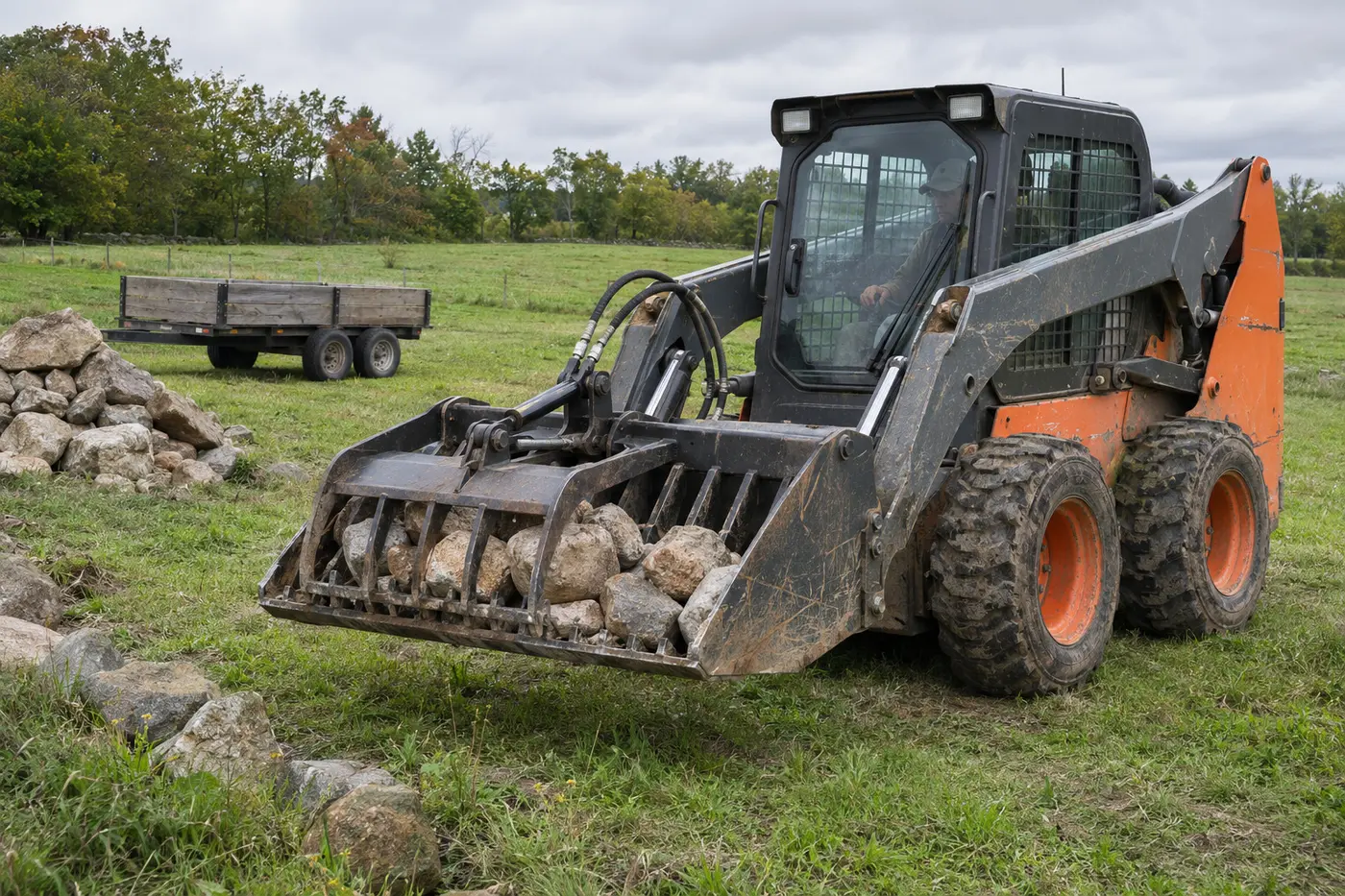
- Collect the rows. Use a bucket with tines, a skeleton bucket or a grapple to lift the stones into a trailer or truck.
- Deal with big rocks. Use a grapple, a thumb or an excavator. Dig out and lever boulders. Never stand where a rock could roll onto you.
- Dispose of the stones. Options include a pile at the field edge, fill for low spots or washouts, a driveway or road base, a rock wall or sale to a landscaper.
- Smooth and finish. Level holes with a grader or box blade. Seed, roll or till as needed.
- Come back after frost. Walk the field again in spring and pick the new ones.
Which skid steer attachments remove rocks?
- Landscape rake: works stones to the surface and windrows them. Good for small to medium stones.
- Power rake: a powered rotor loosens and throws stones into a rear tray. Also good for seedbed prep. Read what a power rake is.
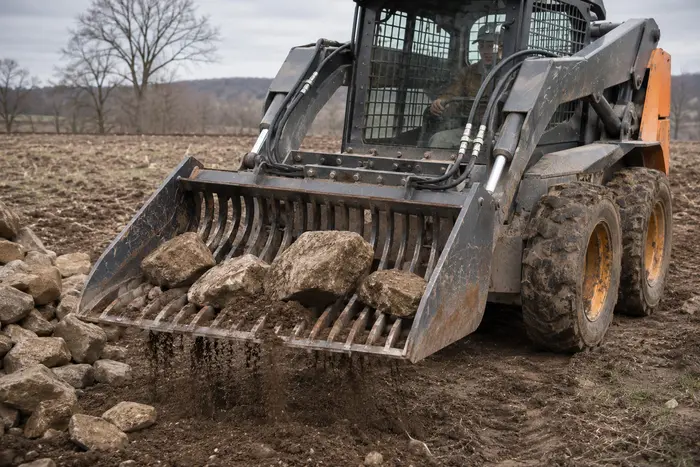
- Skeleton or rock bucket: lets soil fall through while the rocks stay. See rock bucket vs skeleton bucket.
- Grapple: grabs larger rocks and loose debris. Our skid steer grapple buying guide covers sizes and types.
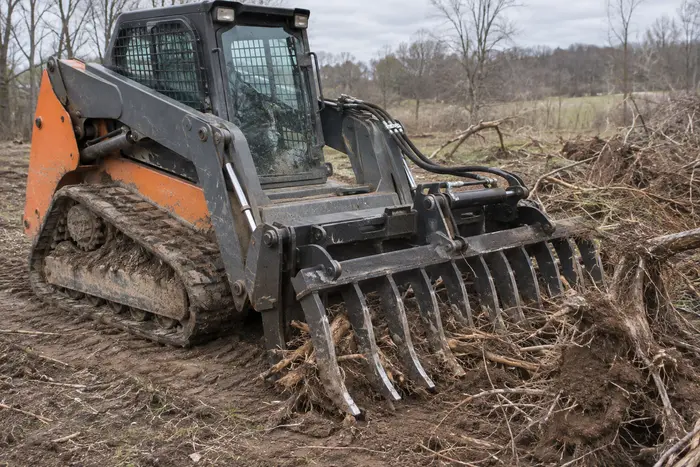
- Root grapple or root rake: clears roots and rocks together. Compare them in root grapple vs root rake.
A skid steer can turn within its own length, which makes it handy in tight field corners and around obstacles. For more tools that suit acreage, read our guide on attachments for farm and acreage.
How to remove rocks from a lawn or yard
On a small lawn, hand picking and a landscape rake are usually enough. For larger areas, a skid steer with a power rake or a landscape rake is quicker. Rake in two directions. Collect the stones with a bucket or by hand. Level and seed afterward. If rocks come back each spring, expect to repeat the job. If the soil is very rocky, bringing in a layer of topsoil may be a better fix than removing every stone.
Planning a big rock-clearing job
For a large field, think in stages. First decide how clean the field has to be. A hay field that will be cut every year needs nearly every stone gone. A rough pasture may only need the large ones out. Second, count what you will move. A pile of stones is bigger than it looks, and trucks and trailers fill quickly, so plan for hauling and for the place you will put them. Third, pick a time of year. Spring after frost leaves fresh stones on top. A dry spell makes work easier and less damaging to the soil, while wet ground gets rutted by loaded machines. Finally, check whether you are near a stream, a wetland or a property line, because local rules may limit where you can pile or place fill.
If the job is bigger than your machines or your time, hire a local contractor for the first big pass and handle upkeep yourself.
Safety
- Lift stones with your legs, not your back. Use machine power for anything heavy.
- Wear gloves, eye protection and sturdy boots. Rocks can pinch, roll and chip.
- Keep people and pets away from the machine. Rakes and pickers can throw stones.
- Work within your machine's rated operating capacity. Rocks are dense and heavy for their size.
- Be careful on slopes and soft ground. A heavy rock in the bucket changes how the machine balances.
- Locate buried utilities and drain tile before digging boulders.
Common mistakes
- Trying to pick everything at once instead of raking first.
- Overloading a bucket with a single big rock.
- Skipping the post-frost pass.
- Digging out boulders without checking for buried lines.
- Leaving holes unfilled, which creates equipment hazards.
Get the right fit the first time
Send us the make, model and year of your machine and what you plan to do with it. A person checks fit against the maker's specs and sends a delivered price for you to approve before you pay, and the supplier ships direct. Ready when you are: get a fit-checked quote.
Questions buyers ask
What is the best way to remove rocks from a field?
Match the method to rock size. Rake small stones into rows, lift fist-size and larger rocks with a rock picker or tined bucket, and move big rocks with a grapple or excavator. Rake first, pick second, haul last, and check again after the next frost.
How do farmers remove rocks from fields?
Many use a rock rake or windrower to gather stones into rows and a tractor-pulled stone picker to lift them. Smaller operations use a skid steer with a landscape rake, tined bucket or grapple. Hand picking still handles the stones machines miss.
Why do rocks keep coming up in my field?
Frost heaving is a major cause. Freezing soil forms ice lenses that push the soil upward, sometimes by a foot or more in severe cases, and stones move up with it. Tillage can also bring rocks to the surface. Expect to pick again after hard winters.
What machine removes rocks from a lawn?
A skid steer with a power rake or a landscape rake works stones to the surface and leaves them in rows. Small yards can use a hand rake and a wheelbarrow. For larger rocks, use a bucket or a grapple on a loader or a mini excavator.
What do you do with rocks after removing them?
Common options are piling them at a field edge, using them as fill for low spots or washouts, using them as base for a driveway or road, building a rock wall or selling them to a landscaper. Check local rules for disposal and for use near water.