Skid steer guide
Skid Steer Grapple Buying Guide: Types and Sizes
Quick answer
A skid steer grapple is a hydraulic claw that holds logs, brush, rock and debris against a bucket, rake or fork frame. Main types are grapple buckets, root grapples and industrial grapples. Choose by material, jaw opening and auxiliary flow, and confirm weight against the machine's rated capacity.
Shopping for this now? Get a fit-checked, delivered quote.
Key takeaways
- A grapple pairs a fixed frame with a hydraulic jaw that clamps material.
- Bucket grapples carry loose material; root and rake grapples sift soil; industrial grapples hold logs and scrap.
- You need auxiliary hydraulics and the right couplers.
- Check weight, width and opening against the machine's rated operating capacity.
- Think about single-cylinder vs dual-cylinder designs for strength and control.
A grapple turns a skid steer into a hand with fingers. It lets you grab, hold and move things a bucket can't: logs, brush piles, rocks, fence panels, demolition scrap. This guide covers the main skid steer grapple types, how to size one and what to check before you buy.
What is a skid steer grapple?
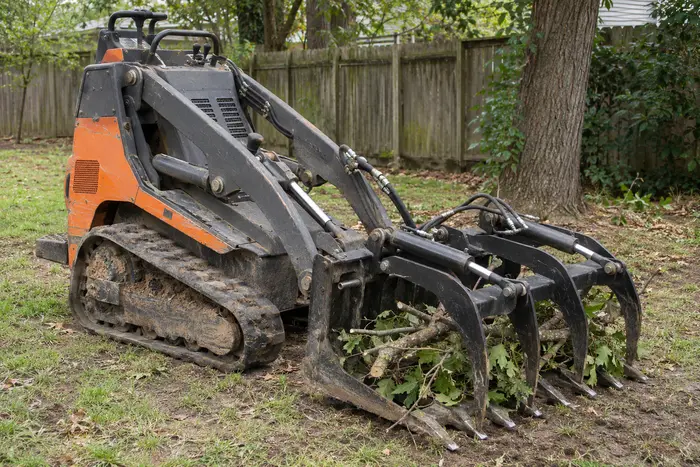
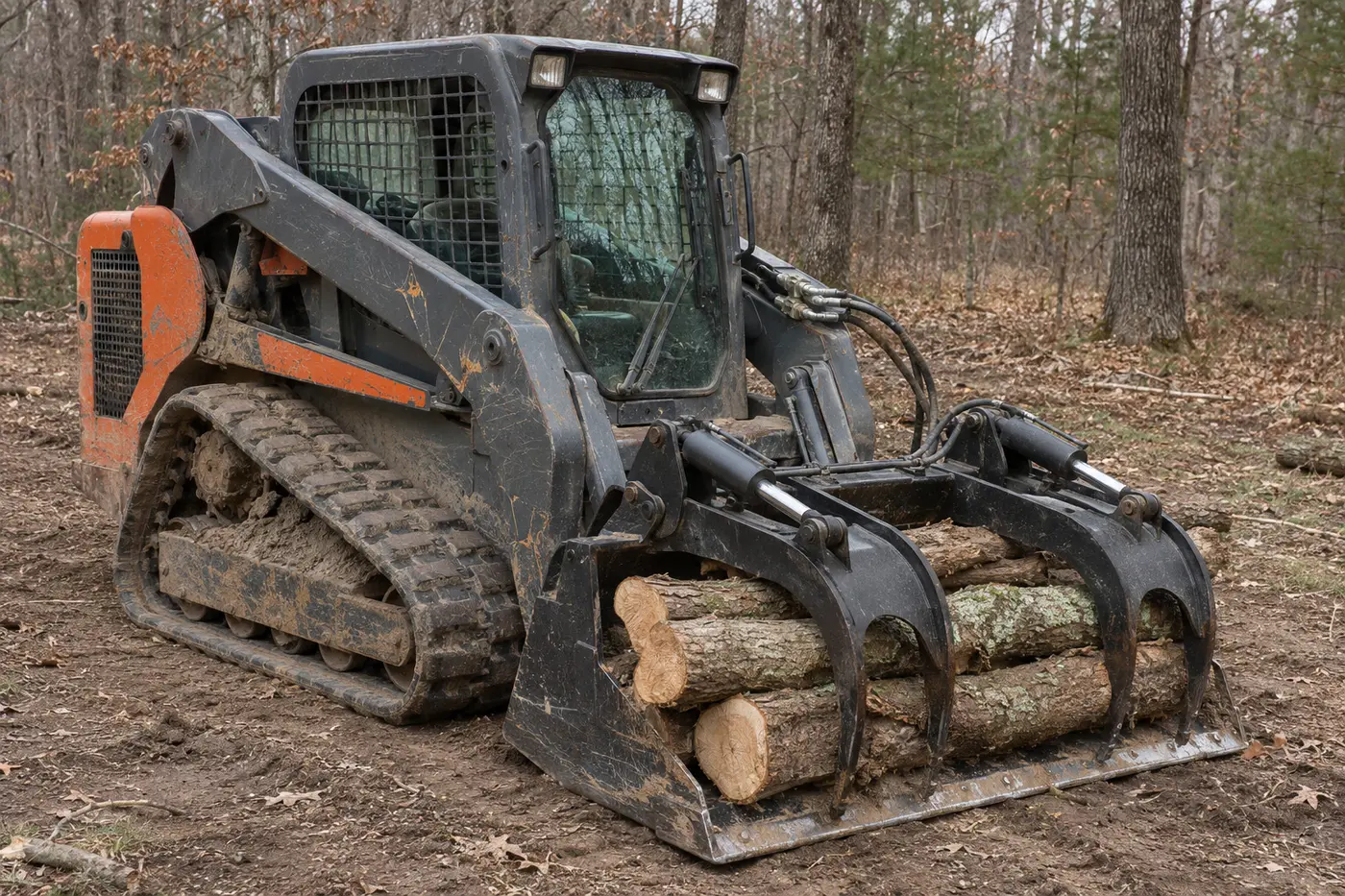
A grapple is a hook or claw used to catch or hold something. On a skid steer, it is a frame with a hydraulic jaw that closes to clamp material. The frame mounts to the quick-attach plate, and a hydraulic cylinder moves the jaw. Simpler designs pair a rake, fork or bucket with an opposing movable "thumb" that grips material. A logging-style grapple has two or more opposing levers that pinch logs or other material so they can be lifted or dragged.
Grapples draw on the machine's auxiliary hydraulics. See the full list of skid steer grapples to compare styles, or mini skid steer grapples for smaller machines.
What types of skid steer grapple are there?
| Type | Design | Best for |
|---|---|---|
| Grapple bucket | Bucket with a top jaw that clamps | Loose brush, debris, rock mixed with soil |
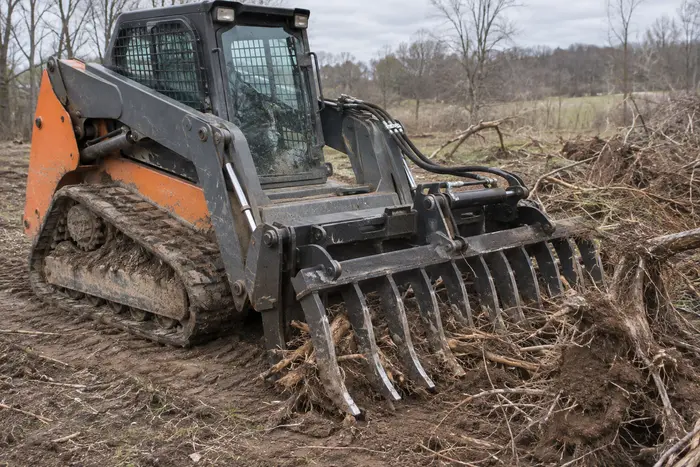
| Root grapple | Open tines with a clamping jaw | Land clearing: roots, brush, stumps |
| Rake grapple | Rake tines plus a jaw | Sifting and carrying debris from soil |
| Industrial grapple | Heavy frame with solid jaws | Logs, pipe, scrap, demolition debris |
| Grapple with saw | Jaw plus a hydraulic saw | Cutting and carrying limbs and small trees |
Not every maker uses the same names. Look at the photos and the description of how the jaw closes, and which parts are solid or open. If you are choosing between a clamping root grapple and a plain root rake, read root grapple vs root rake.
How do you choose between them?
Start with what you grab. Loose material that could fall through tines suits a grapple bucket, because the bucket body holds small pieces. Long or bulky pieces such as logs and pipe suit an industrial grapple or a root grapple with strong jaws. If you want soil to fall away and leave debris behind, choose a root or rake grapple with open tines. If you cut and carry limbs, a grapple with a saw saves a tool change, but it adds weight and more hydraulics.
Also consider the work area. Open ground lets you use a wide attachment. Tight spaces need a narrower unit that you can turn without hitting obstacles.
How do you size a skid steer grapple?
- Width. A little wider than the machine's tires or tracks gives a stable base and a clean path. Very wide grapples are heavy and hard to turn.
- Jaw opening. Look at the largest log, rock or pile you will grab. The jaw must open wide enough to clear it.
- Weight. Add the grapple's weight to the load. Stay within the machine's rated operating capacity.
- Cylinder setup. Dual cylinders give stronger, more even clamping on wide jaws, while a single cylinder is simpler and lighter.
- Tine spacing and strength. Wide spacing sifts better. Thicker tines last longer in rock and stumps.
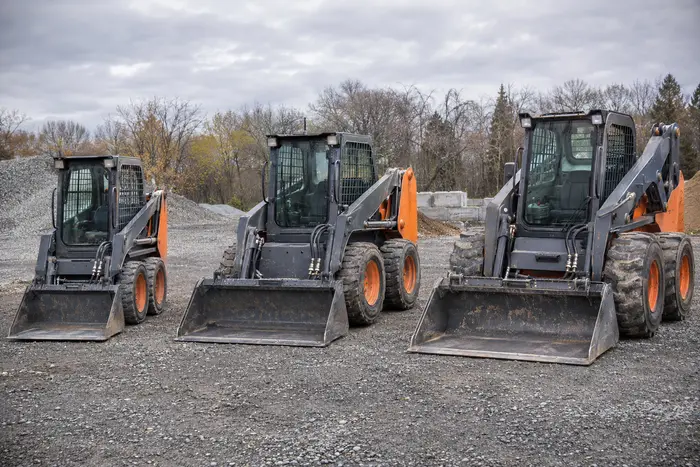
Smaller frames need lighter grapples. If you aren't sure how your machine's class affects the choice, see the skid steer sizes and frame classes guide.
What hydraulics does a grapple need?
Most grapples need auxiliary hydraulics with enough pressure to close the jaw firmly. Standard flow handles most grapples, because they move cylinders rather than spinning a motor. Check the coupler type and hose length, and confirm that the cylinder's speed and force suit your machine's output. A grapple with a saw or a rotator needs more circuits. Ask the maker for the flow and pressure ranges. A person can compare them to your machine's specs.
What should you inspect before and after use?
- Pins and bushings at the pivots, for play and wear.
- Hoses and fittings, for rubbing and leaks, especially at the jaw pivot.
- Tines and jaw edges, for bending and cracks.
- The quick-attach lock, to make sure the grapple is fully engaged.
- Cylinder rods, for scoring and leaks.
Grease the pivots on the schedule in the manual. Clean packed soil and debris from the jaws at day's end so they don't stick and corrode.
How do you operate a grapple safely?
Keep loads low while traveling and within the machine's rated operating capacity. Grab the load near its center of gravity. Don't swing a load beside a slope, and keep people away from the grapple and the load. Never carry a load over anyone. Wear a seat belt and keep the restraint bar down. On uneven ground, go slow and keep the grapple closed on the load. Don't use a grapple to lift a person or as a work platform.
Grapple or something else?
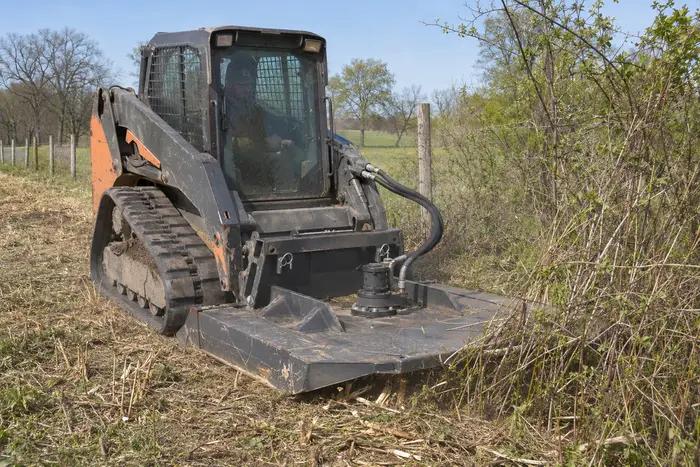
A grapple is great for mixed debris and awkward loads, but it isn't always the best tool. For loose soil and gravel, a bucket is faster. For pallets, forks are better. For long bales, a spear or bale handler is better. A grapple bucket can combine bucket duty with clamping, which makes it a versatile first grapple for farms and landscapers. For brush and trees, pair a grapple with a mulcher or a brush cutter for a complete clearing setup.
Buy new, used or rent?
Rental fits one-off storm cleanup. Buying fits regular work. If you buy used, inspect the jaw pivots, the cylinders and the tines, and check that the mounting plate matches yours. Ask for the model's specs, since fit depends on weight, hydraulics and mounting. A person can check them against your machine's specs before you pay.
What does a grapple do on a clearing job?
On a clearing job, a grapple closes the loop. A brush cutter or mulcher drops material, the grapple gathers it, and a truck or burn pile takes it. Working in a steady cycle saves time: grab, lift, carry low, release, repeat. A grapple with open tines lets soil fall away as you lift, so you don't haul dirt out with the debris. In demolition, a heavier industrial grapple handles lumber, concrete chunks and scrap more cleanly than a bucket.
On farms, a grapple moves fallen limbs, old fence posts, brush and manure-soaked bedding. Landscapers use it for boulders and tree trimmings. Utility crews use it for poles and pipe. The same tool earns its keep in many trades.
What do operators regret after buying?
- Buying too wide a grapple for a small machine, then struggling to turn it.
- Not checking auxiliary couplers, then finding they don't match.
- Choosing open tines when most of the load is small debris that falls through.
- Ignoring the grapple's weight, which cuts the load you can safely carry.
- Skipping a fit check, then finding the mounting plate doesn't lock correctly.
Get the right fit the first time
A grapple has to match your machine's quick attach, couplers and rated capacity. Send us the make, model and year and a person will check fit against the maker's specs. You approve a delivered price before you pay. Get a fit-checked quote or call 1-888-245-1555.
Questions buyers ask
What is a skid steer grapple used for?
It grabs and carries material a bucket can't hold: logs, brush, rocks, pipe, fence panels and demolition debris. A hydraulic jaw clamps the load against a frame. Grapples are common in land clearing, storm cleanup, farm work and demolition.
What is the difference between a grapple bucket and a root grapple?
A grapple bucket has a solid bucket body with a top jaw, so it holds loose material. A root grapple has open tines that let soil fall through while the jaw clamps roots and brush. Choose by whether you want to carry loose material or sift it.
Do skid steer grapples need high-flow hydraulics?
Usually not. Most grapples move cylinders and run on standard auxiliary flow. Grapples with saws or rotators need extra circuits. Confirm flow, pressure, coupler type and hose length against your machine before you order. A person can check that for you.
What size grapple fits my skid steer?
Pick a width slightly wider than the tires or tracks, a jaw opening that clears your largest load, and a weight that keeps the combined load inside the rated operating capacity. A person should confirm fit with your machine's specs.
Is a single or dual cylinder grapple better?
Dual cylinders clamp more evenly and strongly on wide jaws, and they add cost and weight. A single cylinder is simpler and lighter, and it suits narrower grapples or lighter work. Match the design to the loads you carry.