Forklift guide
Forklift Operation Safety Guide: Key Rules
Quick answer
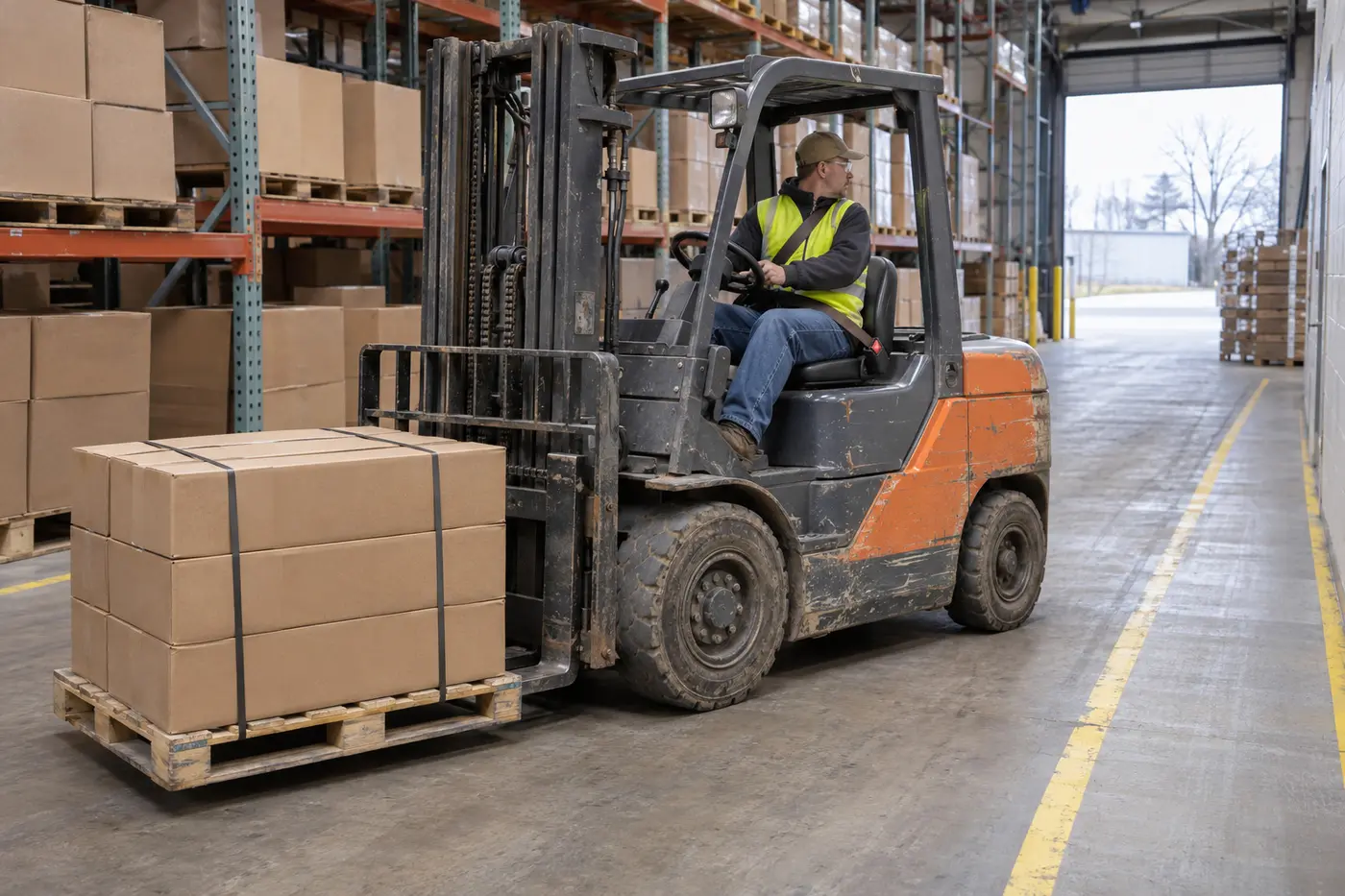
Forklift safety rests on trained and evaluated operators, a daily pre-use inspection, loads within rated capacity, controlled travel and pedestrian awareness. OSHA requires operator performance to be evaluated at least every three years and trucks to be examined at least daily. Always follow the manufacturer's manual and your site rules.
Shopping for this now? Get a fit-checked, delivered quote.
Key takeaways
- Only trained and evaluated operators should drive a forklift.
- Inspect the truck at least daily before use and report defects.
- Keep loads stable, within capacity, tilted back and low while traveling.
- Never let anyone stand or pass under raised forks.
Forklifts move a lot of weight in places where people also walk. That is why the rules are strict. This guide covers the main forklift safety requirements drawn from OSHA's powered industrial truck standard. It is not a replacement for formal training or your employer's program. Follow your machine's operator manual, your site rules and local regulations, and take proper training.
Who can operate a forklift?
OSHA states that it is a violation of federal law for anyone under 18 to operate a forklift (this applies to non-agricultural jobs). Employers must ensure each operator is competent, shown by completing the required training and evaluation. In Canada, rules are set by each province and territory, so check your local regulator.
Evaluation and refresher training
Under OSHA's standard, each operator's performance must be evaluated at least once every three years. Refresher training is required when an operator is seen operating unsafely, has an accident or near miss, gets an evaluation that shows unsafe operation, is assigned a different truck type, or when workplace conditions change in a way that affects safe operation.
What should a forklift pre-use inspection cover?
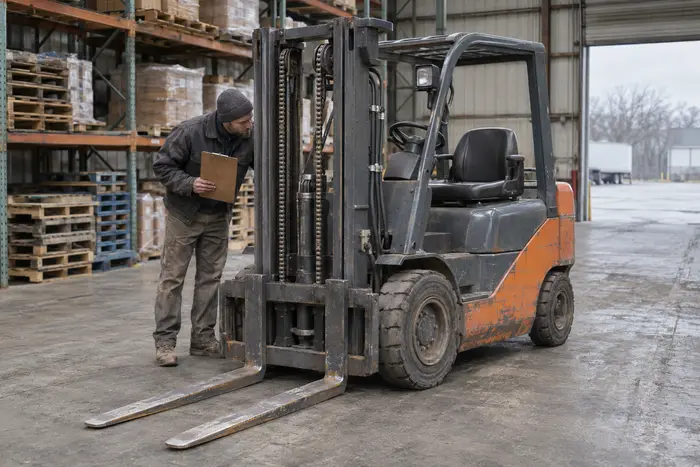
OSHA requires trucks to be examined before being placed in service and at least daily. For round-the-clock operations, they must be examined after each shift. A truck with a condition that adversely affects safety must not be used, and defects must be reported and corrected right away. Our forklift inspection checklist goes through the items. A typical walkaround covers:
- Tires or wheels, for damage and wear.
- Forks, for cracks, bends and wear, and the heel and locking pins.
- Mast, chains and hoses, for leaks and damage.
- Hydraulic fluid, fuel or battery, and cooling levels.
- Brakes, steering and horn.
- Lights, backup alarm and seat belt.
- Overhead guard and load backrest, for damage or missing parts.
- The data plate, so you know the rated capacity.
How do you handle loads safely?
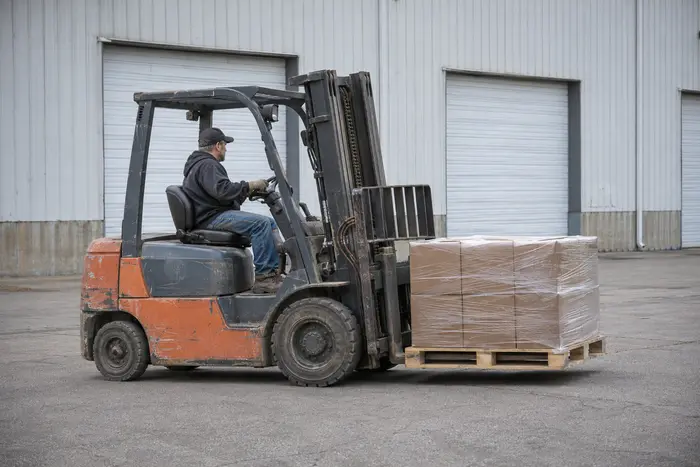
- Handle only stable loads within the truck's rated capacity.
- Place the forks as far under the load as possible, then tilt the mast back to stabilize the load.
- Do not tilt forward with an elevated load, except to place it over a rack or stack.
- When traveling on a grade, keep the load and forks tilted back and raised only enough to clear the road surface.
- Do not add attachments or change the truck without the maker's approval, since it can alter the rated capacity.
Load capacity falls as the load center moves out and up. If you use an attachment or an unusual load, read the capacity plate and the manual first. See how to move pallets with a forklift for a step-by-step method.
What are the travel rules?
| Situation | Rule from OSHA's standard |
|---|---|
| Following another truck | Keep about three truck lengths back, or preferably a three-second gap |
| Grades over 10 percent | Loaded trucks travel with the load upgrade |
| Blocked vision | Travel with the load trailing |
| Cross aisles and blind corners | Slow down and sound the horn |
| Railroad tracks | Cross diagonally; do not park closer than 8 feet from the track center |
| Wet or slippery floors | Reduce speed; travel at a speed that allows a safe stop |
| Intersections and blind spots | Do not pass other trucks |
Observe all traffic rules and speed limits, yield to emergency vehicles and never do stunt driving or horseplay.
How do you protect pedestrians?
- Do not drive a truck up to anyone standing in front of a bench or fixed object.
- No one may stand or pass under the elevated part of a truck, loaded or empty.
- Keep arms and legs inside the running lines of the truck and away from the mast.
- Use the horn, lights and alarms, and use a spotter when visibility is poor.
- Mark and keep separate walkways where possible.
OSHA also lists common forklift hazards that include trucks driven off loading docks, lifts falling between a dock and an unsecured trailer, workers struck by a lift truck and falls from elevated pallets or tines. Never lift people on forks unless you use an approved platform and follow the rules. See our forklift man basket rules.
How should you park a forklift?
When you leave the truck unattended, fully lower the forks, neutralize the controls, shut off the power and set the brakes. Block the wheels if you park on an incline. OSHA defines unattended as being 25 feet or more away with the truck still in view, or out of view altogether. If you step away within 25 feet with the truck in view, lower the forks, neutralize the controls and set the brakes.
Where do toolbox talks and training fit in?
Short weekly talks keep the main rules fresh: pre-use checks, load limits, blind corners and parking. Pair them with real incidents or near misses at your site. Formal training must still follow your regulator's rules. Our how to drive a forklift primer helps new operators, but supervised practice is what turns it into skill.
Other lift equipment
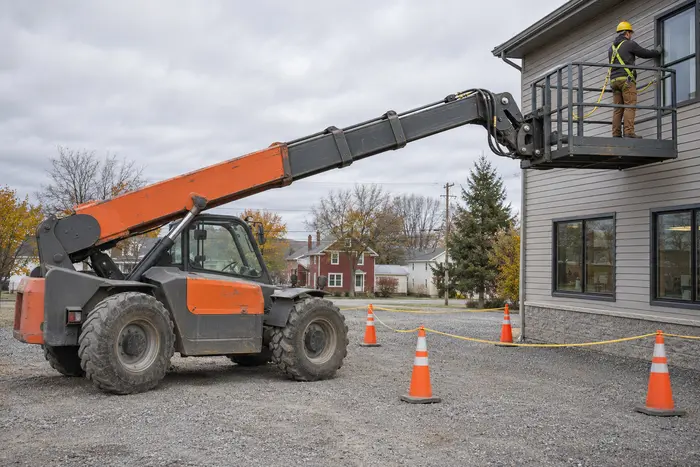
If you work with telehandlers or loaders as well as forklifts, the rules differ. A telehandler has a boom and is rated by a load chart. Read telehandler vs forklift and types of forklifts to know which rules apply.
Building a simple site safety routine
- Keep a list of trained and evaluated operators, with dates for the next evaluation.
- Make the daily inspection a written habit, and pull any truck with a safety defect.
- Mark pedestrian routes and keep aisles clear.
- Set site speed limits and enforce them.
- Review every near miss, and retrain where it points to a gap.
Good habits cost little, and they are what keeps people safe on a busy floor.
Special situations
Some places call for extra care. Loading docks need chocks or restraints so a trailer cannot creep away, and the forklift should never be driven onto a trailer unless it is secured and checked. Ramps and uneven floors reduce stability. Cold storage, narrow aisles and outdoor yards each add risks. Write site-specific rules for these, and make sure every operator has read them.
Finally, remember that rules on paper only work when supervisors enforce them. Walk the floor, watch how trucks are actually driven, and correct small habits early. A quick word about speed or a missed horn beep is far cheaper than an incident report, and operators learn from supervisors who notice.
If your site also uses a telehandler for lifting, see the telehandler work platforms and fork extensions we can fit-check, and keep their separate load charts in mind.
Get the right fit the first time
Send us the make, model and year of your machine and what you plan to do with it. A person checks fit against the maker's specs, and you approve a delivered price, freight included, before you pay. The manufacturer ships direct. Start here: get a fit-checked quote.
Questions buyers ask
how often must forklift operators be evaluated
OSHA requires each operator's performance to be evaluated at least once every three years. Refresher training is also needed after unsafe operation, an accident or near miss, assignment to a different truck type, or a workplace change that affects safe operation.
what should be on a forklift safety checklist
Check tires, forks, mast, chains, hoses, fluids or battery, brakes, steering, horn, lights, backup alarm, seat belt, overhead guard and the data plate. OSHA requires an examination before use and at least daily. Report and fix defects before use.
how old do you have to be to drive a forklift
OSHA states that it is a violation of federal law for anyone under 18 to operate a forklift in non-agricultural jobs. Adults must also be trained, evaluated and certified by their employer. Canadian rules vary by province and territory, so check your local regulator.
how far should you stay behind another forklift
OSHA's standard calls for about three truck lengths, or preferably a three-second gap. Do not pass other trucks at intersections, blind spots or other dangerous places, and slow down and sound the horn at cross aisles and corners.