Forklift guide
Types of Forklifts: The 7 Classes Explained
Quick answer
There are seven forklift classes: electric rider, narrow aisle, hand or hand/rider, engine with cushion tires, engine with pneumatic tires, tractors and rough terrain trucks. Match the class to where you work, how high you lift and what power source you need. Telehandlers add a boom for reach.
Shopping for this now? Get a fit-checked, delivered quote.
Key takeaways
- Seven standard classes cover most forklifts.
- Electric suits indoors; engine and rough terrain suit outdoors.
- Telehandlers use a boom for reach and attachments.
- Stay within the capacity plate rating at all times.
- OSHA requires operator training and periodic evaluation.
Forklifts are grouped into seven classes by the Industrial Truck Association, and OSHA uses the same list. The classes split by power source, where the truck works and how it is built. If you know the class, you know most of what you need to match a truck to a job.
How many types of forklifts are there?
There are seven standard classes. Within each class there are many models and sizes. The classes below follow the OSHA powered industrial truck list.
| Class | Type | Where it works |
|---|---|---|
| Class I | Electric motor rider trucks | Warehouses, docks, indoor smooth floors. Includes counterbalanced trucks. |
| Class II | Electric motor narrow aisle trucks | Tight racking aisles. Includes reach trucks and order pickers. |
| Class III | Electric motor hand trucks or hand/rider trucks | Pallet moving, loading and short hauls. Pallet jacks fall here. |
| Class IV | Internal combustion engine trucks, solid or cushion tires | Indoor and smooth outdoor surfaces. |
| Class V | Internal combustion engine trucks, pneumatic tires | Yards, docks and outdoor work on firmer ground. |
| Class VI | Electric and internal combustion engine tractors | Towing carts and trailers. |
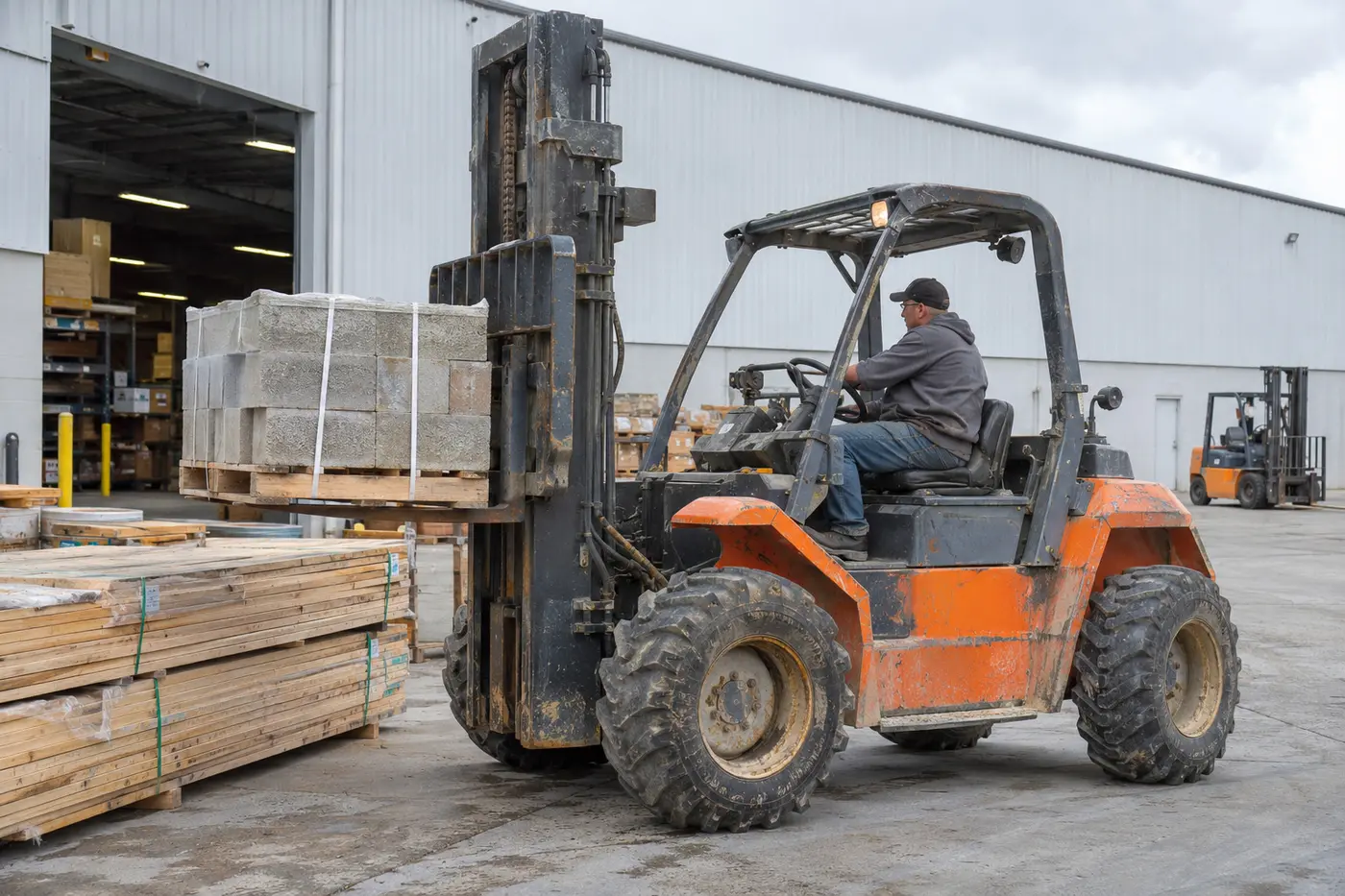
| Class VII | Rough terrain forklift trucks | Construction sites, lumber yards, uneven ground. |
What are the main forklift types in plain words?
Counterbalance forklift
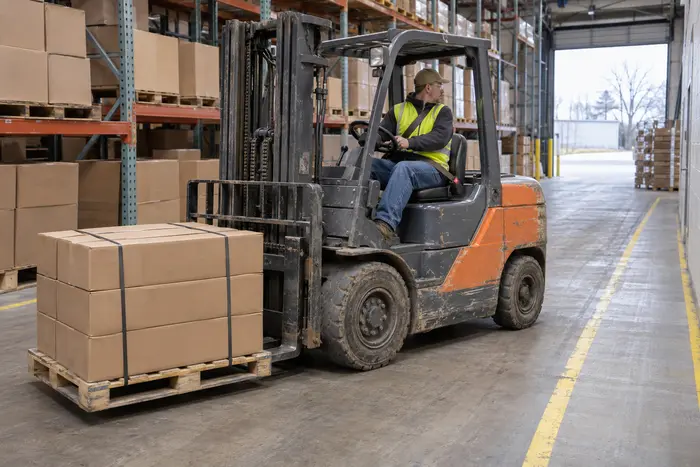
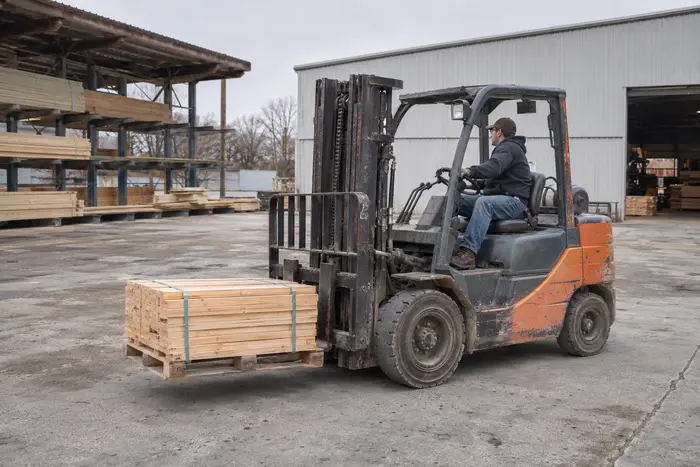
The most familiar forklift. Forks stick out the front, and the weight of the truck body balances the load. It is simple, flexible and works indoors or outdoors depending on power source and tire type. Electric versions are quiet and have no exhaust. Engine-powered versions suit outdoor work.
Reach truck and narrow-aisle truck
Built for high racks and tight aisles. A reach truck extends its forks forward to place pallets deep in racking. These trucks are designed for smooth indoor floors. They are not for rough yards.
Pallet jack and walkie stacker
Low-cost movers for short hauls and light stacking. Powered versions save effort. They are best for flat floors and lighter pallets.
Order picker
The operator rises with the forks to pick items from high racking. Fall protection and training are important because the operator is off the ground.
Rough terrain forklift
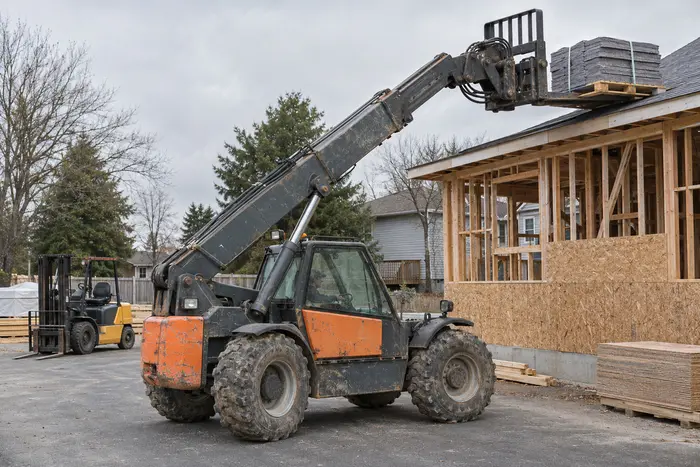
Big tires, higher ground clearance and strong frames. Used on building sites, lumber yards and any place with dirt, gravel or slope. Some use a straight mast; others use a telescopic boom that reaches forward and up, which is the telehandler below.
Telehandler
A telehandler is also called a telescopic handler or reach forklift. It looks like a forklift but has a telescopic boom that extends forward and upward. That makes it more like a crane in reach. The boom accepts attachments such as buckets, pallet forks, grabs and winches. It places loads on rooftops and in places a conventional forklift cannot reach. We compare the two in our guide on telehandler vs forklift.
Side loader
Loads from the side, built for long items like lumber, pipe and bar stock. It travels along aisles with the load aligned with the truck.
How do you choose the right forklift type?
- Where will it work? Indoors on smooth concrete, outdoors on gravel or soil, or both.
- What are you lifting? Pallets, lumber, building materials, bales. Check weight, size and load center.
- How high do you need to lift? Reach and rack height rule out many models.
- How much aisle space do you have? Counterbalance trucks need wide aisles. Narrow-aisle trucks do not.
- Power source. Electric suits indoor work; plan charging or battery swaps for long shifts. Engine-powered suits long outdoor days.
- Tires. Cushion tires suit smooth indoor floors. Pneumatic tires suit uneven or outdoor ground.
- Rated capacity. Always check the capacity plate on the truck and stay within it, including when using attachments.
Weight matters on floors, trailers and elevators. See our guide on how much a forklift weighs and our forklift dimensions guide.
Electric vs engine-powered forklifts
Electric trucks run quietly and produce no exhaust at the truck, which is why they dominate indoor work. They need a place and time to charge or swap batteries, and many are built for smooth floors. Engine-powered trucks, fueled by gasoline, diesel or propane, handle long shifts outdoors and heavier duty without charging breaks. They need ventilation if used indoors and regular engine maintenance. Think about your shift length, your ventilation and your floor surface before you decide.
What is load center and why does it matter?
A forklift's rated capacity assumes the load's center of gravity sits a set distance out from the fork face. That distance is the load center, and it is shown on the data plate. If your load is long or the weight is far from the carriage, the real capacity drops. The same is true when you add an attachment that pushes the load further out. Always read the capacity plate for the truck as it is equipped, and never guess. Ask the maker or dealer if you change forks or add an attachment.
Buying new, used or renting
For occasional use, renting a truck by the day or week keeps cost down and puts maintenance on someone else. For daily use, owning often makes sense. Used trucks can be a fair value, but inspect the mast, chains, forks, tires, hydraulics and battery or engine condition. Check that the data plate is present and legible. Ask for service records. An independent inspection is worth it for any truck you plan to use hard.
Forklift or skid steer with forks?
If you already own a skid steer or compact track loader, pallet forks turn it into a rough-terrain material handler for lighter pallet work. It is not a replacement for a purpose-built forklift on racks or at height, but it moves pallets around yards and job sites. For telehandlers, fork extensions help with longer loads. Make sure you match the attachment rating to the machine.
Operator training and safety
In the United States, OSHA requires training and evaluation for powered industrial truck operators. An evaluation of each operator's performance must be done at least once every three years. Refresher training is required if an operator drives unsafely, has an accident or near miss, gets a poor evaluation, is assigned a different type of truck or if workplace conditions change in a way that could affect safe operation. Canadian rules vary by province, so check your local regulator.
Core safety habits:
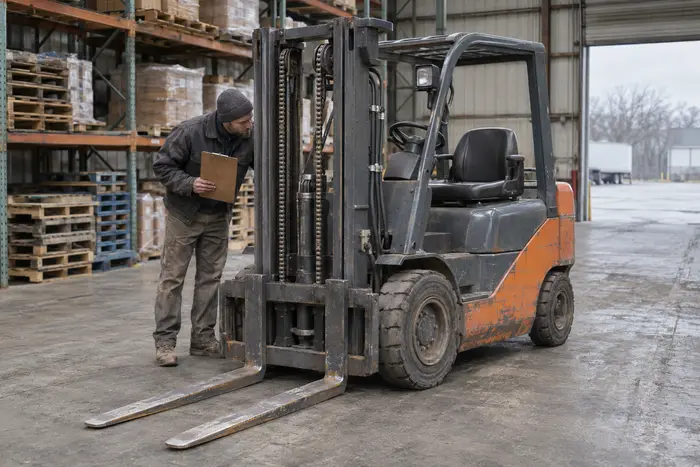
- Do a pre-shift inspection and take faulty trucks out of service. Our forklift inspection checklist covers the key points.
- Stay within the rated capacity shown on the data plate.
- Travel with forks low and the load tilted back.
- Keep people out from under raised forks and loads.
- Wear a seat belt where fitted.
Read more in our forklift safety guide.
Get the right fit the first time
Send us the make, model and year of your machine and what you plan to do with it. A person checks fit against the maker's specs and sends a delivered price for you to approve before you pay. Ready when you are: send your machine details for a fit-checked quote.
Questions buyers ask
What are the 3 main types of forklifts?
People often group forklifts as counterbalance trucks, warehouse trucks such as reach trucks and pallet jacks, and rough terrain trucks for outdoor sites. Formally there are seven classes. They split by power source, tire type and where the truck works, so match the type to your floor, aisle width and load.
What are the 7 classes of forklifts?
Class I electric rider trucks, Class II electric narrow aisle trucks, Class III electric hand or hand/rider trucks, Class IV engine trucks with solid or cushion tires, Class V engine trucks with pneumatic tires, Class VI electric and engine tractors, and Class VII rough terrain forklifts.
What is the difference between a forklift and a telehandler?
A forklift lifts straight up a mast. A telehandler has a telescopic boom that extends forward and upward, so it reaches over obstacles and onto roofs. Telehandlers take attachments like buckets and grabs. Forklifts are usually better for racks and warehouses.
Which forklift is best for outdoor use?
Rough terrain forklifts, engine-powered trucks with pneumatic tires and telehandlers handle dirt, gravel and slopes best. Electric warehouse trucks and cushion-tire trucks are built for smooth indoor floors. Pick by ground conditions, lift height and load weight.
Do forklift operators need training?
Yes. In the United States, OSHA requires training and evaluation of powered industrial truck operators, with an evaluation at least once every three years and refresher training after unsafe operation, an accident or near miss, or a change in truck type or workplace conditions. Check local rules in Canada.