Forklift guide
Forklift Inspection Checklist for Pre-Shift Checks
Quick answer
A forklift inspection checklist covers the walk-around, operator controls and a short operating test before each shift. OSHA requires industrial trucks to be examined before use and at least daily, or after each shift when used round the clock, and unsafe trucks must be taken out of service.
Shopping for this now? Get a fit-checked, delivered quote.
Key takeaways
- OSHA: exam before service, at least daily, after each shift if used around the clock.
- Check forks, mast, chains, hoses, tires, brakes, steering and safety devices.
- Tag out and report any defect; do not operate the truck.
- Keep dated, signed records.
What is a forklift pre-shift inspection?
A forklift pre-shift inspection is a walk-around and operating check you complete before the truck goes into service. The goal is to catch defects in brakes, steering, forks, tires, hydraulics, safety devices and fluids before they cause an injury. In the US, OSHA's powered industrial truck standard says industrial trucks shall be examined before being placed in service, and shall not be placed in service if the examination shows any condition adversely affecting the safety of the vehicle. The exam must be made at least daily. Trucks used round the clock must be examined after each shift, and defects must be reported and corrected immediately.
In Canada, workplace safety rules are set by each province and territory, and many employers adopt a daily or per-shift check too. Check the rules where you work. Whatever the jurisdiction, a written checklist and a signed record show that the check was done.
How often should a forklift be inspected?
The standard answer is before every shift. If the truck is used by more than one operator in a day, many sites also inspect when each new operator takes over. If any item fails the check, tag the truck out of service until a qualified person repairs it. Do not try to "work around" a defect. Written checklists should also record the date, truck ID, hour-meter reading and the operator's name.
Forklift pre-shift inspection checklist
Adapt this list to the make and type of your truck and follow the operator manual. Electric, internal combustion and rough-terrain trucks have different items.
Walk-around (engine off, truck parked)
- Data plate and capacity. The nameplate and capacity plate are present and legible.
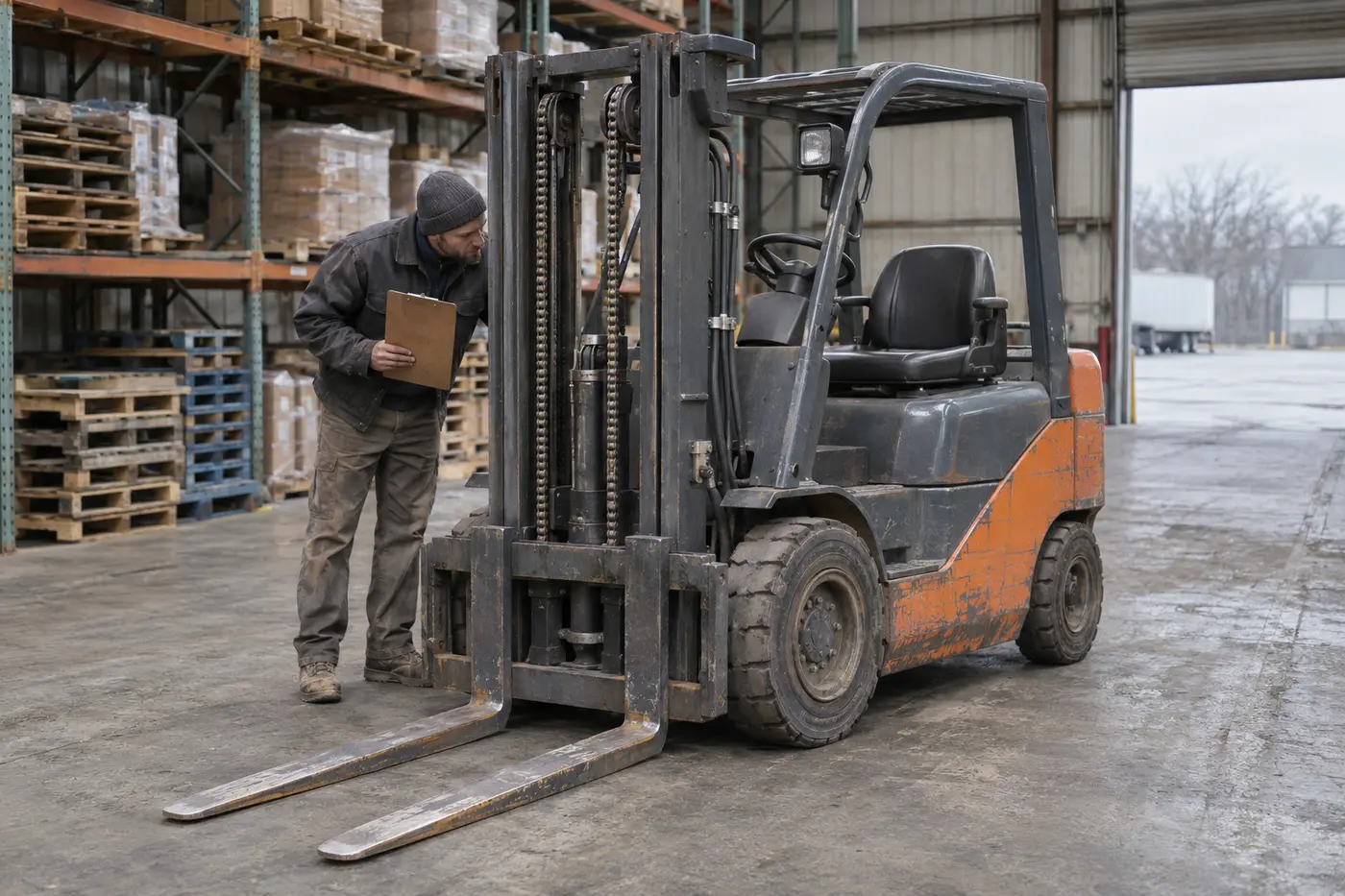
- Forks and carriage. No cracks, bends, wear at the heel or twisted blades. Fork positioning latches work and forks are level.
- Mast and chains. Chains are lubricated and evenly tensioned, with no broken, cracked or rusted links. The mast rails show no damage. Hydraulic hoses have no leaks, cuts or bulges.
- Overhead guard and load backrest. Intact, with no cracks or missing bolts.
- Tires and wheels. No cuts, chunking, flat spots or loose lug nuts. Pneumatic tires are inflated properly.
- Leaks. No oil, fuel, coolant or hydraulic leaks on the floor or under the truck.
- Fluids. Engine oil, coolant, hydraulic fluid and fuel or LP cylinder are at proper levels, and an LP cylinder is mounted correctly.
- Battery (electric trucks). Connector and cables undamaged, electrolyte at the correct level, vent caps in place, battery restraint secure.
Operator station and controls (key on, parked)
- Seat and seat belt. Seat is secure and the seat belt latches and releases.
- Horn and lights. The horn works. Headlights, work lights and strobe or beacon work as designed.
- Gauges and warning lights. Gauges read normal and no warning lights stay on.
- Controls. Hydraulic levers move freely and return to neutral.
- Parking brake. The brake holds on a slope or when tested as the manual describes.
- Decals and manuals. Warning decals are readable and the operator manual is on board.
Operating check (low speed, clear area)
- Steering. Smooth and responsive with no excess play.
- Service brakes. The truck stops smoothly and straight.
- Lift and tilt. The mast raises, lowers and tilts smoothly with no jerking or drift.
- Attachments. Any attachment operates correctly and is secure.
- Back-up alarm. Sounds in reverse where fitted.
What to do if something fails
Stop. Report it to your supervisor immediately, tag out the truck and do not operate it. A qualified person must repair it, and the repair should be documented. Tag-out means locking out or clearly marking the truck so no one starts it by mistake. Never remove a tag unless you are the person authorized to do so.
Forks and attachments: check them too
Forks bear the load, so they deserve close attention. Look for cracks near the heel, a bent blade, uneven tip height and heavy wear on the upper surface. Worn or damaged forks should be replaced, not repaired by an unqualified person. Check any attachment, such as a side shifter, clamp or fork extension, for secure mounting and clean operation. Replacement forklift forks should come from the truck maker or a supplier who can match the fork class and rating. If you also run a skid steer or telehandler, our pallet forks and telehandler fork extensions pages cover those machines. Always follow the operator manual and the data plate for rated capacity with any attachment fitted.
Keep a written record
- Use one checklist per truck type so items match the equipment.
- Record date, shift, truck ID, hour meter and operator name.
- Mark each item pass or fail and add notes for failures.
- Store completed checklists where the supervisor and safety lead can review them.
- Review the checklists for patterns, such as repeated tire or hydraulic issues.
A checklist is only useful if people complete it honestly. Make it short enough to finish in a few minutes, and train every operator on what a failed item looks like. Read our forklift safety guide and how to drive a forklift for the operating side, and the types of forklifts guide to see which checks apply to your truck.
Telehandlers and other lift trucks
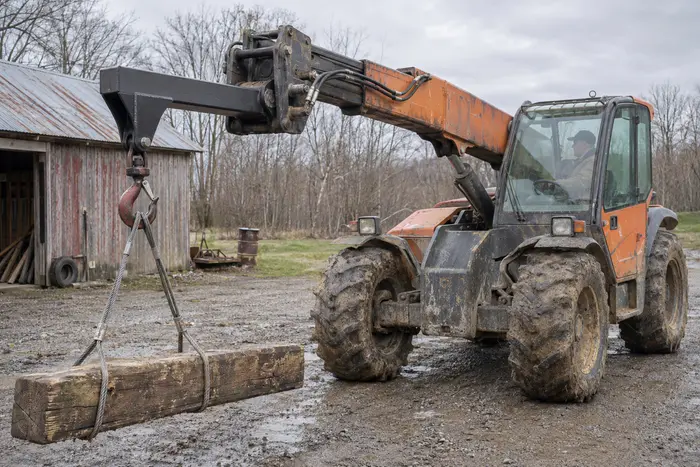
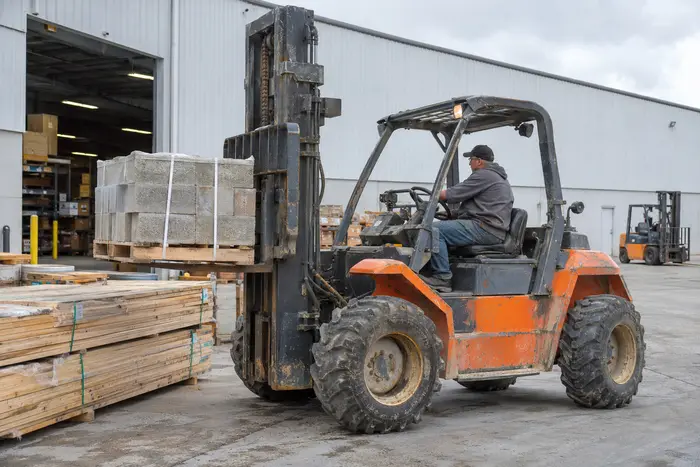
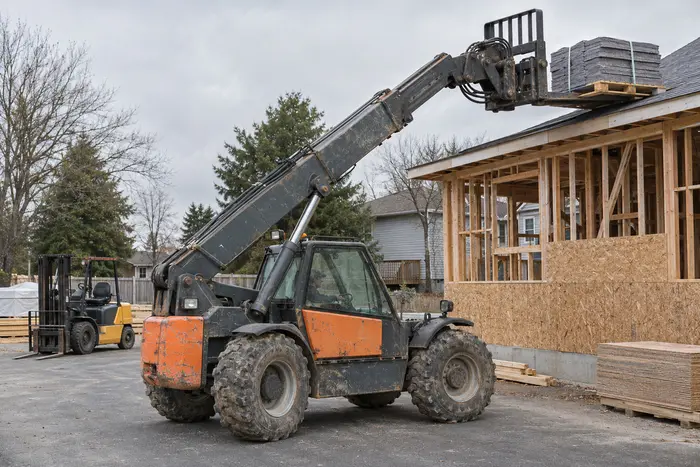
Telehandlers, rough-terrain trucks and loaders with forks have their own manuals and inspection lists. Many items match, but boom, outriggers and stabilizers add checks. If you operate a telehandler, see our guide on telehandler vs forklift, and use the maker's inspection list along with this one. For baskets, see telehandler work platforms and follow the platform maker's instructions.
Common failure points to watch
A few items fail more often than others. Tires pick up cuts and chunks on rough floors, and pneumatic tires lose pressure. Hydraulic hoses chafe on the mast and develop slow leaks. Chains stretch and dry out when nobody lubricates them. Fork heels wear thin and crack. Seat belts get tucked behind the seat and forgotten. Horns and lights fail without notice, and brakes drift out of adjustment over time. Look at these first, and treat small leaks and noises as early warnings. A truck that tells you something is wrong today is cheaper to fix than one that fails under a load.
Training and responsibility
Inspection only works when operators know what they are looking at. Train every new operator on the checklist, show them real examples of worn forks, damaged tires and leaking hoses, and make clear that reporting a defect is expected and never punished. Supervisors should review completed checklists regularly and follow up on repeat issues. Maintenance staff should sign off on repairs before the tag is removed.
Get the right fit the first time
Send us your machine make, model and year and tell us the job. A person checks the attachment against the maker's specs, then you get a fit-checked quote with delivered pricing before you pay. The supplier ships direct, and warranty terms, if any, are written on your quote.
Questions buyers ask
How often should a forklift be inspected?
OSHA requires industrial trucks to be examined before being placed in service and at least daily. Trucks used round the clock must be examined after each shift. Many sites inspect at every operator change. Any defect must be reported and corrected before the truck is used.
What should be on a forklift pre-shift inspection checklist?
A good checklist covers the data plate, forks and carriage, mast and chains, hoses, tires, leaks, fluids, seat belt, horn, lights, gauges, brakes, steering, lift and tilt functions and any attachments. Electric trucks add battery checks. Use the maker's manual to tailor it.
What happens if a forklift fails inspection?
Stop and report the defect to your supervisor. Tag the truck out of service so no one uses it. A qualified person must repair it and the repair should be recorded. OSHA says a truck shall not be placed in service if an examination shows a condition that affects its safety.
Is a forklift inspection checklist required by OSHA?
OSHA requires the examination, and the standard says defects must be reported and corrected. It does not prescribe one form, but employers generally use a written daily checklist to show the exam was done. Keep dated, signed records.
Who can inspect a forklift before a shift?
A trained operator normally does the pre-shift inspection of the truck they will use. Repairs must be done by a qualified person. Employers should train operators on what to check and what to do when something fails.