Forklift guide
Forklift Man Basket Rules: Safe Use on Forklifts and Telehandlers
Quick answer
Forklift man basket requirements start with one rule: a basket is for lifting people only when the truck and platform are made for it. The platform must be firmly secured to the carriage or forks, workers need a way to shut off truck power, and falling-object protection is added where conditions call for it.
Shopping for this now? Get a fit-checked, delivered quote.
Key takeaways
- A basket is a rated work platform, not a pallet with a fence on it
- Power shutoff on the platform and a secure attachment to the carriage or forks are core requirements
- Some training schemes treat telehandler baskets as elevated work platforms
- Follow the machine's operator manual, load chart and local rules before every lift
- Check which rules apply where you work: federal, state or provincial
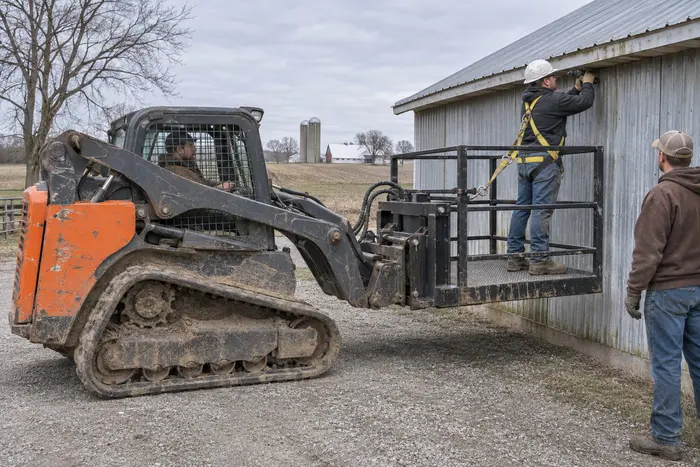
A forklift man basket is a work platform that mounts to the forks or carriage so a person can work at height. People search for the rules because the stakes are high and the rules are not in one place. This guide covers what the published safety texts say, what to check before the first lift, and how a telehandler basket differs from a basket on a standard forklift.
It is a practical overview, not legal advice. Your operator manual, the platform maker's instructions and your local regulator decide what you can do on your site.
What do the rules say about lifting people with a forklift?
The general idea in industrial safety rules is simple. A forklift is built to move loads, not people. So lifting a person is allowed only with extra protection and, in many places, only when another safe way to reach the work is not practical.
The state-plan text for trucks that can raise the operator or a platform lists three core conditions. First, use a safety platform firmly secured to the lifting carriage, the forks, or both. Second, give the people on the platform a way to shut off power to the truck. Third, provide protection from falling objects as the operating conditions require. The construction rule for lift trucks carries the same three precautions for trucks with controls that can be raised with the carriage.
Notice what is missing from those texts: no shortcut. Nothing there approves a pallet, a bucket, or a homemade cage chained to the forks. Different regulators add details such as guardrail and toeboard specifications, platform size, and a capacity reduction when lifting people. Look up the one that governs your site. Rules differ between federal programs, state plans, and Canadian provinces.
Forklift basket vs telehandler basket: what changes?
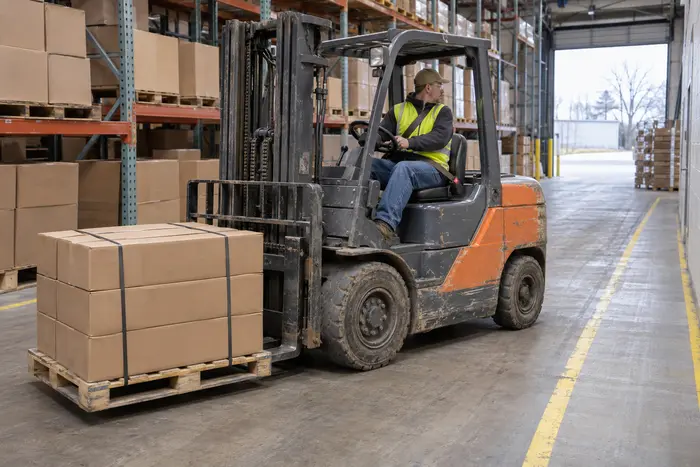
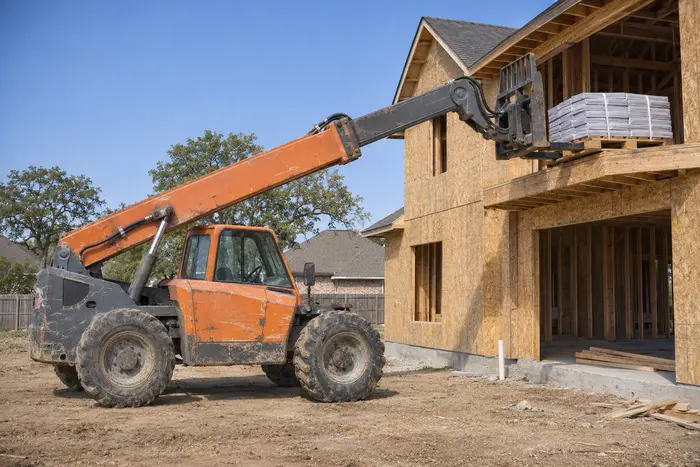
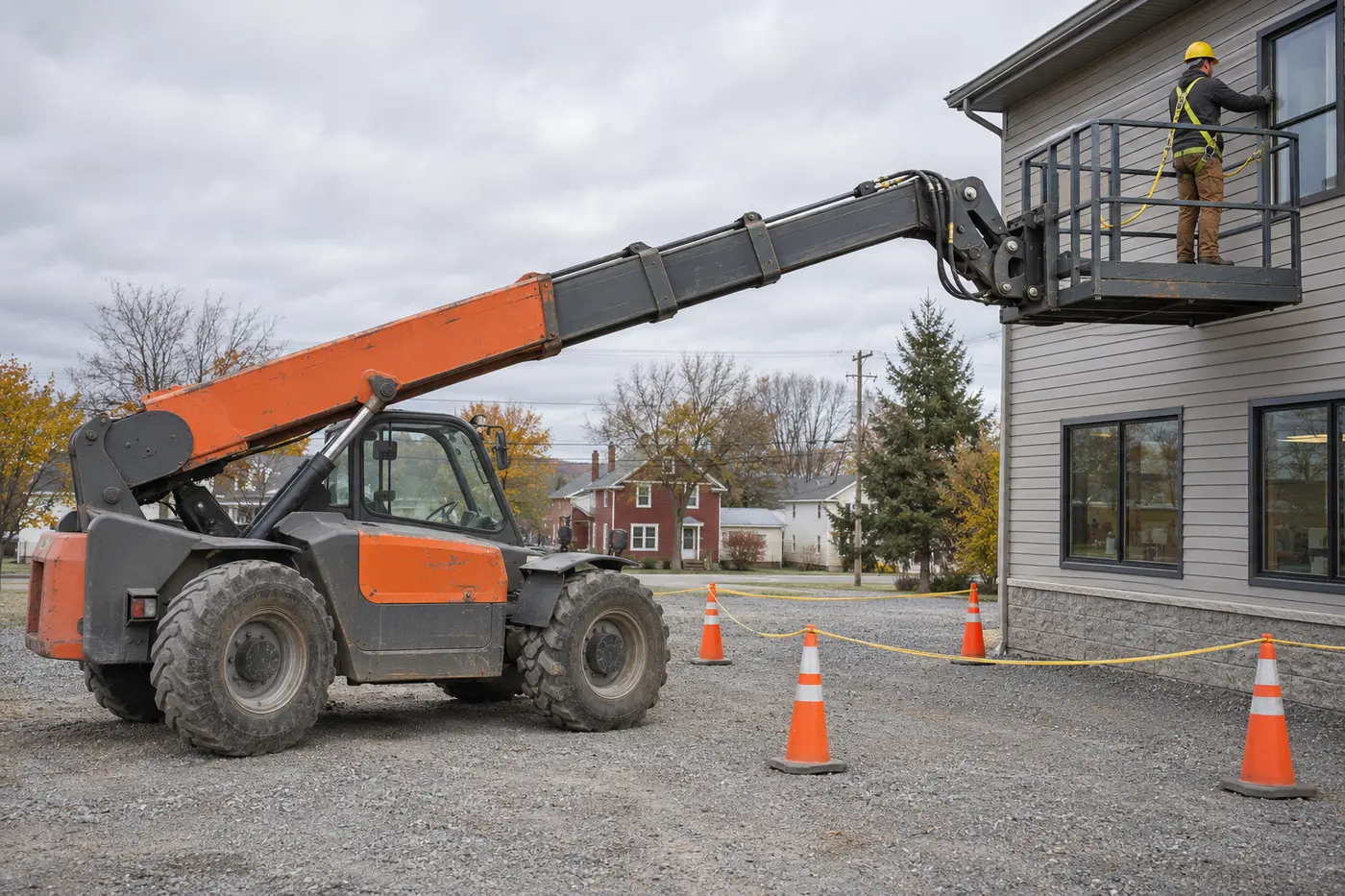
If you are new to the machine, start with what a telehandler is. A standard forklift lifts straight up a mast. A telehandler has a telescopic boom that extends forward and up. That boom acts like a lever, so capacity drops as the load moves away from the machine. A telehandler rated for a given weight with the boom retracted may be able to carry far less at full reach. The load chart tells you how much.
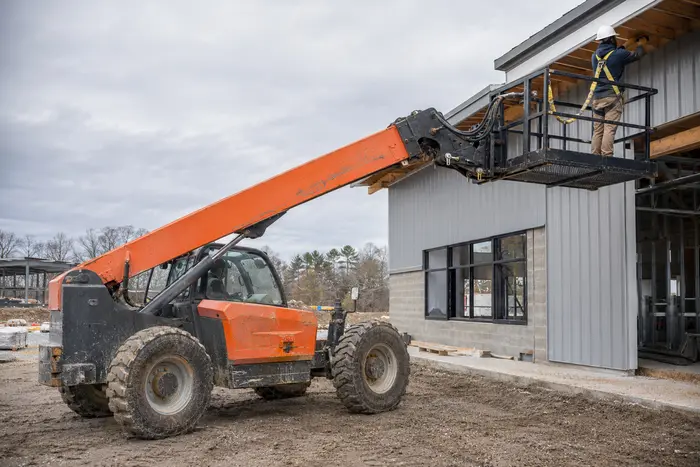
In some licensing and training schemes, work platforms used on telehandlers are classed as elevated work platforms. Many telehandlers can be fitted with lifting hooks for loads and with platforms that carry their own controls, so the person in the basket can move the boom. That is a different arrangement from a basket on a standard forklift, where an operator stays at the truck.
| Point | Standard forklift basket | Telehandler basket |
|---|---|---|
| Lift path | Straight up the mast | Boom extends out and up |
| Capacity limit | Truck data plate | Load chart by boom angle and reach |
| Who controls the lift | Operator at the truck, with power shutoff available to workers | Operator at the truck, or a person in the basket if the platform has controls |
| Platform | Secured to carriage or forks | Secured to the carriage, often with a frame-mounted platform |
| Main extra risk | Tip-over on slopes, mast sway | Reach and boom angle changing capacity, tip-over |
If you are shopping for a basket for a telehandler, start with our telehandler work platforms. The platform has to match the machine's carriage and rated capacity, which is why a person confirms fit before you order.
What does a good basket need?
Use these as a screening list. Your regulator's text and the platform maker's manual are the final word.
- Purpose-built platform. It is made and rated for lifting people on your type of machine, with a rated capacity marked on it.
- Secure attachment. It locks to the forks or carriage so it cannot slide, tip or lift off. Many designs use a locking pin or restraint chain in addition to the carriage fit.
- Guarding. Rails around the sides and a way to keep tools and debris from falling. Check the guardrail and toeboard details that your rules call for.
- Power shutoff. People on the platform can stop truck power.
- Fall protection. Where your rules or the platform maker call for it, workers wear a harness or restraint with the lanyard attached only to the anchor point the platform maker designates. The forklift's body is not an anchor point.
- Documented inspection. Welds, pins, gates, and fasteners are checked before use.
Pre-lift checklist
- Confirm that your rules allow lifting people with this machine for this task and that nobody has a safer way to reach the work.
- Read the operator manual for the machine and the instructions for the platform. Use only a platform approved for that combination.
- Check the combined weight of the platform, tools and every person against the rated capacity. On a telehandler, use the load chart at the highest reach you will need.
- Inspect the platform, the carriage and the forks for cracks, bent parts and worn pins.
- Set up on firm, level ground. Do not drive with workers elevated unless the manual allows it.
- Make sure everyone in the basket knows how to shut off power and how to signal.
- Keep a trained operator at the controls or in the basket, whichever the design requires, and keep the area below clear.
- Stop work for high wind, storms, or anything that makes the lift unstable.
Common mistakes to avoid
Many basket incidents trace back to improvised setups. The pallet-and-cage rig is the classic one: it is not rated, the guard is weak, and it can shift on the forks. Overloading is the next: adding a second person or a heavy tool pushes the total past capacity. Moving the machine with people up is a third. And skipping inspections leaves bent gates or worn locking pins unnoticed.
Our forklift safety guide covers general operating rules. Training matters too. In some regions, using a platform on a telehandler requires operator training for both the machine and elevated work platforms. Ask your employer or training provider which certificates apply where you work.
Who should be involved in the lift?
Treat every basket lift as a small team job. One trained operator runs the machine. The people in the basket know the signals, how to stop the truck, and where their harnesses attach. A spotter or ground person keeps the area clear of foot traffic and watches for overhead hazards such as power lines. Agree on the plan before the lift, and write down the weights you worked from. A two-minute talk at the start catches most problems.
Is a basket the right tool?
Sometimes the better answer is a different machine. A scissor lift or boom lift is designed for people, with guardrails and controls built in. A telehandler with the right platform is a good fit when you need reach over uneven ground, or you already own the machine. If the job is occasional, rental of a purpose-built lift can be simpler than certifying your own setup.
Get the right fit the first time
Send us your machine make, model and year and what you plan to do with it. A person checks fit against the maker's specs, and you approve a delivered price before you pay. The manufacturer ships direct. Get a fit-checked work platform quote.
Questions buyers ask
What are the forklift man basket requirements?
The core texts call for a platform firmly secured to the carriage or forks, a means for people on it to shut off truck power, and protection from falling objects where conditions call for it. Regulators add more detail, so check your local rules and the platform maker's manual.
Can you lift people with a forklift?
Only under strict conditions. A purpose-built platform must be secured to the forks or carriage, and the controls and protections must meet your local rules. Many programs also expect that no safer way to reach the work exists. Follow your regulator and the operator manual.
Is a telehandler man basket allowed?
Telehandler baskets are widely used, and some training and licensing schemes treat them as elevated work platforms. The platform must match the machine, stay within the load chart, and be used by trained people. Check your local rules before lifting.
What should be on a forklift man basket inspection checklist?
Check the platform for cracks, bent rails, worn pins and gate latches, then the carriage and forks. Confirm the rated capacity plate, the secure locking device, any harness anchor points, and the power shutoff. Document the inspection before each use.
Can I build my own forklift man basket?
A homemade rig is a poor idea. Platforms used for lifting people should be purpose-built and rated for the machine, with proper guarding and secure attachment. A pallet with a fence or a bucket is not a safe substitute.