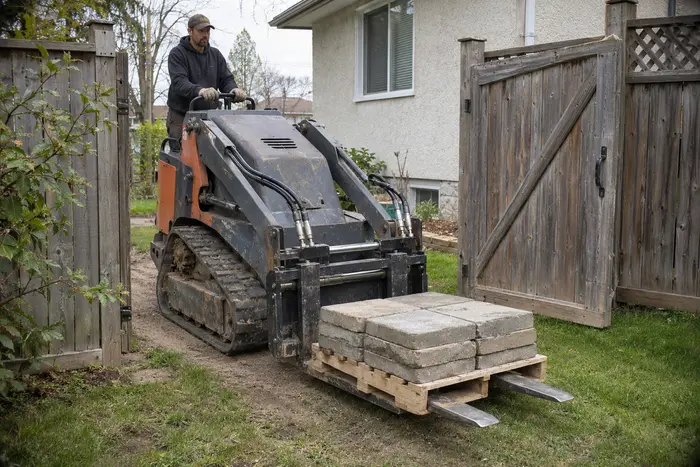
Mini skid steer guide
Mini Skid Steer Grapples: Types and Uses
Quick answer
A mini skid steer grapple is an attachment with hydraulic jaws that grab and carry brush, logs, rock and debris a plain bucket would spill. The main types are grapple buckets, root grapples and rake grapples. Pick by the material, then check that the weight and hydraulic flow suit your mini loader.
Shopping for this now? Get a fit-checked, delivered quote.
Key takeaways
- A mini skid steer grapple holds loose, bulky or awkward material a bucket cannot.
- Grapple buckets scoop and clamp. Root grapples sift soil. Rake grapples sort debris.
- Mini machines have low tipping loads, so grapple weight matters as much as size.
- Most grapples need auxiliary hydraulics, so confirm your machine's flow and coupler type.
- Keep loads low, and never exceed the rated operating capacity.
A mini skid steer is small enough to fit through a backyard gate and strong enough to move real material. The tool that does most of that work is a grapple. It lets the little machine pick up brush piles, logs, rock and demolition debris without losing half of it out the back. This guide covers the types of mini skid steer grapple, what each does well, and how to match one to your machine.
What is a mini skid steer grapple?
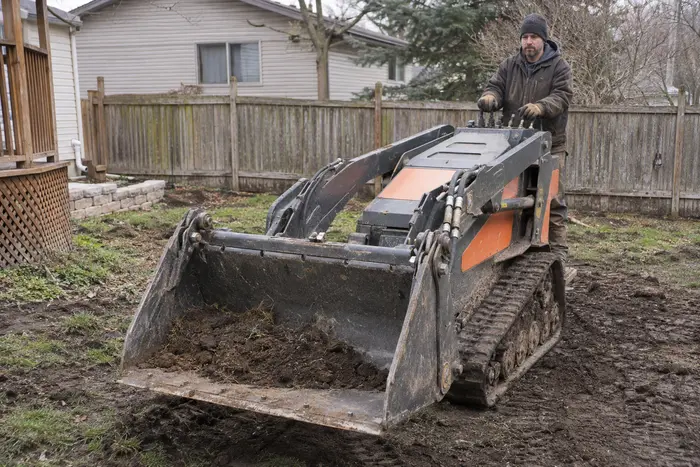
A grapple is a bucket, rake or frame with a hydraulic jaw that closes down on the load. The jaw holds the material in place so you can lift, carry and place it. A mini skid steer is a compact, often stand-on or walk-behind loader, much smaller than a standard skid steer. Because these machines are light, a grapple lets them handle bulky material that would be awkward or unsafe to carry loose in a bucket.
What types of mini skid steer grapples are there?
| Type | How it works | Best for |
|---|---|---|
| Grapple bucket | A bucket with a top jaw that clamps down | Brush, stone, demolition debris, loose mixed loads |
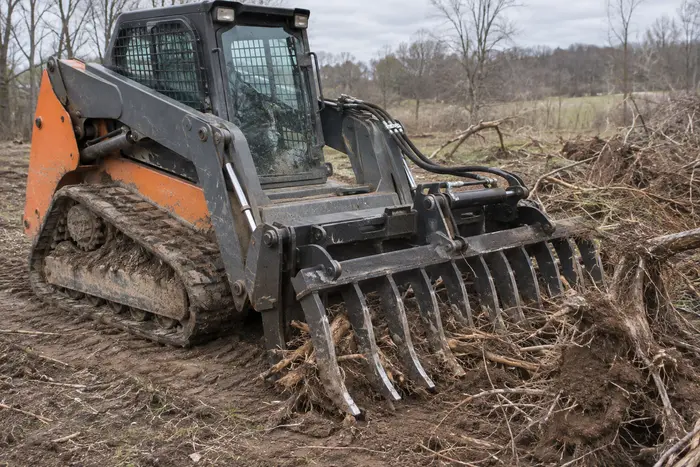
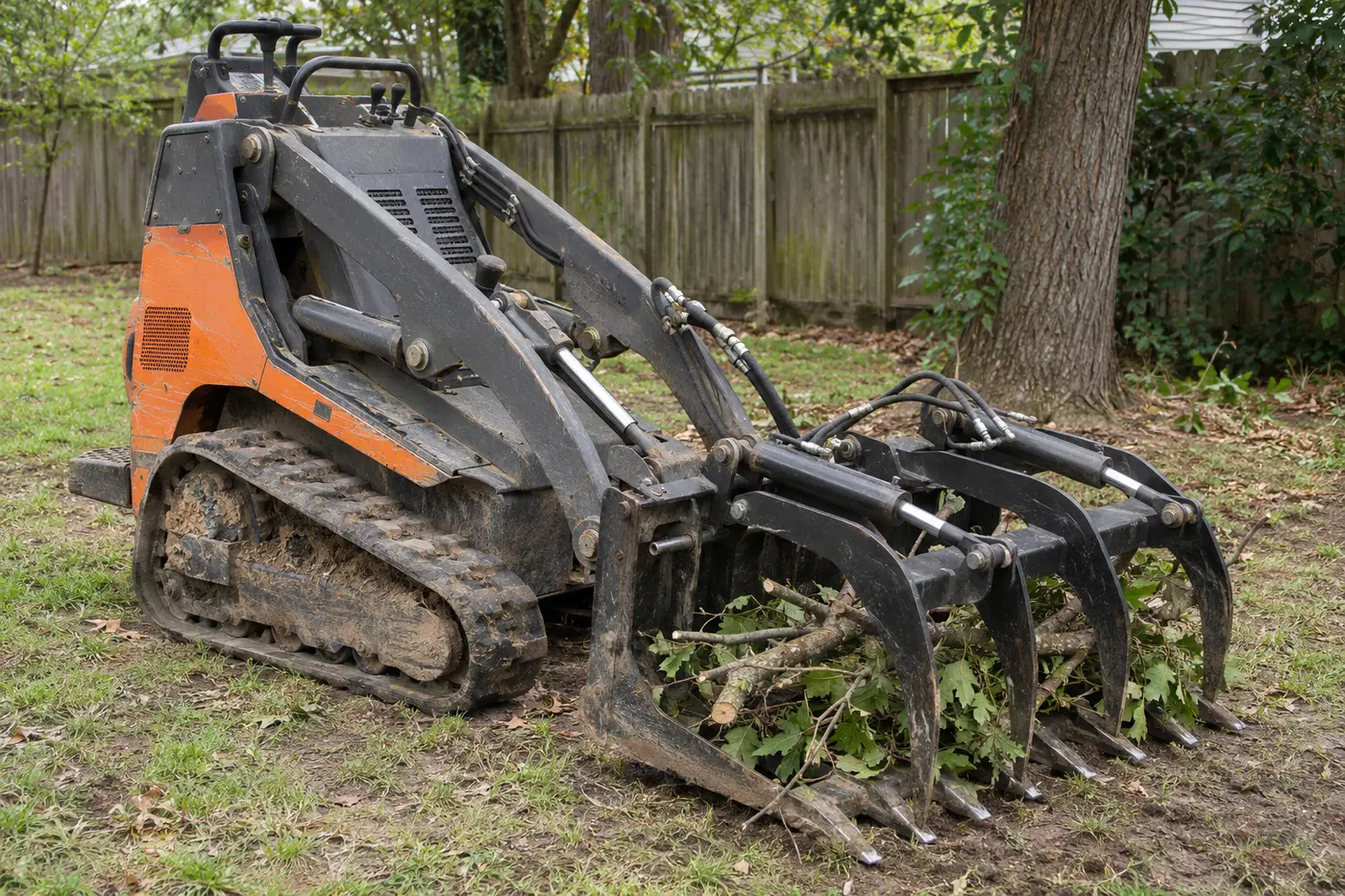
| Root grapple | Open tines with a hinged claw | Roots, stumps, logs, clearing soil from debris |
| Rake grapple | Rake tines with a clamping arm | Brush piles, sorting rocks from soil, final cleanup |
| Industrial grapple | Heavy bucket-style grapple, solid back | Scrap, construction waste, demolition |
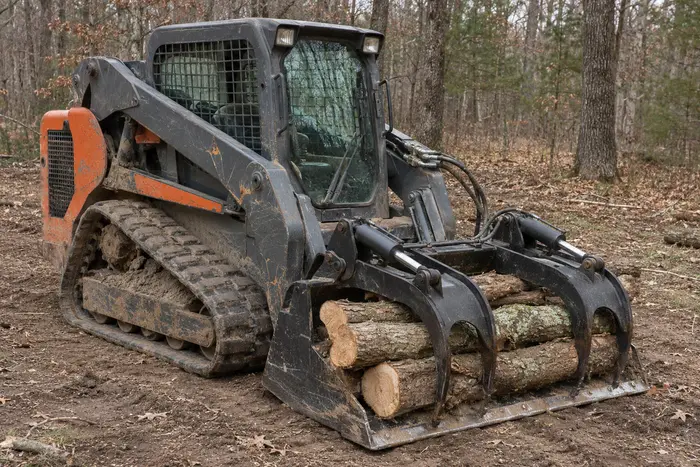
| Forestry claw or log grapple | Curved arms that wrap round material | Logs, poles, trunks, small trees |
Grapple bucket
This is a popular all-round choice for a mini skid steer. It scoops like a bucket and then clamps shut. It carries dirt and rock, and it holds bulky items such as stone or branch bundles. If you can only own one grapple, many buyers pick this one. Browse mini skid steer grapples to see the styles side by side.
Root grapple
A root grapple has open tines. Soil falls through, and roots, rocks and stumps stay in the grip. That makes it a land-clearing tool. It is much better than a bucket for pulling a pile of brush out of the ground without taking the soil with it.
Rake grapple
A rake grapple works like a landscape rake with a clamp. Use it to rake out rocks, gather brush, and make a pile you can then lift. It is also good for cleanup after demolition and for ground preparation.
Forestry claw and log grapples
For logs and trunks, a curved forestry claw wraps around round material. See the mini skid steer forestry claws category for this style. They are good for moving firewood, cut limbs and small trees.
What should you check before you buy?
- Machine rated operating capacity. Look up your mini skid steer's rating in the operator manual. A grapple weighs more than a plain bucket, and the load adds to it. The machine's rating always sets the ceiling.
- Tipping load and stability. Mini machines are light. Keep loads low, travel slowly and avoid slopes with a raised load.
- Auxiliary hydraulics. The jaw needs hydraulic flow. Check that your machine has an auxiliary circuit and note the coupler type. Many compact machines use small flat-face couplers. See our guide to flat-face couplers if you are unsure.
- Quick attach plate. Mini loaders use different mounting systems from full-size machines. Confirm the plate pattern.
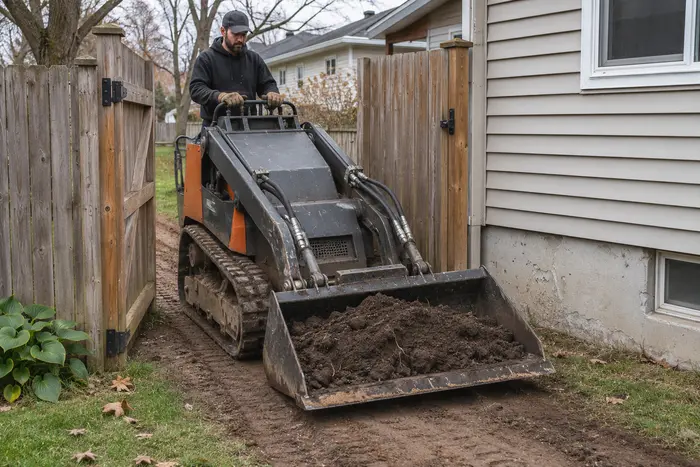
- Width and opening. A wide grapple is fast in open ground but cannot go through a narrow gate. Think about where you will use it.
- Tine spacing. Wide spacing sifts soil. Tight spacing holds small material.
How are mini grapples different from full-size ones?
The jobs overlap, but the design trade-offs are different. A mini grapple is narrower, lighter and has a smaller jaw. That makes it kind to a light machine and lets it go where a full-size unit cannot. The cost is capacity: the jaw holds less, the cylinder has less clamping force, and heavy logs or large rock can be out of reach. A full-size grapple moves more per trip, but it will overwhelm a mini loader and can unbalance it. Do not put a full-size grapple on a mini machine. Pick one sized by the maker for your loader class.
Ground conditions matter too. Soft or sloped ground reduces the safe load for a light machine. If you work in wet or sandy soil, expect to carry smaller bites than the numbers on the spec sheet suggest.
What jobs do mini skid steer grapples handle?
- Lot and brush clearing. Pull, pile and load brush on small acreage or in a tight yard.
- Landscaping debris. Gather branches, stone and dug-out roots.
- Demolition cleanup. Pick up broken block, boards and wire from a small site.
- Firewood and logs. Load a trailer or stack timber.
- Fence line work. Clear a fence line before installing posts.
- Rock picking. Rake grapples and root grapples pull stone from a seedbed.
- Storm cleanup. Clear limbs and small trees quickly after a wind event.
For other attachments that suit small loaders, see best mini skid steer attachments.
How do you use a grapple safely?
Treat every grapple load as a tipping risk, because the mini machine is light. Follow the operator manual for your machine and the attachment.
- Stay under the rated operating capacity, including the weight of the grapple.
- Carry loads low and keep the lift arms down while you travel.
- Close the jaw firmly before lifting. A loose grip drops material onto the operator or bystanders.
- Do not grab a load you cannot see all the way around. Hidden wire, rope or a root ball can fling back.
- Stay clear of overhead lines and branches.
- Keep bystanders out of reach of the load and the swing zone.
- Never use the grapple as a lifting point for people.
How do you get more life from a grapple?
Grease the pivot pins at the intervals in the manual. Check hoses and fittings for rubs and leaks, because brush work abrades them. Inspect the welds around the jaw pivots and the cylinder mounts. Keep tines straight. If one bends, replace it rather than bending it back.
Should you rent or buy?
If you clear brush for a weekend, renting makes sense. If you work with debris, logs or rock several times a year, buying can pay off. Keep in mind that rental fleets stock a limited mix of grapples, and the attachment you need may not match your machine. A grapple that is fit-checked for your machine avoids surprises on the job day.
Get the right fit the first time
Grapple, quick attach and hydraulics all have to match your machine. Send us your mini skid steer make, model and year and the material you plan to move. We will confirm fit against the manufacturer's specs, then send a written quote with the delivered price before you pay. The supplier ships direct, and warranty terms, if any, are written on your quote. Start with a fit-checked quote.
Questions buyers ask
What is a mini skid steer grapple bucket?
A grapple bucket is a bucket with a hydraulic top jaw that closes down on the load. It scoops loose material, then clamps it so brush, rock and debris stay put while you carry them. It is a common grapple style for compact and mini loaders.
Do I need auxiliary hydraulics to run a grapple?
Yes, in almost every case. The jaw is driven by a hydraulic cylinder, so the machine needs an auxiliary circuit and matching couplers. Check your machine's flow and coupler size in the operator manual, and confirm the grapple's hydraulic requirements before you order.
What is a mini skid steer grapple rake used for?
A grapple rake combines rake tines with a clamping arm. Use it to rake rocks and roots out of soil, gather brush into piles, and clean up demolition debris. The open tines let loose soil fall through while the jaw holds the larger pieces.
What is the difference between a root grapple and a grapple bucket?
A root grapple has open tines, so soil falls through and roots, stumps and rocks stay in the grip. A grapple bucket has a solid body that holds loose material, including dirt. Choose a root grapple for clearing and a grapple bucket for general hauling.
Can a mini skid steer pick up logs with a grapple?
Yes, within its rated operating capacity. Forestry claws and log grapples wrap around round material and hold it securely. Keep logs low while you travel, watch the balance, and avoid slopes with a raised load. Heavy logs can exceed the machine's tipping load quickly.