Landscaping guide
Mini Skid Steer Trencher Guide: Sizing, Teeth and Use
Quick answer
A mini skid steer trencher is a chain-and-boom digging attachment that cuts a narrow trench for cable, irrigation, drainage or small pipe. Choose by trench depth and width, tooth type for your soil, and hydraulic flow and pressure that match your mini skid steer, then call for utility locates before digging.
Shopping for this now? Get a fit-checked, delivered quote.
Key takeaways
- A chain trencher cuts a narrow, uniform trench much faster than a bucket
- Depth, width and tooth type decide what soils and jobs it handles
- A mini skid steer's flow and weight limit which trencher fits
- Rock and frozen ground need carbide or rock teeth and a stronger machine
- Locate buried utilities before you dig and follow the operator manuals
A trencher turns a mini skid steer into a small utility-installation machine. It digs narrow, straight trenches for irrigation lines, low-voltage cable, conduit, drainage pipe and small water lines, and it does it far faster than a bucket or a shovel. This guide explains how trenchers work and how to pick one for a compact loader.
What is a trencher?
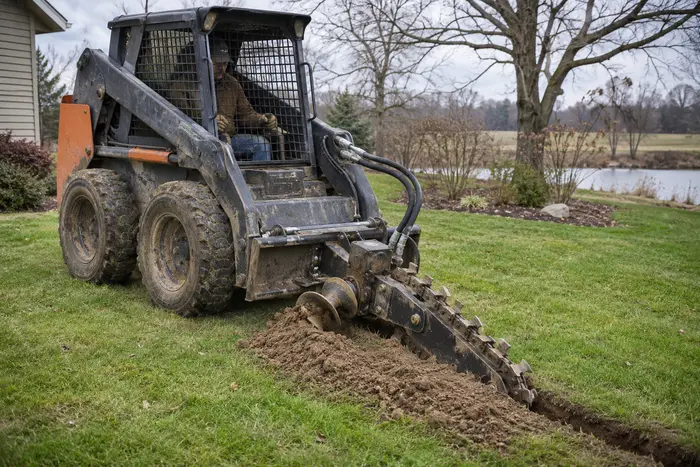
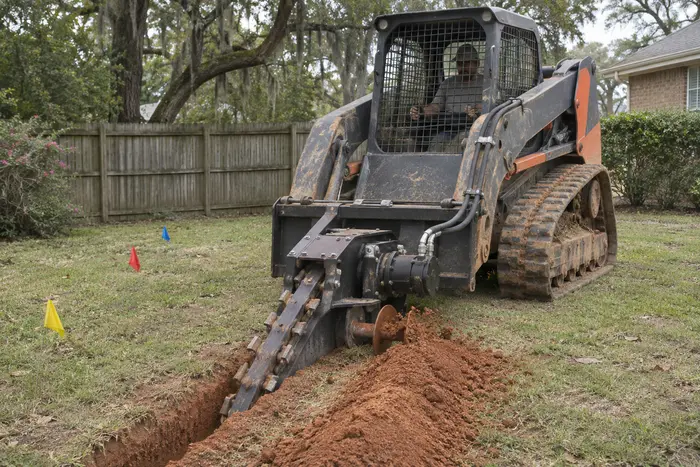
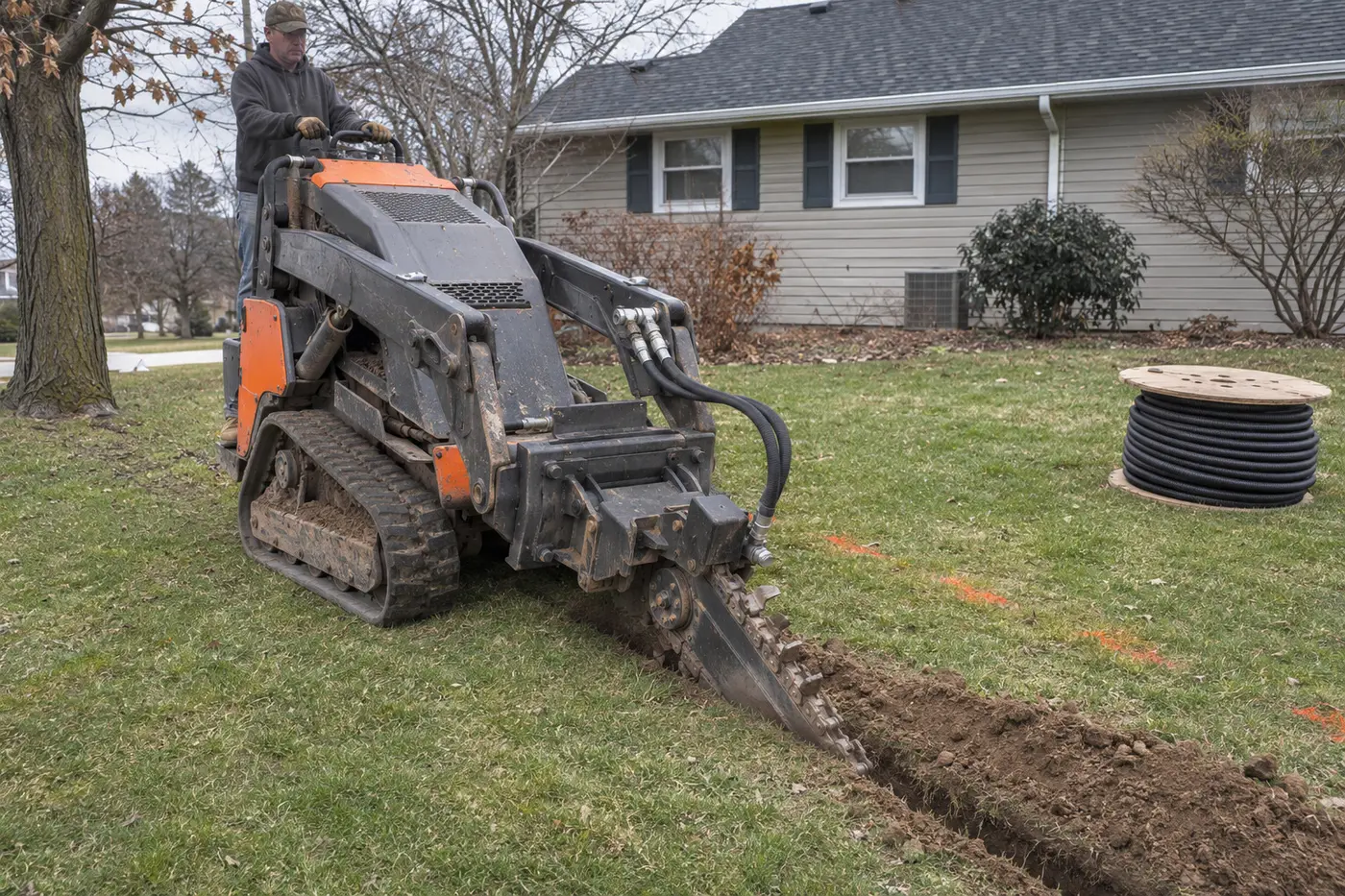
A trencher is a digging machine that cuts a trench with a rotating chain or wheel fitted with teeth. A mini skid steer carries a chain-type trencher on the front quick-attach plate and powers it from the auxiliary hydraulics. The boom, a steel frame with the chain on it, lowers into the ground, and the machine moves backward as the chain digs. Spoil is thrown to the side by an auger or a conveyor on the boom.
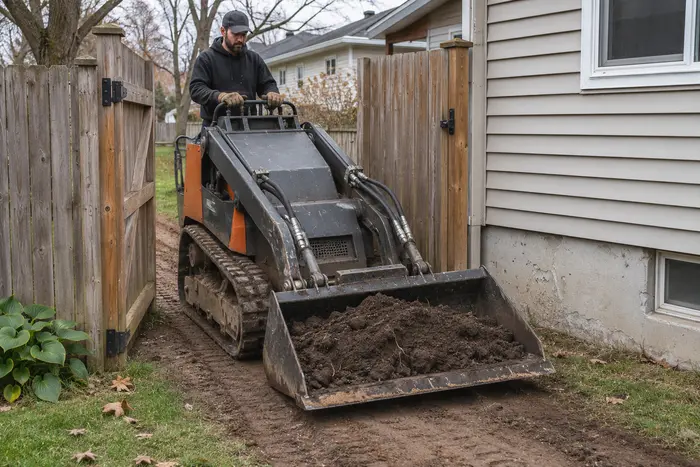
Because the mini skid steer is narrow and has tracks, it can reach places that a larger trencher or an excavator cannot: along house sides, through gates and across lawns. If you are new to the tool, see our guide on what a trencher is.
Trencher vs mini excavator vs backhoe
| Tool | Best at | Limits |
|---|---|---|
| Chain trencher | Long, narrow, uniform trenches for cable, pipe and irrigation | Depth and width are fixed by the boom; poor at digging pits |
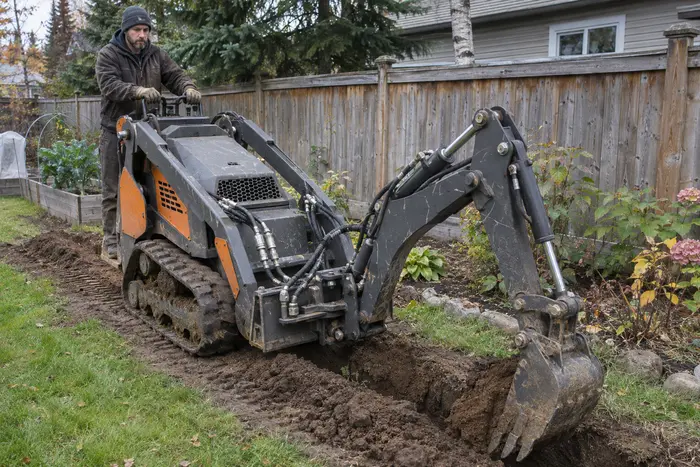
| Mini excavator | Variable depth and width, pits, bell holes, mixed digging | Slower for long straight runs; needs more room |
| Backhoe attachment | Occasional digging with a loader on small sites | Limited reach and depth |
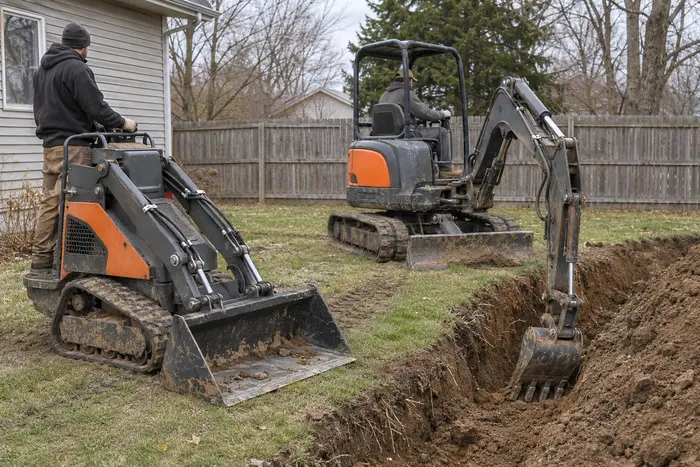
If most of your work is long runs of narrow trench, a trencher is faster and leaves less spoil. If you need varied depths and bell holes, an excavator wins. See mini skid steer trenchers and our guide to mini skid steer vs mini excavator.
How to size a trencher
- Trench depth. Check the depth your pipe or cable needs. Local rules and frost depth set minimums for some utilities, so confirm with your utility or code office. The boom length sets the maximum depth.
- Trench width. Chain widths are made for different pipe and cable. A narrow trench means less spoil and backfill. A wider trench is easier to work in and holds a larger pipe.
- Hydraulic flow and pressure. Each trencher has a required range. A trencher that needs more flow than the machine supplies cuts slowly or stalls. Check the numbers on the spec sheet against the mini skid steer's auxiliary circuit.
- Weight. A trencher is heavy on the front of the machine. Check its weight against the loader's rated operating capacity and check how the machine feels with the boom raised.
- Mount. Some minis use a universal quick attach, and others have a maker-specific plate. Confirm the pattern for your machine.
- Case drain. A trencher's drive motor may need a case drain line. See what a case drain is.
Which teeth should you use?
Teeth are the wear part and the biggest influence on how the trencher cuts. In general:
- Soil and turf teeth. Wide, scoop-like teeth that dig and clear loose soil, sand and clay.
- Rock and hardpan teeth. Carbide-tipped teeth that cut rocky ground, hardpan and frozen soil.
- Combination setups. Mixed teeth that handle varied ground, a sensible choice if you do not know the soil.
Soil conditions decide the tooth. In wet clay, teeth can pack with mud and slow the chain. In rocky soil, soft teeth wear out quickly. Keep a spare set and replace teeth as a group so the chain stays balanced. Ask the seller how teeth are replaced and whether they are available from the manufacturer.
Using a trencher: step-by-step
- Call your local utility locate service and have buried lines marked before you dig. Treat the marked area as a no-dig zone and hand-dig within the tolerance zone in your area.
- Mark the trench line with paint or string. Keep it straight.
- Lower the boom to the start with the chain turning, then crowd it into the ground and begin to back up.
- Back up slowly. Let the chain clear spoil. If the chain bogs down, back off and let it recover.
- Watch depth and the direction of the line, and keep the trench free of loose spoil that falls back.
- Lay pipe or cable, then backfill and compact in layers.
On a mini skid steer, the machine's tracks scuff turf on tight turns. Plan wide curves and use plywood or mats for finished lawns where you can.
Safety and ground conditions
- Utilities first. Never trench without locates.
- Stay clear of the chain. Keep hands, feet and clothing away from the boom and chain while the machine is on.
- Trench hazards. A trench is an excavation. In the US, OSHA requires protective systems in trenches 5 feet deep or more unless they are in stable rock, and a safe way out in trenches 4 feet deep or more. In Canada, provincial rules apply. Most mini trenchers cut shallower, but know the rules where you work.
- Keep spoil back. OSHA calls for spoil and equipment to sit at least 2 feet back from the edge, or be held back by a retaining device.
- Slopes. Keep the boom low and the machine square on slopes, and follow the manual's slope limits.
- Manuals. Follow the operator manuals for both machine and trencher.
What can go wrong
The most common problem is a mismatch between trencher and machine. Too little flow means slow digging. Too much weight makes the machine front-heavy. The next is ignoring the soil: a soil tooth in rocky ground wears out fast. Then there are tracks that slip in wet clay, which hurts trench alignment. And last, it is easy to hit buried lines, which is why locates matter. Fix the mismatch before the first dig, not after.
Maintenance
Check the chain tension and teeth before every job, and replace worn teeth in sets. Grease the boom pivot and the drive points the manual lists. Inspect hydraulic hoses for rubbing near the boom, and look for leaks at the drive motor. After trenching in wet clay, wash the chain and boom so mud does not harden on them, and store the trencher with the boom down and supported. Keep a spare set of teeth in the truck. A broken tooth on a job day costs more than a spare set.
Rent or buy?
Renting makes sense for a single project, such as an irrigation system or a run of conduit. Owning makes sense if you do repeated installs for yourself or clients. If you buy, plan the ground you will cut most often, then size and tooth the trencher for that, rather than for the toughest possible job.
Get the right fit the first time
Send us your machine make, model and year and what you plan to do with it. A person checks fit against the maker's specs, and you see the delivered price on your quote before you pay. The supplier ships direct, and warranty terms, if any, are written on your quote. Get a fit-checked quote.
Questions buyers ask
What is a mini skid steer trencher?
It is a chain-and-boom digging attachment mounted on a mini skid steer's quick-attach plate and powered by its auxiliary hydraulics. It cuts narrow, uniform trenches for cable, pipe and irrigation lines faster than a bucket or shovel.
How deep can a mini skid steer trencher dig?
Depth is set by the boom length of the trencher you choose, and the machine's lifting capacity and stability limit what you can carry. Check the depth range on the spec sheet and compare it to the depth your pipe or cable needs.
What teeth do I need for a trencher?
Use soil teeth for loose soil, sand and clay, rock or carbide teeth for rocky or frozen ground and hardpan, and a mixed set when conditions vary. Teeth are wear parts, so keep a spare set and replace them as a group.
Does a mini skid steer trencher need high flow?
Many trenchers run on standard flow, but each model lists a required flow and pressure range. Check it against your machine's auxiliary circuit. If the machine cannot supply it, the chain will run slowly or stall.
Do I need to call before I trench?
Yes. Always have buried utilities located and marked before you dig. Hitting a line is dangerous and expensive. Follow your local locate service rules, and hand-dig where they require it near marked lines.