Snow guide
What Is Snow Plowing? Methods and Equipment
Quick answer
Snow plowing is clearing snow from roads, parking lots, driveways and walkways by pushing it aside with a blade mounted on a truck, tractor, loader or skid steer. Crews often combine plowing with salt or brine to prevent bonding and melt what the blade leaves behind.
Shopping for this now? Get a fit-checked, delivered quote.
Key takeaways
- Plowing pushes snow into windrows or piles; blowing and hauling move it away.
- Trucks, tractors, front-end loaders and skid steers all run plows or pushers.
- Salt and brine work with plowing, but rock salt slows down sharply in deep cold.
- Pushers, also called box plows, move more snow on lots; angled blades suit roads and drives.
- Plan where the snow goes before the first storm.
Search "what is snow plowing" and you get a mix of answers, from skiing technique to truck prep options. This guide covers the real thing: clearing snow from roads, lots and driveways with a blade. It explains the methods, the equipment and where salt fits in.
What is snow plowing?
Snow plowing is the mechanical removal of snow from a surface by pushing it aside. A plow blade or pusher is mounted on a vehicle, and the operator drives forward to move the snow into a windrow, a pile or a designated storage area. Plowing is one of the main ways to deal with snow and ice, along with chemical treatment, blowing and hauling.
How is snow cleared besides plowing?
There are three main approaches, and most crews use more than one.
- Mechanical removal. Plowing, scraping, shoveling, blowing and vacuuming remove snow from the surface.
- De-icing. Chemicals such as salt melt snow or ice that is already on the ground.
- Anti-icing. Chemicals applied before or during a storm to stop ice from bonding to the pavement. Brine applied shortly before a storm can reduce the salt needed and make plowing easier.
What equipment is used for snow plowing?
| Equipment | Typical use | Strength |
|---|---|---|
| Truck-mounted plow | Roads, driveways and medium lots | Fast travel between sites |
| Front-end loader with a plow or pusher | Large lots and stacking snow | Moves big volume and can pile it |
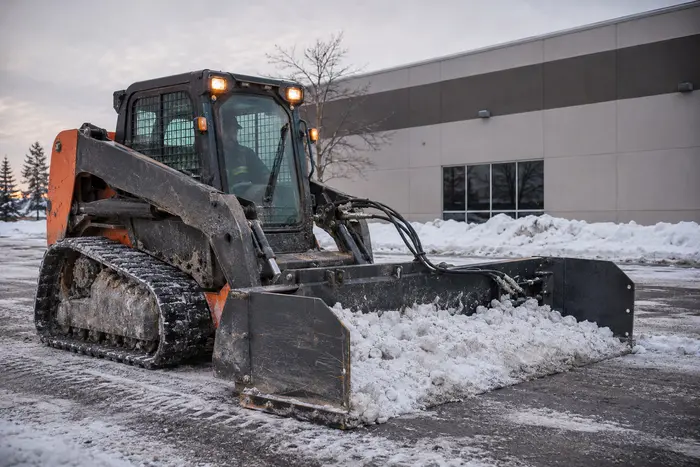
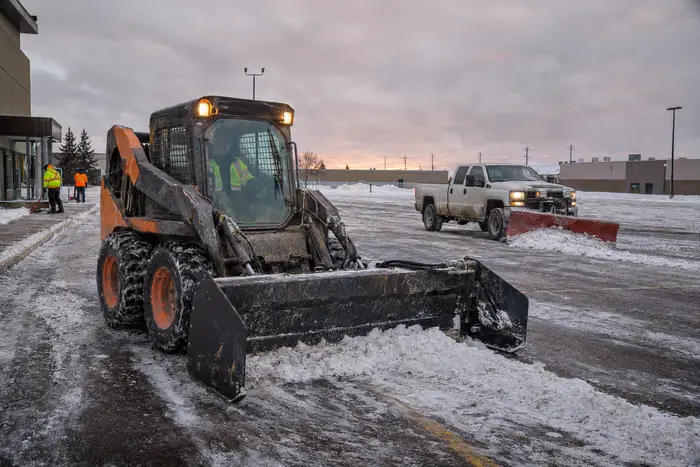
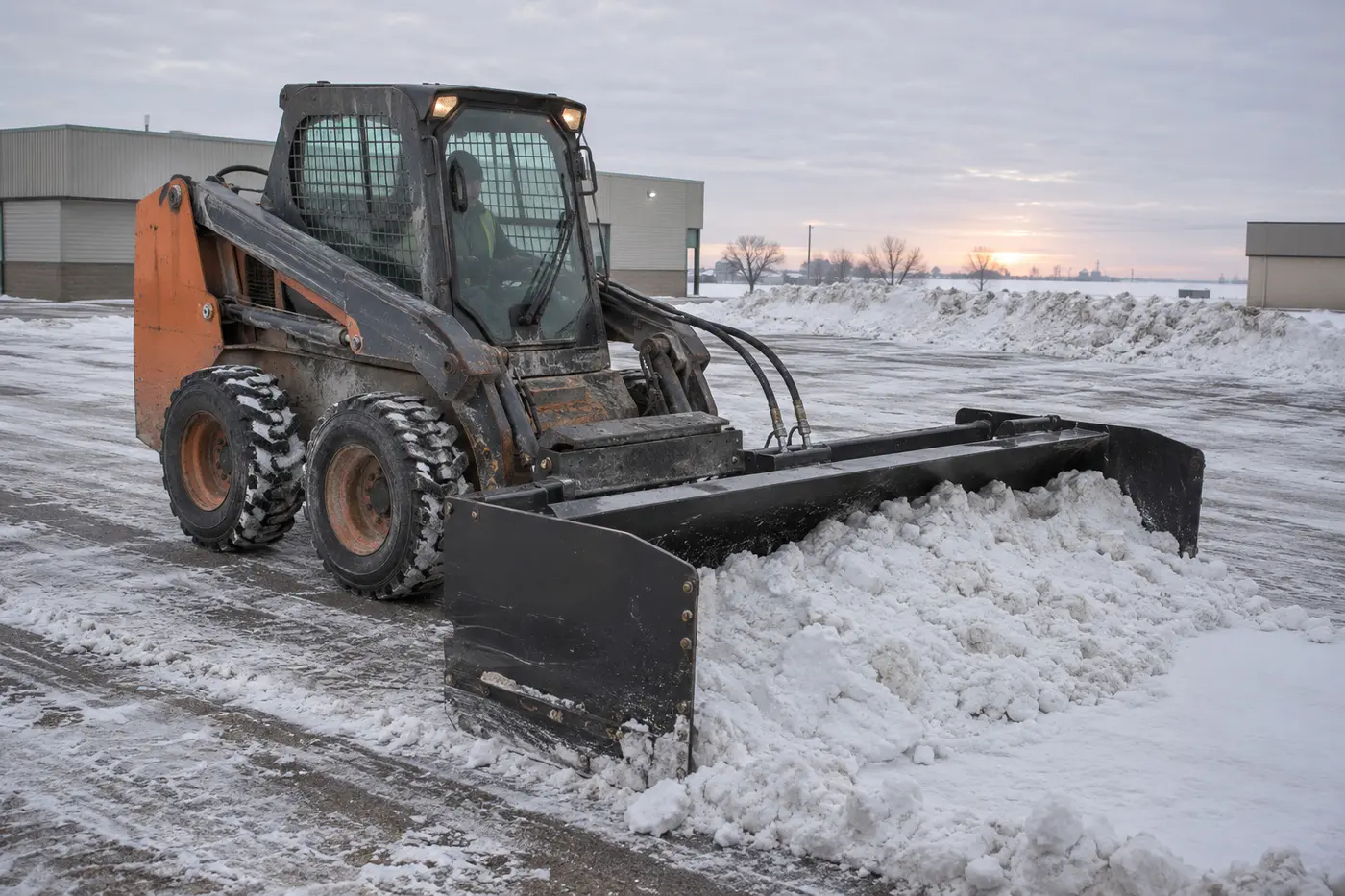
| Skid steer with a plow or pusher | Tight lots, loading docks, sidewalks | Turns on the spot and works in confined areas |
| Tractor with a blade or blower | Long driveways and farm lanes | Power for deep or heavy snow |
| Grader | Roads and rural routes | Long blade for wide passes |
| Walk-behind blower or sidewalk machine | Walks and tight spaces | Reaches where larger machines cannot |
Contractors often use hand shovels, walk-behind snow blowers, truck plows, skid steers, tractors and front-end loaders, sometimes with tire chains for grip. Our guides cover snow removal with a skid steer and sidewalk snow removal equipment.
How does a municipality plow a city?
Cities follow a sequence. Salt trucks, sometimes called gritters, go first. Plows follow, along with front-end loaders using plow attachments and graders, and salt trucks often return afterward. Routes are usually ranked, with main roads and emergency routes cleared before side streets. Sidewalk machines with tracks or large tires handle walks.
Plowing leaves windrows. Crews clear windrows by pulling the snow back, casting it, winging it back or hauling it away. Hauling uses large self-propelled snow blowers that load dump trucks. Snow carries salt, grit and debris, so dump sites are chosen to limit pollution, and many jurisdictions prohibit dumping snow into lakes, rivers or streams.
What is the snow plow technique?
If you are asking about technique in terms of driving a plow, these habits work for most operators.
- Walk the site first. Find curbs, hydrants, drains, edges and anything hidden under the snow. Staking or poles mark edges and protect landscaping.
- Plan the pile. Choose where to stack before you start so the pile does not block sight lines or drains, or melt onto walkways.
- Plow with the storm when possible. Light, regular passes are easier than moving a heavy accumulation.
- Angle the blade. Push snow in one direction along the edge instead of into the middle of the lot.
- Back-drag at doors and docks. Pull snow away from entrances with a pusher or a blade set for it.
- Drive slow near obstacles. A blade rides on pavement, so check for uneven spots.
- Finish with treatment. Salt or sand where needed.
How do salt and sand fit with plowing?
Plowing removes the bulk of the snow. Chemicals and traction material deal with what is left.
- Rock salt is cheap and widely used, but it works much more slowly below about -10 °C (14 °F) and does little at around -18 °C (0 °F) and colder. It also corrodes vehicles and rebar.
- Calcium and magnesium chlorides keep working at lower temperatures than rock salt, and calcium chloride gives off heat as it dissolves. Check each product's label for its working range.
- Sand and other inert materials add traction but do not melt ice, and they can clog drains and create dust.
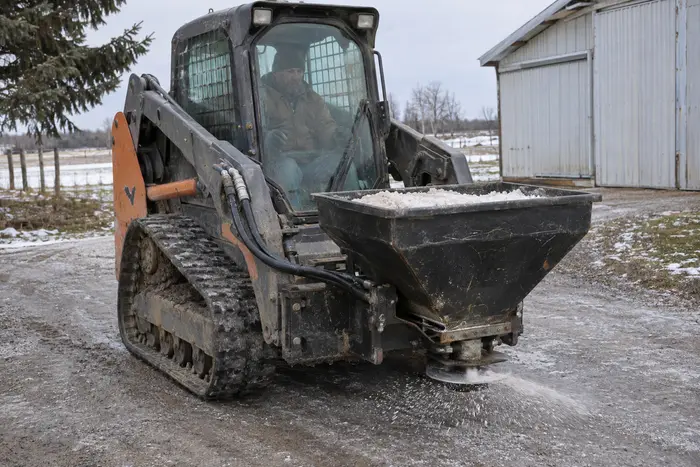
- Salt spreaders mount on a truck, tractor or skid steer. See our skid steer salt spreaders.
Chlorides corrode steel and aluminum. Salts can also harm plants and aquatic life, so use only as much as needed and follow local rules.
What snow plow attachments work on a skid steer?
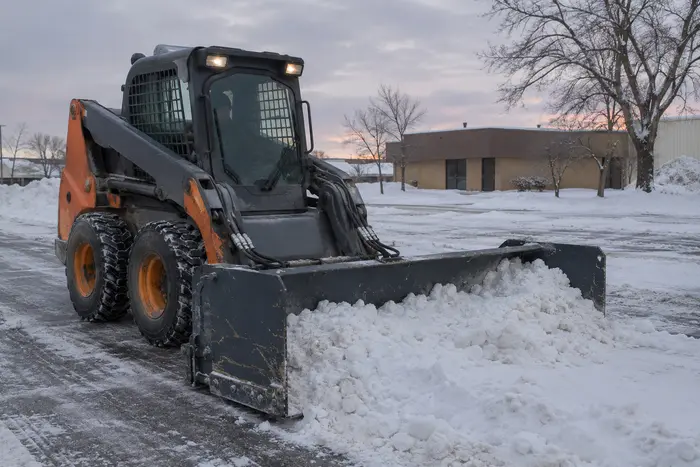
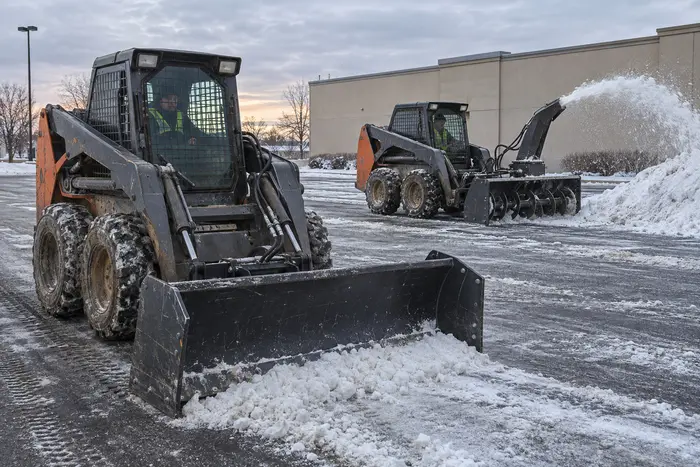
Skid steers run blades, pushers and blowers. A blade (or plow) angles and moves snow to one side. A pusher has wide sides and a box shape that holds snow in front of you and moves it in big volumes, which works well on lots. A blower throws snow far away and suits places where there is nowhere to pile it. Compare snow plows, snow pushers and snow blowers, and read plow vs pusher and blower vs plow.
What is snow plowing insurance?
If you plow for others, you take on liability. Insurance for plowing contractors is commonly built around general liability for property damage and injury, plus coverage for vehicles and equipment. Policies and requirements vary by country and by state or province, so talk to a licensed broker. If you plan to start a business, our guide to starting a snow removal business covers the basics.
What are the risks of snow plowing?
Plowing happens in poor visibility, cold temperatures and often at night. Common hazards include hidden obstacles, slippery surfaces, pedestrians, fatigue and equipment failure. Reduce risk by scouting sites, wearing high-visibility gear, using lights and beacons, keeping equipment maintained and taking breaks. Follow the operator manual and the machine's rated operating capacity, because heavy snow, wet snow and large pushers add load fast.
How do you choose the right plow setup for a site?
- Measure the area. Big open lots favor wide pushers or loaders. Tight lots favor a maneuverable skid steer.
- Find the storage. If there is nowhere to pile snow, plan for a blower or hauling.
- Check the surface. Gravel and uneven pavement call for skid shoes or a softer rubber or poly cutting edge set to ride slightly high, so you do not dig into the surface.
- Match the carrier. A heavy pusher can exceed a small machine's rated operating capacity, especially with wet snow.
- Think about the whole season. One tool seldom does everything. A blade, a pusher and a spreader each cover a different part of the job.
A person can help you check mount type, weight and hydraulics before you order, so the setup works on the first storm instead of the third.
Get the right fit the first time
Snow tools depend on your carrier's weight, mount and hydraulics. Send us the make, model and year of your machine. A person checks fit against the maker's specs, you approve a delivered price before you pay. Get a fit-checked quote or call 1-888-245-1555.
Questions buyers ask
What is snow plowing?
Snow plowing is clearing snow from roads, lots, driveways and walkways by pushing it aside with a blade or pusher mounted on a truck, tractor, loader or skid steer. Crews often follow plowing with salt or sand to deal with the thin layer the blade leaves.
What equipment is used for snow plowing?
Common equipment includes truck-mounted plows, front-end loaders with plows or pushers, skid steers with blades or pushers, tractors with blades or blowers, graders for roads, and walk-behind blowers for walks. The best choice depends on surface size, access and snow volume.
What is the difference between plowing and de-icing?
Plowing removes snow mechanically by pushing it away. De-icing uses chemicals such as salt to melt snow or ice already on the surface. Anti-icing applies chemicals before or during a storm to prevent ice from bonding. Most crews combine all three.
At what temperature does salt stop working?
Rock salt slows down sharply below about -10 °C (14 °F) and does little at around -18 °C (0 °F) and colder. Calcium and magnesium chlorides keep working at lower temperatures. Check the product label for its working range, match it to the forecast and follow local rules.
Do I need insurance to plow snow?
If you plow for others, insurance is strongly advised, and many commercial clients ask for proof of coverage before they sign. Coverage usually centres on liability for property damage and injury, plus your vehicles and equipment, and it varies by region. Speak to a licensed insurance broker about what applies to your work.