Snow guide
Snow Blower vs Snow Plow: Which Is Better?
Quick answer
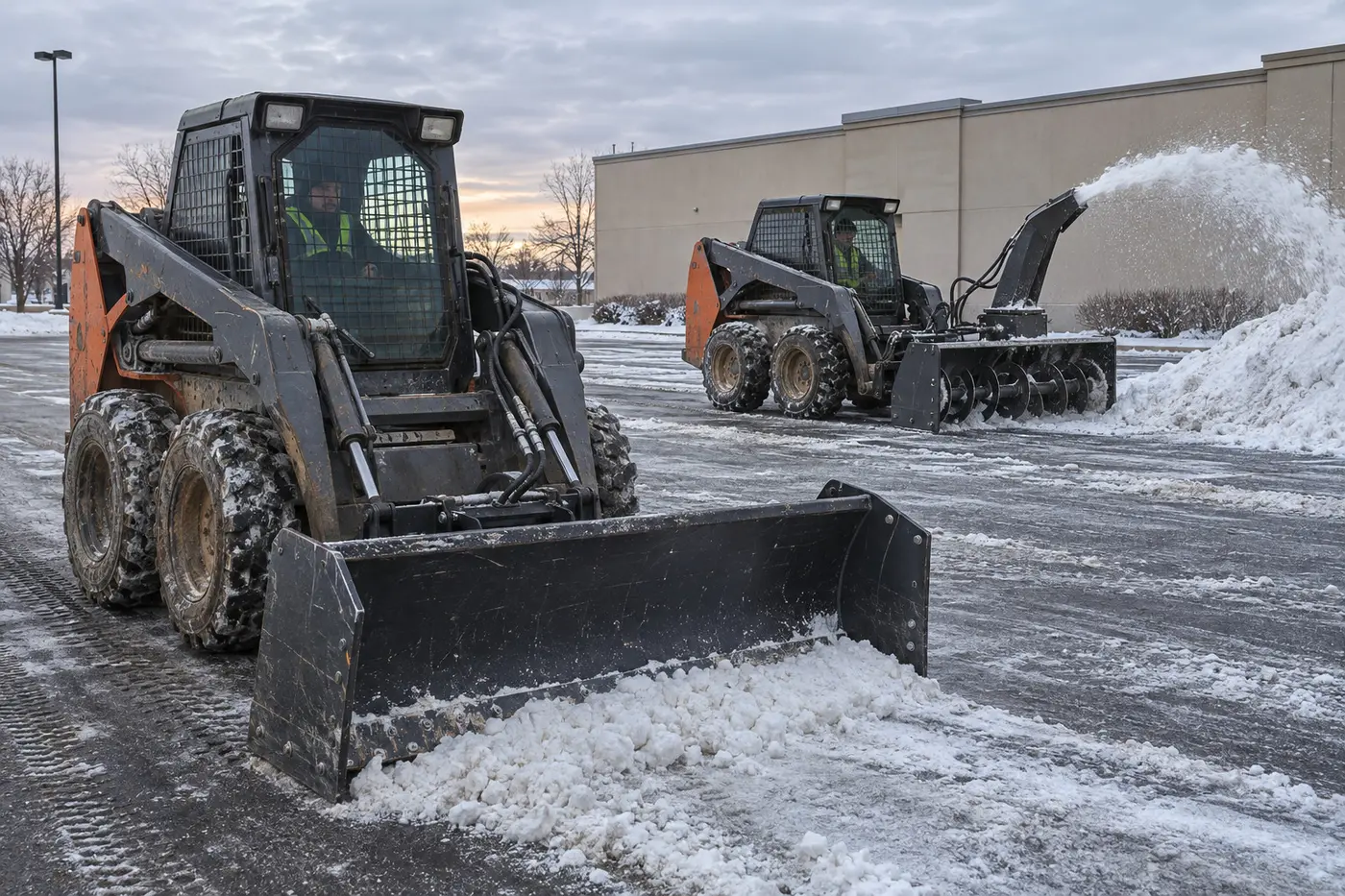
In the snow blower vs snow plow choice, a plow pushes snow aside and is fastest where there is somewhere to put it. A snow blower throws snow clear and wins where piles are deep, space is tight or you must haul or aim snow elsewhere. Many sites use both: a plow for speed, a blower for the pile-up work.
Shopping for this now? Get a fit-checked, delivered quote.
Key takeaways
- Plows push. Blowers throw. That one difference drives every choice.
- A plow is faster and cheaper to run where you have room to stack snow.
- A blower handles deep snow and tight sites where you cannot push to the side.
- Gravel drives are easier with a plow set on shoes. A blower can throw stone.
- Heavy-use sites often need both tools.
Snow blower vs snow plow is the question every driveway owner and snow contractor asks sooner or later. The two tools move snow in very different ways, and each is better in certain situations. This guide compares them side by side and gives a simple way to decide for skid steers, tractors and mini loaders.
How does a snow plow work?
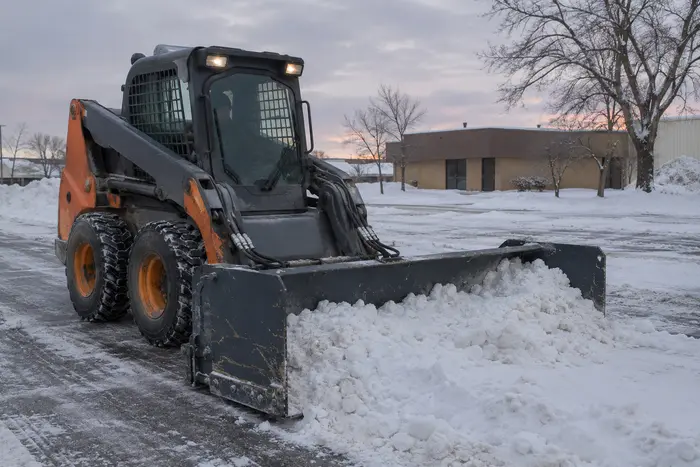
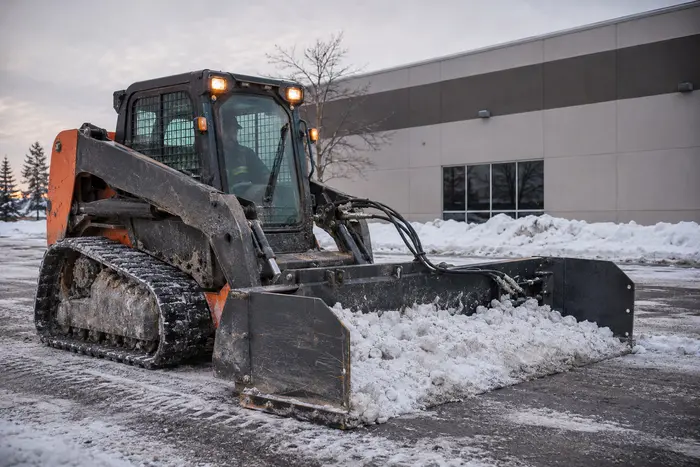
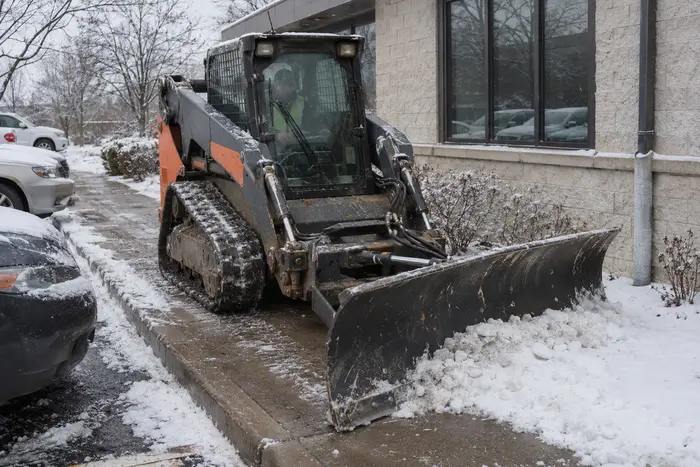
A snow plow is a blade mounted on a vehicle or machine. It removes snow and ice by pushing it forward or to the side. Plows come in many forms: straight blades, V-plows, angled blades and wide pushers that scoop and carry snow in a box. The blade moves snow only as far as you drive it. That makes it fast for clearing a lane, a lot or a road, and it needs a place to stack the snow.
How does a snow blower work?
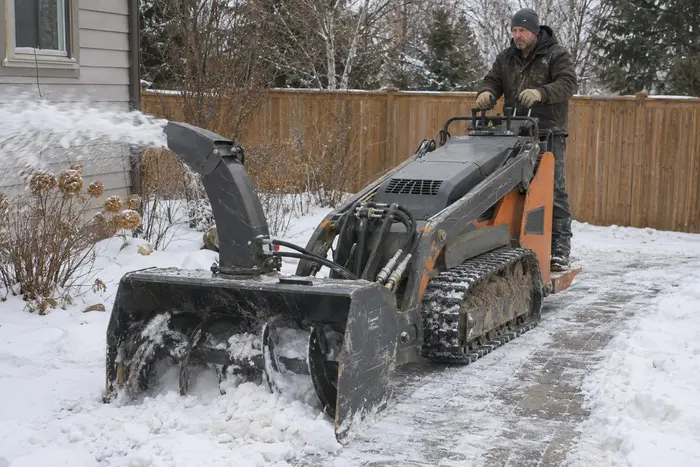
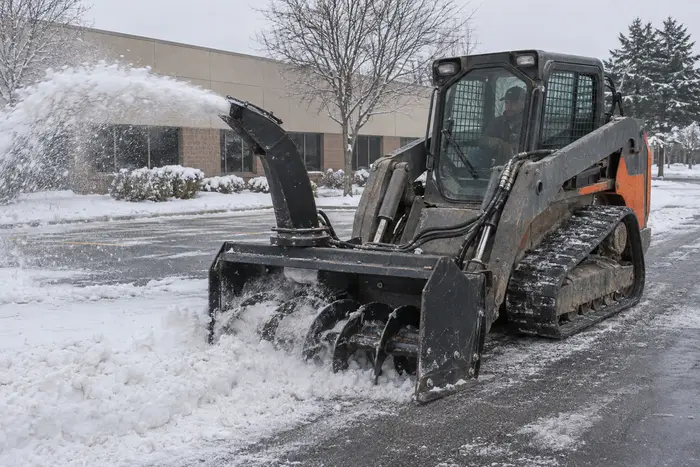
A snow blower, also called a snow thrower, uses an auger to pull snow into the machine. On a two-stage design the auger feeds a high-speed impeller that throws the snow out of a chute. The commonly used term is a misnomer, because the snow is thrown, not blown with air. Most chutes can aim across a wide arc. The attachment version, mounted on a skid steer or tractor, works the same way and is powered by the machine's hydraulics or PTO.
What are the differences between a snow blower and a snow plow?
| Snow plow or pusher | Snow blower | |
|---|---|---|
| How it moves snow | Pushes it ahead or aside | Throws it through a chute |
| Speed | Fast on open lots and drives | Slower per pass |
| Deep snow | Can stall and spill over the blade | Handles depth better |
| Tight sites | Needs a pile area | Can throw over curbs and fences |
| Stacking | Builds windrows and piles | Places snow where you aim |
| Gravel and unpaved | Works with shoes to keep the blade up | Can pick up and throw stone |
| Hydraulics | Simple, minimal flow | Needs a hydraulic or PTO drive |
| Upkeep | Few moving parts | More parts, shear pins and bearings |
When is a plow the better choice?
- Light to moderate snowfalls. You can clear a lot quickly and keep up with storms.
- Open space. If you can push the snow to the edge or into a pile area, a plow is the faster tool.
- Large lots and roads. Pusher boxes carry big volumes in a single pass.
- Gravel driveways. A plow with skid shoes rides above the surface. A blower's auger can pick up stone and throw it.
- Budget and upkeep. A plow has few moving parts to maintain.
For contractors, our snow plow vs pusher guide helps you decide between a blade and a pusher. Browse skid steer snow plows and snow pushers to compare.
When is a snow blower the better choice?
- Deep or drifting snow. A plow can stall in deep snow. A blower chews through it and keeps moving.
- Tight sites. Narrow driveways, walkways and loading docks leave no room to stack. A blower throws snow over a fence or into a truck.
- Heavy accumulation. Where windrows from earlier storms are piling up, a blower can cut them back.
- Hauling snow out. Some sites must load snow into a truck. A blower can discharge into a bed.
- Cleaning up after a plow. A blower deals with the final bits a plow leaves along curbs and around parked cars.
If you are shopping, see our best skid steer snow blower guide and skid steer snow blowers. Smaller machines have their own range of mini skid steer snow blowers.
Single-stage or two-stage blower?
Single-stage blowers use one auger that pulls snow in and sends it out. The auger touches the ground, so these are for paved surfaces only. Two-stage blowers add an impeller. The auger feeds snow to the impeller, which then discharges it. Because the auger stays off the ground, two-stage units work on gravel and unpaved ground, and they handle deeper snow. Most skid steer and tractor attachments are two-stage designs.
What about a snow blade or a pusher?
A blade is a plow on a skid steer or tractor. It angles to either side. A pusher is a wide box with side walls that carries a larger load of snow ahead of it. Pushers are very quick on big lots, because they hold the snow instead of letting it spill around the edges. They do not angle, so they need space to push forward. Blades suit driveways and roads where you want to windrow to one side.
What about cost and running time?
Plows and pushers usually cost less to buy and have fewer parts to wear. Blowers cost more, need hydraulic or PTO power, and have bearings, shear pins and an auger to maintain. Running time is the other side of the picture. A pusher can clear a big lot in a single sweep, while a blower makes smaller bites and moves slower. If you bill by the job, speed often wins. If you bill by the storm or must remove snow completely, a blower can save a second trip with a loader and a truck.
How do you decide?
- Look at your site. Is there space for a snow pile? If yes, lean toward a plow or pusher. If no, add a blower.
- Look at your snowfall. Deep and frequent storms call for a blower in the mix. Lighter storms favor a plow.
- Look at the surface. Pavement allows either tool. Gravel and unpaved surfaces favor a plow on shoes or a two-stage blower with the housing set high.
- Look at your machine. A blower needs hydraulic flow or a PTO. A plow needs little more than a mount. Our snow removal with a skid steer guide has machine-specific tips.
- Look at the job. Contract plowing, residential driveways and sidewalk work each have their own best tools.
What safety rules apply to both?
- Follow the operator manuals for the machine and the attachment.
- Never clear a jammed blower with your hand or foot. Disengage the drive, shut off the engine, remove the key, wait for all moving parts to stop, then use a clearing tool.
- Keep people and pets well away from the chute and the blade.
- Watch for curbs, hydrants, edges and buried obstacles under the snow.
- Wear eye and ear protection, and dress for the cold.
- Mind your sight lines when you reverse with a wide blade or pusher.
Do you need both?
For many commercial sites, yes. A pusher or plow does the bulk of the clearing, and a blower deals with deep banks and places where you cannot stack. Home users often start with one and add the other if their winter demands it.
Get the right fit the first time
Snow tools have to match your machine's mount, weight and hydraulics. Send us your make, model and year. We will confirm fit against the manufacturer's specs and give you a delivered price to approve before you pay. Start with a fit-checked quote.
Questions buyers ask
What is better, a snow plow or a snow blower?
Neither wins everywhere. A plow is faster and simpler where you have room to push snow aside. A blower works better in deep snow and tight spaces, where you must throw snow away or load it into a truck. Many sites use both for the best coverage.
Is a snow blower or plow better for a gravel driveway?
A plow with skid shoes is usually the safer choice on gravel, because the shoes hold the blade above the stones. A two-stage blower can work on gravel if the housing is set high, but a blower's auger can pick up and throw stone if it touches the surface.
What is the difference between a single-stage and a two-stage snow blower?
A single-stage blower uses one auger that pulls snow in and throws it out, and the auger touches the ground, so it is for paved surfaces. A two-stage blower adds an impeller and keeps the auger off the ground, so it handles deeper snow and unpaved surfaces.
Is a snow blower or plow better for a tractor?
For a tractor, a plow or blade is simpler and faster for general clearing, while a PTO-driven blower handles deep snow and tight spaces. If you have deep winters and long drives, a blower is a worthwhile addition. Check your tractor's PTO and hydraulic capacity first.
Can a skid steer run a snow blower?
Yes, a skid steer can run a snow blower attachment powered by its auxiliary hydraulics. Check the attachment's required flow and pressure, the quick attach mount and the machine's lift capacity. Some blowers need high flow, so confirm before you buy.