Land clearing guide
Mini Excavator Mulcher: Buying Guide
Quick answer
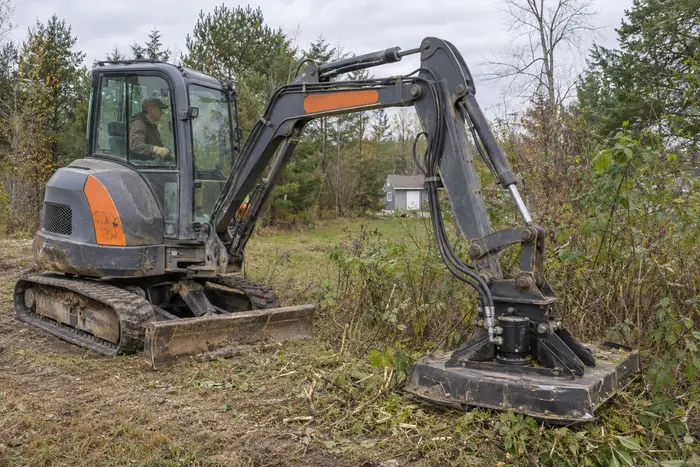
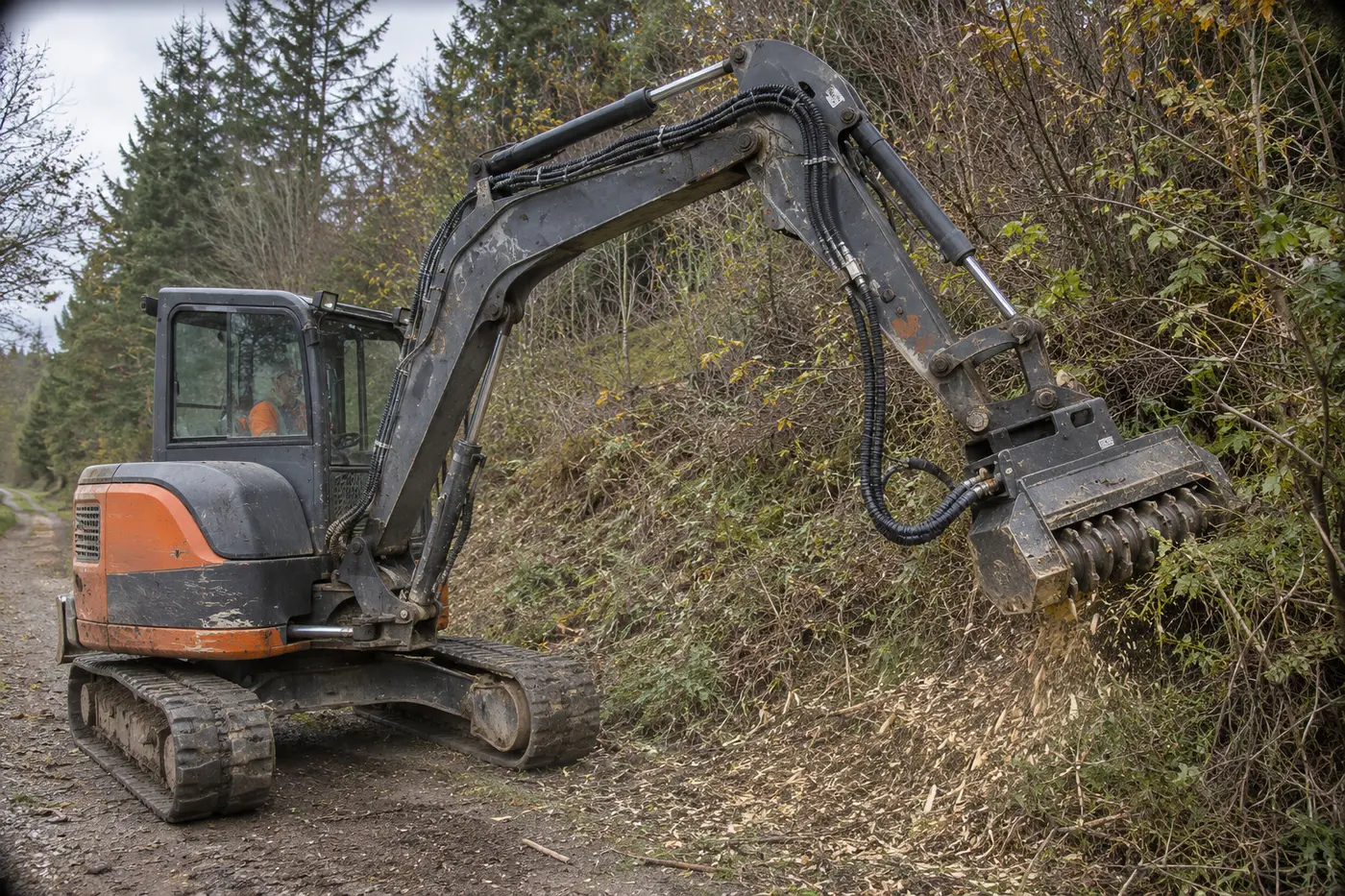
A mini excavator mulcher is a forestry head that mounts on a compact excavator's stick and shreds brush, saplings and stumps into mulch. Choose by your excavator's auxiliary flow and case drain, lift capacity, cutting width, drum or disc design and mounting. It reaches slopes and tight spots a loader can't.
Shopping for this now? Get a fit-checked, delivered quote.
Key takeaways
- Needs a rotating-tool circuit with case drain, not just a hammer line.
- Match head weight to lift capacity at full reach.
- Excavator mulchers excel on slopes and tight lots.
- Check mounting and coupler fit before ordering.
What is a mini excavator mulcher?
A mini excavator mulcher is a forestry mulching head that mounts on a compact excavator's stick and is powered by the excavator's auxiliary hydraulics. A drum with teeth spins and shreds brush, saplings and stumps into mulch. The arm gives you reach and precision. You can cut on slopes, around trees you want to keep, along fence lines and in places where a loader cannot go.
Because the excavator stays put while the arm swings, you do less driving over soft or steep ground. That makes it a good fit for trail building, utility corridors, ditch banks and tight residential lots.
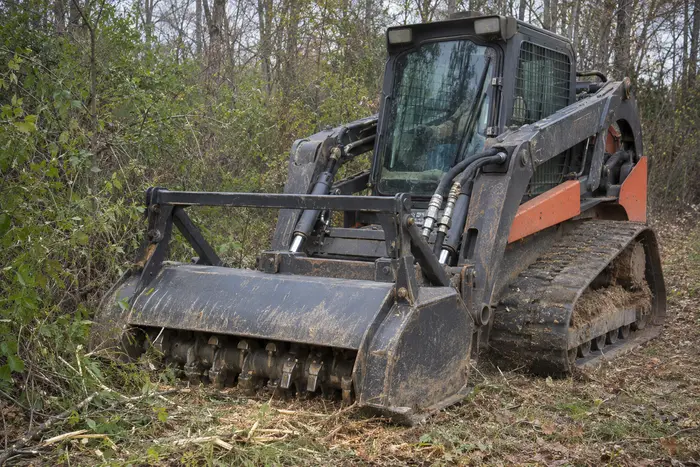
Mini excavator mulcher or skid steer mulcher?
| Question | Mini excavator mulcher | Skid steer mulcher |
|---|---|---|
| Reach | Long, with boom and stick angles | Limited to the loader's arm |
| Slopes and banks | Good; machine can stay on level ground | Needs to drive the slope |
| Precision | High; can work around keepers | Less; wide path |
| Production on open ground | Slower; swings and repositions | Faster; drives and cuts |
| Hydraulics | One-direction auxiliary circuit with case drain | Auxiliary circuit; many heads need high flow |
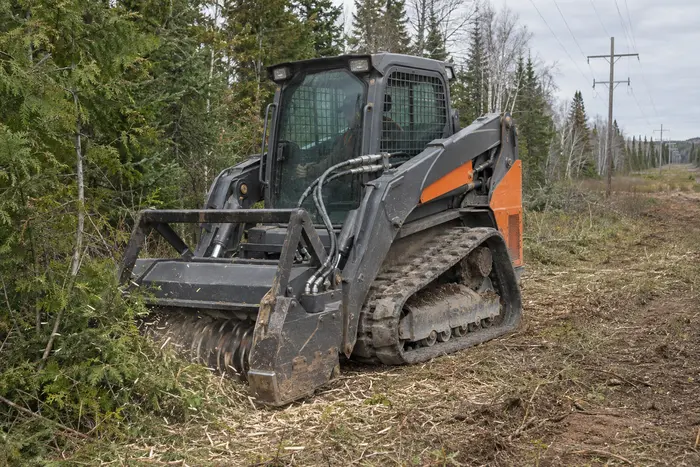
If you already own a compact excavator, a mulching head turns it into a clearing tool. If you own a loader, read our skid steer mulcher guide. Neither is better in every case. The right choice depends on terrain and your carrier.
How do you choose a mini excavator mulcher?
- Auxiliary hydraulics. Mulching heads need a steady flow of oil in one direction and a case drain return. Check that your excavator has an auxiliary circuit set up for a rotating tool, not only for a hammer or thumb. Confirm flow and pressure against the head's needs.
- Machine size and weight. Match the head's weight to the machine's lifting capacity at full reach. A head that is too heavy lifts the tracks off the ground when you stretch out.
- Cutting width. Smaller excavators suit narrow heads. A head wider than the machine can handle reduces control.
- Drum or disc. Drum heads give a finer finish. Disc heads can slice standing wood. See the disc vs drum mulcher guide.
- Tooth type and spacing. Pick teeth for your material and your soil. Dirt contact wears teeth quickly.
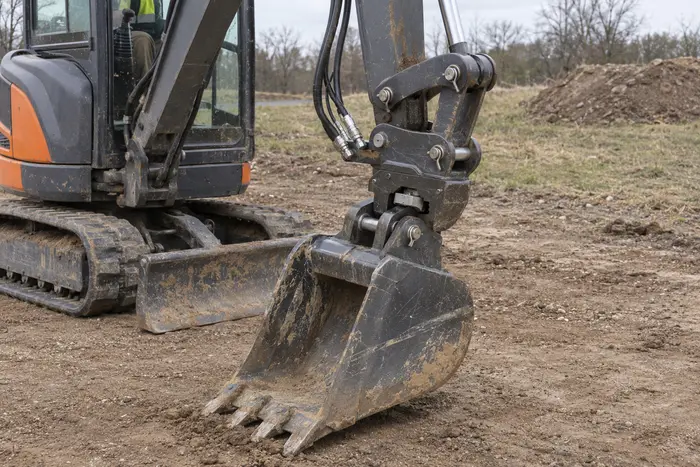
- Mounting. Pin-on or quick coupler. If your excavator has a quick coupler, confirm the head's bracket matches. Our quick coupler guide explains the options.
- Protection. A cab guard or screen helps keep debris away from the operator. Check what the maker recommends for forestry work.
Browse the excavator forestry mulchers category. If you also deal with stumps and roots, the root rakes and tree grubbers fit the same carrier.
What size excavator do you need?
Excavator size classes are set by operating weight, and mulching heads are matched to that class and its hydraulic output. Smaller compact excavators suit lighter heads and brush. Larger compact excavators carry heavier heads and handle bigger timber. Do not stretch a small machine to run an oversized head. Our mini excavator sizes and weight guide shows how classes are divided.
Technique and safety
- Inspect the work area for utilities, wells, septic systems and boundary lines before you start. In the US, call 811. In Canada, contact your provincial one-call service.
- Keep people and animals far outside the throw zone while the drum runs.
- Use the arm to sweep the head across the work area in controlled passes. Do not plunge the drum into a stump at full extension.
- Keep tracks on stable ground. Reposition before you reach past the machine's stability limit.
- Lower the head, shut off the hydraulics and stop the engine before service. Teeth and drums stay dangerous until they stop.
- Follow the excavator and attachment manuals, including lift capacity charts and slope limits.
Maintenance
Check teeth daily and replace worn or broken ones as a set. Look at drum bearings, hose routing and case drain connections. Clean wrapped vines and wire from the drum. Check the attachment's mounting bracket and pins for wear. A head that runs loose strains the stick and the coupler.
When a mini excavator mulcher is not the right tool
If you have acres of flat ground with light brush, a loader or a tractor mower will cover ground faster. If your goal is to take out stumps below grade, a stump grinder may do the job better. Mulching leaves stump remnants at ground level or above, depending on how deep the teeth reach. Decide whether you need a mulched site or a clean grade. For many sites, a combination of mulching, root raking and grading gives the best result.
Planning the job before you start
Walk the site and decide what stays. Tag trees you want to keep, mark property lines and look for fence wire, old foundations and buried scrap. Metal and concrete destroy teeth and can throw dangerous fragments. Plan where the excavator will stand and how it will move. A mulching head is happiest working a pass at a time from a stable position, not from a machine that is constantly reaching at the edge of its range.
Think about the finish. Mulching leaves a layer of chips on the ground. That layer protects soil and slows erosion, which helps on slopes. If you need a bare, graded surface for building, plan time to rake or scrape the mulch away afterward. A grading beam or a root rake on the same carrier can help finish the site.
What to tell us before you order
- Your excavator make, model, year and operating weight class.
- Whether it has an auxiliary circuit for rotating tools, with case drain.
- Whether it has a quick coupler and which type.
- The largest tree or stump you plan to cut.
- Terrain, such as slope, wet ground or rock.
With that, a person can confirm fit against the maker's specs and check whether the head, the hydraulics and the mounting all agree.
Rent, buy or hire a crew?
A one-time lot clearing may be cheaper to hire out or rent. A mulcher that works a few days a year can cost more to own than it saves. If you clear regularly, own the head and set aside a budget for teeth and hoses. Whichever way you go, a head that does not suit the carrier's hydraulics is a poor deal, so check fit first. Compare the land clearing cost guide and the forestry mulching explainer to see where each method makes sense.
Get the right fit the first time
Send us your machine make, model and year and tell us the job. A person checks the attachment against the maker's specs, then you get a fit-checked quote with delivered pricing before you pay. The supplier ships direct, and warranty terms, if any, are written on your quote.
Questions buyers ask
Can a mini excavator run a forestry mulcher?
Yes, if it has an auxiliary hydraulic circuit with enough flow and pressure, a case drain return, and the lifting capacity to carry the head at full reach. Compare the head's needs with your machine's specs. A person can check fit from your make, model and year.
Is a mini excavator mulcher better than a skid steer mulcher?
It depends on terrain. An excavator mulcher reaches slopes, ditch banks and tight lots and works around trees you want to keep. A skid steer mulcher covers open flat ground faster. Choose by terrain and by the carrier you already own.
What hydraulics does a mini excavator mulcher need?
Most need a steady one-direction circuit with a low-restriction return and a case drain line. A circuit set up only for a thumb or hammer may not have these. Check the maker's flow and pressure requirement and your excavator's auxiliary settings before you order.
How big a tree can a mini excavator mulcher cut?
The maker lists a maximum diameter for each head. It depends on the head size and the carrier. Staying within that rating protects the teeth, drum and motor. Larger timber needs a bigger head on a bigger machine.
Does a mulcher grind stumps on a mini excavator?
A mulcher can grind stumps down to around ground level, depending on the head and how deep the teeth reach, but it does not remove roots below grade. For stumps that must be taken out deeper, a stump grinder or a grubbing tool may suit better, depending on the site.