Land clearing guide
How Much Does Land Clearing Cost Per Acre?
Quick answer
Land clearing cost per acre depends on the method, the vegetation, the soil and the terrain. One extension source cites about $850 per acre for mulching and about $1,650 per acre for conventional clearing, from a 2008 study. Hourly rates of $200 to $1,200 are also reported. Get local quotes.
Shopping for this now? Get a fit-checked, delivered quote.
Key takeaways
- Cost swings widely with vegetation, terrain, soil and the finish you want.
- One extension source cites about $850 per acre for mulching and about $1,650 for conventional clearing (2008).
- Hourly rates reported there run from about $200 to $400 and up to $1,200.
- An acre can take from one to eight hours depending on conditions.
- Rocky soil is a poor fit for mulching.
Land clearing cost per acre doesn't have a single answer. It depends on what is growing there, how the ground lies, what equipment is used and how clean you want the result. This page gives sourced benchmarks, explains what moves the cost and shows how owners with their own machines can think about the job. These are market figures, not what we charge.
What does land clearing cost per acre?
A Virginia Tech Extension publication on clearing and mulching cites a 2008 study at the Southern Piedmont Agricultural Research and Extension Center. It found mulching cost about $850 per acre, against about $1,650 per acre for conventional clearing. The page attributes that to personal records, not a formal report, and the figures are old. Treat them as a ratio, not a current price: in that comparison, mulching cost roughly half as much as conventional clearing.
The same page reports fees for mulching and clearing that start around $200 to $400 per hour and can reach $1,200 per hour. Larger equipment costs more per hour but works faster. It also says that, depending on conditions, an acre may take from one to eight hours to clear.
What drives the cost?
| Factor | Effect on cost |
|---|---|
| Vegetation type and density | Pine is easier to process; dense hardwood and large stems slow the work |
| Site size | Small sites often cost more per acre, because transport and setup costs spread over fewer acres |
| Soil | Very rocky sites are poorly suited to mulching and wear tools |
| Terrain | Steep or wet ground slows machines and adds risk |
| Landowner preferences | A cleaner, more finished look takes more passes |
| Method | Mulching, grubbing, pushing and hauling, and burning all have different costs |
What are the main clearing methods?
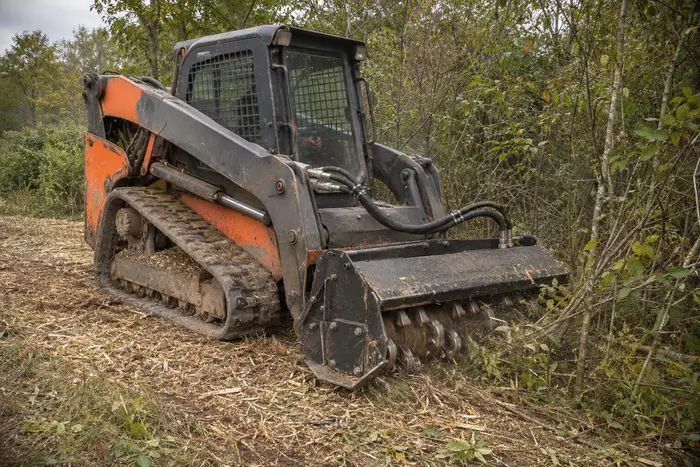
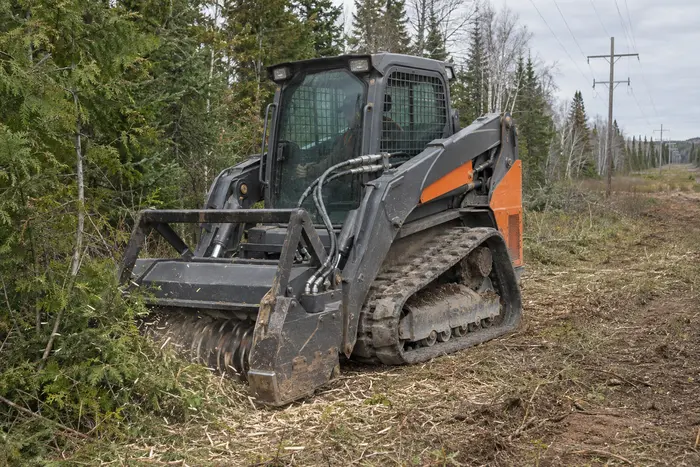
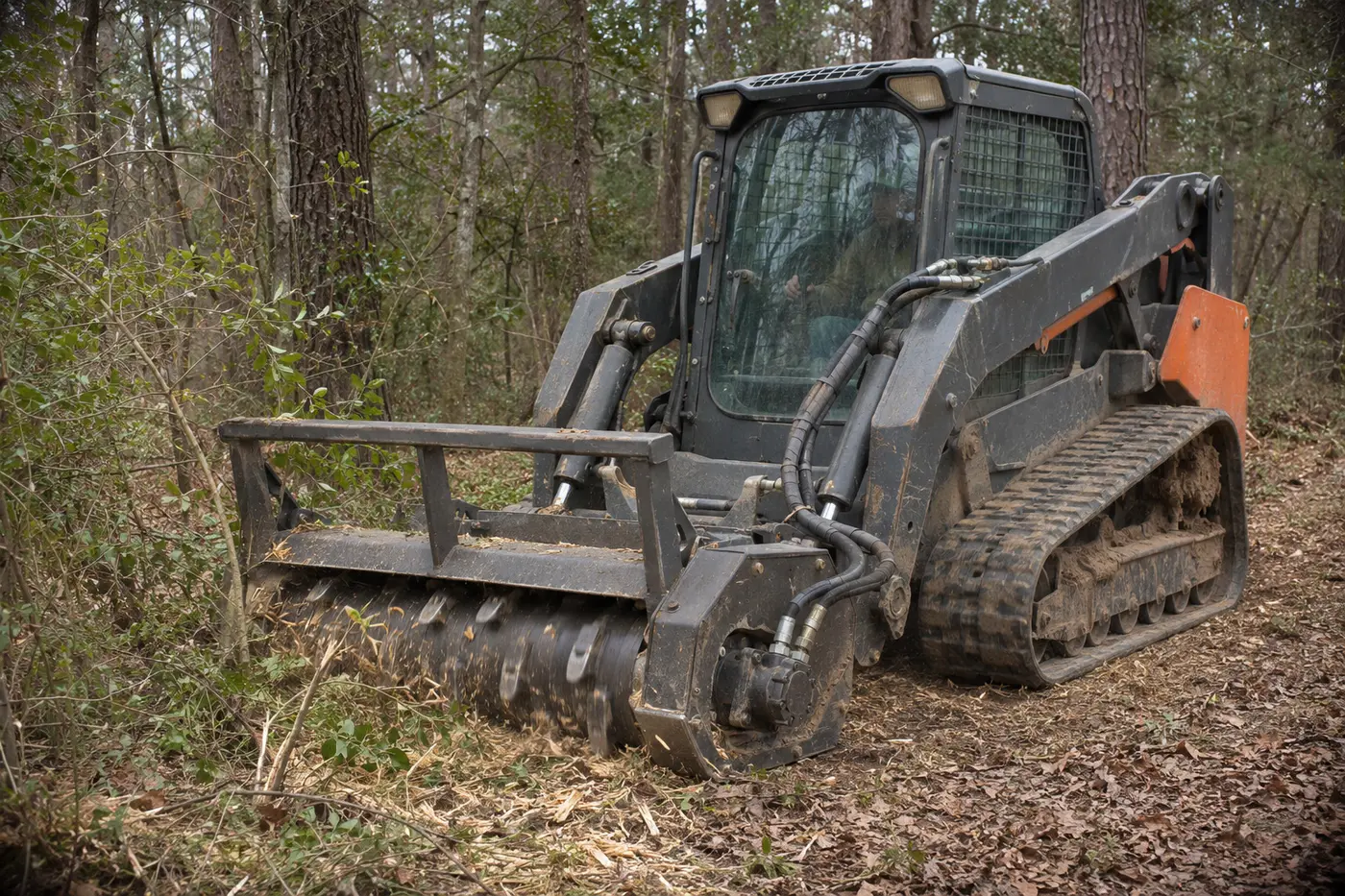
Forestry mulching grinds trees and brush on site into a mulch layer. It leaves stumps cut low and doesn't need hauling. Conventional clearing pushes or grubs out stumps and roots, piles debris and then hauls or burns it. Each has trade-offs. Mulching is fast and leaves soil in place but can leave stumps and a mulch mat. Conventional clearing removes roots but moves more soil and needs a disposal plan. Read what is forestry mulching for the process, and disc mulcher vs drum mulcher for tool types.
How does it compare to doing it yourself?
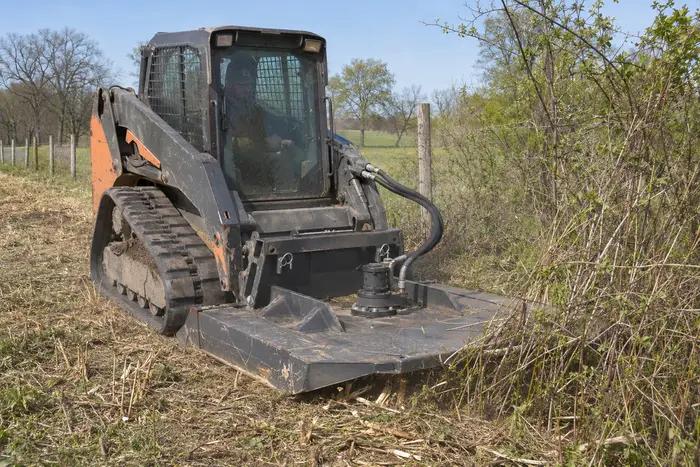
If you own a skid steer or excavator, you can clear some land yourself with the right tool. A brush cutter handles brush and small trees. A mulcher handles larger stems. A grapple or root rake handles piling. Time is the main cost: the one to eight hours per acre range quoted above is for professional equipment, and a smaller machine takes longer. Fuel, tooth and tine wear, and your own time all count. Browse skid steer brush cutters and skid steer mulchers to compare tools.
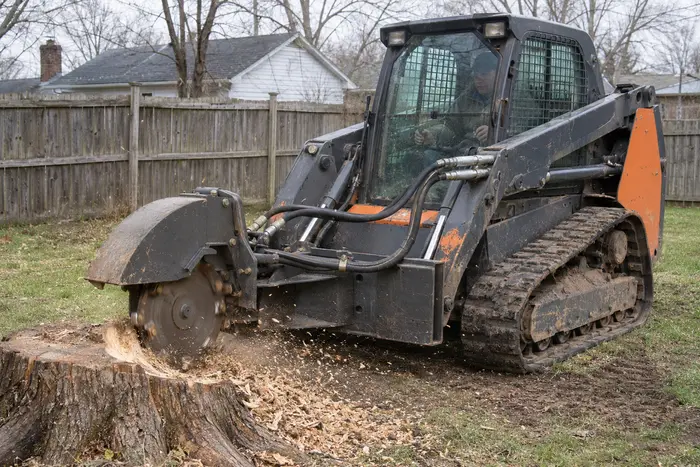
For small jobs, see how to clear brush with a skid steer. For tree and stump removal costs, see stump grinding cost.
How do you estimate your own job?
- Walk the site and note vegetation type, stem size and density.
- Note rocks, wet areas, slopes and access for equipment.
- Decide the finish: mulch left in place, stumps cut low, or ground cleared and graded.
- Pick the method: mulching, grubbing and piling, or a combination.
- Ask for quotes by the acre and by the hour so you can compare.
- Ask what the price includes: stump work, hauling, disposal, equipment transport.
The Virginia Tech page doesn't say what its per-acre or hourly fees cover, which is why you should ask.
What other numbers float around online?
You will see many ranges from cost guides and contractor sites, and they vary widely by region and site. We haven't used them here because they are not from fetched sources we can verify, and they often leave out grading, stump removal and hauling. Use them only as rough prompts for what to ask. For a real number, get written quotes for your site from local contractors. State extension offices are a good place to look for current regional guidance.
What should you check on permits and rules?
Clearing land can trigger permits. Depending on where you are, rules may cover wetlands, streams, protected trees, erosion control, nesting seasons and burning. Check with your county, state or province before you start. Mark underground utilities and property lines. If you hire a contractor, ask for proof of insurance and a written scope, and ask how they handle erosion control after the work. Leaving bare ground can lead to runoff, so many owners seed or mulch the area soon after clearing.
Which attachments matter for clearing?
For brush and small trees, a brush cutter or mulcher on a skid steer or excavator does the bulk of the work. A grapple, a root rake or a tree puller removes roots and piles debris. Matching the tool to the machine's hydraulics is the key to making it work. Browse forestry mulchers for excavators for the larger option. Send us your machine details for a fit check before you order.
What does a mulching job look like in practice?
A mulching crew walks the site first to mark property lines, utilities, wet spots and trees to keep. The machine then works in strips, grinding stems at or near ground level and leaving a layer of chips. A skilled operator can leave desirable trees alone and protect the soil structure. Stumps stay in the ground, cut low, and break down over time unless you remove them.
After mulching, many owners seed, plant or grade the area. The mulch layer helps hold soil and moisture, but a thick mat can slow seed germination if left too deep. If you plan to build, you will still need stump and root removal in the footprint, which adds cost. Ask the contractor what the finished ground will look like, and whether they leave chips on site or haul them away.
When is conventional clearing the better choice?
Choose conventional clearing when you need stumps and roots out, such as for a building pad, a pond, a drain field or a driveway. Excavators and dozers push or grub trees out, pile the debris and then burn or haul it. It moves more soil and can leave bare ground that needs erosion control. It costs more in the 2008 comparison, but it leaves a site that is ready to build. Pick by end use, not just the cheapest number.
For tool types, read disc mulcher vs drum mulcher before you choose a mulcher.
Get the right fit the first time
Mulchers, brush cutters and grapples all depend on your machine's hydraulic flow and rated capacity. Send us the make, model and year and a person will check fit against the maker's specs. You approve a delivered price before you pay, and the supplier ships direct. Get a fit-checked quote or call 1-888-245-1555.
Questions buyers ask
How much does land clearing cost per acre?
It varies widely. One extension source cites about $850 per acre for mulching and about $1,650 for conventional clearing, from a 2008 study. Hourly fees of $200 to $400, up to $1,200, are also reported. Get local quotes for current numbers.
Is forestry mulching cheaper than conventional clearing?
In the 2008 study cited by Virginia Tech Extension, mulching cost about half as much per acre. Results depend on vegetation, soil and terrain. Very rocky ground is a poor fit for mulching, which can change the comparison.
How long does it take to clear an acre?
The same extension source says an acre may take from one to eight hours, depending on vegetation, site size, soil, terrain and how clean you want the result. Smaller machines take longer than large professional units.
What makes land clearing cost more?
Dense or large vegetation, rocky or wet soil, steep terrain, small sites with high setup costs, and a high finish standard all add cost. Hauling, stump removal and disposal can also add to the total depending on what the quote includes.
Can I clear land myself with a skid steer?
For brush and small trees, yes, with a brush cutter or mulcher and the right hydraulic flow. Larger stems take bigger tools and more time. Check permits first, mark utilities, and match every attachment to your machine's capacity and hydraulics.