Excavator guide
Parts of an Excavator Explained
Quick answer
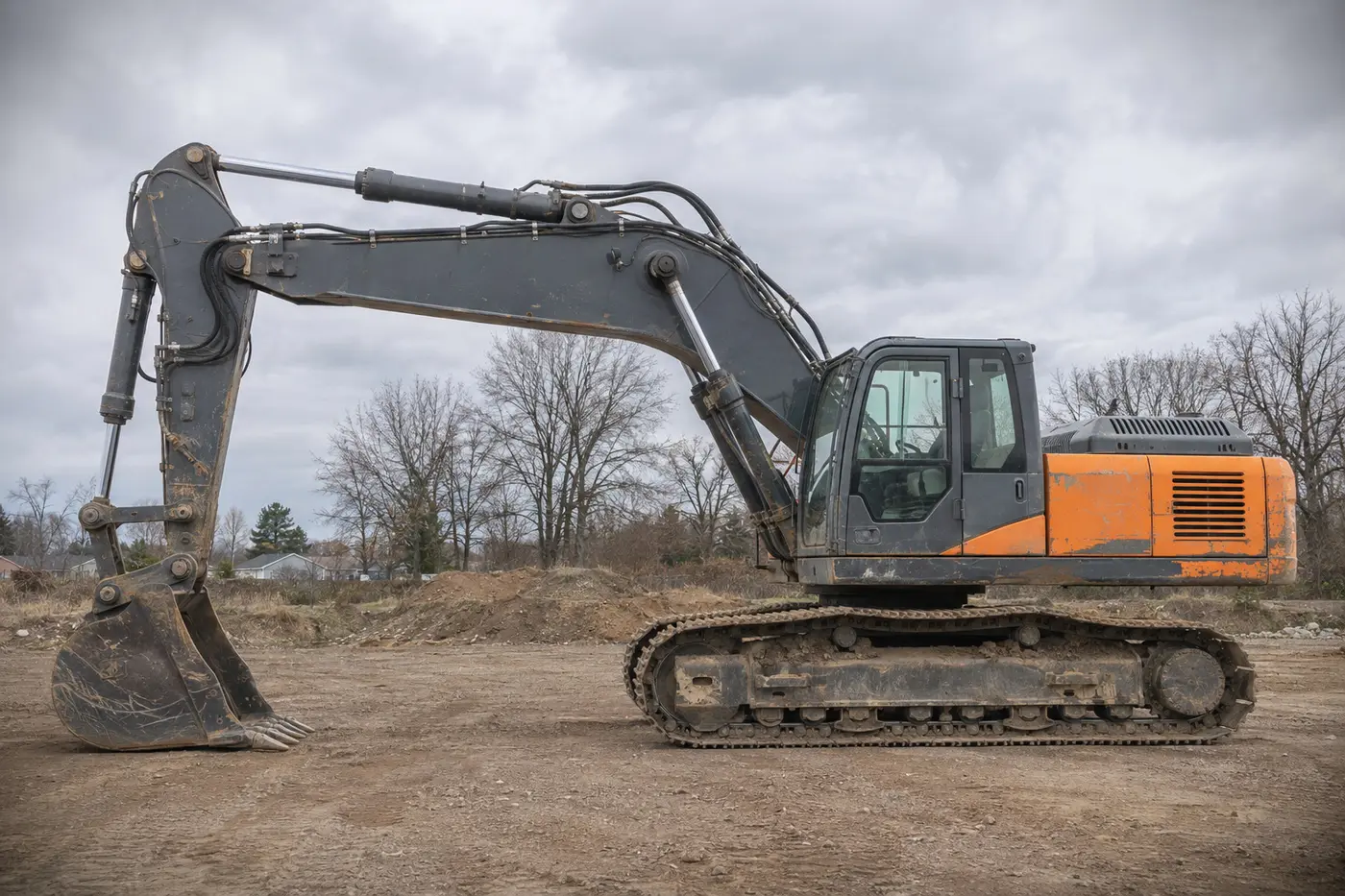
The main parts of an excavator are the boom, the stick, the bucket, the cab and house, the counterweight and the undercarriage with its tracks. The boom raises and lowers, the stick pulls the bucket through the ground, and the house swings on a center pin above the tracks.
Shopping for this now? Get a fit-checked, delivered quote.
Key takeaways
- Boom, stick and bucket form the digging arm, called the work group.
- The house holds the cab, engine, counterweight and tanks and slews on a center pin.
- The undercarriage includes tracks, track frame and final drives.
- Hydraulic cylinders and motors power every movement.
- Attachments mount at the end of the stick, often through a quick coupler.
An excavator has a few big parts and a lot of small ones. Knowing the names helps when you read a manual, order a bucket or talk to a service shop. This guide covers the main parts, what each does and where attachments fit. It follows the standard naming used in general references.
What are the main parts of an excavator?
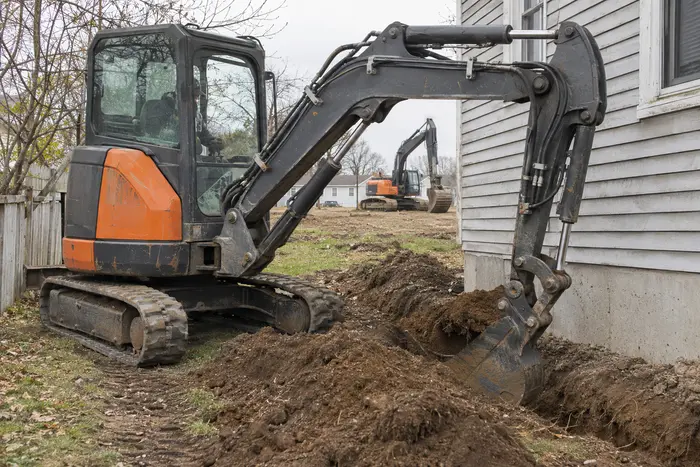
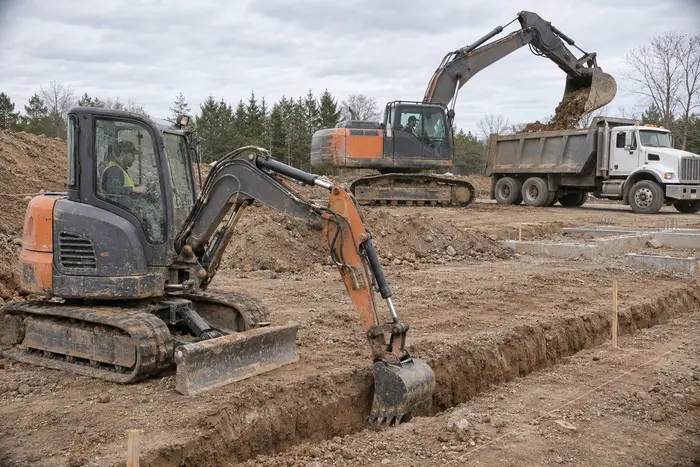
An excavator has three big systems. The digging arm, also called the work group, is the boom, the stick and the bucket. The house is the rotating upper body that holds the cab and engine. The undercarriage is the tracked base. A set of hydraulic cylinders, motors and hoses connects it all and does the work.
| Part | What it is | What it does |
|---|---|---|
| Boom | Large arm attached to the house | Provides the up-and-down movement |
| Stick (dipper arm) | Arm attached to the end of the boom | Provides the digging movement that pulls the bucket through the ground |
| Bucket | Tool on the end of the stick | Digs, scoops and dumps |
| House | Rotating upper platform | Carries cab, engine, counterweight and tanks |
| Cab | Operator station | Holds the seat, controls and protective structure |
| Counterweight | Heavy mass at the rear of the house | Balances the digging arm and load |
| Undercarriage | Tracks, track frame, final drives | Carries and moves the machine |
What does the boom do?
The boom attaches to the house and provides the up-and-down movement. One or more hydraulic cylinders raise and lower it. Some machines have a fixed boom, others have an offset or swing boom that moves sideways, which helps dig along walls or fences. Boom length affects how far and how deep the machine can reach.
What does the stick do?
The stick, also called the dipper arm, attaches to the end of the boom. It provides the digging movement needed to pull the bucket through the ground. A hydraulic cylinder moves the stick in and out. Stick length changes reach and breakout force. A longer stick reaches farther but lifts less at full extension. Many machines offer a choice of stick lengths.
What does the bucket do, and how does it attach?
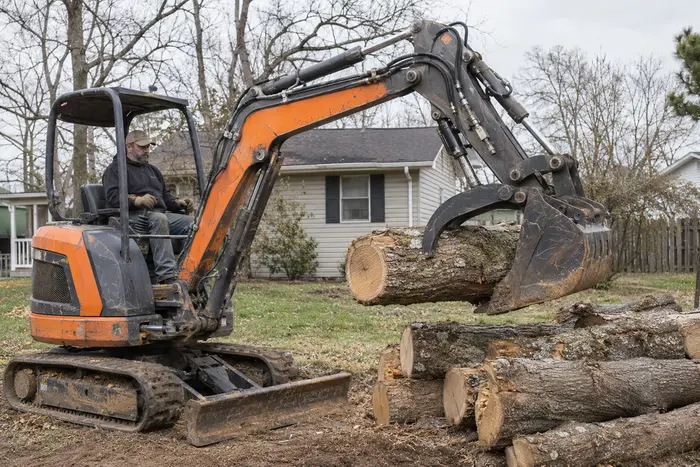
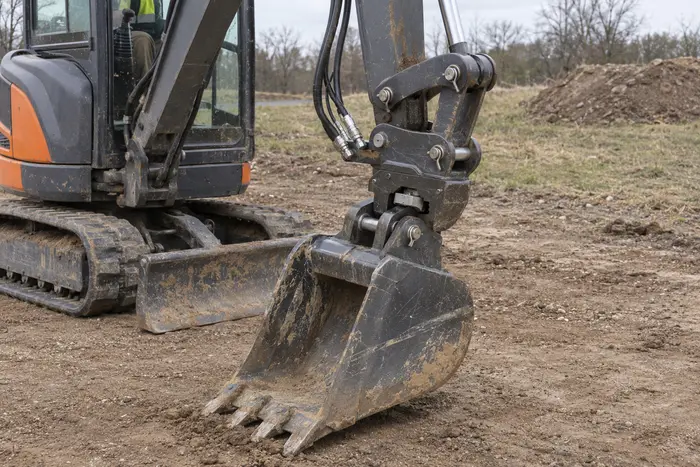
The bucket mounts at the end of the stick. A general-purpose bucket usually has hardened side cutters and teeth to break hard ground. A third cylinder, the bucket cylinder, curls it in and out. The bucket connects through pins or a quick coupler, which lets the operator swap tools. See excavator buckets for styles, and the quick couplers category for mounting systems. The guide mini excavator quick coupler guide explains the options.
What is the house and what is inside it?
The house is the rotating platform on the undercarriage. According to the standard description, it includes the operator cab, the counterweight, the engine and the fuel and hydraulic oil tanks. It attaches to the undercarriage through a center pin. A hydraulic swivel and a swing motor let the house rotate, and the machine can slew 360 degrees without limit. That is what lets an excavator dig on one side and dump on the other without moving the tracks.
What does the counterweight do?
The counterweight is part of the house. It balances the weight of the arm and the load. Conventional excavators have a counterweight that swings out past the tracks, which is a problem in confined areas. Zero tail swing designs, which arrived in the 1990s, keep the counterweight within the width of the tracks as the machine turns. Compact excavators often use this design so they can work close to walls.
What is in the undercarriage?
The undercarriage includes the tracks, track frame and final drives. Hydraulic motors and gearing drive each track. Rollers, idlers and sprockets guide and move the track chain or rubber track. Some machines have a dozer-style blade at the front, which is used for backfilling, leveling and stabilizing the machine while digging. Undercarriage wear is a major maintenance cost, so check track tension, rollers and sprockets on schedule.
Which parts do attachments change?
Attachments change what happens at the end of the stick. A thumb adds a gripping claw against the bucket. Augers, breakers, grapples, tiltrotators and compactors replace the bucket and use auxiliary hydraulics. Learn about thumbs and the mini excavator thumb guide to see how the hinge and cylinder work.
How do you name parts when you order or service?
- Give the machine make, model and year, and the serial number if you have it.
- Name the part by its role: boom cylinder, stick pin, bucket link, track roller, idler.
- Measure pin diameters and spacing for tool changes.
- Check the manual's parts diagram for the exact name and number.
Names vary slightly between makers. Some call the stick the arm or dipper, and the house the upper structure. If a name isn't on your manual's diagram, ask the maker for the equivalent.
How does size change the parts?
The parts are the same from a compact machine to a large one, but sizes and details change. Compact excavators are described as machines up to about 8.5 tonnes operating weight. Smaller units may have retractable tracks, a smaller counterweight and fewer auxiliary circuits. Larger machines have heavier booms, bigger cylinders and more complex hydraulics. For size classes, read excavator sizes, and for the machine families see types of excavators.
What do the hydraulic parts do?
Every movement on an excavator comes from hydraulic fluid acting on cylinders and motors. Cylinders extend and retract to move the boom, stick and bucket. Motors turn the tracks and swing the house. A main pump, driven by the engine, sends oil through control valves to each function. Hoses and steel lines carry it. Leaks, worn seals and dirty oil are the common failure points, so check hoses and fittings for rubbing, and keep the oil clean and at the right level.
Controls inside the cab, usually two joysticks and a pair of travel levers or pedals, direct the valves. Many machines also have auxiliary circuits for attachments such as thumbs, augers and breakers.
What are the wear parts to watch?
Bucket teeth, cutting edges, pins, bushings, track rollers and track pads or rubber tracks wear fastest. Grease the pins on the schedule in the manual. Replace teeth before the adapter is damaged. Check track tension and look for uneven wear on rollers and sprockets. Wipe the quick coupler and check its lock each time you change a tool, because that connection holds a heavy, moving load over your head and the machine.
Get the right fit the first time
Attachment fit depends on your stick, pins, coupler and hydraulics. Send us the make, model and year and a person will check fit against the maker's specs. You see the delivered price on your quote before you pay. The supplier ships direct, and warranty terms, if any, are written on your quote. Get a fit-checked quote or call 1-888-245-1555.
Questions buyers ask
What are the main parts of an excavator?
The boom, stick and bucket form the digging arm. The house holds the cab, engine, counterweight and tanks. The undercarriage includes tracks, track frame and final drives. Hydraulic cylinders and motors power the movements. Attachments mount at the end of the stick.
What is the difference between the boom and the stick?
The boom attaches to the house and provides the up-and-down movement. The stick attaches to the end of the boom and provides the digging movement that pulls the bucket through the ground. Together with the bucket they form the digging arm.
What is in the house of an excavator?
The house is the rotating upper platform. It holds the operator cab, counterweight, engine and the fuel and hydraulic oil tanks. It attaches to the undercarriage with a center pin and can slew 360 degrees.
What does the counterweight do on an excavator?
It balances the weight of the arm and the load so the machine stays stable. Zero tail swing designs keep the counterweight within the track width as the machine turns, which helps in confined spaces.
What parts make up an excavator undercarriage?
The undercarriage includes the tracks, track frame and final drives. Hydraulic motors and gearing drive each track. Rollers, idlers and sprockets guide the track, and some machines add a dozer-style blade to the front. Check wear regularly.