Telehandler guide
What Is a Spreader Bar Attachment? Uses and Sizing
Quick answer
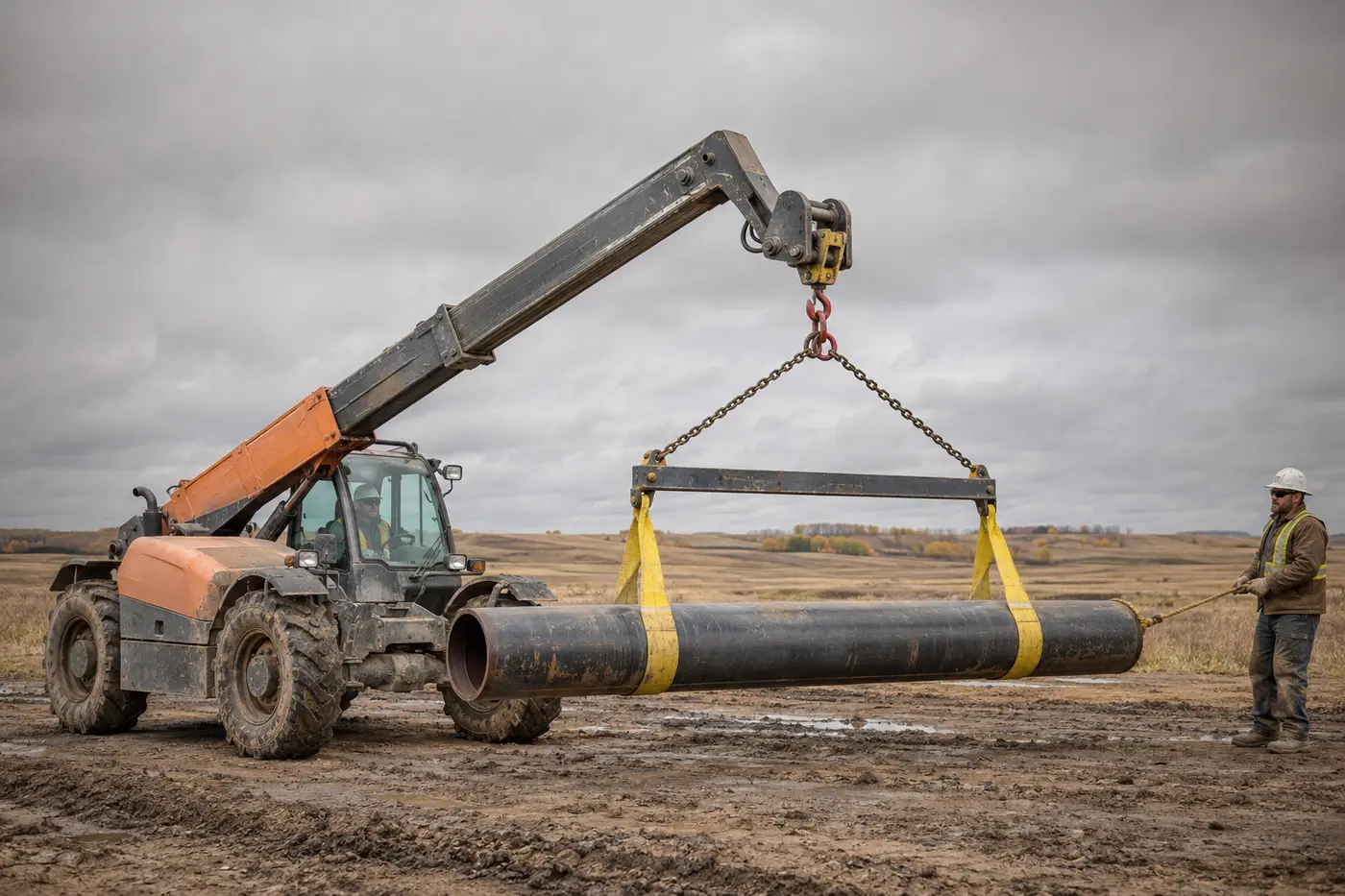
A spreader bar attachment is a rigid beam that hangs from a machine's boom or carriage and spreads two or more lift points apart. It lets you lift long, awkward loads such as pipe, beams, panels and trusses with slings kept near vertical, which keeps the load stable and reduces sling stress.
Shopping for this now? Get a fit-checked, delivered quote.
Key takeaways
- A spreader bar spreads the lift points so slings pull straight down, not inward.
- It is a below-the-hook device: it hangs from a hook, fork pocket or boom point.
- The bar, the slings, the shackles and the machine all have separate capacities, and the lowest one governs.
- Mount type, length and rated load must be matched to your machine's load chart.
A spreader bar attachment is a rigid horizontal beam that carries two or more lift points. It hangs from the machine's boom, carriage or hook, and slings drop from each end to the load. By spreading the lift points, the bar keeps the slings close to vertical. That protects the load from being squeezed and keeps the sling forces under control. It is a common tool for long loads on telehandlers, excavators, forklifts and cranes.
What does a spreader bar do?
If you lift a long pipe with a single hook and two slings meeting at a point, the slings pull inward on the load. That can crush thin-walled pipe, bend a panel or slide a load. A spreader bar takes that sideways pull. The slings hang straight down from the ends of the bar, and the bar carries the compression. The result is a straighter, more predictable lift.
It also helps with balance. Two lift points at the right spacing keep a long load level. Some bars let you move the lift points or add a center point for a heavier or longer load.
Spreader bar vs lifting hook vs lifting beam
These three get mixed up. They are related but different.
| Tool | What it does | Best for |
|---|---|---|
| Lifting hook | A single point you rig to with a sling or chain | Compact, balanced loads with one lift point |
| Spreader bar | Carries compression and spreads two or more lift points | Long loads that need near-vertical slings |
| Lifting beam | Carries the load in bending between lift points | Heavy loads where the beam is the structure |
The terms are sometimes used interchangeably in shops, so read the product description and the rated load, not just the name. For a single-point option, see our lifting hooks.
Where spreader bars are used
- Construction. Steel beams, trusses, precast panels and long pipe sections.
- Utilities. Pipe, conduit, poles and culverts that must stay level.
- Farm and fabrication shops. Long tanks, panels and frames.
- Material yards. Lumber, rebar bundles and long stock.
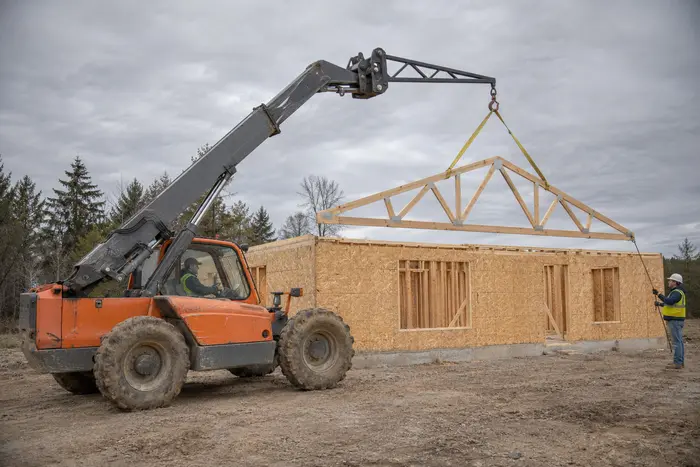
On a telehandler, a spreader bar normally hangs from a lifting hook or from a boom attachment. On an excavator it hangs from the machine's rated lifting point, often a lifting eye on the coupler or bucket linkage. Always check that the machine is approved for lifting suspended loads. Many machines need a lifting rating for hook work, and some require added safety devices, such as hose-burst check valves or an overload warning. Our guide to telehandler attachments covers what a telehandler can carry.
How to size a spreader bar
Four numbers decide the right bar.
- Load weight. Include the rigging. The bar's working load limit must exceed the load plus slings and shackles.
- Load length and lift point spacing. The bar should be about as long as the spacing between lift points. A bar that is too short pulls the slings inward.
- Sling angle. Slings that pull at a shallow angle carry much more tension than the load weight suggests. Keep them as close to vertical as the job allows.
- Headroom. The bar, slings and load all need clearance under the boom and over obstacles.
Then check the capacity chain. The bar, the slings, the shackles and hooks, and the machine at that boom position all have limits. The lowest one rules. On a telehandler, the load chart shows the machine's capacity at each reach and height, and the rigged load must stay inside that chart with the attachment weight included. See our guide to what a telehandler is for how load charts work.
Rating, marking and inspection
A proper bar carries a marked rated capacity, a serial number and the maker's name. The tag should survive in service. If the tag is missing, assume the bar is unrated and do not use it. Industry standards for below-the-hook lifting devices cover design, marking and inspection, and your jurisdiction may require them. Before each use, look for bent or cracked welds, elongated holes, worn shackles and corroded or kinked slings. Take a damaged bar out of service.
Keep a written inspection record if your site requires one, and do not modify a bar by welding or drilling it without engineering approval from the maker.
Safe lifting basics
- Follow the machine's operator manual and rated capacity at the actual reach and height.
- Use a qualified rigger for suspended loads, and a signal person if the operator cannot see the load.
- Keep people out from under and around the load.
- Lift a few inches first to check balance and that slings are seated.
- Do not use a tipped, bent or modified bar, and never exceed the marked limit.
- Avoid dragging or side-pulling the load with the boom.
A load swinging on a hook behaves very differently from a load carried on forks. Take it slow, use tag lines when appropriate, and wait for the load to settle.
Choosing the mount
Mount style sets how the bar attaches to the machine. Common choices include a fork-mounted bar that slides on carriage forks, a hook-hung bar that you rig from a boom hook, and a quick-attach version for a loader or telehandler carriage. Check that the mount matches your machine's carriage or coupler, and whether the lifting point on the bar is rated for overhead lifting. If you run a skid steer, see our skid steer adapters and note that a lifting device must still be approved for use on that machine.
Browse our telehandler spreader bars to compare styles and lengths.
Spreader bar mistakes to avoid
- Rigging to the wrong point. Only use the lift points the maker designed for overhead lifting. Do not sling around the bar itself unless the manual says so.
- Counting only the load. The bar, slings, shackles and any hook block all add weight. Add them before you check the load chart.
- Using a bar too short for the load. The slings then angle inward and pull on the load, which defeats the purpose.
- Mixing parts. Use slings and shackles with their own markings and ratings. A strong bar with a weak shackle is still a weak lift.
- Skipping the test lift. Raise the load a few inches, pause, and look at balance and sling seating before you go higher.
Fixed or adjustable?
A fixed bar has set lift points and a known rating, which suits repeat jobs where you lift the same load. An adjustable bar has several attachment points or a sliding section so you can match different load lengths. Adjustable bars are flexible, but the rating can change with the setting, so read the capacity table for each position. If you lift one product all day, a fixed bar is simpler. If your loads vary, an adjustable bar saves buying several.
Get the right fit the first time
Tell us your machine's make, model and year and the loads you lift. A person checks the fit against the maker's specs and the rated capacity, and you approve a delivered price before you pay. Get a fit-checked quote.
Questions buyers ask
What is a spreader bar used for?
A spreader bar spreads two or more lift points on long or wide loads, such as pipe, beams, panels and trusses. It keeps the slings near vertical, so the load is not squeezed inward. It also helps keep the load level during the lift.
What is the difference between a spreader bar and a lifting beam?
A spreader bar carries compression between the slings, so the slings hang straight down. A lifting beam carries the load in bending, like a beam. The terms are often mixed up in practice, so check the manufacturer's description and the marked rated load.
Can I use a spreader bar on a telehandler?
Often yes, usually hung from a hook or fitted to the carriage, but only if the machine is approved for suspended loads. Include the bar and rigging weight in the load, and stay inside the load chart for the actual reach and height.
How long should a spreader bar be?
Match the bar to the spacing between your lift points, so the slings hang near vertical. A bar that is too short pulls the slings inward and can bend or crush the load. Check the rated load for that length with the maker.
How do I inspect a spreader bar?
Before each use, check the rating tag, look for cracks at welds, bent members, elongated holes, worn shackles and damaged slings. Remove any unrated or damaged bar from service. Follow your site's inspection rules and the maker's instructions.