Land clearing guide
How Wood Chippers Work: Drum vs Disc and Sizing
Quick answer
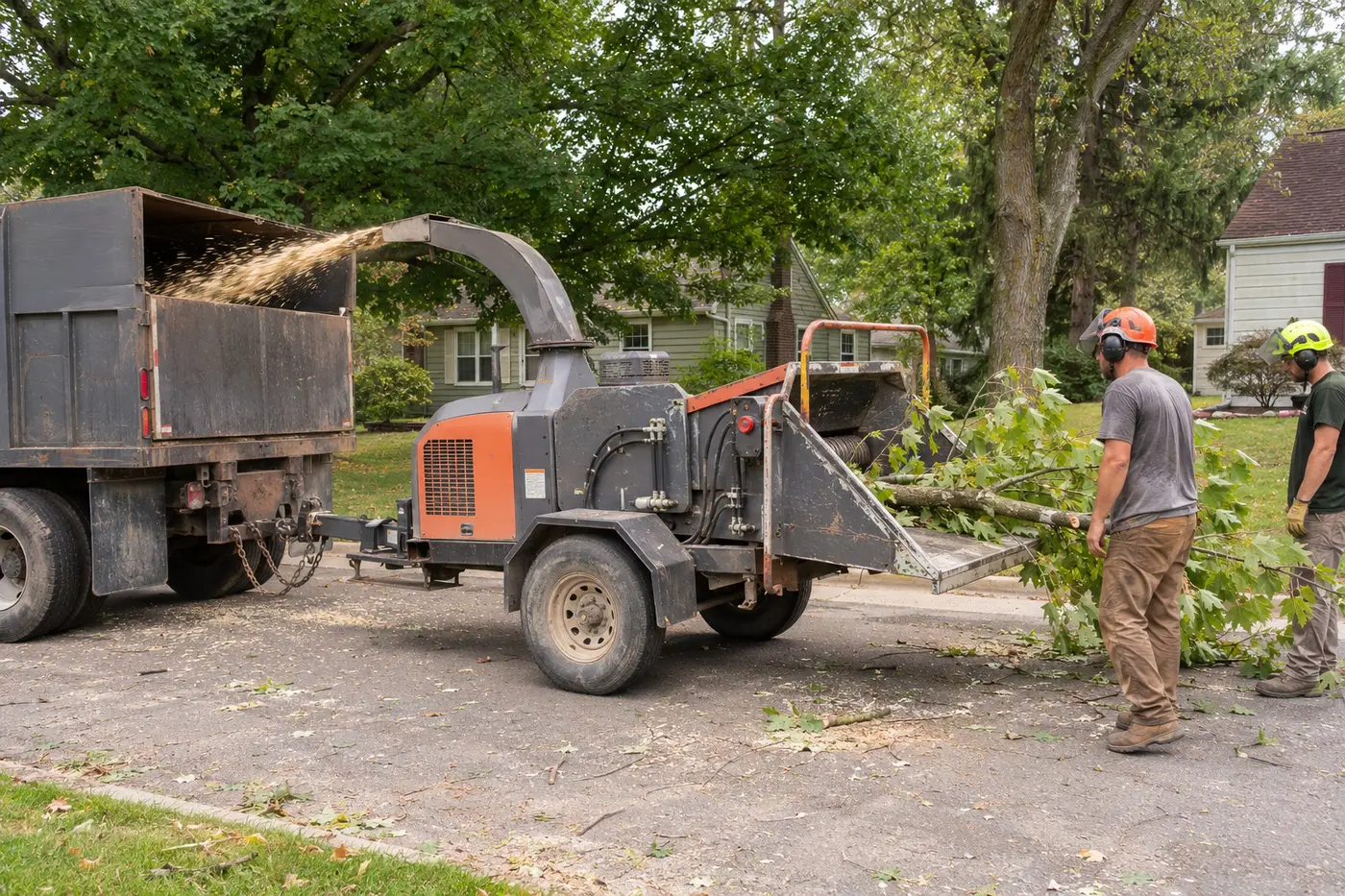
A wood chipper feeds branches into a hopper, pulls them in with a feed roller or the spinning rotor, and cuts them into chips with knives mounted on a drum or disc. The chips leave through a discharge chute. Drum and disc chippers differ in how the rotor is built and fed.
Shopping for this now? Get a fit-checked, delivered quote.
Key takeaways
- Every chipper has four parts: hopper, feed system, cutting rotor with knives, and discharge chute.
- Drum chippers pull wood in with a spinning drum; disc chippers use a flywheel-style disc with blades.
- Size by the largest branch diameter you plan to feed, not by horsepower alone.
- Sharp knives and a clear feed path matter more than the engine for chip quality and speed.
People ask how do wood chippers work because the machine looks like it swallows a branch whole. The process is simple. A hopper guides the wood in, a feed system pulls it forward, a spinning rotor with knives cuts it into chips, and a chute throws the chips out. What changes between machines is the type of rotor and how it feeds. This guide covers the parts, the two main designs, and how to size one.
The four parts of a wood chipper
- Hopper (infeed). A funnel-shaped opening that guides branches toward the cutters. Its size sets the largest log you can feed.
- Feed system. Either a pair of hydraulic feed rollers that grip and pull, or the rotor itself, which pulls the wood in as it cuts.
- Cutting rotor with knives. A drum or a disc with replaceable blades. It rotates fast and shears the wood into chips.
- Discharge chute. Throws the chips into a pile, a truck or a trailer. A swivel chute lets the operator aim them.
Power comes from an engine, a PTO from a tractor or hydraulic flow from a loader. Some chippers add a hydraulic winch to pull in heavy limbs.
Disc chippers: how they work
A disc chipper uses a heavy disc, like a flywheel, with blades mounted on its face. The wood enters at an angle and meets the spinning blades. The blades shear the wood and the chips are flung out through the chute by flanges on the disc. Disc chippers rely on the stored energy of the heavy flywheel to cut. Published descriptions put the diameter capacity of commercial disc chippers at roughly 6 to 18 inches (15 to 45 cm).
Disc chippers tend to make a cleaner, more uniform chip, and they work best when fed straight. Many smaller chippers for yard use are disc-type, because the design is simple.
Drum chippers: how they work
A drum chipper uses a large steel drum parallel to the hopper, turning toward the chute. Blades are mounted on the outer surface of the drum. As the drum spins it cuts the wood and propels the chips into the chute. In many conventional designs the drum itself pulls the wood in, which is why the style is nicknamed "chuck and duck": the wood is drawn in and cut very quickly. Published figures give a commercial drum chipper's diameter capacity as about 9 to 24 inches (25 to 60 cm).
Drum chippers are common on professional tree crews because they handle mixed material and larger limbs, and are often fitted with a feed roller system for control.
Drum vs disc chipper
| Feature | Disc chipper | Drum chipper |
|---|---|---|
| Cutting action | Blades on a flat disc face | Blades on a rotating drum |
| Feed | Angled feed; often gravity or roller | Drum draws wood in, plus feed rollers |
| Chip quality | Usually uniform | Good, varies with blade setup |
| Typical diameter range | About 6 to 18 in in commercial units | About 9 to 24 in in commercial units |
| Common use | Yard, farm and many commercial jobs | Tree service and land clearing |
There are other types too, including hammer and flail designs that shred material rather than cut it. These work on brush, bark and green waste, and they make rougher mulch.
What size wood chipper do I need?
Size the chipper by the largest branch you plan to feed regularly. A hopper rated for a given diameter will jam or stall on thicker wood. Use these steps:
- Measure your typical branch. Note the largest diameter you want to chip.
- Add some margin. Pick a chipper rated above your usual diameter so the machine does not run at its limit.
- Check the power source. Engine, tractor PTO or skid steer hydraulics each have limits.
- Look at feed control. Roller feed with a reverse and a safety bar is safer than hand-feeding only.
- Think about the discharge. A swivel chute with a high throw loads a truck bed easily.
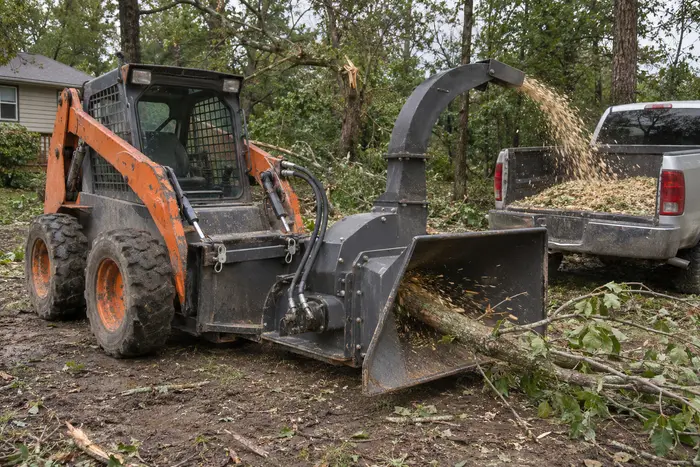
If you want to run it from a loader, check the hydraulic requirements. Our skid steer wood chipper guide explains what a skid steer can run, and our wood chipper category shows the main styles. Stumps are different work: see stump grinders.
Blades, feed and chip quality
Sharp knives give clean chips and ease the load on the engine. Dull knives tear fibers, bog the engine and make ragged chips. Check the blades regularly, rotate or replace them in sets, and keep the clearance to the bed knife as the manual says. A clear feed path matters too: trim side branches, feed butt end first and do not overfill the hopper.
Safety around a wood chipper
A chipper can pull in a glove or sleeve in a fraction of a second. These rules are standard in the industry:
- Never reach into the hopper or the chute while the rotor is turning.
- Stand to the side of the feed path, not in line with it.
- Wear close-fitting clothing, eye and hearing protection and a hard hat.
- Know where the emergency stop and reverse are before you start.
- Shut the machine off and wait for the rotor to stop before clearing a jam.
Follow your machine's operator manual and your local safety rules at all times.
Chipper maintenance that pays off
A chipper takes a beating from dirt, stones and metal hidden in wood. A few habits make it last.
- Check the knives every day of use. Look for nicks, chips and dullness. Sharpen or replace them as a matched set so the rotor stays balanced.
- Keep the anvil or bed knife gap correct. The manual shows the clearance. Too wide and the chips are stringy, too tight and the knives can touch.
- Grease the bearings and pivots on the schedule in the manual.
- Clear the chute. Wet chips can pack and cut airflow, so check for blockage after a long session.
- Inspect the feed rollers and hydraulics. Look for leaks and worn teeth, and keep the hoses clear of the rotor.
- Look before you feed. Remove nails, wire and stones from the pile. Dirt dulls knives fast.
What to do with the chips
Fresh chips make a good mulch for paths, beds and tree rings once they age a little. Green wood chips can heat up in a big pile, so spread them or turn the pile instead of leaving a deep mound next to a building. Some sites compost chips, burn them in a biomass system or haul them away. Ask local authorities about any rules on moving brush or wood, especially where there are pest quarantines.
Get the right fit the first time
Tell us your machine's make, model and year and the branch size you want to chip. We confirm the fit and flow requirements against the maker's specs, you approve a delivered price before paying, and the supplier ships direct. Get a fit-checked quote.
Questions buyers ask
How do wood chippers work?
Branches go into a hopper, a feed roller or the spinning rotor pulls them in, and knives on a drum or disc cut them into chips. The chips are thrown out of a discharge chute. The rotor type and feed system are what differ between designs.
What is the difference between a drum and a disc wood chipper?
A drum chipper has blades on a rotating steel drum that also helps pull wood in. A disc chipper has blades on a flat spinning disc that shears the wood at an angle. Drum machines suit larger, mixed material, while disc machines often give uniform chips.
What size wood chipper do I need?
Choose by the largest branch diameter you will feed, with some margin. A hopper rated for a given diameter will stall on thicker wood. Also check the power source, the feed control and the chute so the machine fits your regular jobs.
How do skid steer wood chippers get power?
They run off the machine's auxiliary hydraulics, so flow and pressure must match the chipper's needs. Some designs add a separate engine. Check the manufacturer's flow requirement against your machine before you buy and follow the operator manual.
Is it safe to feed a wood chipper by hand?
It can be done safely with training and the right gear, but the risk is high. Stay to the side, never reach in, keep clothing close-fitting, and know where the emergency stop is. Follow the operator manual and local safety rules.