Land clearing guide
Skid Steer Tree and Post Puller: Buying Guide
Quick answer
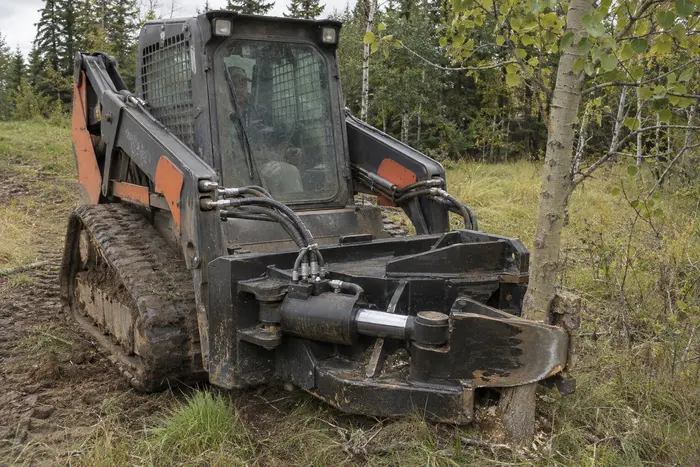
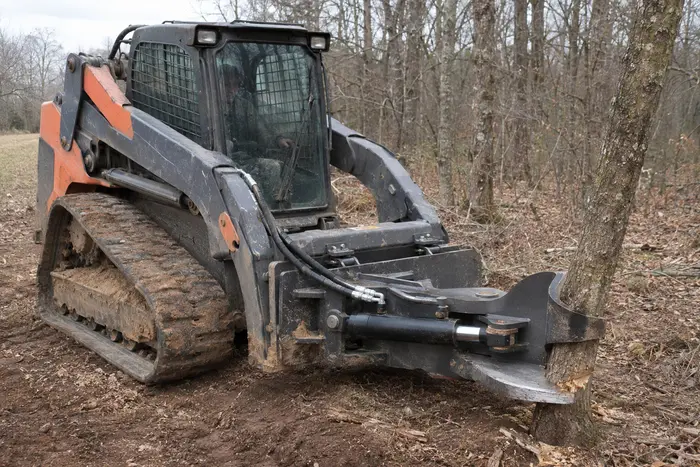
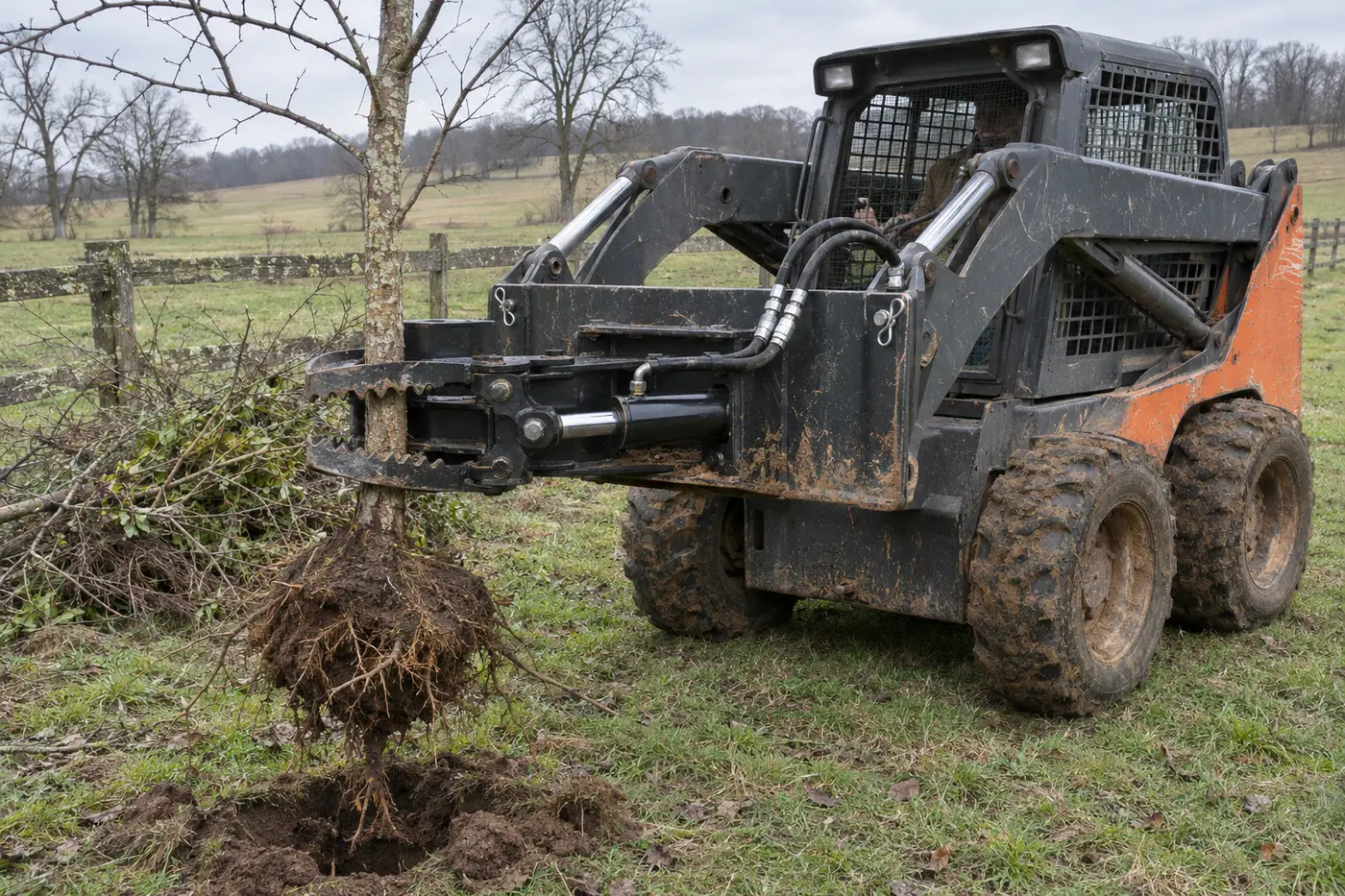
A skid steer tree puller is a clamping jaw on a lever arm that grips a trunk or post and pulls it straight out of the ground using the machine's lift arms. It suits saplings, brush, fence posts and small to medium trees. Size the jaw opening and pulling force to the largest trunk you plan to pull.
Shopping for this now? Get a fit-checked, delivered quote.
Key takeaways
- A puller grips and leverages the tree or post out whole, roots and all, with little digging.
- Jaw opening, weight and lift capacity of the skid steer set the largest tree you can pull.
- Soil moisture and root type matter as much as trunk size: moist ground helps, rocky or clay-bound roots hurt.
- Pullers beat grinders when you want the roots gone, but they leave a hole to fill.
A skid steer tree puller pulls trees, brush and fence posts out of the ground with the root system attached. A steel jaw clamps the trunk, a short lever arm gives pulling leverage, and the skid steer's lift arms do the work. It is a fast tool for fence lines, brush clearing and tree removal where you want roots gone. This guide covers how it works, what it can handle and what to check before you buy.
How a tree and post puller works
The puller mounts to the quick attach plate, and most designs use a hydraulic cylinder to open and close the jaw. You drive up to the trunk, set the jaw as low as you can, and close it. Then you lift the arms or tilt the attachment back. The jaw sits on a pivot or lever, so the pull is near the base of the trunk and acts like a lever that rocks the tree out. Roots break or come free, and the tree leaves the ground in one piece.
Because the pull is mostly vertical, the puller works best on single trunks, posts and saplings. Multi-stem clumps are harder, since the jaw needs to grip them.
What can a skid steer tree puller remove?
- Fence posts. Wood posts, steel T-posts and pipe, including posts set in concrete if the soil and post condition allow.
- Saplings and young trees. Quick work, especially in moist soil.
- Brush and invasive shrubs. Pulling the whole plant limits regrowth.
- Small to medium trees. Within the jaw opening and the machine's rated operating capacity.
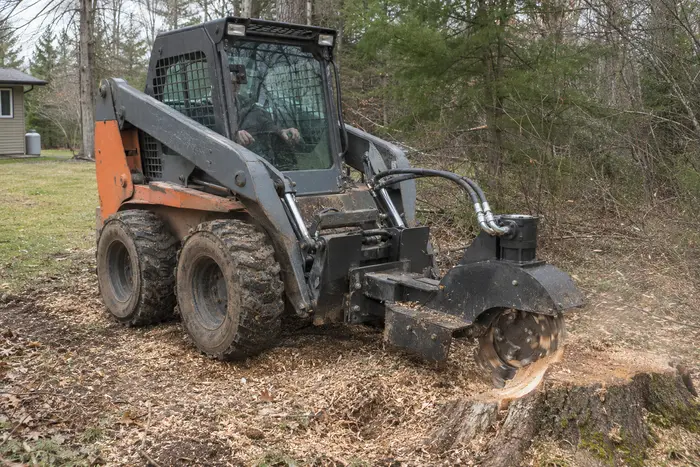
It is a poor fit for stumps that have already been cut flat to the ground, because there is no trunk to grip. For those jobs, look at a stump grinder or a stump bucket.
Puller vs stump bucket vs grinder
| Tool | Best for | What you get |
|---|---|---|
| Tree and post puller | Standing posts, saplings, small trees | Whole plant out, roots included; hole to fill |
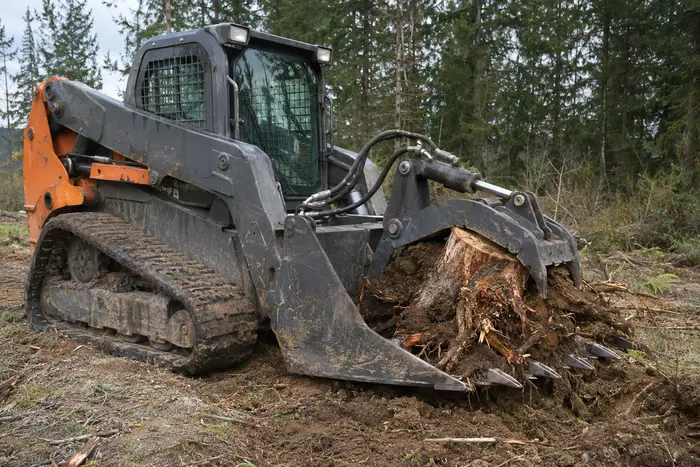
| Stump bucket and grapple | Cut stumps, brush piles | Digs and lifts stumps; more soil disturbance |
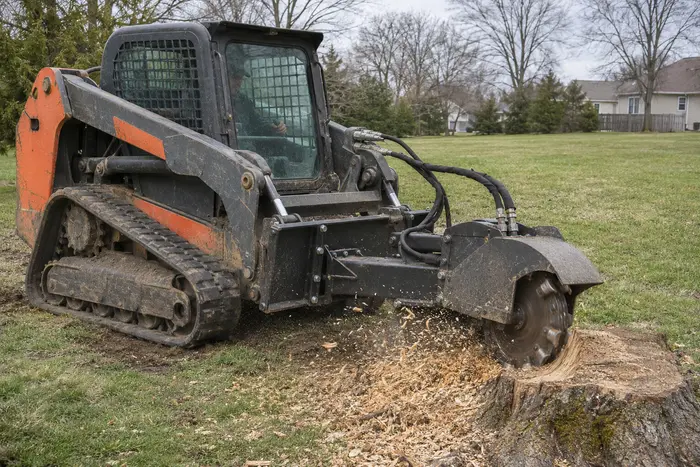
| Stump grinder | Finished lawns, stumps below grade | Chips the stump; roots stay in the ground |
Our how to remove a tree stump guide compares these side by side. For a wider look at the options, read the tree cutting attachments guide.
How to size a puller for your machine
Three limits decide what you can pull.
- Jaw opening. The widest trunk or post the jaw can grip. Check what happens to the grip on a rough or leaning trunk.
- Rated operating capacity of your skid steer. The puller adds its own weight, and the tree acts as a load. A skid steer with a low ROC can tip or rear up when pulling a heavy tree.
- Machine weight and traction. A heavier machine, or one on tracks, usually holds the ground better while you pull.
Check your machine's weight and capacity in the operator manual. Our guide to skid steer weight and dimensions explains the numbers. Also check the auxiliary hydraulics. A puller usually needs standard flow, but confirm the coupler type and the pressure.
Step by step: pulling a tree
- Call before you dig. Have underground lines marked, especially near fence lines and property edges.
- Inspect the tree. Check for dead limbs, leaning, rot and overhead lines. Take a good look at where it will fall or swing.
- Clear a path. Remove rocks and debris so the machine has stable footing.
- Grip low. Close the jaw near the base of the trunk. Gripping high gives the tree more leverage against you.
- Pull smoothly. Lift or tilt in a steady motion and let the roots release. Avoid jerky moves.
- Rock if it holds. A gentle back-and-forth motion can break stubborn roots.
- Carry or drop. Keep the load low while you travel. Set it down on a pile.
- Fill the hole. Backfill and compact so no one steps into a soft pit.
What affects how easily a tree pulls
- Soil moisture. Damp soil releases roots more easily than dry, hard ground. Soaked ground, though, cuts traction.
- Root type. Trees with a deep taproot resist pulling more than trees with shallow, spreading roots.
- Species and age. A young tree usually pulls easier than an old one of the same trunk size.
- Soil type. Sandy and loamy soils tend to release roots; heavy clay and rock tend to lock them in place.
- Frozen ground. Can lock a tree in place and stress the machine.
Safety
- Keep people clear of the tree and the machine while pulling. A tree can spring or fall in a direction you did not expect.
- Do not exceed the machine's rated operating capacity.
- Stay out from under overhead lines and watch for lines the tree could hit.
- Do not wrap chains around a trunk unless the attachment and manual say so.
- Use a seat belt and keep the restraint bar down.
What to check before you buy
Compare jaw capacity, weight, steel thickness, pivot points and the cylinder size. Look for replaceable wear parts on the jaw. Ask about hose routing and guards so roots do not cut the lines. Check the mounting plate and the coupler type. Our post and tree pullers category lists the options. If you work with posts a lot, also look at post drivers, which are the other half of fence work.
Wheels or tracks for tree pulling?
Pulling puts a heavy load on the front of the machine and on the ground under it. A wheeled skid steer can spin its tires and dig in on wet or loose ground, which makes a mess of the site and wastes effort. A track machine spreads its weight and keeps traction, and it tends to sit lower and steadier when the load comes up. On firm ground, either works. On soft or muddy ground, tracks usually do better. Over-the-tire tracks can help a wheeled machine, so look at our over-the-tire tracks if traction is your main problem.
Rent, buy or hire it out?
If you have a handful of trees to pull once, renting or hiring a contractor is often the simplest route. If you have a long fence line, a pasture to reclaim or regular clearing work each year, owning a puller pays back in saved time. Think about how many pulls you will do, how often, and whether you already have a skid steer with enough capacity. A tool you use twice a year may not justify the purchase. A tool you use every week will.
After the pull: cleanup and regrading
Pulling leaves holes and piles of roots. Use the bucket or a landscape rake to fill the holes, smooth the soil and move roots to a burn or chip pile. Compact the fill in layers so it does not sink later. If you are reseeding, spread seed and cover it soon, since bare soil washes out quickly. Check local rules before you burn brush, and look for any limits on moving wood in areas under pest quarantine.
Get the right fit the first time
Send us your machine's make, model and year and the biggest tree or post you plan to pull. A person checks the fit against the maker's specs, you approve a delivered price before paying, and the supplier ships direct. Get a fit-checked quote.
Questions buyers ask
What is a skid steer tree puller?
It is a clamping jaw and lever that attaches to a skid steer and pulls posts, saplings and small to medium trees out of the ground with the roots. The skid steer's lift arms provide the pulling force. Jaw opening and machine capacity set the size limit.
Can a skid steer pull a fence post set in concrete?
Often, if the post is sound and the ground is not locked solid, though results vary. The puller grips the post and levers it up with the concrete attached. A rotten post can snap, and large footings can exceed the machine's capacity.
How big a tree can a skid steer tree puller remove?
The jaw opening and your machine's rated operating capacity decide it. Soil, root type and moisture matter too. As a rule, a skid steer puller handles saplings and small to medium trees. For big trees, use a bigger machine or other methods.
Does a tree puller remove the roots?
Yes, in most cases the tree comes out with its main roots, leaving a hole to fill. Some fine roots stay in the ground. A grinder, by contrast, chips the stump and leaves the roots below grade.
Do I need high flow for a tree puller?
Usually no. The jaw cylinder runs on standard auxiliary hydraulics. Confirm with the manufacturer and check that the coupler type matches your machine. Follow the operator manual for pressure and flow.