Land clearing guide
Skid Steer Tree Cutting Attachments for Clearing
Quick answer
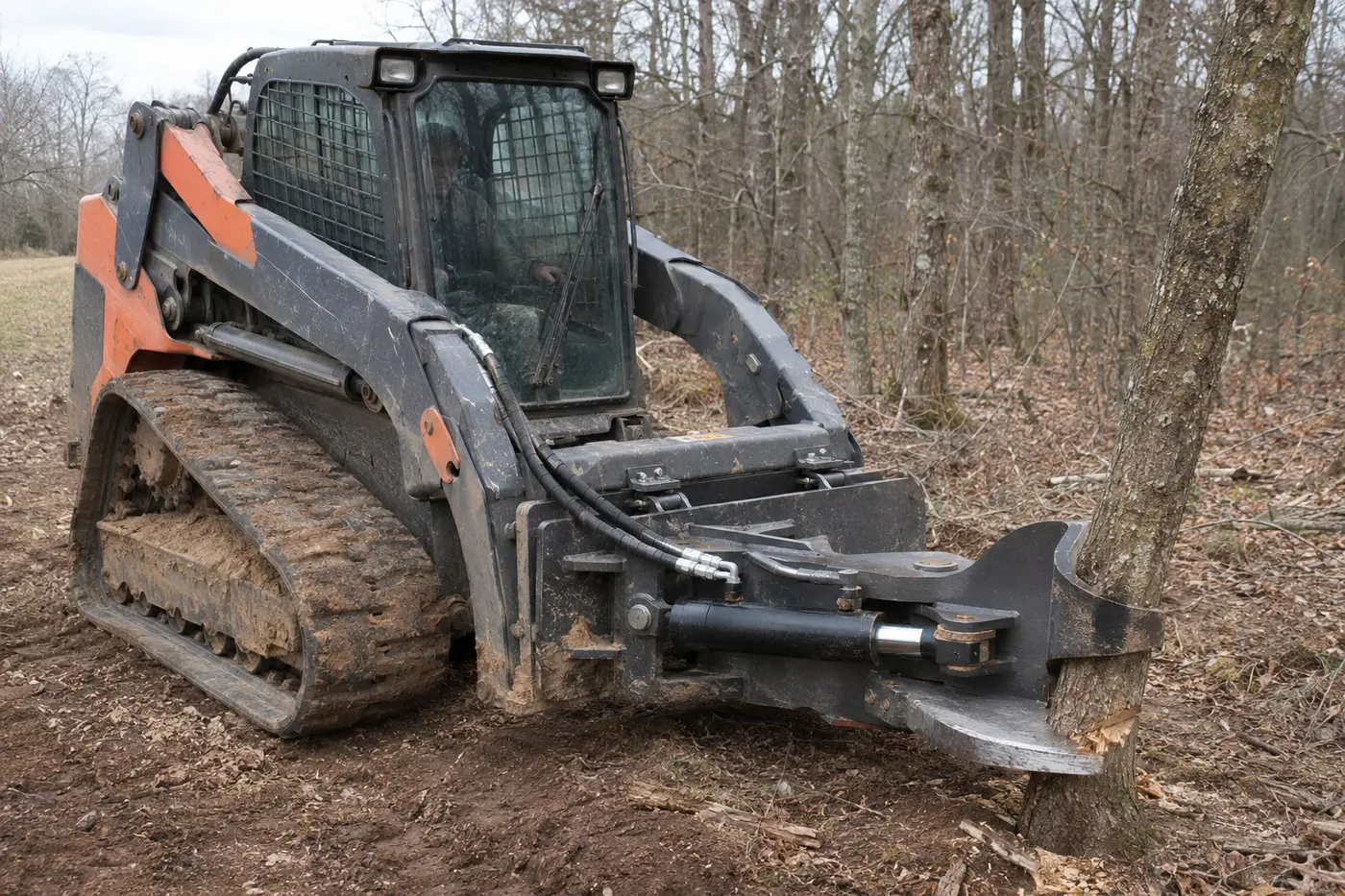
Skid steer tree cutting attachments include saws, shears, mulchers and grapples. Saws and shears cut stems cleanly, mulchers grind them to chips, and grapples move the felled wood. The right tool depends on stem diameter, whether you want the wood or chips, and your loader's hydraulic flow.
Shopping for this now? Get a fit-checked, delivered quote.
Key takeaways
- Saws and shears cut trees; mulchers grind them; grapples move wood.
- Stem diameter and hydraulic flow set the tool you can run.
- Shears are fast but leave a rougher cut than a saw.
- Never work under or near a tree that is being cut.
Clearing land with a loader takes more than one tool. People search for a skid steer tree cutter attachment, but the job usually breaks into three steps: cut the tree, deal with the wood, and clear the stump. Different attachments handle each step. Here is how they compare.
What types of tree cutting attachments exist?
Hydraulic saws
A hydraulic saw head uses a chain or disc blade to cut a stem and, in some designs, hold it as it falls. Saws give a clean, controlled cut and handle a range of stem sizes depending on the model. They need steady hydraulic flow and a stable machine.
Tree shears
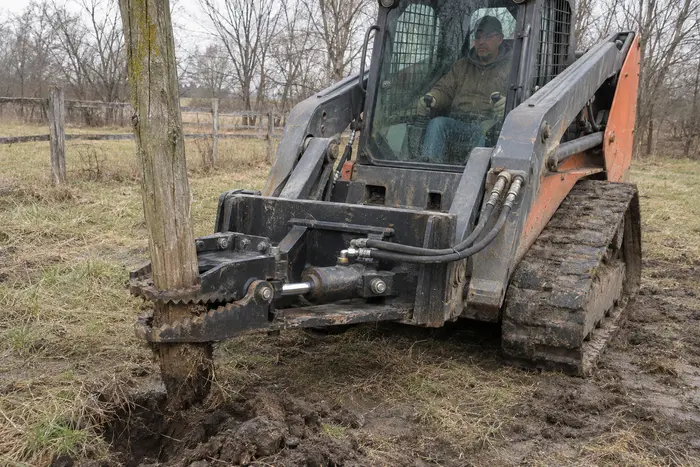
A shear uses a large blade that closes against an anvil to cut a stem in one squeeze. It is fast and handles hardwood and small trees well, but it can crush or split the stem end instead of leaving a smooth cut. See the skid steer tree shears category.
Forestry mulchers
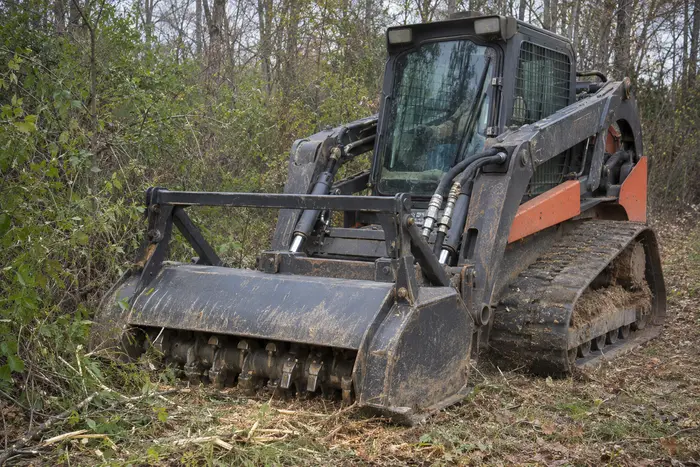
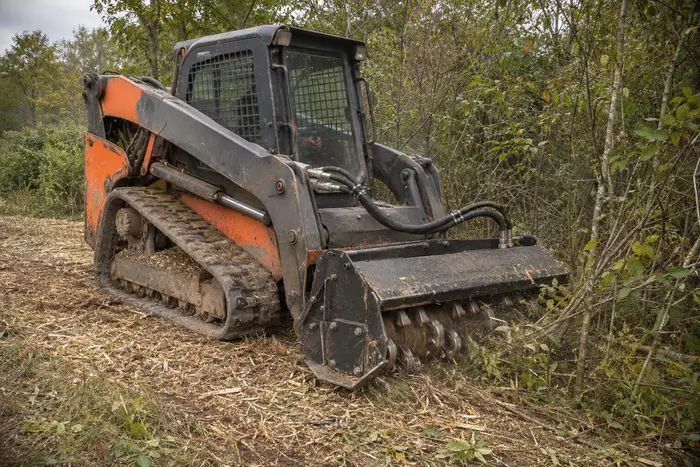
A mulcher grinds trees, brush and stumps into chips on site, so there is no hauling or burning. It needs high hydraulic flow and a strong loader. Read the skid steer mulcher guide and the disc vs drum mulcher comparison to learn more.
Brush cutters
For light saplings and brush, a rotary cutter is enough. It is not a tree tool, and stem capacity is limited. Check brush cutters for that smaller work.
Grapples
Once trees are down, a grapple picks up logs, limbs and brush and stacks them in piles. Grapples are the support tool that makes tree cutting efficient.
Which tool for which job?
| Goal | Best attachment | Why |
|---|---|---|
| Fell individual trees | Saw or shear | Controlled cut |
| Clear a whole lot to chips | Forestry mulcher | No hauling |
| Thin brush and saplings | Brush cutter | Lower cost, lighter duty |
| Move felled trees and brush | Grapple | Grips odd shapes |
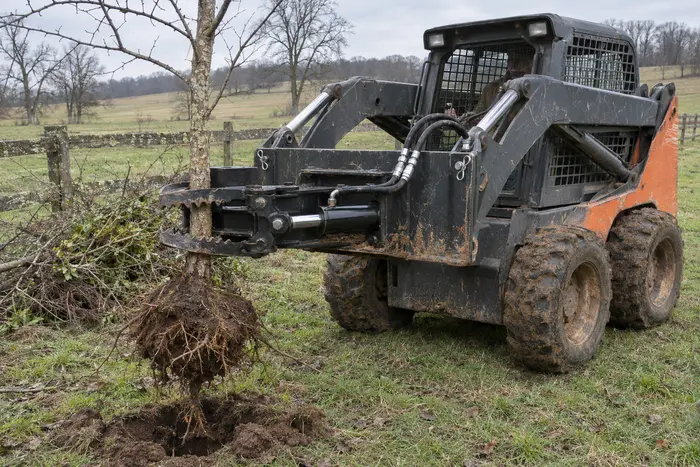
| Remove roots and stumps | Stump grinder, tree puller | Targets the root system |
What tree size can a skid steer handle?
That depends on the attachment's stated capacity and your loader's size, weight and hydraulic output. Small and mid-size loaders handle small trees, while big trees call for larger or purpose-built machines. Always check the maker's stated maximum stem diameter for the attachment you choose, and do not cut beyond it. Pushing a tool past its rating risks damage and injury.
Do you need high flow?
Mulchers and some saws do. High-flow loaders deliver more oil per minute, which lets the attachment cut at full speed. Standard flow can work for smaller shears and saws. Compare your loader's output with the attachment's requirement. Our attachments that need high flow guide lists common cases.
Safety for tree work
Tree cutting is one of the more hazardous jobs you can do with a loader. Keep these rules in mind:
- Check that your loader has an operator enclosure and guarding rated for the work, such as a falling-object protective structure where the manual calls for it.
- Keep bystanders well outside the fall zone, far enough for the tallest tree.
- Look for hung limbs, dead branches and lean before you cut.
- Never cut under power lines. Call the utility.
- Plan your escape path and the direction of fall.
- Never exceed the attachment's capacity or the loader's rated operating capacity.
- Follow the operator manual for the loader and the attachment.
What to check before you buy
- Stem capacity. Compare to the trees you actually cut.
- Hydraulic requirement. Match flow and pressure to your loader.
- Weight. Heavy heads reduce the loader's usable capacity.
- Machine protection. Check window guarding and cab protection.
- Mounting. Confirm the quick-attach plate and hose couplers.
- Wear parts. Blades, teeth and chains need regular replacement.
Plan the whole job, not only the cut
Before you buy a tree tool, decide what happens to the wood. If you want firewood, logs or lumber, a saw or shear that leaves intact stems makes sense. If you want a clean lot, a mulcher saves the hauling. Then think about stumps. Our tree puller guide and stump grinder guide cover the roots. A full forestry mulching overview shows how the pieces fit.
Rent or buy?
For a single lot clearing, renting or hiring out can be cheaper than buying. If you clear land regularly for customers, owning the right tool gives you a service you can sell again and again.
Common setups that work
Most operators build a small kit around one machine rather than buying every tool at once:
- Selective clearing: a shear or saw to fell the trees you want gone, and a grapple to stack them. Good for fence lines, driveways and thinning.
- Full lot clearing: a forestry mulcher on a high-flow machine, with a grapple for oversized pieces. Good for building lots and pasture reclamation.
- Light clearing and maintenance: a brush cutter for saplings and regrowth, with a bucket or grapple for cleanup.
Machine requirements
A tree tool changes how the loader behaves. Heavy heads add weight at the front, and falling limbs or kickback are a risk to the cab. Check that the loader has the guarding the manual calls for, that the tires or tracks are in good shape, and that the loader's rated operating capacity is not exceeded by the attachment. Ask whether your machine needs a special cab door or window guard for forestry work.
Who should hire it out?
Big trees, trees near buildings or lines, and trees in poor condition are jobs for trained tree crews. A skid steer attachment is a good tool for the right trees. It is not a license to take on work beyond your training or equipment.
Tree work and the weather
Wind, rain and frozen ground change what is safe. Wind can push a tree off its planned fall line. Wet or soft ground reduces the loader's traction and stability, and a falling tree adds shock load. Frozen ground can make stumps and roots harder to move. Postpone cutting when conditions make the plan unreliable, and never rush a cut to beat the weather. Leave a clear escape path, keep the cab door shut and the machine's guarding in place.
Keep a log of the attachments you use and their stated capacities. When a new tree is bigger than the tool's rating, you have a clear answer without debate: call a crew with the right equipment. That discipline protects both people and machines.
Get the right fit the first time
Send us the make, model and year of your loader and what you need to cut or clear. A person checks fit against the maker's specs, and you approve a delivered price before you pay. Ready when you are: get a fit-checked quote.
Questions buyers ask
what is the best skid steer attachment for cutting trees
It depends on the job. Saws and shears fell individual trees, mulchers clear whole lots to chips, and grapples move the wood. Check each tool's stated stem capacity and hydraulic requirement against your loader before you decide.
can a skid steer cut down trees
Yes, with a saw, shear or mulcher attachment, within the attachment's stated stem capacity and your loader's limits. Tree work carries real risk, so use proper machine guarding, keep people clear, and follow both operator manuals.
what is a tree shear on a skid steer
A tree shear is an attachment with a large blade that closes against an anvil to cut a stem in one squeeze. It is fast on small and mid-size trees, but it can leave a rougher, crushed end than a saw.
do skid steer tree attachments need high flow
Mulchers and some saws do, because they need steady oil volume to cut at speed. Smaller shears may run on standard flow. Compare the attachment's requirement with your loader's published output before you order.