Landscaping guide
Skid Steer Rotary Tiller: Soil Prep Guide
Quick answer
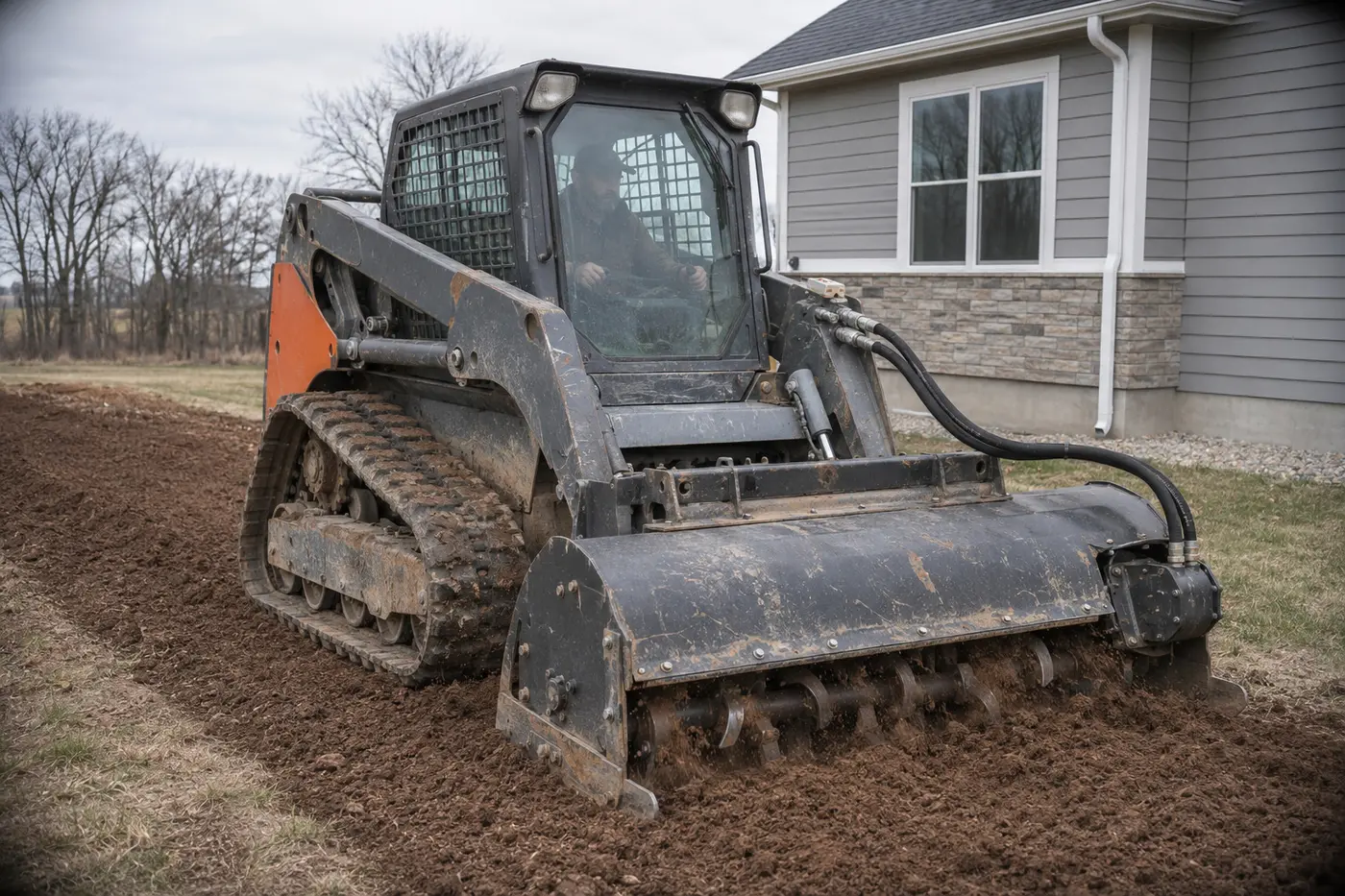
A skid steer tiller is a hydraulic-driven tine rotor that breaks up soil and mixes in amendments for gardens, seedbeds and food plots. Check working width, hydraulic flow and pressure, depth control and weight against your loader. Till moist soil in shallow passes and keep people clear of the rotor.
Shopping for this now? Get a fit-checked, delivered quote.
Key takeaways
- Tillers break and mix soil; power rakes finish the surface.
- Match width, flow and weight to your loader.
- Till moist soil, not soaking or bone dry.
- Take shallow passes in stages.
- Inspect and replace tines as a set.
A skid steer rotary tiller is a hydraulic-driven attachment with a spinning set of tines that breaks up soil, mixes in amendments and leaves a loose seedbed. It lets one machine prep gardens, food plots, lawn areas and new beds without a separate tractor. The deciding factors are working width, hydraulic flow and how rocky your soil is.
What does a skid steer tiller do?
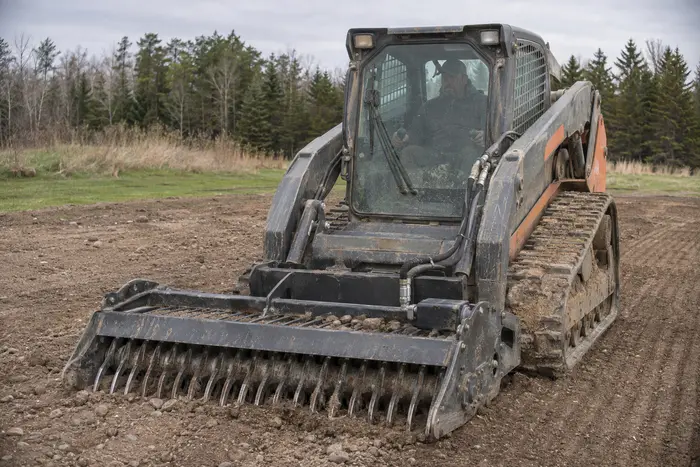
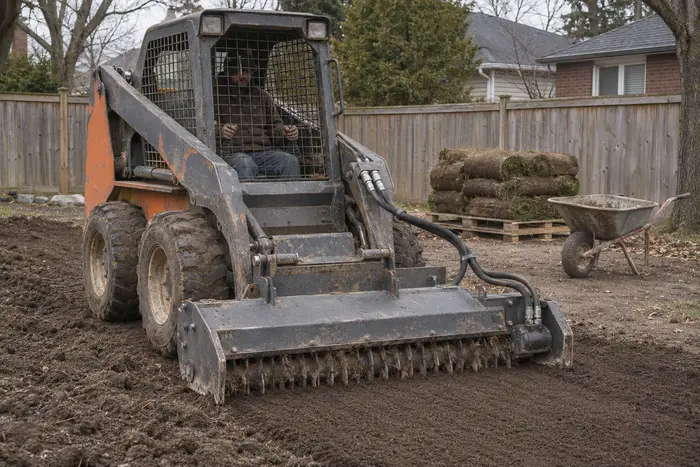
Cultivators stir and pulverize the soil, either before planting to aerate it and prepare a smooth, loose seedbed, or after a crop has begun growing. Rotary tillers use the rotary motion of teeth to do this job and combine the functions of a harrow and a cultivator. A skid steer tiller does the same with a tine rotor driven by a hydraulic motor, usually through a chain or gear case. The rotor turns while the loader drives forward at a walking pace.
Common uses:
- Breaking sod and preparing new lawn or garden beds.
- Mixing compost, lime, fertilizer or topsoil into existing soil.
- Making seedbeds for food plots and pasture renovation.
- Loosening compacted soil before landscaping.
- Stirring up weeds so they can be raked out.
Do skid steer tillers need high flow?
Many skid steer tillers run on standard flow, especially narrower models. Wider or heavier-duty tillers may want more flow or higher pressure. Check the attachment's specification against your loader's auxiliary rating before you buy. Compare two things: flow in gallons or liters per minute, and working pressure. If either is short, the rotor will slow down, stall in tough soil and heat the oil. For help understanding these numbers, read our guide to skid steer hydraulic flow.
How to choose a skid steer rotary tiller
| Feature | What to look for |
|---|---|
| Working width | Wider covers more per pass but needs more flow and weight. Narrower models suit gardens and tight spots. |
| Tine type and count | Different tines handle sod, loam or rocky ground. More tines generally give a finer tilth. |
| Depth control | Skid shoes or a rear roller let you set working depth. |
| Drive system | Chain or gear case drive. Gear drives are often heavier duty. Check how easy they are to service. |
| Guards and shields | Front and rear shields reduce thrown dirt and stones. |
| Weight | Keep the attachment within your loader's rated operating capacity. |
| Mount and couplers | Confirm the plate style and hydraulic fittings. |
Browse skid steer rotary tillers and mini skid steer rotary tillers to compare sizes. For smaller machines, a narrow tiller is easier to control and needs less flow.
Tiller or power rake: which do you need?
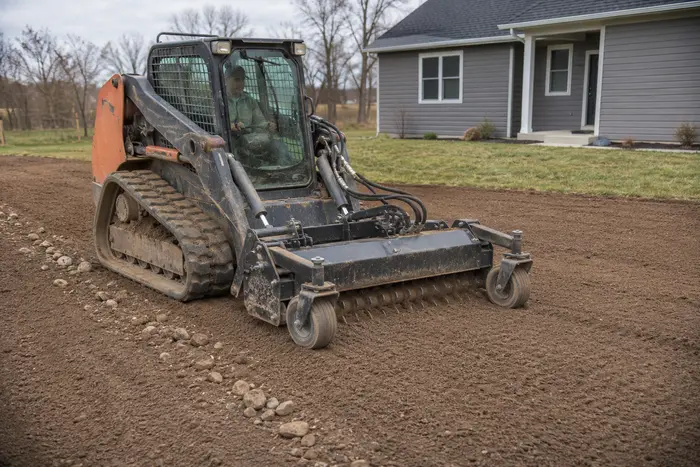
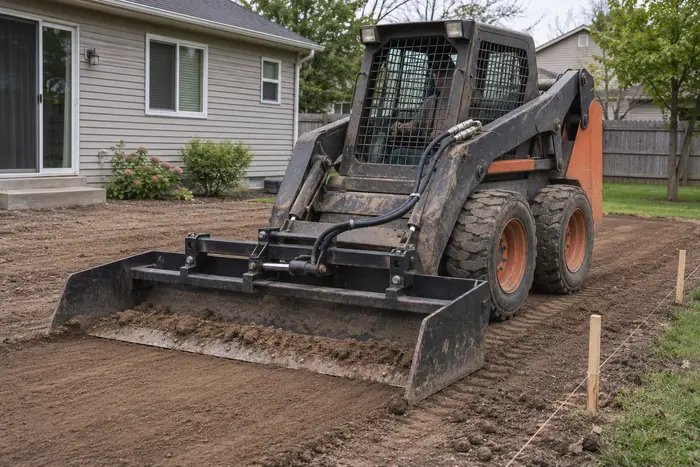
They sound alike but do different jobs. A tiller breaks up and mixes soil. A power rake, also called a power box rake, loosens the top layer and leaves a smooth, rock-free seedbed. If you are making a new lawn on compacted ground, a tiller breaks it up and a power rake finishes the surface. Read what a power rake is for the details and see skid steer power rakes. A landscape rake helps clear stones and level after tilling.
How to till with a skid steer, step by step
- Check the soil. Till when the soil is moist, not soaking wet or bone dry. Wet soil clumps and bakes into clods. Dry soil makes dust and breaks into fine powder.
- Clear the area. Remove rocks, wire, stakes and large debris. Mark irrigation lines and buried utilities.
- Inspect the tiller. Check tines, bolts, chain or gear oil, hoses and shields.
- Set the depth. Use the skid shoes or the control that sets working depth. Start shallow.
- Start the rotor in the clear. Bring it up to speed before you lower it into the soil.
- Drive slowly. A slow, steady ground speed gives a finer finish and puts less stress on the machine.
- Make overlapping passes. Overlap a few inches so you leave no untilled strips.
- Go deeper in stages. Run a second pass at greater depth if needed, instead of one deep pass.
- Finish the surface. Rake, level and roll as the project requires.
Tips for better results
- Do not over-till. Too many passes pulverize soil structure and can lead to crusting after rain.
- Add amendments before the final pass so they mix evenly.
- On slopes, follow your operator manual. Skid steers are generally driven straight up and down a slope, not across it, with the heavy end uphill. Plan for erosion control afterward.
- Do not till right up to trees. Roots near the surface can be damaged.
- Check for stones as you go. Rocks wear tines and can throw hard.
Common problems and fixes
- Rotor stalls. The soil is too hard or you are cutting too deep. Raise the depth, slow down and make a second pass.
- Clods and lumps. The soil is too wet. Wait for it to dry a little, or make another pass later.
- Uneven finish. Ground speed is too fast or passes are not overlapping. Slow down and overlap.
- Wrapped roots or wire on the rotor. Shut down completely before you clear them, and clear the site better next time.
- Hot hydraulics. Flow is mismatched or hoses are restricted. Stop and check.
Safety basics
A tiller rotor is a rotating hazard, and it can throw soil, stones and debris. Keep people and pets out of the work zone and downwind. Wear eye and hearing protection. Never reach near the rotor with the engine running. Shut down, lower the attachment, relieve pressure and let the rotor stop before clearing jams or changing tines. Follow your loader and attachment manuals.
Maintenance and wear
Tines wear faster in sandy or rocky soil. Inspect them before each job and replace worn or bent tines as a set to keep the rotor balanced. Check the gear case or chain case oil level on the schedule in the manual. Grease bearings and pivots. Look at the hydraulic hoses and couplers for rubs, cracks and leaks. At the end of a job, clean off packed soil and roots, because trapped wet soil rusts steel and hides cracks.
Buy, rent or hire it done?
For one garden, a rental or a landscaper may cost less than buying. For regular land prep, food plots, new lawn installations or landscaping, an attachment that runs on a loader you already own can pay back through reuse. See also our guide on skid steer attachments for landscaping for other tools that pair with a tiller.
Get the right fit the first time
Send us the make, model and year of your machine and what you plan to do with it. A person checks fit against the maker's specs and sends a delivered price for you to approve before you pay, and the supplier ships direct. Ready when you are: get a fit-checked tiller quote.
Questions buyers ask
What is a skid steer rotary tiller?
It is a hydraulic attachment with a spinning rotor of tines that breaks up and mixes soil. It mounts to your skid steer's quick attach plate and runs off the auxiliary hydraulics. Owners use it for seedbeds, gardens, food plots, new lawns and mixing amendments into soil.
Can a skid steer be used to till a garden?
Yes, with a rotary tiller attachment sized for your loader. Choose a narrower model for gardens, check hydraulic flow and weight limits, and till when the soil is moist. Clear rocks and mark buried lines first, and keep people away from the rotor.
Do skid steer tillers need high flow?
Many run on standard flow, especially narrower models. Wider and heavier models may need more flow or pressure. Check the attachment's required flow and working pressure against your loader's auxiliary rating in the manual before you buy to avoid a slow, overheated rotor.
What is the difference between a tiller and a power rake?
A tiller breaks up and mixes soil with a tine rotor. A power rake loosens the top layer and leaves a smooth, rock-free seedbed. For a new lawn on compacted ground, many people till first, then power rake to finish the surface.
How deep should you till with a skid steer tiller?
It depends on the job and the soil. Start shallow and make a second, deeper pass if needed instead of forcing one deep cut. Set depth with the skid shoes or the depth control, and follow the maker's guidance for your tiller and conditions.