Tractor guide
Best Rotary Tiller for Compact Tractor or Skid Steer
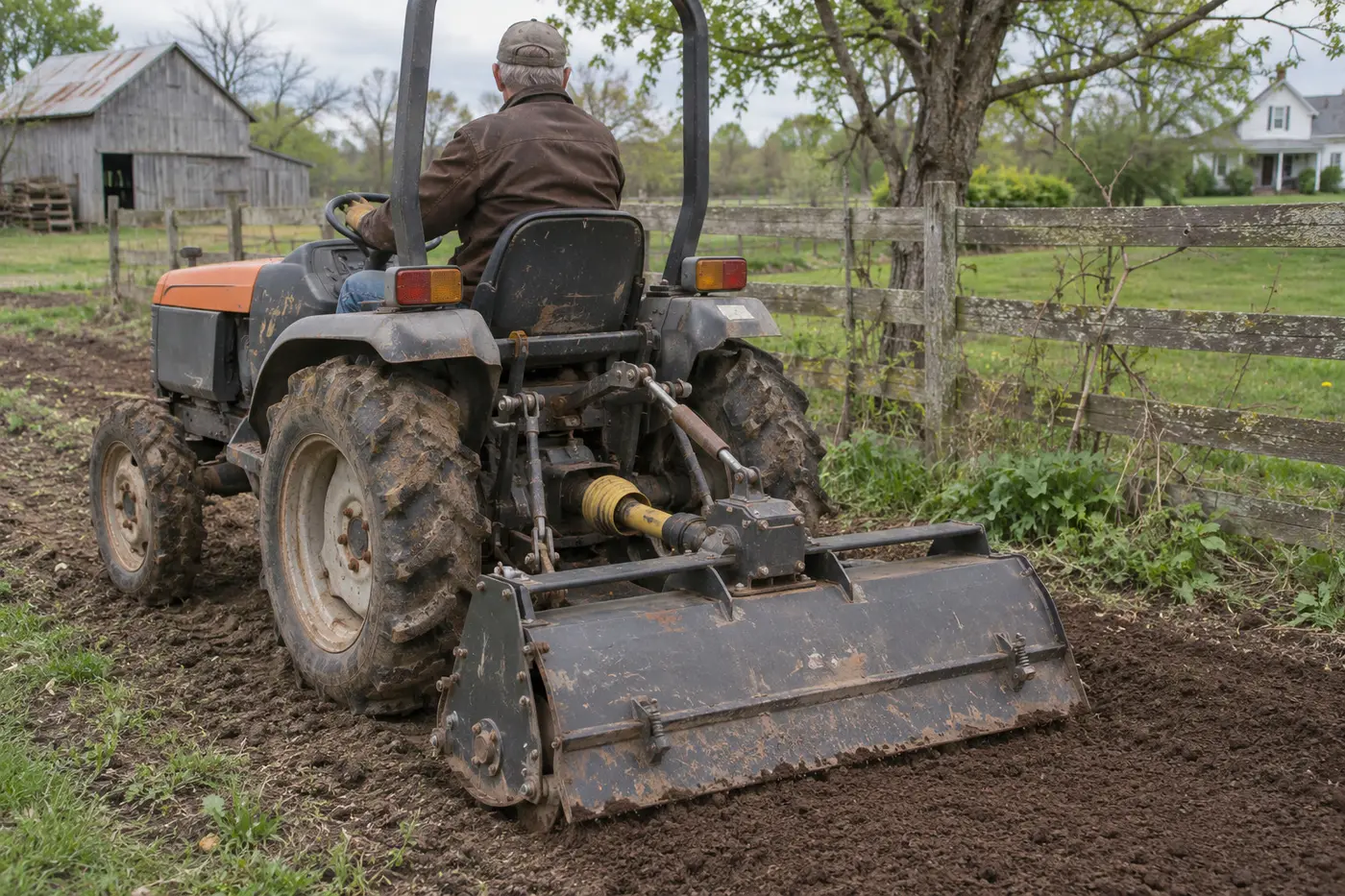
Quick answer
The best rotary tiller for a compact tractor is the one your tractor can turn at full depth without bogging down. Match working width to PTO power, choose a hitch that fits your tractor, and pick tine style for your soil. Skid steers need a hydraulic-driven tiller instead of a PTO unit.
Shopping for this now? Get a fit-checked, delivered quote.
Key takeaways
- Size the tiller to your PTO power, not your ambition.
- Tractors use a PTO-driven three-point tiller; skid steers use a hydraulic-driven one.
- Tine style matters more in rocky or root-filled soil than in clean garden ground.
- Check hitch category and driveline length before you order.
A rotary tiller is a cultivator with powered rotating tines that chop and mix soil into a fine seedbed. On a four-wheel tractor it normally hangs on the three-point hitch and takes power from the PTO. That is the basic setup behind every compact tractor tiller. The rest of this guide is about choosing one that actually works with your machine.
How does a rotary tiller work?
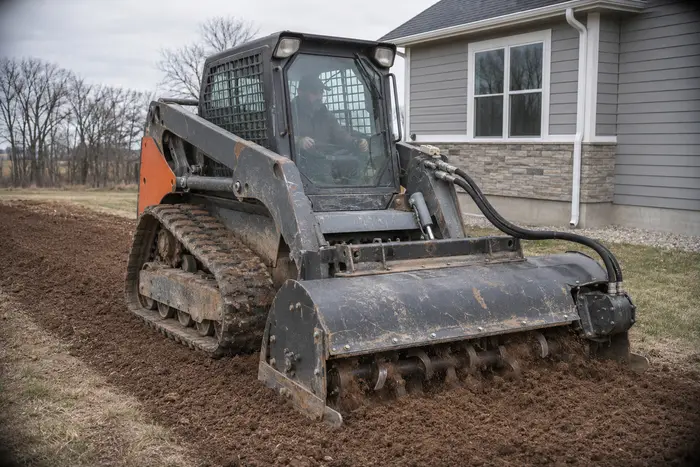
Tines spin on a horizontal shaft. They cut into the ground, throw soil against a rear shield, and break it into smaller pieces. Slower travel speed gives you a finer result because the tines get more passes at the same patch of ground. Faster travel leaves a rougher surface. On the large machines, power comes through the PTO and a gearbox. On a skid steer, a hydraulic motor turns the shaft instead.
One honest warning from general references on tilling: a tiller that hits roots or buried debris can kick or lurch. Walk the plot first and pull out rocks and old stakes. A cheap pre-walk saves tines and drivelines.
What size rotary tiller does a compact tractor need?
Power decides width. A tiller that is too wide for the tractor will stall or force you to creep along in the lowest gear. A tiller that is too narrow wastes passes. Use the PTO horsepower on your tractor's spec sheet, not the engine rating, and compare it with the tiller maker's recommended PTO range. Do not stretch the top of that range.
- Working width should usually cover the outside width of the rear tires, so the tiller erases your wheel tracks. Go narrower only if your PTO power calls for it, and use an offset hitch to work close to beds and fences.
- Lighter tractors need a lighter tiller. A heavy gearbox on a small tractor makes it nose-light.
- Check the lift capacity of your three-point arms with the tiller attached, not just at the lift points.
Sub-compact and compact tractor checklist
- Confirm your hitch category. See our guide to three-point hitch categories.
- Confirm PTO speed and shaft type on the tractor.
- Check that the driveline length works at full lift and in the lowered working position.
- Choose fixed or offset hitch. Offset lets you till right next to a wall or fence.
- Decide whether you need a chain drive, gear drive or a combination.
- Look at the shield: a hinged rear shield controls clod size and helps contain thrown soil and stones.
Gear drive vs chain drive
| Feature | Gear drive | Chain drive |
|---|---|---|
| Durability | Built for heavy, steady work | Fine for lighter garden use |
| Noise | Louder gearbox whine | Quieter, chain rattle |
| Shock loads | Handles them less forgivingly | Chain can absorb some shock |
| Upkeep | Oil level checks | Chain tension and lube |
Neither is wrong. Rocky ground and daily use favor a heavier drive. A food plot you till twice a year can get by with something lighter.
Tine style: what should you look for?
Tines come in a few shapes. Straight-blade tines make fine seedbeds in clean soil. Curved or bent tines move through sod and tougher ground with less strain. Pick tine type for your worst soil, not your best. If you till new ground with grass roots, ask about heavier-duty tines. Replacement tines wear on rocks, so check that they are standard parts you can reorder.
Can you use a rotary tiller on a skid steer?
Yes. Skid steer tillers run off the auxiliary hydraulics instead of a PTO. They mount on a universal quick-attach plate and use two hoses and a case drain on many models. Because they work from hydraulic flow, you need to match the tiller's flow and pressure needs to your machine. Read our explainer on skid steer hydraulic flow before ordering. Our guide to the skid steer tiller covers that setup in more detail.
Browse skid steer rotary tillers if you run a loader rather than a tractor, or mini skid steer rotary tillers for small tracked units.
Tractor tiller vs skid steer tiller
| Question | Tractor three-point tiller | Skid steer tiller |
|---|---|---|
| Power source | PTO | Auxiliary hydraulics |
| Hookup | Three-point hitch | Quick-attach plate plus hoses |
| Best for | Gardens, food plots, field prep | Landscape beds, reseeding, mixed work with one loader |
| Main limit | PTO horsepower | Hydraulic flow and pressure |
Using the tiller well
- Till when the soil is moist, not soaked and not dust-dry. Wet ground clumps into bricks.
- Take a shallow first pass, then go deeper on a second pass instead of forcing one deep cut.
- Engage the PTO at low engine speed with the tines just clear of the ground, then lower into the soil. Disengage the PTO before you raise the tiller high, and follow the tractor manual on slopes.
- Keep people and pets well away. Tines throw rocks.
- Follow the operator manual and the maker's recommended operating speed.
Which one should you buy?
Choose by job. For a large garden or food plot, a PTO tiller on a compact tractor is usually the most economical way to cover ground quickly. For landscape installs where you already own a loader and a bucket, a hydraulic tiller means one machine does everything. If you run both a tractor and a loader, pick the machine that will do most of the tilling hours.
Whatever you choose, get the fit confirmed before you order. A tiller that is wide enough on paper can still miss on driveline length, hitch category or hose couplers.
Common mistakes buyers make
- Buying by width alone. A wide tiller looks efficient, but if the tractor lugs down you cover less ground, not more.
- Ignoring driveline angles. A short tractor with a long tiller can run the shaft at a steep angle when raised. That wears joints fast. Raise the tiller only as far as you need to clear the ground.
- Skipping the slip clutch or shear bolt. Buried debris will stop the tines. A protection device on the driveline is cheaper than a gearbox.
- Tilling too wet. Wet clay turns into hard clods that bake in the sun. Wait.
Do you need a tiller at all?
A rotary tiller is not the only way to prepare ground. For leveling and finishing a lawn, a power rake may be a better tool. For a one-time job, renting can make more sense than buying. For repeated work such as a yearly food plot or an acre of garden, owning often makes more sense. Think about how many hours per year you will run it.
Maintenance that keeps a tiller working
- Grease the driveline and any pivot points on schedule.
- Check gearbox oil level before each season and after heavy work.
- Look at the tines for wear, cracks and loose bolts. Replace in sets so the shaft stays balanced.
- Clear wrapped vines and wire from the shaft before storing.
- Store the tiller lowered on blocks so the shield and tines do not take load.
Get the right fit the first time
Fit problems are the expensive mistakes, and they are easy to avoid. Send us your machine make, model and year and what you plan to do with it. A person checks the fit against the maker specs, and you see the delivered price before you pay. When you are ready, get a fit-checked quote.
Questions buyers ask
What is the best rotary tiller for a compact tractor?
The best one matches your PTO horsepower with a recommended working width, uses the right hitch category and has tines suited to your soil. Heavier gear-drive units suit rocky ground and daily use. Lighter chain-drive models are fine for occasional garden work.
What does a rotary tiller work for?
A rotary tiller breaks soil into a fine, loose seedbed. People use it for gardens, food plots, reseeding lawns and mixing amendments into the top layer. It is a seedbed tool, not a heavy digging tool, so it is not meant for hardpan or large rock.
Can a rotary tiller go on a skid steer?
Yes. Hydraulic-driven tillers mount to a skid steer's quick-attach plate and run from the auxiliary hydraulics. You need to match the tiller's flow and pressure needs and check couplers and case drain before ordering. If you are unsure, a person can check it against your machine's specs.
How does a rotary tiller work?
Powered tines spin on a horizontal shaft, cut into the soil and throw it against a rear shield. Slower travel gives a finer seedbed. A tractor drives the shaft from the PTO; a skid steer drives it with a hydraulic motor.
What size tiller for a sub compact tractor?
Pick a width that sits within the tiller maker's recommended PTO power range for your tractor, ideally wide enough to cover the rear wheel tracks. A tiller that is too big makes the tractor stall or forces you to crawl in low gear.