Snow guide
Skid Steer Salt Spreader: Buying Guide
Quick answer
A skid steer salt spreader is a hopper attachment that mounts on the quick attach plate and spreads salt or sand while you drive. Choose by hopper size, spread pattern, feed system, power source and corrosion resistance. Salt's working temperature ends near 15 degrees Fahrenheit pavement temperature, so deep cold may need treated blends.
Shopping for this now? Get a fit-checked, delivered quote.
Key takeaways
- Mounts on the quick attach plate; check hydraulic or electric drive.
- Keep loaded hopper weight within rated operating capacity.
- Plain salt stops working near 15 F pavement temperature.
- Wash and grease after use; salt corrodes steel fast.
What is a skid steer salt spreader?
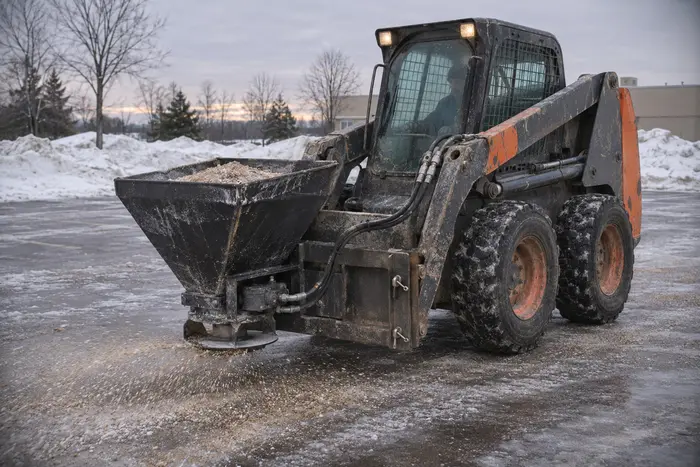
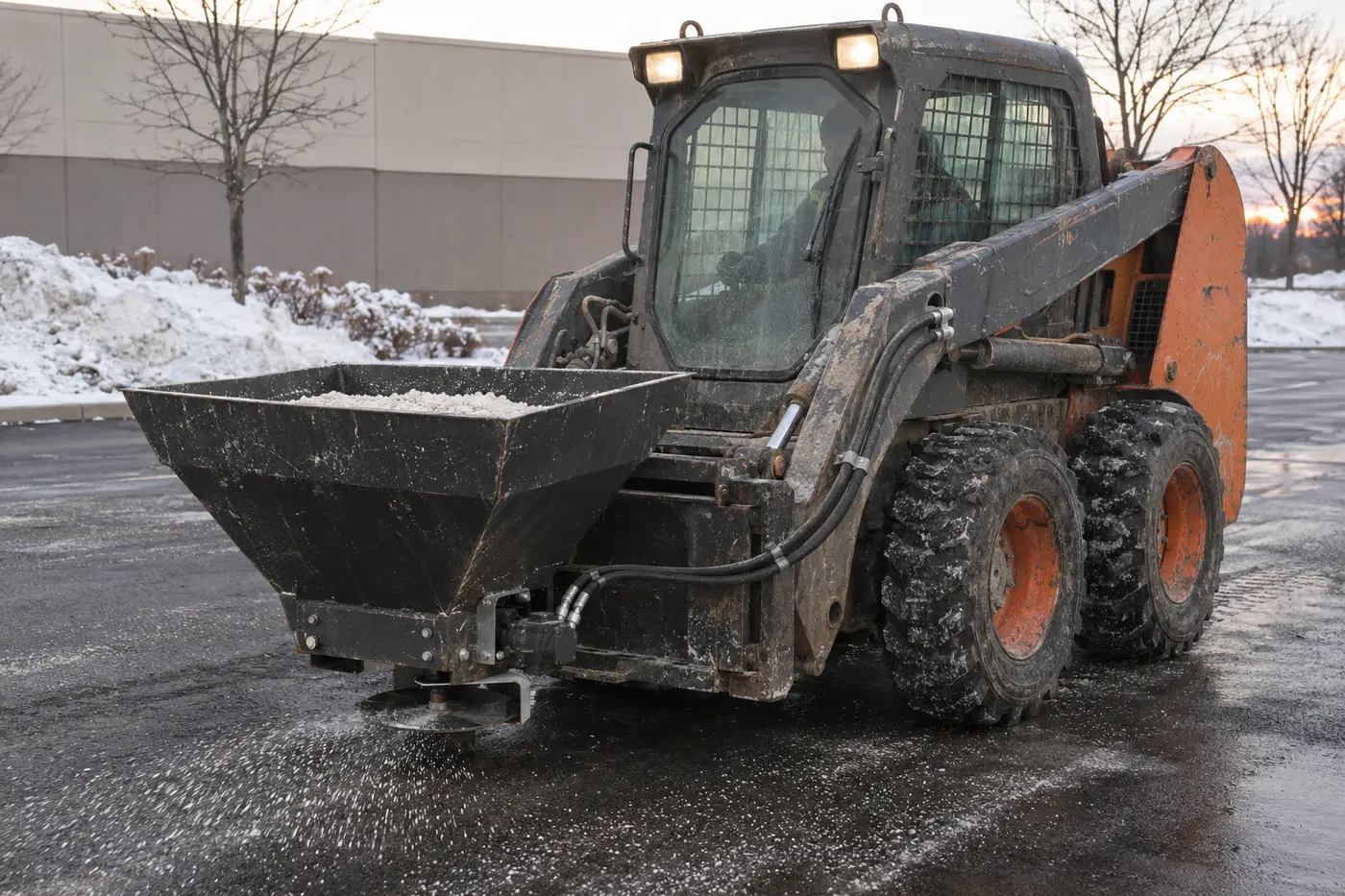
A skid steer salt spreader is a hopper-style attachment that mounts on the loader's quick attach plate and spreads salt, sand or de-icing mixes as you drive. A feed mechanism meters material out of the hopper, and a spinner or drop gate spreads it across a path. You load the hopper with the same loader, or with a bucket. It is popular with property managers, municipalities and snow contractors who already run a skid steer for plowing, because one machine can clear and treat a lot, driveway or sidewalk.
The big benefit is time. You plow, load and spread without switching machines. The trade-off is that a hopper on the front of the loader limits payload and visibility, and a skid steer does not travel as fast as a truck. It suits small to medium lots, sidewalks and drives better than long roads.
How do you choose a skid steer salt spreader?
- Hopper capacity. A bigger hopper means fewer refills, but it also adds weight to the front of the loader. Keep the loaded weight inside rated operating capacity.
- Spread pattern and width. Spinner spreaders cast a wide swath. Drop spreaders place material right under the hopper for precise coverage along walls and sidewalks. Think about the surfaces you treat.
- Feed system. Augers and conveyors meter material at a set rate. Check whether you can adjust the feed rate from the seat and whether the system handles damp, clumpy salt.
- Power source. Some units use the loader's auxiliary hydraulics. Others use an electric drive. Hydraulic units need the right flow and coupler. Our hydraulic flow guide explains the basics.
- Corrosion resistance. Salt eats steel. Stainless steel, heavy coatings or poly hoppers generally resist salt better. Ask what the maker uses on the hopper, auger and frame.
- Cover and sealing. A cover keeps rain and snow out of the salt, and good seals prevent leaks. Wet salt clumps and jams augers.
- Mounting. Most units use a universal quick attach plate. Confirm yours matches your loader.
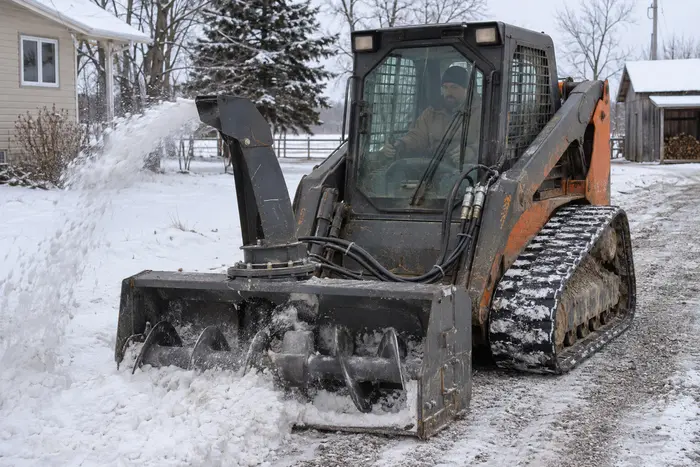
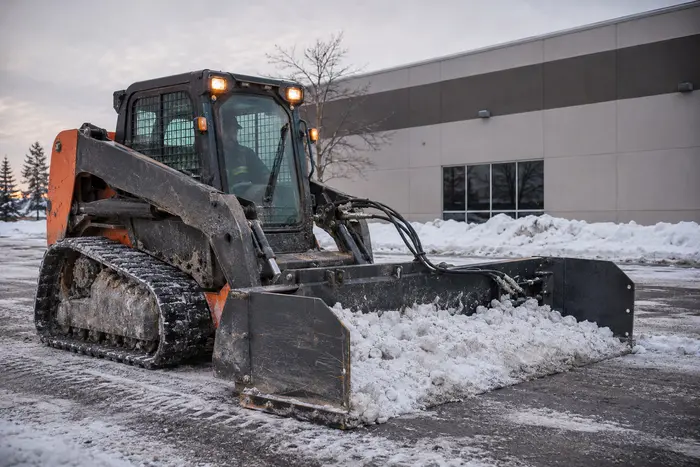
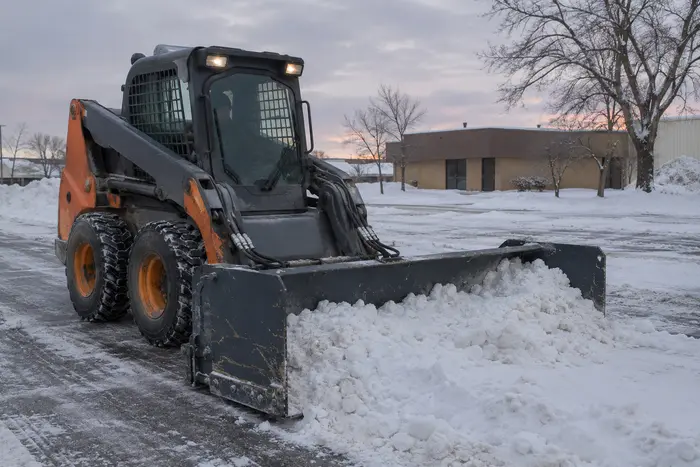
Browse our skid steer salt spreaders category for current options. Many snow contractors pair a spreader with a snow pusher or snow plow, or a snow blower for tight spaces.
When does salt work, and when does it not?
Salt works by lowering the freezing point of water, so it melts snow and ice and keeps them from bonding to pavement. But the effect fades as it gets colder. Road-salt guidance from a Minnesota Department of Transportation handbook says the working temperature of salt ends at about 15 degrees Fahrenheit pavement temperature. Below that, untreated salt melts very little ice and takes hours to do so. In these extremely cold situations, the handbook says untreated salt should not be used, and alternatives such as salt treated with magnesium chloride or calcium chloride should be considered. If pavement temperatures fall to 0 degrees Fahrenheit or lower, even those methods are ineffective, and traction materials may be the only option.
That matters for spreader choice. If you work in deep cold, such as much of Canada, you may need to spread sand or treated blends instead of plain salt. A spreader that handles both salt and sand, with a feed system that does not choke on either, is worth asking about.
How much salt should you spread?
Less than most people think. Application rates depend on pavement temperature, the kind of storm and the surface. The same handbook publishes guideline tables for roads that raise the rate as temperatures fall. Those tables are for roads, not for lots and sidewalks, but they show the principle. Colder pavement and heavier precipitation call for more material. More salt is not always better. Over-application wastes money, harms vegetation and concrete, and runs off into groundwater and streams.
- Plow or shovel first. Salt works best on a thin layer of ice or packed snow.
- Apply before a storm where you can. Anti-icing prevents the bond between ice and pavement.
- Calibrate the spreader to see how much it places per pass at a given speed and setting.
- Keep a record of what you spread, where and when.
Our guide on sand or salt for winter maintenance compares the two materials in more depth.
Operating tips
- Check the hopper, feed system, hoses and spinner before each storm.
- Load the hopper on level ground and stay within rated operating capacity.
- Drive at a steady speed. Unless the controller adjusts for ground speed, driving faster spreads less material per square foot.
- Keep people and vehicles clear of the spread pattern. Material thrown by a spinner can strike cars, glass and people.
- Wash the spreader after use. Dry it and grease the moving parts, because salt corrodes quickly.
- Follow the loader and attachment manuals.
Skid steer spreader or a truck or tow-behind spreader?
A truck-mounted spreader suits roads and large lots, with higher speed and capacity. A tow-behind or walk-behind spreader suits small areas and sidewalks. A skid steer spreader is a strong fit if you already own the loader, work in tight sites and want to plow and spread in the same session. Skid steers are strong in snow removal, especially small parking lots where maneuverability around cars, light poles and curbs matters. See our guides to snow removal with a skid steer and snow plow vs pusher to build a complete winter set-up.
Storing salt and protecting the spreader
Salt absorbs moisture from the air. Store it dry and covered, and do not leave a full hopper sitting for weeks, because damp salt cakes and jams the feed system. At the end of the season, empty the hopper, rinse the spreader with fresh water, let it dry and grease the bearings, chains and pivots. Touch up chips in the paint or coating so rust does not start. A few minutes of cleaning after each storm is the cheapest way to extend the life of the attachment.
What to tell us before you order
Send your loader make, model and year, the quick attach style, and whether you have auxiliary hydraulics or need an electric-drive unit. Tell us what you spread, such as salt, sand or a blend, and how big the areas are. A person will check the spreader against your machine before you commit to anything.
Get the right fit the first time
Send us your machine make, model and year and tell us the job. A person checks the attachment against the maker's specs, then you get a fit-checked quote with delivered pricing before you pay. The supplier ships direct, and warranty terms, if any, are written on your quote.
Questions buyers ask
Can you put a salt spreader on a skid steer?
Yes. Hopper-style salt spreaders mount on a skid steer's quick attach plate and run off the loader's hydraulics or an electric drive. Keep the loaded hopper within the loader's rated operating capacity and confirm the plate and couplers match.
At what temperature does salt stop working?
A Minnesota DOT handbook says the working temperature of salt ends at about 15 degrees Fahrenheit pavement temperature. Below that, untreated salt melts little ice and takes hours. Treated salt or traction materials such as sand may be needed in deep cold.
How much salt should I spread per pass?
It depends on pavement temperature, storm type and surface. Colder pavement and heavier snow call for more, but over-application wastes money and harms vegetation and concrete. Calibrate your spreader and use the maker's guidance and local best-practice guidelines.
Is a skid steer salt spreader good for parking lots?
It works well for small and medium lots, sidewalks and driveways where the loader is already on site. For long roads and very large lots, a truck-mounted spreader is faster. Skid steers offer strong maneuverability around cars, curbs and light poles.
Do I need a hydraulic or electric salt spreader?
Both exist. Hydraulic units run from the loader's auxiliary circuit and need the right flow and coupler. Electric units run from the machine's electrical system. Check the maker's requirements against your loader to make sure they match.