Skid steer guide
Skid Steer Cold Planer: Buying and Operating Guide
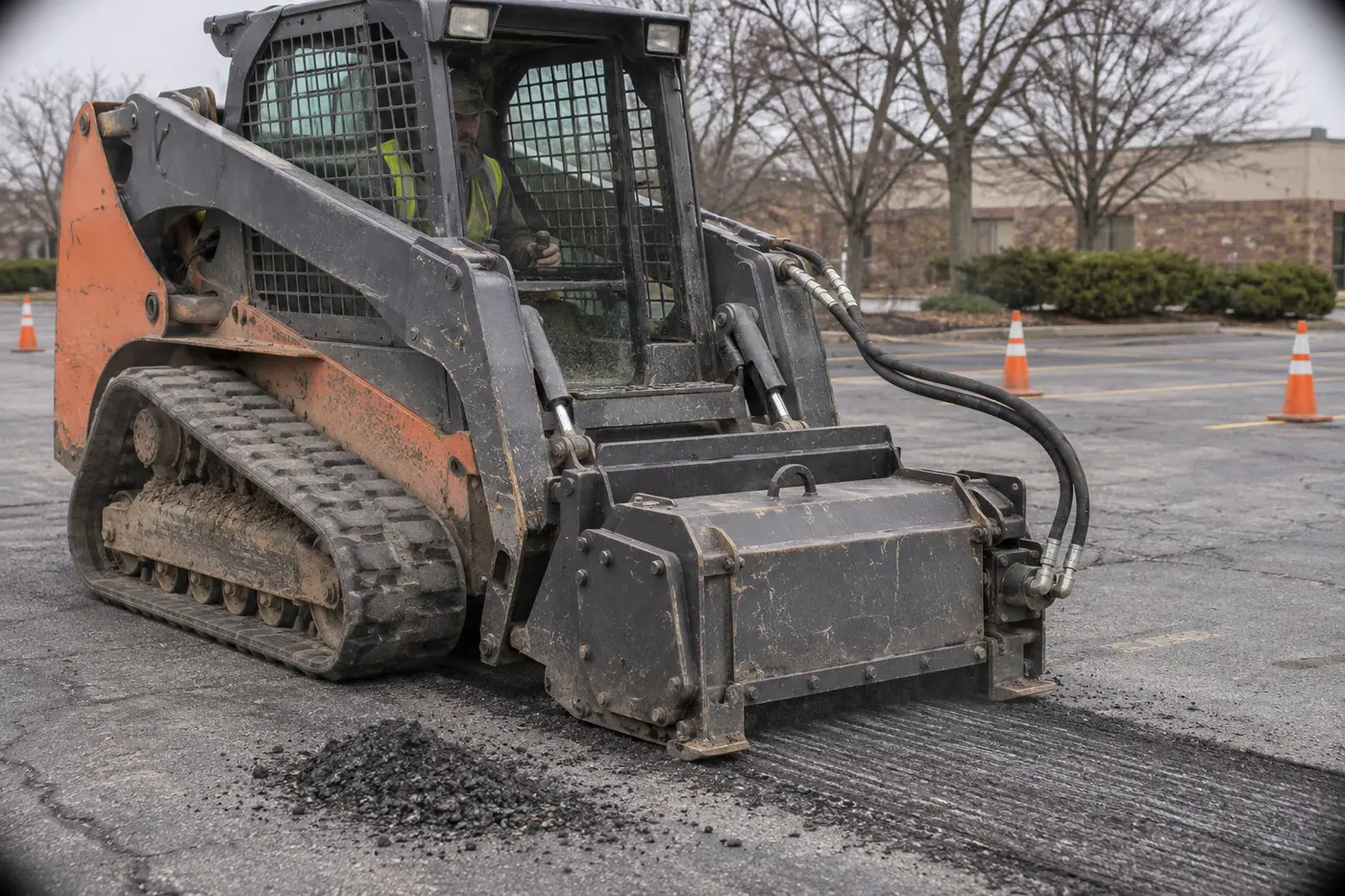
Quick answer
A skid steer cold planer is a hydraulic drum attachment that grinds a set depth of asphalt for patches, edges and grade changes. Many, especially wider models, need a high-flow auxiliary circuit. Check flow, drum width, depth control and attachment weight against your loader's rated capacity before you buy.
Shopping for this now? Get a fit-checked, delivered quote.
Key takeaways
- Many cold planers need high-flow hydraulics; standard-flow models cut narrower and slower.
- Narrow drums suit patches; wider drums need more power.
- Take shallow passes and let the drum do the cutting.
- Plan for teeth as the main wear cost.
- Use dust, hearing and traffic controls on every job.
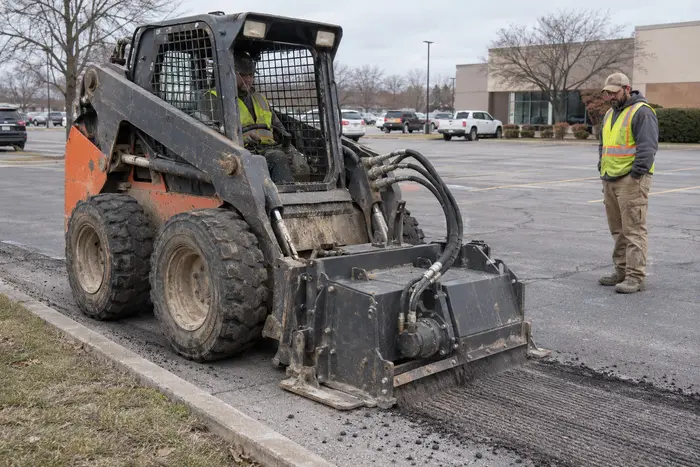
A skid steer cold planer grinds off a controlled layer of asphalt so you can patch, level or repave small areas without bringing in a full-size milling machine. It is a high-demand attachment, so hydraulic flow decides whether it works on your loader.
What does a skid steer cold planer do?
A cold planer, also called an asphalt planer or milling attachment, carries a drum fitted with carbide teeth. The drum spins on a hydraulic motor, and the teeth shave pavement to a set depth. The same process is used on roads at a larger scale. Our explainer on what pavement milling is covers the basics.
On a skid steer, the usual jobs are:
- Cutting out failed patches so new asphalt can be placed flush.
- Feathering the edge where new pavement meets old, such as at driveways and drains.
- Lowering a section of lot or drive aisle to match a new grade.
- Removing a thin layer of damaged surface before an overlay.
- Cutting trenches or channels in asphalt for utility work.
Do you need high flow for a skid steer cold planer?
Usually, yes. Milling asphalt takes a lot of continuous power, and the hydraulic motor that turns the drum is demanding. Many cold planers, especially the wider ones, are designed for a high-flow auxiliary circuit. Narrower planers made for standard flow exist, but they cut less and more slowly. Check your loader's auxiliary flow and pressure rating in the manual, then compare it with the attachment's required flow range. Our guide on attachments that need high flow explains how the hydraulic side works.
If your loader is standard flow only, pick a planer specified for it and set realistic expectations on cut depth and speed. Do not try to run a high-flow tool on a standard circuit.
How to choose a cold planer attachment
| Feature | Why it matters |
|---|---|
| Drum width | Wider drums cover more per pass but need more flow and weight. Narrow drums suit patches and trenches. |
| Cutting depth range | Look at the maximum and the adjustment method. Skid shoes or depth gauges set the cut. |
| Side shift | Lets you move the drum sideways without repositioning the loader. Very useful along curbs. |
| Tooth system | Carbide teeth are replaceable. Easy tooth changes save downtime. |
| Drum drive | Direct drive or chain or gear designs have different wear and noise profiles. |
| Weight | Heavy tools drop your rated capacity margin and add ground pressure. |
| Dust control | Some units add water spray. Dust management is a site requirement in many places. |
Compare options in the skid steer cold planer category. Running a mini excavator instead? See cold planers for mini excavators.
What loader works best with a cold planer?
Traction and weight matter. The attachment pushes into hard ground and needs the machine to stay planted. Compact track loaders are common choices because tracks give grip and spread weight. Wheeled loaders work too, but tires can slip on loose milled material and wear faster. Whatever you run, the attachment weight plus any load in the bucket area must stay within rated operating capacity. Follow the operator manual.
A larger frame generally brings more hydraulic output and weight. Our skid steer frame class guide gives a quick way to see where your machine sits.
How to plane asphalt step by step
- Mark the cut. Spray-mark the edges. Decide your depth before you start.
- Locate utilities. Know where buried lines and drain structures sit. Cutting depth near manholes and valves needs care.
- Check the attachment. Inspect teeth, hoses, couplers and guards. Replace worn teeth.
- Set the depth. Adjust skid shoes or the depth control per the manual.
- Engage the drum in the clear. Bring it up to speed before it touches pavement.
- Lower and advance slowly. Let the drum do the work. Forcing forward speed stalls the motor and wears teeth.
- Take it in passes. Several shallow passes beat one deep pass on most loaders.
- Clean up. Scoop or sweep the millings. A bucket, a broom or a vacuum keeps the cut clean.
Safety rules for planing
These rules follow general jobsite practice. Your manuals and site rules come first.
- Keep people clear of the cutting area. The drum throws chips and fragments.
- Wear eye, face, hearing and respiratory protection. Pavement milling creates dust.
- Use traffic control when working near roads or in lots with vehicles and pedestrians.
- Do not plane over unknown objects like manhole covers or steel plates at full depth.
- Lower the attachment, shut off hydraulics and follow lockout steps before cleaning or changing teeth.
Teeth, wear and running costs
Teeth are the main wear part. They wear faster on abrasive aggregate and when they hit steel, concrete or buried objects. Plan on a spare set and the tool you need to swap them. Rotating teeth is part of the design on many drums, so look at the maker's guidance on whether they turn in their holders. Hydraulic hoses and couplers also take abuse, so inspect them each shift. Budget for wear parts in the same way you would for any ground-engaging attachment.
Cold planer vs hiring a milling contractor
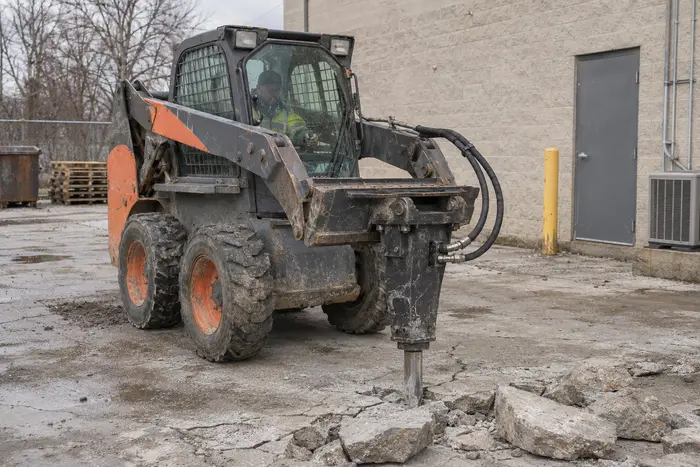
For a few small patches, a contractor with a specialized milling machine may be cheaper than buying a planer. For a property manager, a paving crew or a contractor doing frequent repairs, an attachment that rides on a loader you already own saves repeated mobilization. Also compare it with a hydraulic breaker for small cut-outs, which does a different job on broken pavement.
Working with millings after the cut
Milled asphalt does not disappear. It piles up behind the drum and spreads across the cut. Decide before you start where it will go: into a dump truck, onto a pile for reuse, or into a trailer. A bucket on a second machine or on the same loader after you detach the planer keeps the surface clean. Leaving loose millings on the cut makes it hard to see depth and can contaminate tack coat or new asphalt. Millings are often reusable as base or driveway fill, so ask your local supplier or recycler what they accept. Always follow local rules for handling and disposal.
Plan the order of work so you plane, clean, inspect the depth and then hand off to the paving crew. A clean, even cut gives the new asphalt a better bond and a smoother finish.
Common mistakes
- Buying without confirming the planer's flow requirement against your loader.
- Taking too deep a cut and stalling the drum.
- Ignoring heat in the hydraulic oil on long runs.
- Using a tool far too wide for the loader's weight and traction.
- Forgetting where the millings will go.
Get the right fit the first time
Send us the make, model and year of your machine and what you plan to do with it. A person checks fit against the maker's specs and sends a delivered price for you to approve before you pay. Ready when you are: get a fit-checked cold planer quote.
Questions buyers ask
What is a skid steer cold planer?
It is a hydraulic attachment with a toothed drum that grinds away a set depth of asphalt. It mounts to your skid steer's quick attach plate and runs off auxiliary hydraulics. Owners use it for patch cut-outs, feathering edges, matching grades and prepping surfaces for an overlay.
Do cold planers need high flow?
Many do, especially wider models. Milling asphalt demands continuous power, so many cold planers are built for a high-flow circuit. Lighter, narrower models run on standard flow but cut slower and shallower. Check your loader's auxiliary rating against the attachment's requirement before you buy.
Can a skid steer mill asphalt?
Yes, with a cold planer attachment sized for your machine. You need enough hydraulic flow and pressure, and the attachment weight must stay within the loader's rated operating capacity. Compact track loaders are popular because tracks give grip. Follow both operator manuals and use dust and traffic controls.
What is the difference between a cold planer and an asphalt grinder?
In everyday use people use the terms interchangeably. Both describe a toothed drum that removes asphalt. Planer is the common term for the attachment. Check the specifications instead of the name: drum width, depth range, side shift and hydraulic requirement tell you what it does.
How do you change cold planer teeth?
Shut off hydraulics, lower the attachment, follow lockout steps and let the drum stop completely. Remove worn teeth with the correct tool, clean the holders and fit new teeth as the maker's manual directs. Check the maker's manual for torque and rotation guidance, and wear gloves and eye protection.