Equipment basics guide
What Is Pavement Milling? Process, Uses and Equipment
Quick answer
Pavement milling, also called cold planing or asphalt milling, removes all or part of a paved surface using a rotating cutting drum. It levels and smooths the road before resurfacing, fixes surface damage, adjusts heights and creates reclaimed asphalt pavement that can be recycled into new asphalt.
Shopping for this now? Get a fit-checked, delivered quote.
Key takeaways
- Milling grinds off the surface layer with a carbide-toothed rotating drum, without heat.
- It can remove just the top layer or the full pavement depth.
- The milled material, called reclaimed asphalt pavement, can be recycled into new asphalt.
- Automatic depth control can hold the cut to within a few millimetres of the target height.
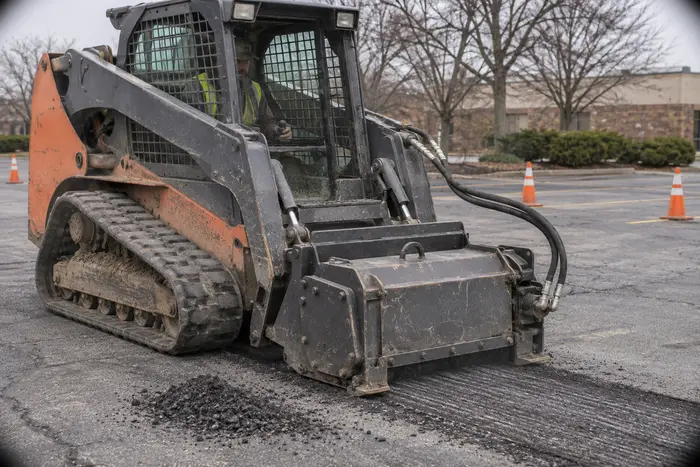
- Small milling jobs can be done with skid steer or excavator cold planer attachments.
When a road gets resurfaced, the old layer usually comes off first. The tool that does that is a milling machine. The process is called pavement milling, and you will also see it called cold planing, asphalt milling or profiling. This guide explains what it is, how it works, where it is used and what happens to the material afterward.
What is pavement milling?
Pavement milling removes all or part of the surface of a paved area, such as a road, bridge or parking lot. It can take off just enough material to level and smooth the surface, or it can remove the full depth of the pavement. "Cold" refers to the fact that no heat is used to soften the asphalt. The machine grinds it away.
How does a pavement milling machine work?
Cold planers, also called milling machines, use a large rotating drum to grind away the surface. Here is what the drum assembly does:
- Carbide cutters. The drum carries scrolls of tool holders that hold replaceable carbide teeth. The teeth do the cutting.
- Scrolls move material. The scroll pattern pushes the loosened material toward the center, where it falls onto a conveyor.
- Rotation. On most machines the drum turns against the direction the wheels or tracks roll, so the teeth cut upward through the pavement.
- Water. Water is sprayed on the drum to cool the teeth and keep dust down.
- Depth control. Automatic depth control, using lasers or string lines, can hold the milled surface to within a few millimetres of the target height. Published figures are often around 5 mm (0.20 in), but real results depend on setup and conditions.
The conveyor loads the milled material into a truck that drives alongside, so the crew can work in a continuous line.
Why is pavement milled?
There are practical reasons to mill instead of paving directly over the old surface.
- Fix surface damage. Milling removes raveling, bleeding, rutting, shoving, uneven ride quality and damage from accidents or fire.
- Keep heights in check. Paving over without removing a layer raises the road. That affects curb reveals, manholes, catch basins, shoulders, guardrails and overhead clearances. Milling lets crews pave without changing those heights.
- Change the slope. Crews mill to alter camber or adjust grade to improve drainage.
- Prepare for a new layer. A milled surface has texture that helps new asphalt bond.
- Specialty cuts. Milling machines cut rumble strips and dowel bar retrofit slots.
What is the difference between milling and other types of surface removal?
| Method | How it works | Used when |
|---|---|---|
| Standard milling | A drum with carbide teeth cuts a set depth | Typical resurfacing and leveling |
| Micro-milling | Much tighter tooth spacing, with several times as many cutting teeth as a standard drum | Finer texture and smoother finish |
| Full-depth removal | Milling through the full pavement layer | Reconstruction |
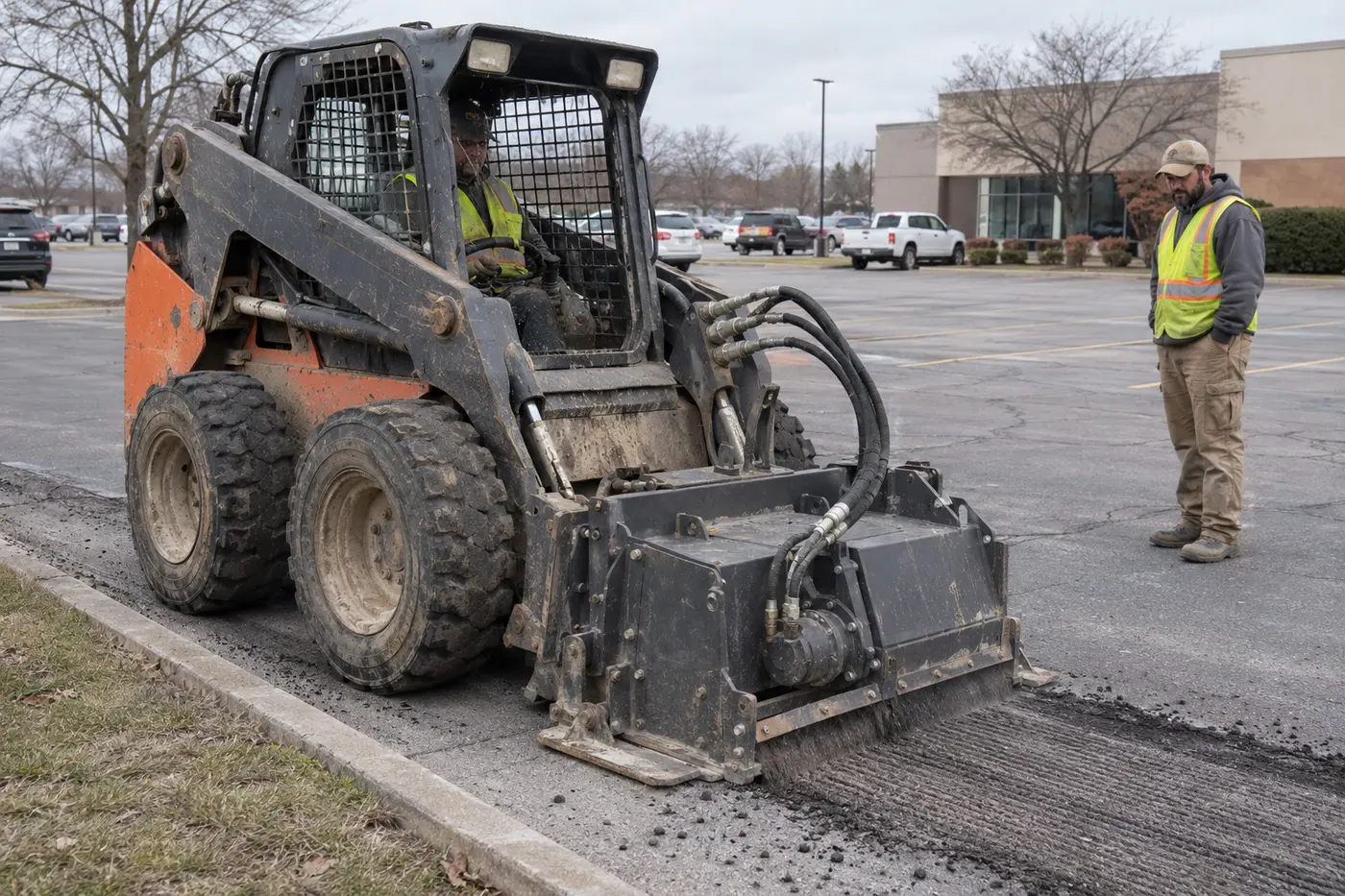
| Small-area cold planing | A cold planer attachment on a skid steer, compact loader or excavator | Patches, driveways, trenches and tight spots |
What happens to the milled material?
Milled asphalt is called reclaimed asphalt pavement, or RAP. It can be recycled into new hot mix asphalt by combining it with new aggregate and asphalt binder or a recycling agent. Reusing milled material means less new aggregate and binder are needed, which cuts cost and waste.
People also search for "pavement millings near me" or "pavement milling for driveway." Millings are often sold by paving contractors and suppliers for use as a base or surface on driveways, farm lanes and parking areas. Quality varies. Millings that include clean, well-graded material compact into a firm surface. Dirty or oversized pieces do not. Compact them in thin layers and plan drainage. Check local rules before you use millings on a property, especially near wells, wetlands or waterways, since some areas restrict where they can go.
What are the common pavement milling machines?
Full-size milling machines are self-propelled and work on roads and large lots. Smaller jobs use other tools:
- Skid steer cold planers. These attach to a loader's hydraulics and cut a narrow width. See skid steer cold planers and our cold planer buying guide.
- Excavator cold planers. These mount to an excavator's coupler and are good for utility trenches and patches. Browse excavator cold planers.
- Walk-behind or small milling machines. Compact equipment for edges and small repairs.
Attachment cold planers need strong hydraulics. Some models run on standard flow, but wider drums and deeper cuts usually call for a high-flow circuit. Check the flow and pressure on the spec sheet against your machine before you buy. Our hydraulic flow guide explains the numbers.
How is a milling job planned?
- Survey the pavement. Find the damage, depth and the height constraints around structures.
- Set the cut depth and width. Choose one pass or several.
- Mark utilities and structures. Manholes and valve covers can break teeth.
- Plan traffic and dust. Set up control, water supply and a truck route.
- Mill and load. Keep the conveyor and trucks in step.
- Sweep and inspect. Clear the surface, check depth and prepare for the new layer.
What are the risks and limits?
Cutters wear as they work. Depending on the material, teeth may need replacing after anything from a few hours to several days of cutting. Tool holders can wear out or break, especially when the drum hits structures such as manholes. Dust, noise and sudden obstructions are hazards. Operators and ground crews need training, hearing protection, eye protection and high-visibility gear. Follow the operator manual and your local work-zone rules.
Milling is not always the answer. For small potholes or cracks, patching may be enough. For failing bases, milling the top will not fix the problem. A pavement engineer or local road authority can say what the surface needs.
What is the difference between milling and grinding or stripping?
The words overlap, and contractors use them loosely. Milling and cold planing mean the same thing: a drum with teeth cutting the surface. Grinding usually means a finer finish, such as diamond grinding to smooth concrete. Stripping is used loosely for taking a layer off, but in paving it also names a defect where the binder separates from the aggregate, so ask what a contractor means. If you are ordering a job, describe the result you want, such as depth, width and finish, rather than relying on one word.
What should you ask a contractor before a milling job?
- How deep will the cut go, and will it be one pass or several?
- How will height changes at structures and edges be handled?
- Where will the millings go, and who owns them?
- How will dust and water be managed on site?
- What traffic control is planned, and who is responsible for it?
Clear answers up front avoid change orders later. For a small driveway or patch, many of these still apply, only at a smaller scale. If you plan to rent a planer attachment for your own loader, ask the same questions about hydraulics, tooth wear and who replaces teeth.
Get the right fit the first time
Cold planer attachments are hydraulics-hungry. Send us the make, model and year of your machine. A person checks fit against the maker's specs, you approve a delivered price before you pay. Get a fit-checked quote or call 1-888-245-1555.
Questions buyers ask
What is pavement milling?
Pavement milling, also called cold planing or asphalt milling, uses a rotating drum with carbide teeth to remove all or part of a paved surface. It levels the road, removes damage and prepares for resurfacing, and it helps keep curb and structure heights where they should be.
What happens to the asphalt that is milled off?
It becomes reclaimed asphalt pavement, or RAP. RAP can be recycled into new hot mix asphalt by blending it with new aggregate and binder or a recycling agent. Millings are also reused as base or surface material in some places.
Can you use pavement millings on a driveway?
Millings are used for driveways, farm lanes and parking areas. Quality varies, so compact them in thin layers and plan drainage. Clean, well-graded material works better than dirty or oversized pieces. Check local rules before you install.
How accurate is pavement milling?
With automatic depth control using lasers or string lines, a milling machine can hold the milled surface to within a few millimetres of the target height. Figures around 5 mm (0.20 in) are commonly cited, but accuracy depends on setup, machine condition and the surface being milled.
Can a skid steer mill pavement?
A skid steer with a cold planer attachment can mill small areas such as patches, trenches and driveways. It needs enough hydraulic flow and pressure for the attachment. Check the planer's flow and pressure range against your machine, and its weight against your rated operating capacity, before buying or renting.