Buying advice guide
How Much Does It Cost to Rent a Skid Steer?
Quick answer
Skid steer rental costs commonly run from about $200 to $450 per day for wheeled machines and $250 to $700 for compact track loaders, according to one rental marketplace guide. Weekly and monthly rates are lower per day. Delivery, fuel, insurance and attachments usually cost extra, so ask for the full total.
Shopping for this now? Get a fit-checked, delivered quote.
Key takeaways
- Wheeled machines rent for less than compact track loaders.
- Weekly and monthly rentals lower the daily rate.
- Delivery, fuel, insurance and attachments add to the base rate.
- If you rent most weeks, compare it with the cost of owning.
Rental rates are one of the most asked questions in this business, and one of the hardest to answer cleanly. Prices change with region, season and yard. This guide gives sourced ballpark ranges, explains what drives them, and shows how to compare renting with owning. Treat all numbers as a starting point and call local yards for current quotes.
How much does it cost to rent a skid steer?
One rental marketplace guide, drawing on U.S. and Canadian data, lists these average ranges:
| Machine | Daily | Weekly | Monthly |
|---|---|---|---|
| Wheeled skid steer | $200 to $450 | $750 to $2,000 | $2,500 to $4,000 |
| Compact track loader | $250 to $700 | $1,000 to $2,000 | $3,000 to $5,000 |
The same page gives an example of $300 for one day versus $1,200 for a week, which shows how longer rentals bring the daily rate down. Treat all of these as ballpark figures from one source, not quotes. Check which currency and region a figure applies to, and get local quotes.
What drives the price?
- Size and capacity. Larger frames cost more, and where they are less common in a fleet, that can raise prices.
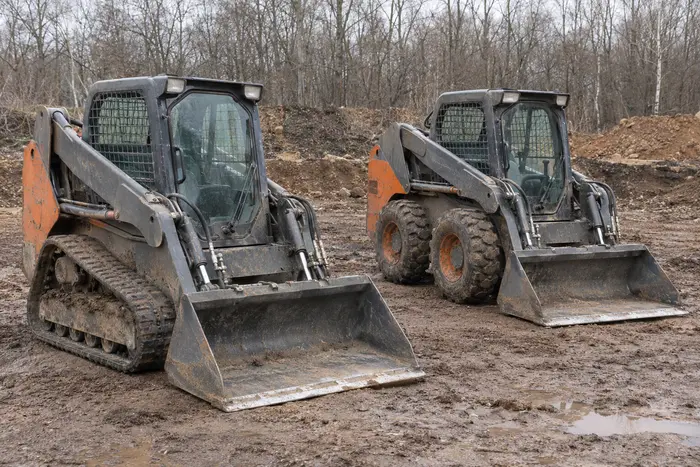
- Wheels or tracks. Compact track loaders cost more than wheeled machines. See skid steer wheels vs tracks.
- Rental length. Longer rentals lower the daily rate.
- Make and model. Some models rent higher than others.
- Location and demand. Demand differs by region and ground. Track loaders can be in higher demand where ground is soft or snowy, and wheeled machines where it is dry and firm.
- Season. Shortages and seasonal demand, such as winter snow removal, can raise prices.
What is not included?
The base rate is rarely the whole bill. The same guide lists fuel, attachments, insurance, delivery and environmental fees as post-rental costs that can add up. It gives no set amounts, since they depend on the yard and the job site. Ask these questions before you sign:
- Is fuel included, or do I return it full?
- What does delivery and pickup cost, and what does it depend on?
- Is insurance required, and what does the yard offer?
- Which attachments are included, and which cost extra?
- What hours per day are included in the rate?
- Is there an environmental or cleaning fee?
- What happens if the machine breaks down on my site?
- Is there a damage deposit or hold on my card?
What does a skid steer cost per hour to rent?
Most yards rent by the day, week or month, not by the hour. If you only need a few hours, ask whether a half-day rate exists. Some companies offer machine and operator by the hour, which costs more than a bare rental because it includes labor. Compare the full job price, not just the machine rate.
Should you rent or buy?
Renting makes sense when you need a machine a few times a year, when you want to test a type of work, or when a job needs a size you do not own. Buying starts to make sense when you rent most weeks, turn work away or need the machine ready every day. A simple test: add up what you spent renting over the last twelve months. If it approaches the cost of ownership, including financing, insurance, storage and maintenance, you are close to the switch point. Our guide to skid steer and attachment financing covers the buy side, and how much a skid steer costs looks at purchase prices.
A middle path: rent the machine, own the attachments
Some contractors rent the base machine and bring their own attachments. If a yard's attachment rates are high or the tool you need is not in its fleet, owning the attachment can help. A grapple, a power rake or pallet forks can pay for themselves if you use them regularly. Check that your attachment fits the rental machine's plate, frame size and hydraulic flow. A universal skid steer quick attach plate is common, but confirm before you order. Our guide to whether skid steer attachments are universal explains it.
Browse pallet forks, grapples and power rakes to see common tools people bring to rentals.
Tips for getting a good rental
- Call two or three yards. Prices and availability differ.
- Reserve early for peak seasons like spring and snow season.
- Inspect the machine at pickup. Photograph damage, check fluids and note the hour meter.
- Ask for a quick demonstration if you are new to the controls.
- Return it clean and on time to avoid extra fees.
- Read the operator manual and follow the rated operating capacity.
Other options to compare
If you only need a short job done, hiring a contractor with a machine can cost less than renting and learning. For a rental with an operator, expect a higher price that covers labor. And for a short-term need on a site you will return to, rent-to-own and lease programs exist at some yards. Compare the total cost across the term, not the monthly payment alone.
Questions about renting near you
Local rates depend on who has machines available. Big-box rental chains, independent equipment yards and peer-to-peer marketplaces all rent skid steers, and each prices differently. Call at least two, ask for the all-in total with delivery, and check the minimum rental term. In busy seasons, availability can matter as much as price, so book early.
Operator, training and liability
Renting a machine does not train you to run it. If you have never used a skid steer, ask the yard for a walkthrough of the controls, the restraint bar, the lift arm support and the emergency shutdown. Check what your own insurance covers when you rent, and what the yard's coverage requires of you. Some yards require proof of insurance or a card hold. Ask early so there are no surprises at pickup, and keep every document in the cab.
Finally, think about total project cost, not only the machine. Fuel, trailer or delivery, attachments, your own time and cleanup are all part of the bill. A cheap daily rate with a long delivery fee can cost more than a slightly higher rate at a closer yard.
If the numbers confuse you, ask each yard for a written quote showing the same items: base rate, hours included, delivery, fuel policy, insurance and any fees. Lined up side by side, the differences are easy to see, and the cheapest base rate is not always the cheapest bill.
Get the right fit the first time
Send us the make, model and year of your machine and what you plan to do with it. A person checks fit against the maker's specs, and you approve a delivered price, freight included, before you pay. The supplier ships direct. Start here: get a fit-checked quote.
Questions buyers ask
how much does it cost to rent a skid steer per day
One rental marketplace guide lists roughly $200 to $450 per day for wheeled machines and $250 to $700 for compact track loaders. Rates vary by region, season and yard, and fuel, delivery and insurance can add to the total.
how much does it cost to rent a skid steer per week
The same guide lists roughly $750 to $2,000 per week for wheeled skid steers and $1,000 to $2,000 for compact track loaders. Weekly rates cost less per day than daily rentals. Confirm what is included before you sign.
what is the monthly rental cost of a skid steer
One guide lists roughly $2,500 to $4,000 per month for wheeled machines and $3,000 to $5,000 for compact track loaders. Long rentals lower the daily cost, but extras still apply. Compare with ownership if you rent most months.
what extra costs come with renting a skid steer
Fuel, attachments, insurance, delivery and environmental fees can add to the base rate. The amounts depend on the yard and job site, so ask for an itemized total. Also check hours included and any damage deposit.