Excavator guide
Mini Excavator Brush Cutter: How to Choose One
Quick answer
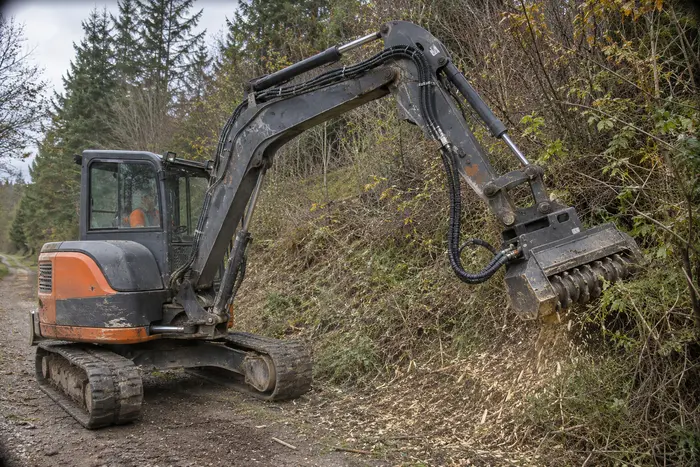
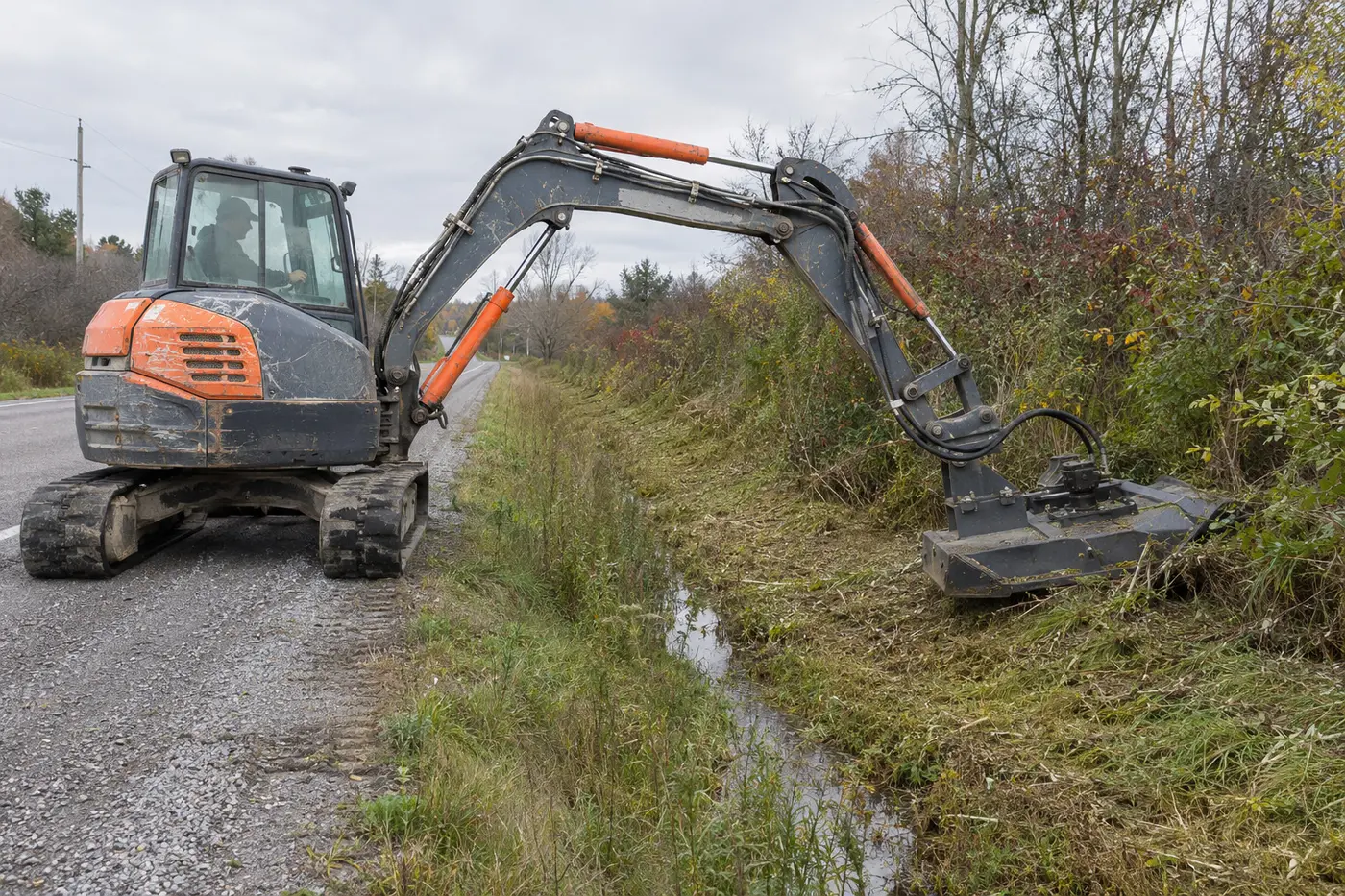
A mini excavator brush cutter is a hydraulic cutting head mounted on the dipper arm to clear brush on slopes, ditches and ground a wheeled machine cannot reach. Choose one by matching its flow and pressure to your excavator, its weight to the machine size, and its mounting to your coupler.
Shopping for this now? Get a fit-checked, delivered quote.
Key takeaways
- The arm gives reach over ditches, banks and slopes
- Match the head's flow, pressure and weight to your excavator's auxiliary circuit and size
- Mounting pattern and coupler type must match
- Flail heads and rotary heads suit different growth
- Keep bystanders well clear and follow the operator manual
A brush cutter on a mini excavator gives you reach. The arm lets you cut brush on a bank, across a ditch or around trees where a loader or tractor could not safely go. People often search for it after clearing a fence line or overgrown ditch with a hand tool and giving up.
Here is how to pick one without learning it the hard way.
What is a mini excavator brush cutter?
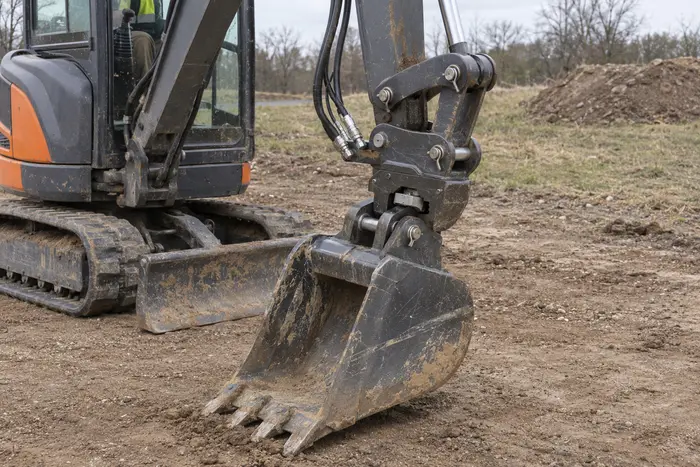
It is a hydraulic head that replaces the bucket at the end of the arm. The operator swings and positions it from the cab, much as they would a bucket. A compact excavator is a tracked or wheeled machine of modest operating weight, and it uses the same auxiliary circuit it uses for tools such as breakers, augers and grapples. The cutter head attaches through a quick coupler or a pin-on mount.
The common head types are:
- Rotary or disc-style heads with swinging blades. They cut brush and small trees.
- Flail heads with many small swinging knives on a drum. They shred grass and light brush into fine pieces.
- Forestry mulcher heads that grind thicker growth into chips. These need much more hydraulic power.
See mini excavator brush cutters and forestry mulchers for the options.
Mini excavator brush cutter vs flail mower
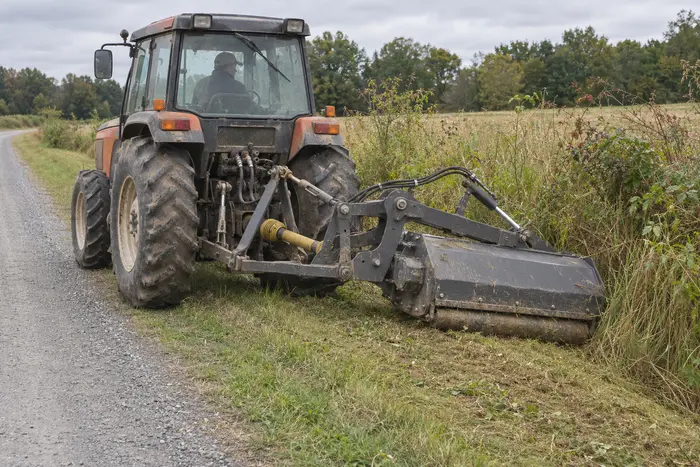
The names are used loosely, but the difference in how they cut matters. A flail mower uses a drum of small knives and leaves a clean mulched finish on grass, weeds and small brush. A brush cutter is the better tool for tougher, woodier growth. Many ditch and slope jobs use a flail because it leaves a tidy result, and its swinging knives tend to deflect off stones rather than break.
| Question | Brush cutter head | Flail head |
|---|---|---|
| Best on | Brush, briars, saplings | Grass, weeds, light brush |
| Finish | Coarser | Finer, mulched |
| Debris | More thrown pieces | Often contained by the housing |
| Wear parts | Blades | Knives or flails |
For a comparison of the two on a tractor or other carrier, see our flail mower vs rotary cutter guide.
How to match the head to your excavator
A mini excavator does not behave like a skid steer. Its hydraulics are built around the arm, and the auxiliary circuit has limits. Work through these steps in order.
- Auxiliary flow and pressure. Compare the head's required flow and pressure range to your excavator's auxiliary circuit. A head that needs more than the machine can supply will run slowly or not at all.
- Machine size. Compact excavators are classed by operating weight, up to roughly 8.5 tonnes. The head's weight has to sit well inside what the arm can lift at reach. A heavy head at full reach reduces stability.
- Mounting. Check whether you use a quick coupler or pin-on, and the pin size and spacing. See our quick coupler guide if you are not sure.
- Plumbing. You need auxiliary lines to the end of the arm. Many machines have a one-way or two-way auxiliary line. Cutter heads usually need a motor line and a case drain.
- Tilt and rotation. A fixed head is simple. A tilt or rotate head helps on slopes but adds cost and weight.
Where does it make sense?
Excavator-mounted cutters shine in specific jobs:
- Ditches and drainage channels. The arm reaches into the channel without driving through it.
- Steep banks and slopes. You can cut while the machine stays on firmer ground.
- Fence lines and tree rows. The reach lets you cut under and between.
- Utility corridors. Long, narrow strips are easy to work with an arm.
It is a weaker choice for large open fields. A skid steer or tractor-mounted cutter covers open ground faster. If your work is mostly open brush, see our guide on mini excavator mulchers or consider a loader-based cutter.
Cutting technique from the arm
Work from the top of a bank down, or from the side along a slope, so cut material falls away from the machine. Sweep the head in slow, overlapping arcs rather than stabbing into thick growth. Keep the head moving and let the motor recover before taking another bite. Cut at ground level only when the ground is clear of rocks, and raise the head a little in rocky patches. Leave a margin around trees you plan to keep, since a spinning head can scar bark. When the head bogs down, lift it clear and let it spin up again before you resume. Plan the pass so you are not working across a slope that could tip the machine.
Operating safely
- Keep people back. Cutters throw material. Follow the manual's clear distance and use the cab guarding it recommends.
- Cut from stable ground. Set the tracks level and avoid working with the machine on a steep slope. Swinging the arm shifts the center of gravity.
- Check for utilities and obstructions. Buried lines, rocks and fence wire all damage a head.
- Inspect blades and knives before each shift. Missing or damaged cutters cause vibration and unsafe operation.
- Follow the manuals. The excavator and the attachment manual control.
Choosing between rental and buying
If you clear a ditch or fence line once a year, rent. If you cut every season, owning can make more sense, because the learning curve and wear are easier to manage on your own equipment. Whichever you choose, ask who the cutter is built for. Heads made for forestry mulching are overkill for roadside mowing, and a light mowing head will not survive thick woody stems. Matching the head to the real work is where most of the value is.
Wear parts and upkeep
Blades, flail knives and cutting teeth are consumables. Plan to inspect them before each shift and replace sets, not single pieces, so the head stays balanced. An unbalanced head shakes the arm and the coupler, and the vibration works loose bolts and shortens the life of the motor and bearings. Grease the pivot points the manual lists. Check hoses at the arm joints, because they flex every swing and wear first there. After work in damp growth, clean sap and plant matter off the housing so it does not hold moisture and corrode.
Also think about the arm. Cutting puts side loads on the dipper and the coupler that a bucket does not. If you have a hydraulic coupler, check that its locking is in good shape before you hang a spinning head on it.
Buying checklist
- Machine make, model, year and operating weight.
- Auxiliary flow, pressure and whether it has a case drain port.
- Heaviest growth you plan to cut.
- Coupler type and pin pattern.
- Whether you need tilt or a rotating head.
- How wear parts are supplied, and the warranty terms in writing.
Get the right fit the first time
Send us your machine make, model and year and what you plan to do with it. A person checks fit against the maker's specs, and you see the delivered price on your quote before you pay. The supplier ships direct, and warranty terms, if any, are written on your quote. Get a fit-checked quote.
Questions buyers ask
What is a mini excavator brush cutter?
It is a hydraulic cutting head that mounts to a mini excavator's arm in place of the bucket. It clears brush on slopes, ditches and fence lines where reach matters. It runs off the excavator's auxiliary hydraulic circuit.
Can a mini excavator run a brush cutter?
Yes, if the machine has auxiliary hydraulics and the head's flow and pressure fit its circuit. Weight and mounting must match too. Confirm the whole combination against the maker's specs before you buy, because mismatches show up only after the first run.
What is better for a mini excavator, a flail mower or a brush cutter?
A flail head gives a finer, cleaner result on grass and light brush. A brush cutter head tackles thicker, woodier growth. Choose by the heaviest material you cut regularly, and check the head's maximum cutting size in its manual.
Do I need a case drain for a mini excavator brush cutter?
Many motor-driven heads do. The case drain keeps motor leakage at low pressure and protects the shaft seal. Check the attachment manual, and check whether your excavator has a drain line run out to the arm.
How big an excavator do I need for a brush cutter?
It depends on the head's weight and flow demand. Heavier heads need a larger machine with enough auxiliary flow and lifting stability at reach. Match the head to the machine's rated capacity and its auxiliary circuit.