Skid steer guide
Foam Filled Skid Steer Tires vs Solid: Which to Buy
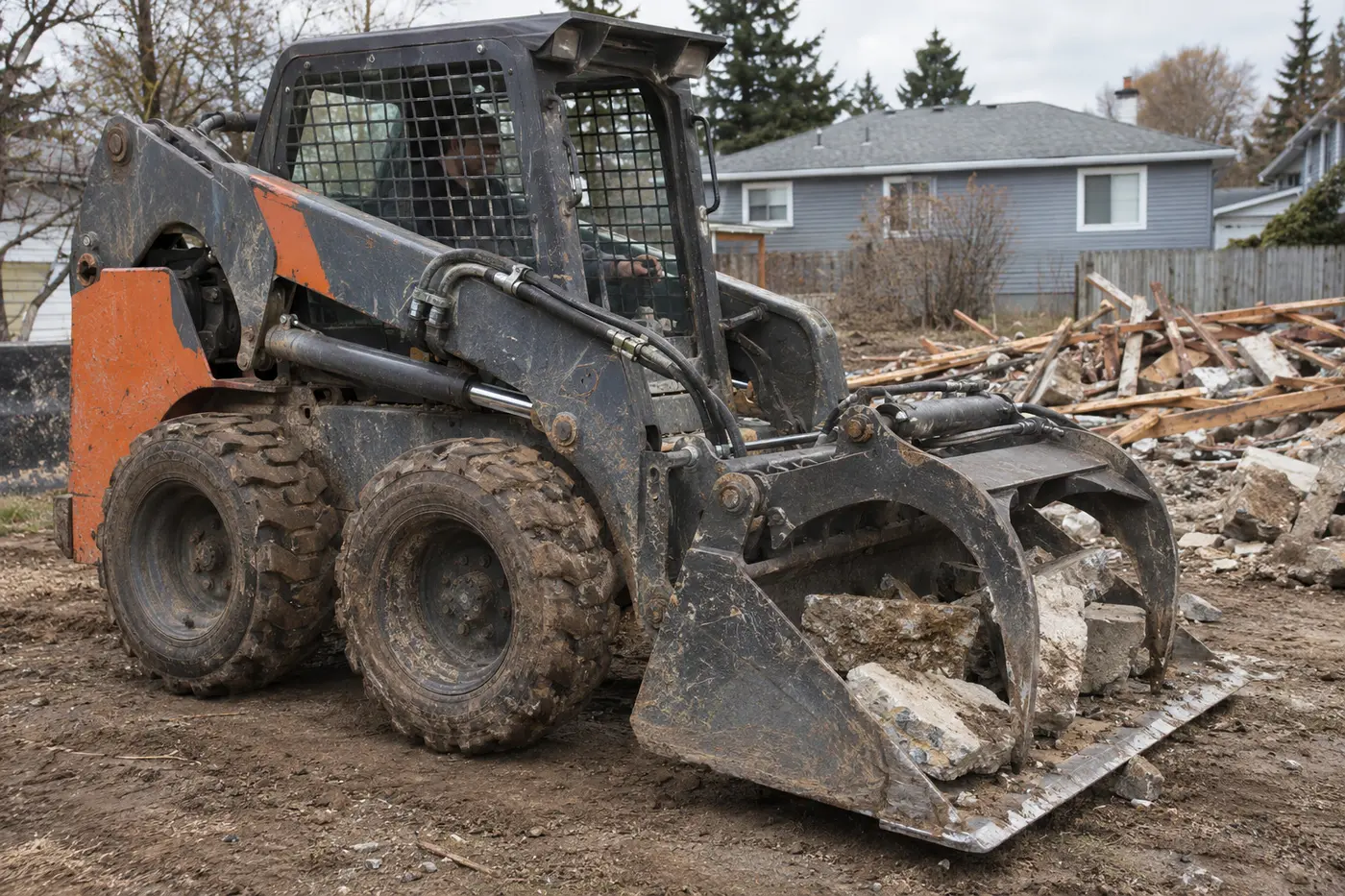
Quick answer
Foam filled skid steer tires cannot go flat because a polyurethane fill replaces the air, but they ride firmer and weigh more. Solid tires are the toughest for sharp debris and ride hardest. Air tires ride best but puncture easily. Choose by the debris and ground you work on.
Shopping for this now? Get a fit-checked, delivered quote.
Key takeaways
- Foam fill ends flats but gives a firmer, heavier tire.
- Solid tires suit scrap and recycling but ride hardest.
- Ballast weight does not raise rated operating capacity.
- Have a qualified shop fill or fit tires.
- Choose by ground and debris, not by label.
Foam-filled tires cannot go flat, but they ride harder and add weight. Solid tires cost more over the life of the tire in some jobs and less in others. Air tires ride best and fail fastest. The right pick depends on what is on the ground where you work.
What are the three skid steer tire types?
- Pneumatic (air-filled). A standard tire holding air. Best ride and the most forgiving on the machine, but a nail, wire or sharp rock can drop it flat.
- Foam-filled. A pneumatic tire that has had liquid polyurethane pumped in so the cavity becomes a firm, spongy fill instead of air. It keeps the tire shape without pressure.
- Solid. A tire made of solid rubber, often pressed onto the wheel or built as a one-piece wheel and tire. There is no air to lose and nothing to fill.
Some shops also describe a solid pneumatic style with a rubber insert. Ask what the product is made of before you compare quotes, because the names are not always consistent.
Foam filled vs solid skid steer tires: side by side
| Factor | Pneumatic | Foam-filled | Solid |
|---|---|---|---|
| Flat risk | High in debris | None once filled | None |
| Ride comfort | Best | Firmer | Harshest |
| Weight | Lightest | Heavier than air | Heaviest |
| Traction on soft ground | Good, adjustable by pressure | Good, pressure fixed | Depends on tread depth |
| Repair if damaged | Patch or replace | Usually replace the filled tire | Replace |
| Best use | Clean sites, grass, comfort | Demolition, scrap, brush, construction | Indoor, recycling, very sharp debris |
The table is general. Always follow your loader maker's tire guidance and the tire maker's load rating.
When do foam-filled skid steer tires make sense?
Foam fill earns its keep where a flat costs you a day. Think demolition debris, rebar, scrap yards, tree work, and old construction sites full of nails. You keep working instead of stopping to swap a wheel. Foam also resists the sidewall flex that can unseat a tire when you push hard against a pile.
The added weight is not all bad. A filled tire adds weight low on the machine, which some operators find steadier with a heavy bucket or a long attachment. But added weight does not change the rated operating capacity on the nameplate. Do not treat ballast as permission to lift more. Follow the operator manual.
What are the downsides of foam fill?
- Firmer ride. You feel more of the ground. Long days on rough ground are harder on the operator and on the machine.
- Heat. Foam does not shed heat as readily as air. Long travel at speed can build heat in the tire.
- No pressure tuning. You cannot drop pressure for flotation on soft ground or raise it for hard pavement.
- Harder disposal. A filled tire is a heavier, messier item to recycle or replace.
- Heavier wheel. Wheel bearings, axles and drive components carry the extra mass.
If you are on grass, finished lawns or a clean pad, regular air tires leave less mark and cost less to start with. If you run mostly on tracks or plan to switch, our guide on skid steer wheels vs tracks helps you decide whether tires are the right system at all.
Can you foam fill skid steer tires yourself?
You will find tutorials online, but this is a job for a shop with the right equipment. The tire must be sealed, pressurized and vented correctly. The fill needs the right mix and cure time. A badly filled tire can be lopsided, soft in spots or overpressured. Overpressure in a tire is a real hazard. If a filled tire fails while you work, the result can be dangerous. Have a qualified tire service do the fill and follow the maker's instructions for load and speed.
Many buyers choose factory or shop-filled tires and buy them already mounted on rims. That removes the hassle and gives you a wheel with a documented rating. Ask for the load capacity and the intended speed range for any tire you buy.
Are solid tires better than foam-filled?
Solid tires are the toughest option for scrap yards, recycling plants and indoor work with sharp debris. They last long when the ground is hard and the tread is not chewed up. They give the harshest ride. They are heavy and hard to change. On loose or soft ground they can slip because tread depth and flex are limited.
Foam is the middle ground for many owners. It keeps a real tire shape and tread pattern with flat protection. Solid is the stricter choice for the worst environments. If you are unsure, describe your work and ground to a tire service before you buy. The right answer depends on the site, not on the tire label.
How do tires affect attachment choice?
Tires change the footprint under the machine. A firmer tire gives a steadier base for a loader bucket or a pallet fork. It also transmits more shock into attachments that dig or break. If you run heavy powered tools, keep an eye on stability and weight. Our guide on how much a skid steer can lift explains how rated capacity and tipping load relate. For attachment-specific questions, browse skid steer buckets and other tools sized for your frame.
If you need extra traction or flotation without changing tires, over-the-tire tracks are another option. They fit over existing wheels of a matching tire size and can improve grip on mud, snow or soft ground. Confirm the tire size and machine clearance first.
How long do skid steer tires last?
There is no honest single number. Tire life depends on surface, turning habits, load and how much you spin the wheels. Skid steer tires wear fast because the machine steers by dragging the tires sideways across the ground. Tight pivot turns on pavement scrub tread off quickly. Wide, gentle turns and less wheel spin stretch tire life on any type. Rotate or swap sides when wear gets uneven, if the tire design allows it, and check the tire maker's guidance.
Inspect tires at the start of each shift. Look for cuts, bulges, exposed cord and stones lodged in the tread. On foam-filled and solid tires you will not see pressure loss, so visual checks matter even more.
A buyer's checklist for skid steer tires
- List the surfaces you work on and the worst debris you meet.
- Count how many flats you had in the past year. If it is more than a couple, foam or solid deserves a look.
- Check the tire size and load rating on your current wheels.
- Confirm the tire and fill spec with a qualified tire service.
- Ask about wheel and axle load limits for added weight.
- Plan the swap with the machine on level ground, following lockout and support rules in the manual.
Get the right fit the first time
Send us the make, model and year of your machine and what you plan to do with it. A person checks fit against the maker's specs and sends a delivered price for you to approve before you pay, and the manufacturer ships direct. Ready when you are: send us your machine details for a fit-checked quote.
Questions buyers ask
Can you foam fill skid steer tires?
Yes. A shop pumps liquid polyurethane into a pneumatic tire where it cures into a firm fill that cannot go flat. Have a qualified tire service do it. A poor fill leaves a lopsided or overpressured tire. Always confirm the load rating and speed range for the finished tire.
Are foam-filled tires better than solid tires on a skid steer?
Foam-filled tires keep a real tread and a slightly softer ride, so they suit mixed work like demolition, brush and construction. Solid tires are tougher in scrap yards or indoor work with sharp debris but ride harshest. Pick based on ground and debris, not on the label.
Do foam-filled tires ride rougher?
Yes. Foam is firmer than air, so you feel more of the ground. On rough sites for long days that adds operator fatigue and shock through the machine. If comfort matters more than flat protection, stay with air-filled tires and keep a plan for punctures.
Do foam-filled tires add weight to a skid steer?
Yes, a filled tire is heavier than an air tire, which adds ballast low on the machine. It does not raise the rated operating capacity on the nameplate. Follow the operator manual for load limits, and check wheel and axle ratings with the maker.
What is the difference between solid and pneumatic skid steer tires?
Pneumatic tires hold air, ride best and can go flat. Solid tires are made of rubber with no air, so they cannot puncture but ride hard and weigh more. Foam-filled tires sit between them, using a pneumatic tire with a polyurethane fill.