Forklift guide
Pallet Fork Capacity: Classes, Ratings and Weight Limits
Quick answer
Pallet fork capacity is the maximum weight a pair of forks can carry at a stated load center, and it falls as the load sits farther out. Fork classes tie capacity to carriage height. On a skid steer, the machine's rated operating capacity is usually the lower number, so it sets the real limit.
Shopping for this now? Get a fit-checked, delivered quote.
Key takeaways
- Capacity is for the pair of forks, at a stated load center.
- A load that overhangs the tines moves the load center out and cuts safe capacity.
- ITA classes tie carriage height to a capacity range.
- The skid steer's rated operating capacity is usually the lower limit.
- Never rely on a fork's size to guess its rating. Read the rating plate.
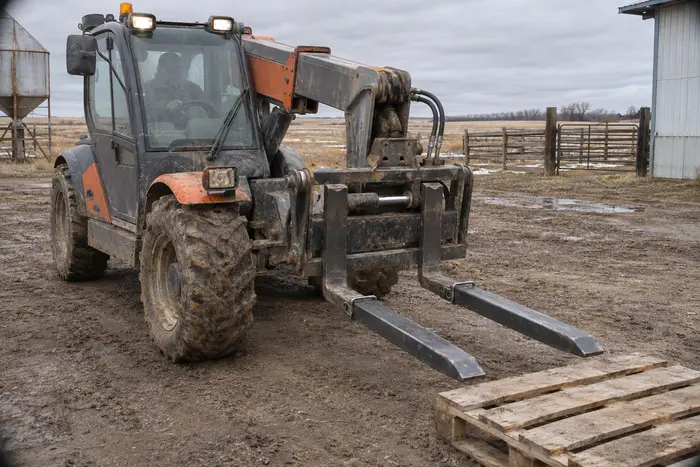
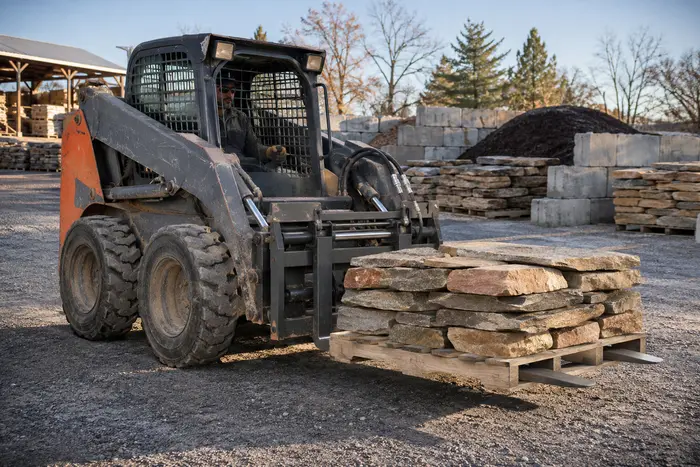
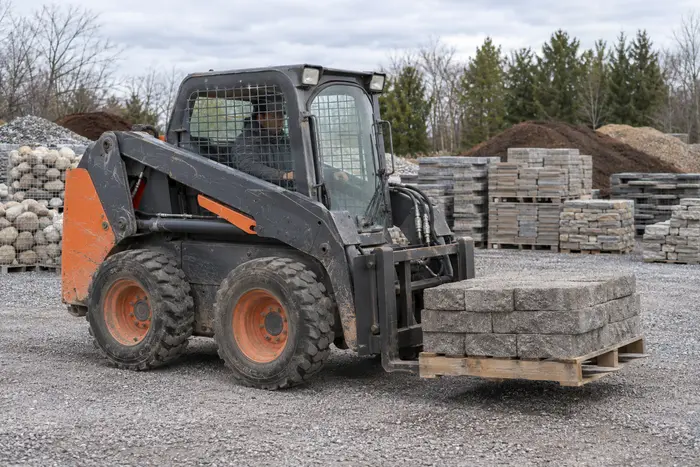
Ask ten operators how much their pallet forks can lift and you get ten guesses. The right answer comes from three things: the fork rating, the load center and the machine. This guide explains pallet fork capacity in plain terms, how fork classes work, and how to stay inside safe limits, whether the forks hang on a skid steer or a forklift.
What does pallet fork capacity mean?
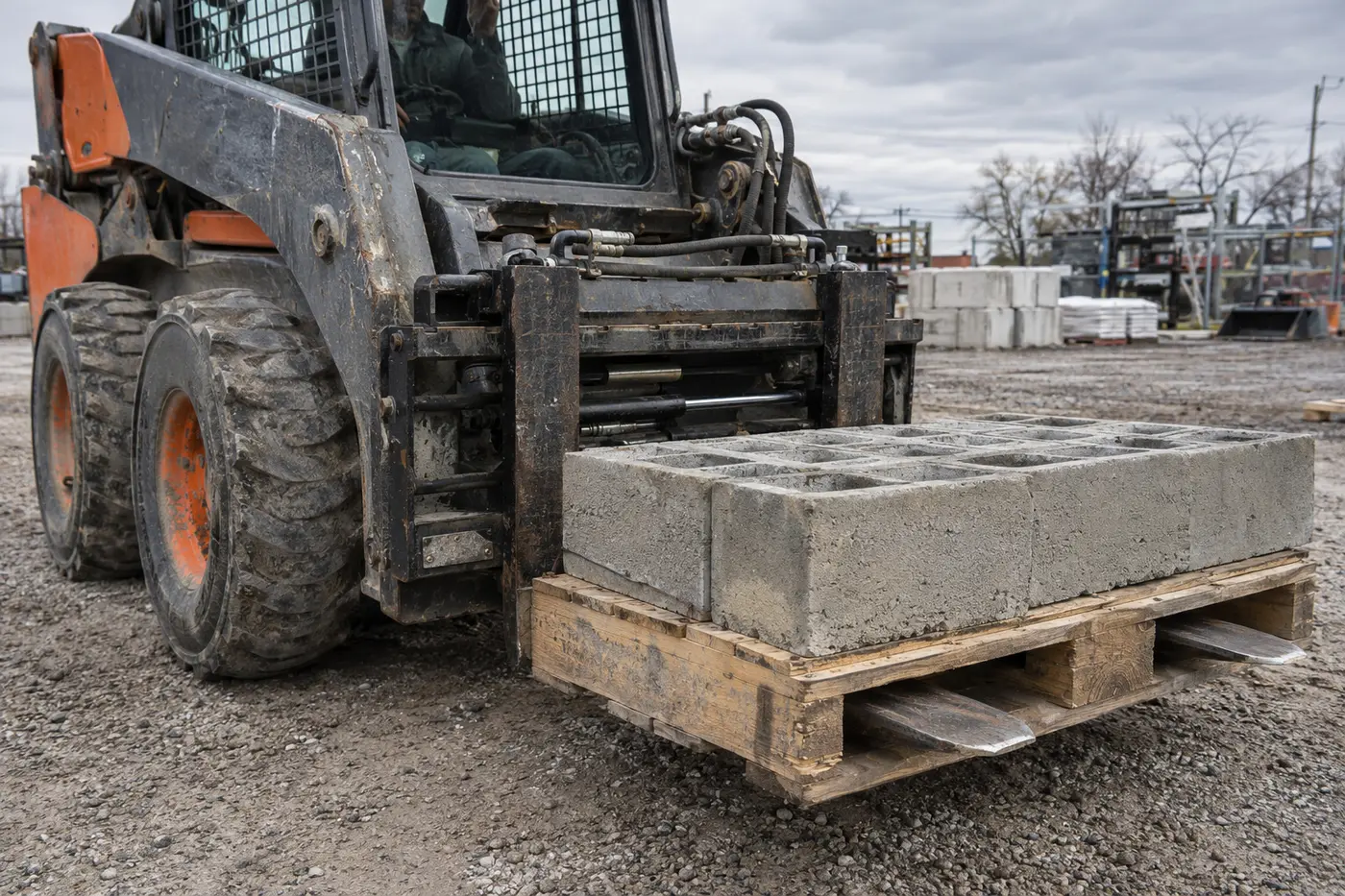
Pallet fork capacity is the maximum load a set of forks is designed to carry safely. It is normally rated for the pair, not for each tine, and for a stated load center. Load center is the horizontal distance from the vertical face (the heel) of the fork to the center of gravity of the load. A rating only means something with that distance attached. If you move the load farther out, the forks and the machine can safely carry less. If the load is a pallet that sits flush against the heel, the load center is close and the full rating applies.
Why does load center matter so much?
It works like a lever. The farther the weight sits from the heel, the more turning force it puts on the fork, the carriage and the machine. A load that overhangs the ends of the tines, or a tall load that is awkward to balance, shifts the center of gravity outward. Capacity drops. That is why long, uneven loads like lumber, culvert and rolled materials need extra care, and why a common rule of thumb is that forks should reach at least two-thirds of the length of the load.
What are fork classes?
Forklift forks are grouped by carriage class, set by the Industrial Truck Association. A class corresponds to a standard height between the top and bottom bars of the carriage, and each class goes with a range of lifting capacity. There are five classes. The figures below are the commonly published ITA ranges; the rating on your own forks is what counts.
| ITA class | Carriage height | Capacity range |
|---|---|---|
| Class 1 | 13 inches | Up to about 2,200 lb |
| Class 2 | 16 inches | About 2,200 to 5,500 lb |
| Class 3 | 20 inches | About 5,500 to 11,000 lb |
| Class 4 | 25 inches | About 11,000 to 17,600 lb |
| Class 5 | 28.66 inches | About 17,600 to 24,200 lb |
On Class 2 and 3 forklift forks, a 42 inch length is common because it suits ordinary 40 to 48 inch pallets. Thickness and width rise with capacity: lighter forks are often around 1.5 inches thick and 4 inches wide, heavier classes thicker and wider. Read the stamped rating rather than judging a fork by its size.
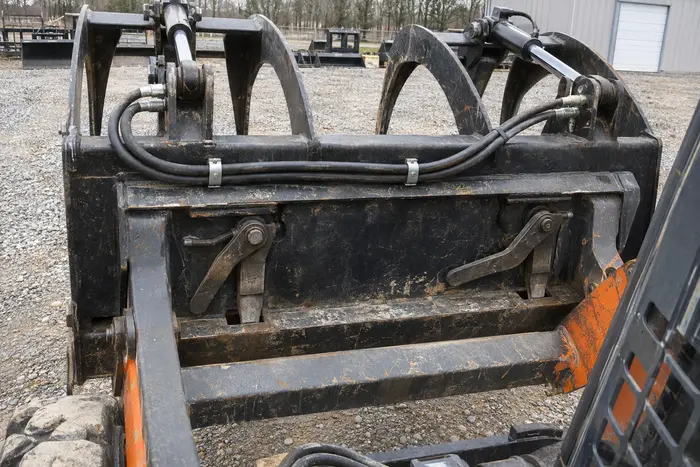
Class numbers apply to hook-type forks on a forklift carriage. Many skid steer fork frames use a different mounting scheme, so do not assume a class number applies. Read the rating on the frame and the tines. If you are comparing, our skid steer pallet forks guide covers frame types and options.
How does a skid steer change the numbers?
A skid steer has its own rating, the rated operating capacity. It is set by the manufacturer and based on tipping and stability. Compared with a rough terrain forklift of similar size, a skid steer is generally more maneuverable but usually rated to lift less. When you add forks, the weight of the frame and tines counts against the machine. The real limit for your lift is the lower of three numbers:
- The fork rating for the pair at the actual load center.
- The skid steer's rated operating capacity.
- Whatever the ground and the situation allow. Soft ground, slopes and uneven terrain cut safe capacity a lot.
Our guide on how much a skid steer can lift explains the machine side.
How do you read a fork rating?
- Find the data plate or markings on the forks and frame. Look for the capacity per pair and the load center.
- Check the class or the mounting type.
- Check that both tines match. Mismatched tines can hide different ratings.
- Compare the number to the heaviest load you plan to carry, with a margin.
- If a rating is missing or unreadable, take the fork out of service until the maker confirms its rating, or replace it.
How do you calculate whether a load is safe?
- Weigh or estimate the load. Use the shipping label, the manufacturer's data or a scale. Add the pallet.
- Find the load center. Measure from the heel of the fork to the middle of the load. A standard pallet pushed all the way in puts the center at about half its depth.
- Compare with the fork rating. The load must be under the pair's capacity at that center.
- Compare with the machine rating. Include the weight of the frame and forks.
- Choose the lowest. If any number is close, lighten the load or use bigger equipment.
When in doubt, take a smaller load. A tipped machine costs far more than a second trip.
Does fork length change capacity?
Yes. A rating assumes a normal fork length and a load that sits close to the heel. A longer fork that carries a long load pushes the center of gravity farther out, so the usable capacity falls. Extensions and slip-on tine covers make the effective length longer, and they come with their own derating. If you add extensions to move long materials, find out what the extension maker says about capacity and assume the lower figure applies. The same goes for tall, top-heavy loads, which raise the center of gravity and make the machine less stable even when the weight is within the rating.
Keep a simple habit: before every unusual lift, ask where the weight sits, how far it is from the heel, and whether the machine is level.
How do you use forks safely?
- Follow the operator manual for the machine and the forks.
- Keep loads low and tilted slightly back when you travel.
- Do not lift people on forks.
- Do not use forks that are bent, cracked or have worn heels.
- Keep bystanders away and watch overhead.
- Avoid sharp turns and slopes with a load raised.
When should you replace pallet forks?
Replace forks that are visibly bent, cracked, or twisted, that have a worn heel, or that have lost thickness at the blade. Wear in thickness cuts capacity. Forks that no longer sit level, or that are no longer parallel, can drop a load. Many shops set a limit on how much a blade can wear before it is retired, so check the maker's guidance. Browse skid steer pallet forks and mounting plates when you need to replace parts.
Get the right fit the first time
Forks, frames and quick attach plates all have to match your machine, and the rating has to cover your heaviest load. Send us your make, model and year, and the loads you move. We will confirm fit against the manufacturer's specs and give you a delivered price to approve before you pay. Start with a fit-checked quote.
Questions buyers ask
What is pallet fork capacity?
It is the maximum weight a pair of forks can carry safely at a stated load center. The rating drops as the load sits farther from the heel of the fork. On a skid steer, the machine's own rated operating capacity also applies, and the lower of the two numbers is your limit.
What are pallet fork classes?
Fork classes are standard carriage sizes defined by the Industrial Truck Association. There are five, from Class 1 to Class 5, each tied to a carriage height and a capacity range. For example, Class 2 is commonly listed at about 2,200 to 5,500 lb. The classes apply to hook-type forks on a forklift carriage.
How much weight can skid steer forks lift?
It depends on the forks and the machine. Check the fork rating for the pair and the skid steer's rated operating capacity, which is usually the lower number. Include the weight of the frame and tines, and remember that overhanging loads and soft or sloped ground reduce what is safe.
How long should pallet forks be?
A common rule of thumb is that forks reach at least two-thirds of the length of the load. A 42-inch length is common on Class 2 and Class 3 forklift forks because it suits standard pallets. Too short and loads tip. Too long and the tips can hit whatever sits behind the pallet.
Do forklift fork classes apply to skid steer forks?
Not always. Class numbers apply to hook-type forks on a forklift carriage. Many skid steer fork frames use a different mounting scheme. Read the manufacturer's rating on the frame and tines, and confirm that the frame matches your quick attach plate.