Land clearing guide
Flail Mower vs Rotary Cutter: Which Is Better?
Quick answer
A flail mower shreds with hinged hammers on a drum and leaves a finer cut with less thrown debris. A rotary cutter slashes with heavy blades, handles thicker brush and usually needs less power per foot of width. Choose a flail for roadsides and finish. Choose a rotary cutter for heavy rough clearing.
Shopping for this now? Get a fit-checked, delivered quote.
Key takeaways
- Flail mowers give a finer cut and throw less debris.
- Rotary cutters handle thicker woody brush.
- Flails deflect off obstacles; blades can bend or break.
- Check hydraulic flow or PTO power before you buy.
- A mulcher is the step up for standing trees.
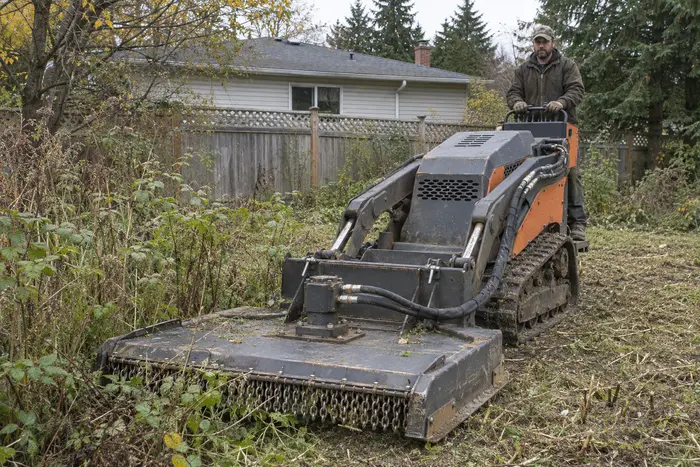
A flail mower shreds and mulches with many small hinged hammers on a spinning drum. A rotary cutter chops with one or two heavy blades on a vertical spindle. Flail mowers leave a finer cut and tend to throw less debris. Rotary cutters handle thicker, tougher stuff and have fewer wear parts. The right one depends on what you are cutting.
How does a flail mower work?
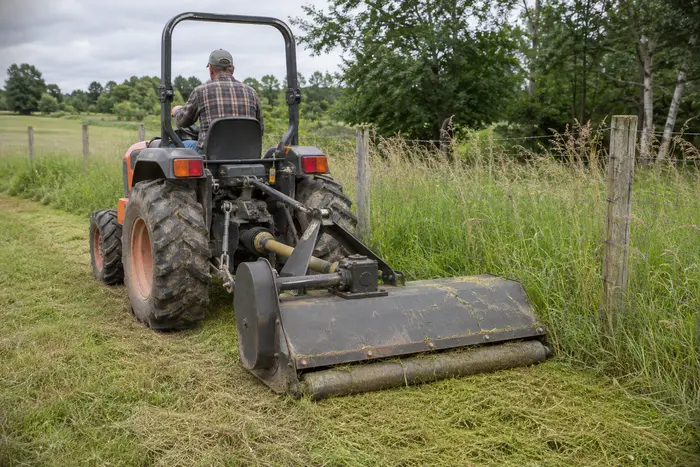
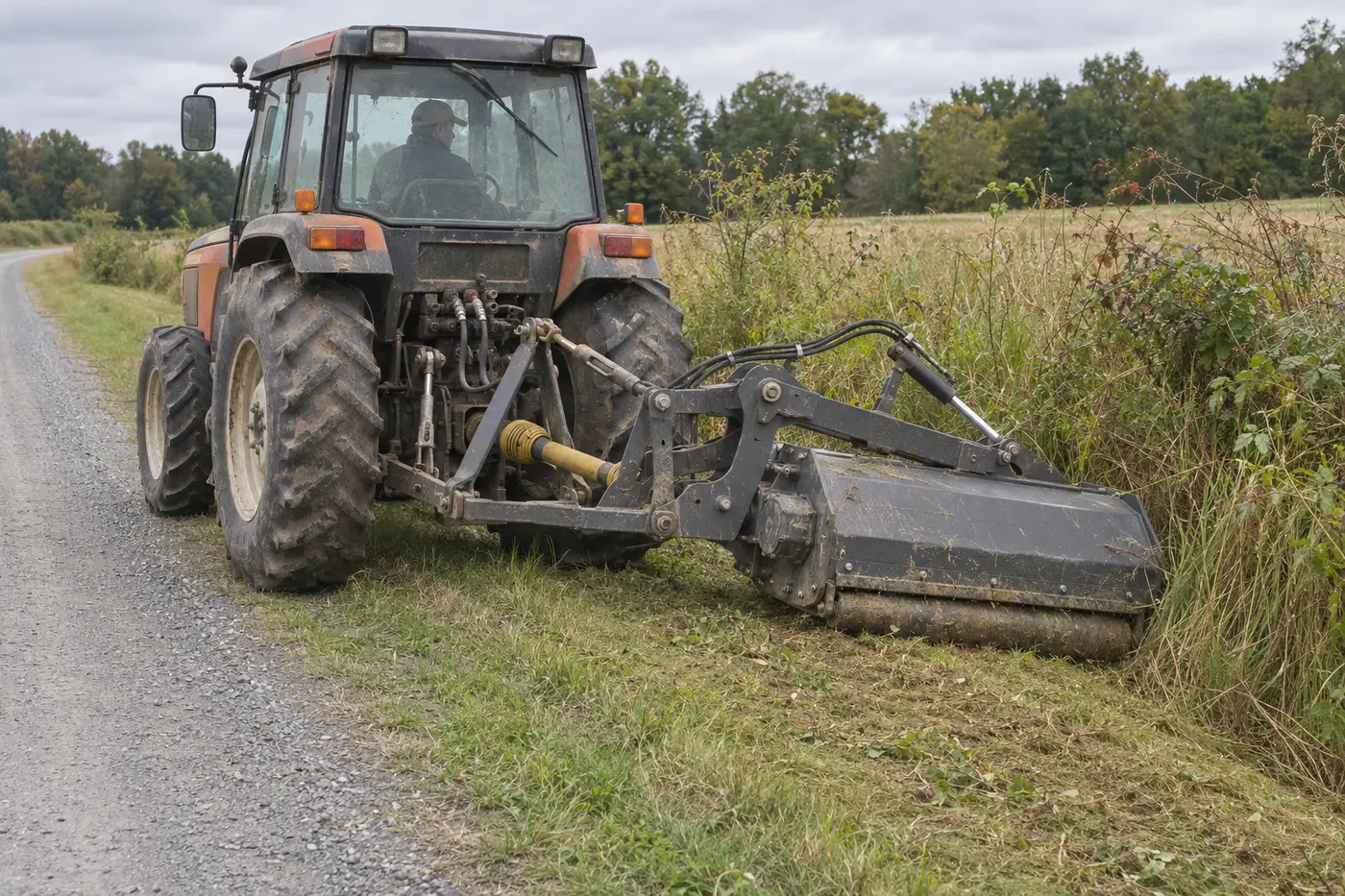
A flail mower is a powered vegetation cutter used on heavier grass and scrub that a normal lawn mower could not cope with. It gets its name from the flails, which hang from a rotating horizontal drum. Some makers call the flails knives, blades or hammers. As the drum turns, centrifugal force pushes the flails outward, and they cut by impact. Standard flails are shaped like a T or a Y, and some special shapes are made for shredding larger brush or for a smoother finish.
A flail mower is best used to give a rough cut to long grass and even brambles in places such as roadsides, where contact with loose debris is possible. If a flail strikes an immovable object, it tends to swing back rather than grab it. Rotary-style mowers are more likely to catch and throw objects.
How does a rotary cutter work?
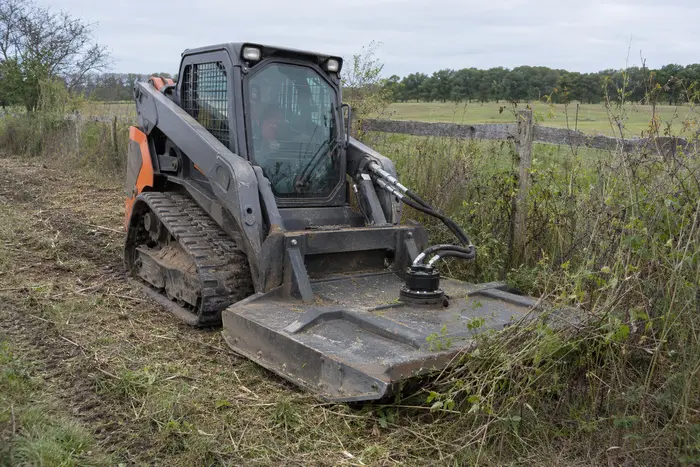
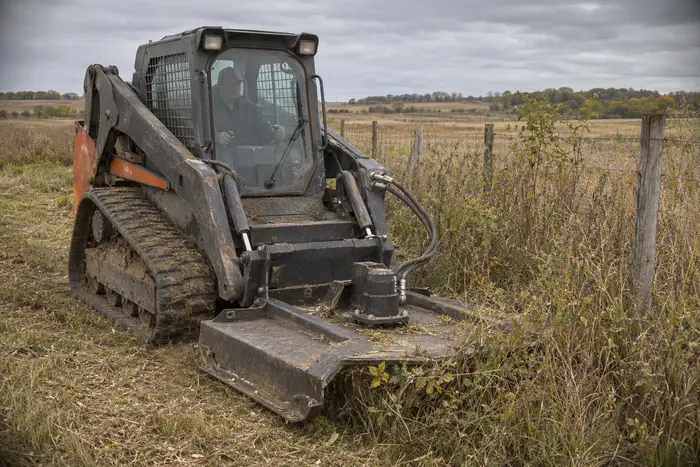
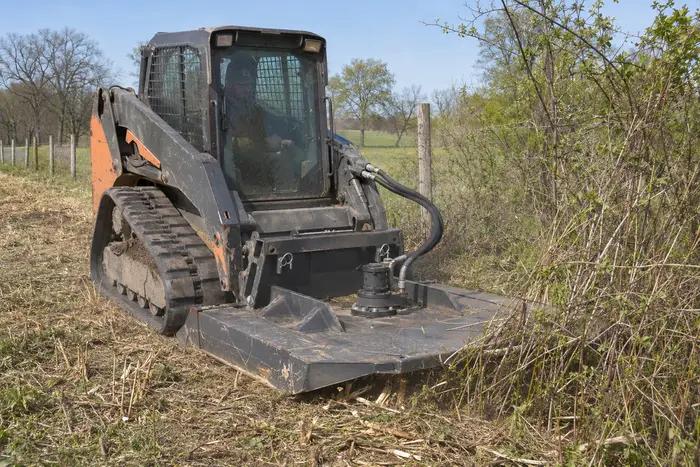
A rotary cutter, sometimes called a brush cutter, has one or more heavy blades on a vertical shaft that spin inside a steel deck. The blades cut by sheer speed and weight. They slash grass, weeds and woody brush as the machine moves forward. Rotary cutters mount on a tractor's three-point hitch and run off the PTO, or they mount on a skid steer or excavator and run off hydraulics. Heavy-duty versions can handle saplings and thicker stems.
Flail mower vs rotary cutter: side by side
| Factor | Flail mower | Rotary cutter |
|---|---|---|
| Cut quality | Fine, mulched clippings | Coarser, can leave clumps |
| Thick brush and saplings | Handles light to medium brush | Better on heavier woody stems |
| Debris throw | Less. Material is held and shredded | More. Blades can throw rocks and trash |
| Hitting obstacles | Flails deflect | Blades can bend or break |
| Power need | Higher per foot of width | Lower per foot of width |
| Maintenance | Many flails to replace, more moving parts | Fewer parts, blades sharpen or swap |
| Best for | Roadsides, ditches, pasture, finer finish | Overgrown fields, thick weeds, heavier brush |
Which one should you buy?
Choose a flail mower if you
- Mow near roads, buildings, fences or people and want less thrown debris.
- Want finely chopped clippings that break down faster.
- Cut around stones, wire and trash that could damage a rotary blade.
- Mow slopes, ditches or banks where a smooth finish is helpful.
Choose a rotary cutter if you
- Clear overgrown fields with thick weeds and woody stems.
- Need a rugged tool at lower cost for rough cutting.
- Do not need a fine finish.
- Have a tractor with limited PTO or hydraulic power.
If you cut mixed vegetation near roads or people and want one tool, a flail is often the better all-rounder. If you spend most of your time clearing, a rotary cutter is often the faster tool. Many owners end up with both.
Flail mower vs brush cutter on a skid steer
On a skid steer, both tools run off the auxiliary hydraulics. Check the flow and pressure the attachment needs against your machine's rating. A skid steer works as a tool carrier with the ability to turn within its own length, which makes it good for tight clearing jobs. See our skid steer brush cutter buying guide, our guide on piston vs gear motor brush cutters and our low-flow skid steer brush cutter guide for the details. Browse skid steer brush cutters and excavator brush cutters to compare.
What about a mulcher?
A mulcher is a stronger relative. It grinds standing trees and thick brush instead of slashing. It needs more power and usually more hydraulic flow, so check the rating on your machine. See skid steer mulchers if your clearing job involves trees, not just brush and grass.
Hydraulic or PTO drive: what powers it?
On a compact tractor, most flail mowers and rotary cutters run off the PTO and ride on the three-point hitch. Check the PTO horsepower the mower needs and the hitch category before you buy. Our guide to choosing a flail mower for a compact tractor covers sizing. On a skid steer, mini skid steer or excavator, the same tool types come in hydraulic versions. They need the right flow, the right pressure and, for some motors, a case drain line. Mismatched hydraulics lead to slow, hot, short-lived machines, so confirm the spec before you order.
Where each tool fits on the property
Think about where you will mow most. Along a public road, a flail's controlled, shredded cut and lower debris throw is a clear advantage. In a pasture with scattered stones, a flail tolerates strikes better. In an overgrown field you have not touched in years, a rotary cutter gets through the first pass faster, and you can follow with a flail to clean it up. On slopes and ditches, check the machine's stability limits and the attachment's weight first. Wet ground and dense growth slow any cutter, so plan extra time and take lighter passes.
Cost of ownership in plain terms
A flail mower has more moving parts and more wear items, so expect to replace flails, bearings and rollers over time. A rotary cutter has fewer wear parts, but blades need sharpening or replacement, and a heavy strike can bend a blade or spindle. In both cases the real cost is downtime: a broken tool in the middle of a job costs more than the part. Keep spares of the wear items and keep the manual handy.
Safety basics for any mower or cutter
- Walk the area first. Remove wire, metal, large stones and trash.
- Keep bystanders, children and pets far from the work zone. Blades and flails can throw objects.
- Check guards, chains, deflectors and shields before each use.
- Do not run the cutter with bystanders downwind or near vehicles and windows.
- Shut down, lower the attachment and let the rotor stop before inspecting or clearing jams.
- Wear eye, hearing and head protection.
- Follow the maker's operator manual and your site's rules.
Maintenance: what wears and how often to check
On a flail mower, flails wear and break, and the pins or bolts that hold them wear out. Check them before every use and replace worn or missing flails in sets so the drum stays balanced. Check the rollers and bearings and grease them on schedule. On a rotary cutter, blades dull and nick. Sharpen or replace them as a pair to keep the spindle balanced. Look at the blade bolts and the spindle for signs of looseness or damage. For both types, check gearboxes or hydraulic motors and hoses for leaks and heat.
Get the right fit the first time
Send us the make, model and year of your machine and what you plan to do with it. A person checks fit against the maker's specs and sends a delivered price for you to approve before you pay, and the manufacturer ships direct. Ready when you are: get a fit-checked cutter quote.
Questions buyers ask
What is the difference between a flail mower and a rotary cutter?
A flail mower uses many small hinged flails on a horizontal drum to shred vegetation into fine clippings. A rotary cutter uses one or two heavy blades on a vertical shaft to slash through. Flails deflect off obstacles and throw less debris. Rotary cutters handle thicker brush and have fewer parts to wear.
Is a flail mower better than a rotary cutter?
Not always. A flail mower gives a finer cut, throws less debris and tolerates stones and wire better. A rotary cutter is stronger on thick woody brush and usually needs less power. Choose by what you cut, how close people are and the finish you want.
Can a flail mower cut brush and saplings?
Light to medium brush and small saplings, yes, depending on model and power. Very thick woody stems are better suited to a heavy-duty rotary cutter or a mulcher. Check the maker's maximum cutting diameter and make sure your tractor or loader supplies the required power or flow.
Is a flail mower safer than a rotary cutter?
A flail mower generally throws less debris because the flails deflect off immovable objects instead of grabbing and throwing them. Both types still throw material, so guards, clear zones and protective gear are essential. Follow the manual, and keep bystanders and pets well away.
Which is better for a skid steer, a flail or a rotary cutter?
Both run on auxiliary hydraulics. Flail mowers suit finer cutting and safer work near roads. Rotary cutters suit heavy brush and rough clearing. Check your loader's flow and pressure against the attachment's requirements, and consider a mulcher for trees.