Skid steer guide
How to Grade With a Skid Steer Bucket, Step by Step
Quick answer
How to grade with a skid steer bucket: set grade stakes, rough cut and fill with the bucket flat, then back-drag with the cutting edge on the ground in thin passes. Work from high spots to low spots, check against your reference often, and finish with light overlapping passes in one direction.
Shopping for this now? Get a fit-checked, delivered quote.
Key takeaways
- Set stakes or a string line first so you always know cut and fill.
- Rough grade with big passes, finish grade with thin, slow ones.
- Back-dragging with the bucket flat is what leaves a smooth surface.
- A wide, straight-edge bucket grades faster than a general-purpose bucket.
- For large flat areas, a grader or box blade beats a bucket.
A skid steer bucket can grade a yard, a pad or a gravel drive if you work in the right order. The trick is to stop thinking about digging and start thinking about shaving. This guide covers how to grade with a skid steer bucket, from the first stake to the last pass.
What does grading actually mean?
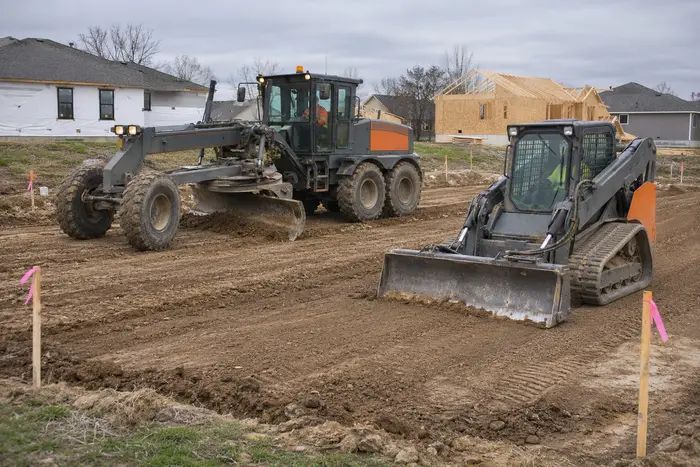
Grading is shaping the ground so it is level or sits at a set slope. That might be a base for a slab, a pad for a shed, a gravel road, or a yard that drains away from the house. The usual process is simple. Someone marks the site with stakes that show how much to cut (remove) or fill (add). Heavy machines rough out the shape. Then a finer tool finishes the surface. Our plain-English grading guide goes deeper on the terms.
What do you need before you start?
- A reference: grade stakes, a string line, a laser, or at least a straight board and a level.
- A bucket with a flat, straight cutting edge. A general-purpose bucket works. A wider bucket with a low profile works better.
- Free-moving bucket tilt. Check that you can dump and curl the bucket without the lift arms fighting you.
- Dry or slightly damp soil. Mud and standing water ruin finish work.
- Your operator manual and the rated operating capacity. Wear the seat belt, keep the restraint bar down and keep people clear of the work area.
How to grade with a skid steer: the steps
- Walk the site. Find the high spots, low spots, soft spots and anything buried. Mark utilities before you dig.
- Set your reference. Stakes with cut and fill marks are the standard. A string line works for small jobs. Without a reference you are guessing.
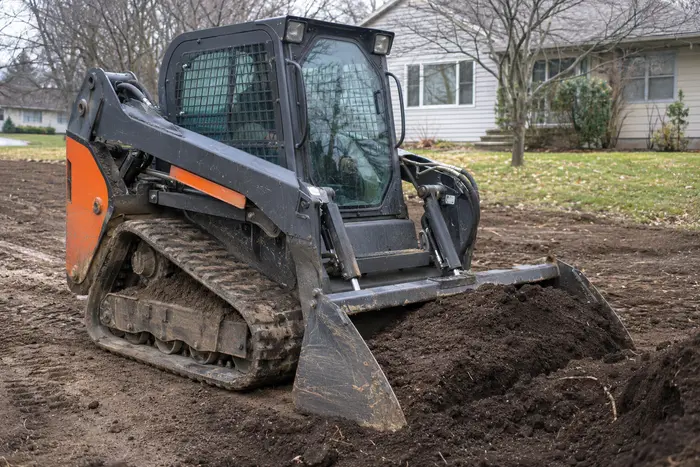
- Strip and rough cut. Take the top layer off where it needs to come down. Carry the dirt to low spots. Keep the bucket slightly open and use short, repeatable passes.
- Fill and spread. Dump material in the low areas, then spread it with the bucket tipped forward. Do not try to place it perfectly. Overfill a little and shave it later.
- Compact where needed. Loose fill settles. If the area carries a load, compact in layers and re-check the level.
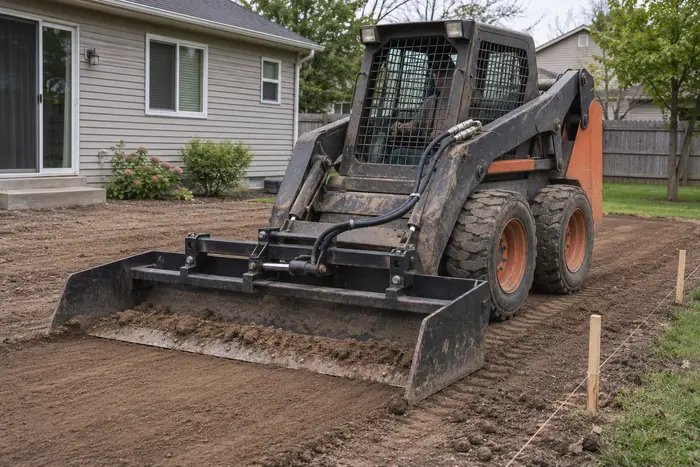
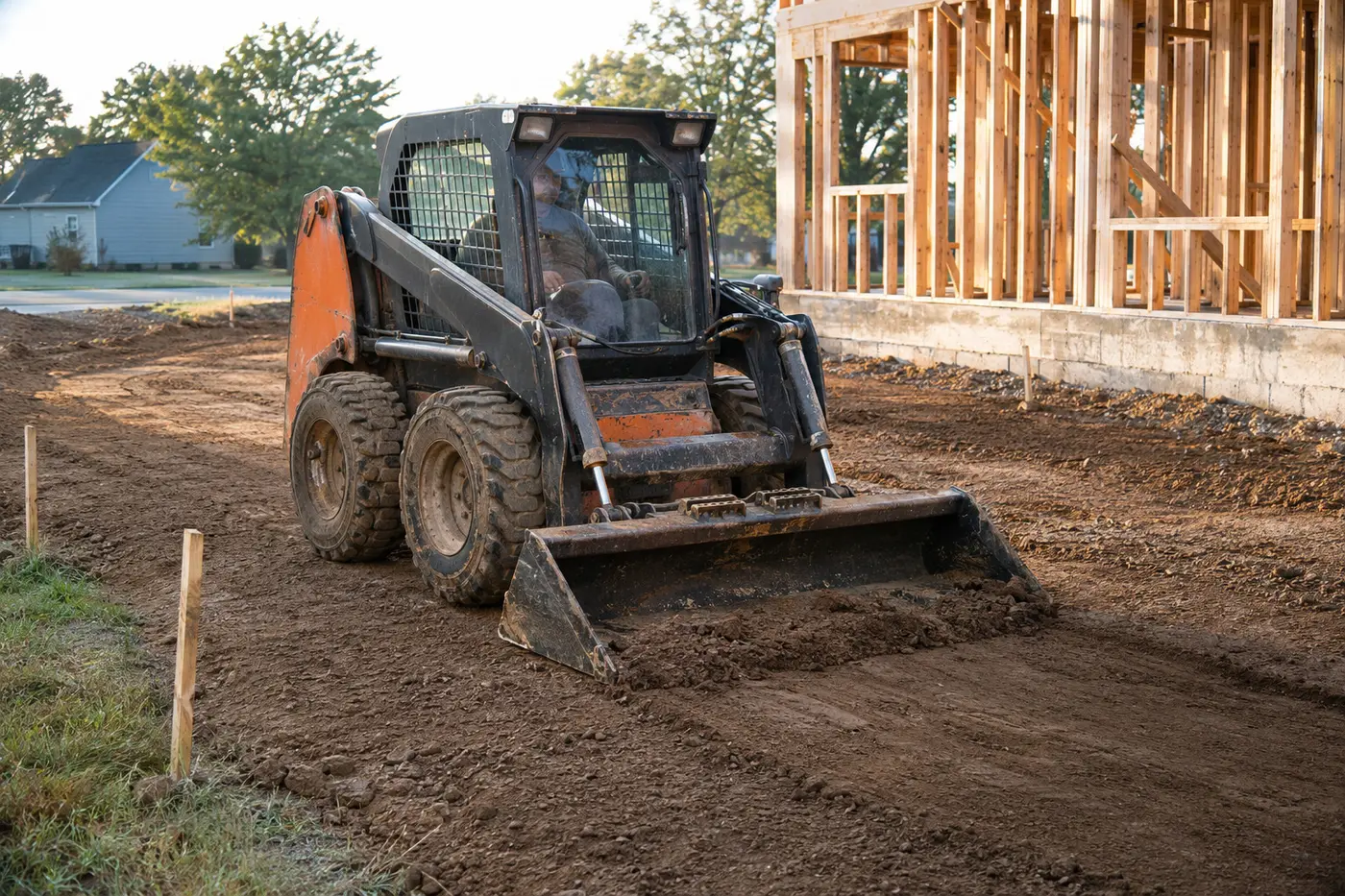
- Back-drag to smooth. This is the core move. Lower the bucket so the cutting edge sits on the surface, set the tilt so the bottom of the bucket is close to flat, and reverse slowly. The edge shaves the high spots and drops that soil into the low ones.
- Finish with light passes. Make thin, overlapping passes in one direction, then a second set at a right angle. Keep your speed low and steady.
- Check the result. Sight down the surface, check against your reference, and fix what is off while the machine is still there.
How do you rough grade vs finish grade?
Rough grading gets the shape right. Finish grading gets the surface smooth. They use the same machine but a different touch.
| Rough grade | Finish grade | |
|---|---|---|
| Goal | Correct shape and elevation | Smooth, even surface |
| Bucket angle | Open, scooping | Nearly flat, edge on the ground |
| Direction | Forward and back as needed | Mostly back-dragging |
| Pass depth | Deeper cuts | Very light shaving |
| Speed | Moderate | Slow and steady |
How do you grade gravel with a skid steer?
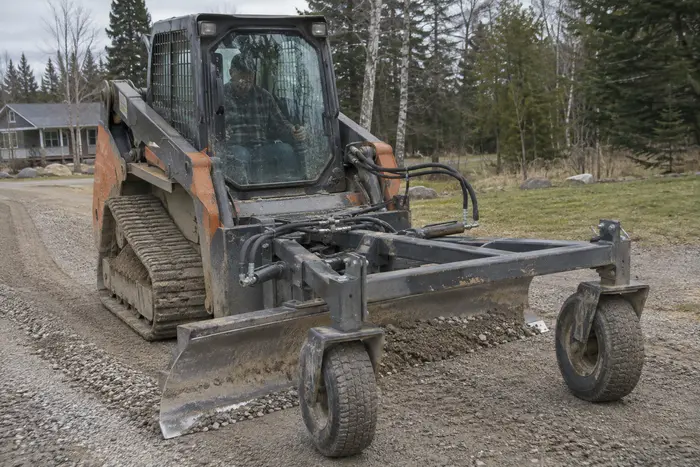
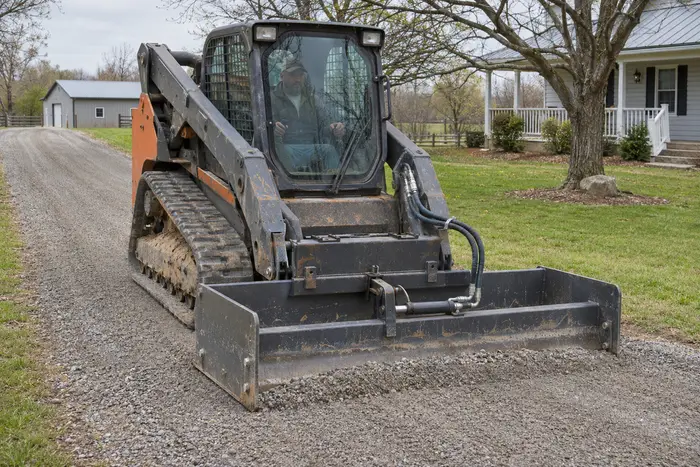
Gravel is more forgiving than dirt, but the same method applies. Spread the stone in an even layer, then back-drag in light passes. Crown a drive so the center sits higher than the edges and water runs off. Add stone where you see low spots, not everywhere. Compact between lifts if the surface will carry vehicles.
Wide bucket choices matter here. Our skid steer buckets page shows the range, and the bucket size guide helps you pick a width and capacity that suits your machine.
How do you set and hold a slope?
Most grading jobs are not dead level. Water has to go somewhere. For a yard or pad, the usual idea is to pitch the surface away from buildings so rain runs off instead of pooling at the foundation. Pick your high point and your low point, then make every pass respect that line.
A few habits help:
- Stretch a string between two stakes and measure down from it at several points. If the distance changes in a steady way, your slope is steady.
- Mark where the finished surface should sit on each stake, so you are cutting to a number and not to a feeling.
- Work along the slope, not across it, on the final passes. Cross-slope passes tend to push soil sideways.
- Re-check after rain. A fresh surface settles and shows low spots you could not see before.
If drainage matters, such as a yard next to a house or a drive with a ditch, take extra time here. A smooth surface that holds water is still a bad grade.
What about grading around trees, curbs and edges?
Edges are where bucket grading gets tricky. Use the corner of the bucket for tight spots, and hand-finish the last bit with a rake or shovel. Keep soil away from the base of trees, because piling fill against a trunk can hurt the tree over time. Leave a clean break at hard edges such as slabs and curbs so the new surface meets them flush and does not leave a lip.
Which common mistakes ruin the finish?
- Taking too much per pass. Deep bites leave ridges and waves. Take less.
- Fighting the bucket tilt. If the edge digs in on a back-drag, you have tipped the bucket too far forward. Curl it back a touch so the bottom sits flatter.
- Grading with a loaded bucket. A bucket full of dirt skids on the surface and hides what is under it. Dump before you finish.
- Skipping the reference. Eyeballing a slope is how a patio ends up draining toward the house.
- Working wet ground. Wheels and tracks rut it. Wait for it to firm up.
- Ignoring tire or track marks. Your own marks show up in the final surface. Plan your last passes so you walk across the finished area as little as possible.
When should you use a different tool?
A bucket is a great all-rounder, but it is not the fastest way to finish a big flat area. A grader or box blade has a longer cutting edge, floats over the surface and averages out bumps. A landscape rake pulls out rocks and roots and leaves a seedbed texture. For long gravel drives and large pads, look at box graders and landscape rakes. We compare them in our grader attachment guide.
If you are not sure which attachment fits your machine and the job, send us the make and model and we will help you match one. A person confirms fit against the maker's specs before you pay.
Can a mini skid steer grade too?
Yes, on smaller jobs. A mini has less weight and less power, so take thinner passes and expect to work longer. Narrower buckets also mean more overlap. For patios, paths and garden beds it is often the better choice because it fits through gates.
Get the right fit the first time
Whichever bucket or grading tool you pick, it has to match your machine's quick attach, lift capacity and hydraulics. Send us your make, model and year and we will confirm fit against the manufacturer's specs, then give you a delivered price to approve before you pay. Start with a fit-checked quote.
Questions buyers ask
How do you grade with a skid steer for beginners?
Start with a reference such as stakes or a string line. Rough cut and fill first, then back-drag with the bucket nearly flat to smooth the surface. Take thin passes, work slowly and check your level often. Practice on a small patch before you tackle the whole site.
How do you finish grade with a skid steer?
Dump the bucket empty, set the cutting edge nearly flat on the ground, and back-drag in thin overlapping passes in one direction. Make a second set at right angles. Keep speed low and constant, and avoid driving on the finished surface more than you have to.
What is a grading bucket?
A grading bucket is a wide, low-profile bucket with a straight cutting edge, made for shaving and spreading material rather than digging. Some have a hydraulic tilt or a rear blade so the edge can follow a slope. A standard bucket can grade too, but a grading bucket is usually faster at it.
How do you grade gravel with a skid steer?
Spread gravel in an even layer, then back-drag in light passes. Crown a driveway so the middle sits higher than the edges and water drains off. Add stone only to low spots, and compact between lifts if vehicles will use the surface.
Is a skid steer bucket good for grading?
Yes, for small and medium jobs. It is the attachment most machines already have. For wide flat areas and long gravel drives, a box grader or land plane is faster and gives a flatter result. Use the bucket to rough out the shape either way.