Equipment basics guide
What Is Grading in Construction? A Plain-English Guide
Quick answer
What is grading in construction? Grading is shaping the ground so it is level or sits at a planned slope. It creates a stable base for foundations, roads and landscaping, and directs water away from structures. The work runs from rough grading with heavy machines to fine finish grading.
Shopping for this now? Get a fit-checked, delivered quote.
Key takeaways
- Grading sets the level and slope of the ground to a design.
- Rough grading shapes the site. Finish grading smooths the final surface.
- Good grading sends water away from buildings.
- Surveyors set stakes that show cut and fill depths.
- Bad grading causes erosion, ponding and unstable slopes.
Before a house goes up, a road gets paved or a lawn is seeded, someone has to shape the ground. That is grading. This guide answers the question "what is grading in construction" in plain terms, shows the stages, and explains the equipment used on each.
What is grading in construction?
Grading is the work of making sure the ground is level or sloped to a specified pitch. It provides a base for a foundation, a road, a railway or a landscape improvement, and it controls surface drainage. The finished shape of the ground is often called the sub-grade or finished contour. When land is regraded, it is raised or lowered to a new level. If the goal is to make land flatter, it is sometimes called leveling.
Why does grading matter?
- A stable base. Foundations, slabs and pavement need ground that is uniform and well compacted.
- Drainage. Grading routes rain and snowmelt away from buildings and toward drains, swales or ditches.
- Access. It enables construction on land that was too steep or uneven, and it makes roads and driveways usable.
- Slope control. It improves the stability of terrain next to buildings and roads.
The reverse matters just as much. Poor grading can cause soil and slope instability, erosion, drainage problems and damage to the surrounding landscape. Leveling one area can make nearby slopes steeper, which makes them more prone to erosion.
What are the types of grading?
| Type | What it means | Typical equipment |
|---|---|---|
| Mass or bulk grading | Moving large volumes of soil to shape the whole site | Bulldozers, scrapers, excavators |
| Rough grading | Shaping the site close to the design level | Dozers, excavators, skid steers, loaders |
| Fine grading | Smoothing the surface to tight tolerances | Graders, skid steer buckets, box blades, land planes |
| Finish grading | Final surface before paving, sod or seed | Landscape rakes, power rakes, hand tools |
| Site grading | The overall plan covering the whole lot | All of the above |
These terms overlap, and different contractors use them differently. In general, rough grading comes first and finish grading comes last.
How does the grading process work?
- Survey. A surveyor measures the existing conditions at the site and the limits of the work.
- Stake. Stakes mark the work area. Each stake shows either a finished grade from the design or a cut or fill mark that says how much soil to remove or add. All grade marks are measured from established site benchmarks.
- Clear and strip. Vegetation, topsoil and debris are removed where needed. Topsoil is often stockpiled to put back later.
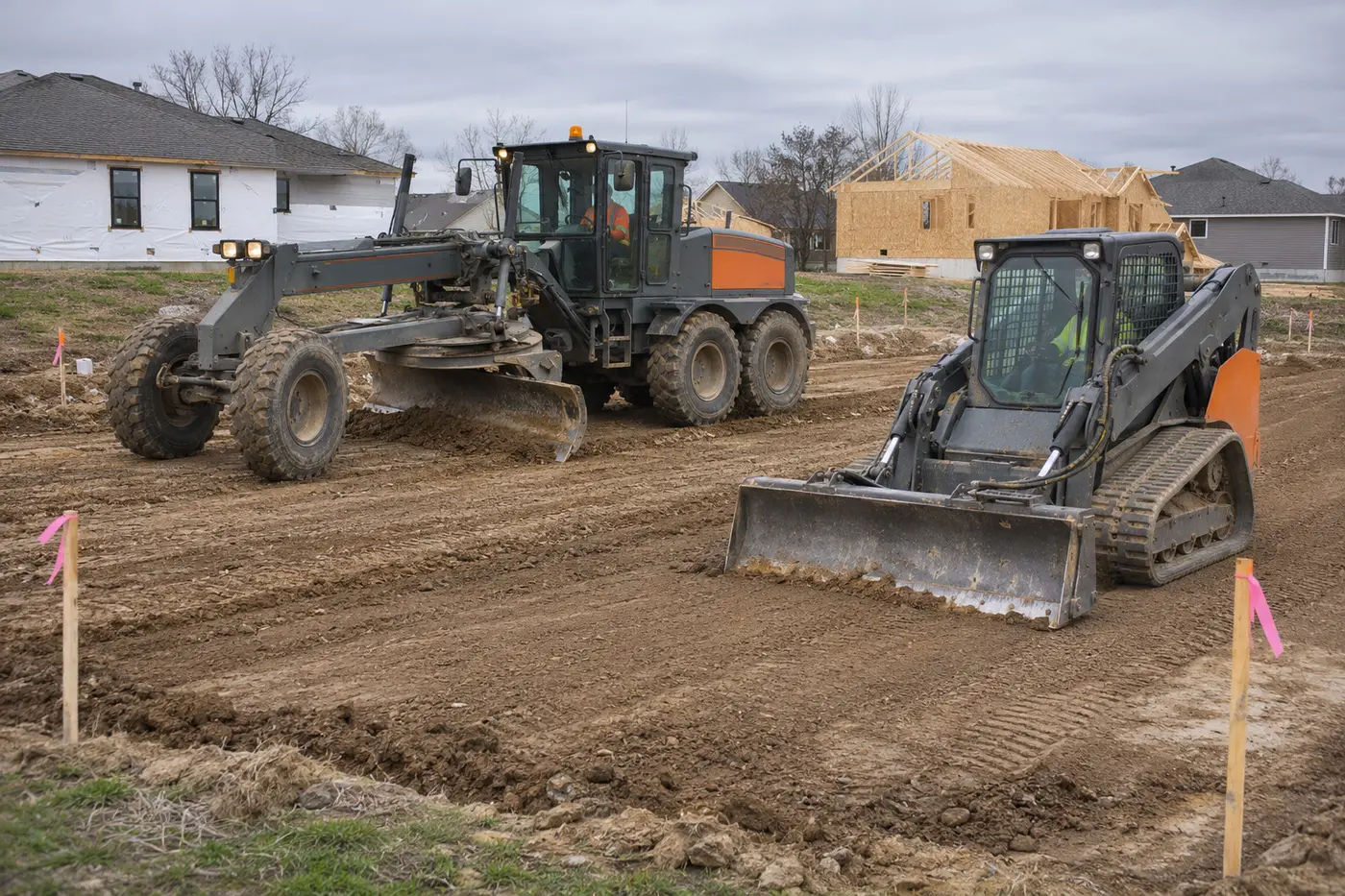
- Rough grade. Heavy machines, such as bulldozers and excavators, cut high areas and fill low ones to bring the site close to the design.
- Compact. Fill is spread in layers and compacted so it will not settle later.
- Fine grade. A grader or similar tool finishes the surface to a smoother, more exact shape.
- Verify and adjust. The result is checked against the plan, and any bad spots are fixed.
What is cut and fill?
Cut means removing soil from a high area. Fill means adding soil to a low area. A well-planned site tries to balance the two, so you move soil around on site and avoid hauling a lot in or out. Stakes with cut and fill marks tell the operator how far above or below the finish line the ground is at each point.
What equipment is used for grading?
- Bulldozers. Push large volumes of soil and rough out the site.
- Excavators. Dig, load and shape slopes. A mini excavator can also grade with a bucket or a grading beam. See excavator grading beams.
- Motor graders. Long blades set the final shape on roads and large pads.
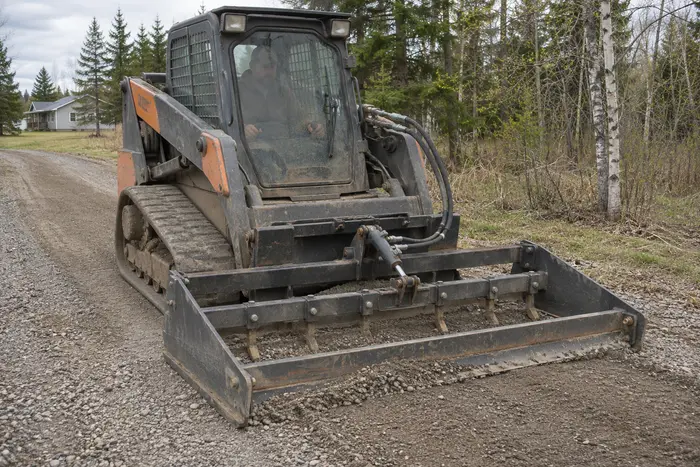
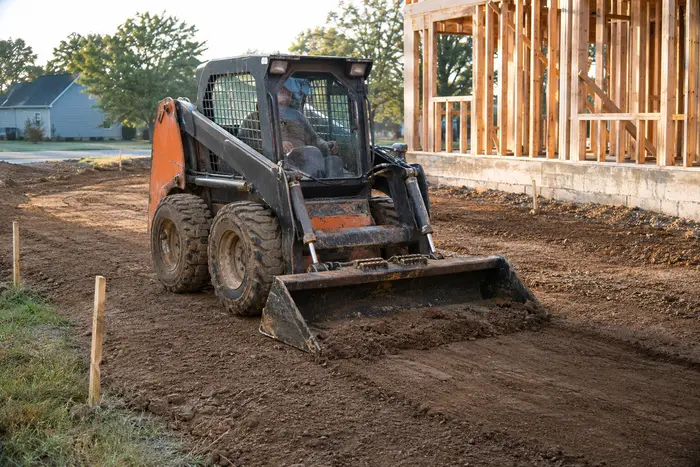
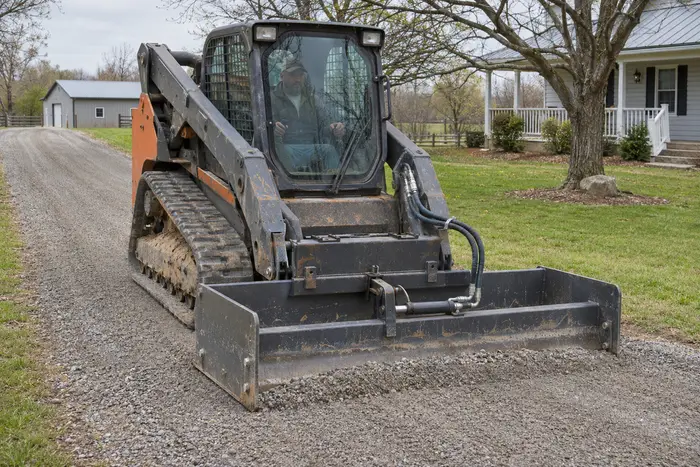
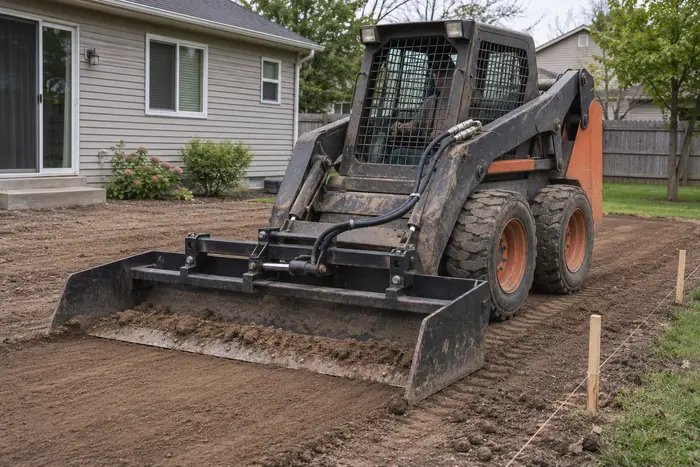
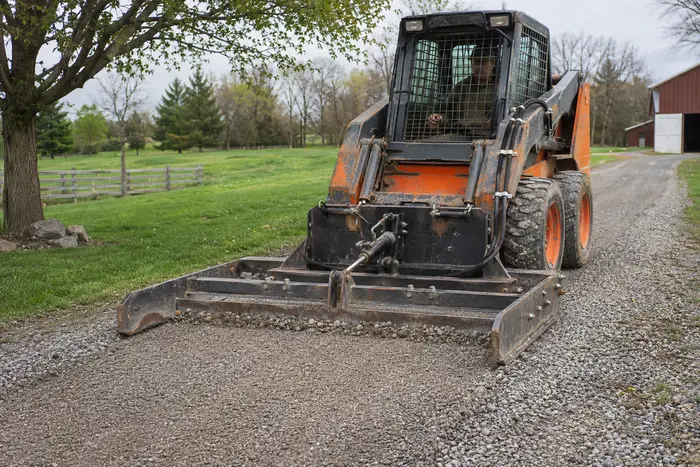
- Skid steers and compact track loaders. Move and spread material, then finish with a bucket or a grading attachment.
- Attachments. Box graders, land planes, power rakes and landscape rakes. Browse skid steer graders and box graders.
- Compactors. Rollers and plate compactors firm up the base.
- Lasers and GPS. Machine control systems help the operator hold a slope.
On small jobs, a skid steer can handle most of it. Our guide on how to grade with a skid steer bucket shows how.
How is grading different from excavation or compaction?
People mix these up, but they are separate steps. Excavation removes material, such as digging out a basement or a trench. Grading shapes the surface of the ground, either by cutting and filling or by smoothing. Compaction squeezes the soil so it is dense and will not settle. A normal job uses all three. You might excavate for a foundation, grade the surrounding yard to drain away from the walls, and compact the base under a driveway before the stone goes on. If you only grade and skip compaction, the new surface settles over time and leaves dips.
What does grading look like on a small property?
On a house lot, grading usually means three things. First, the area around the foundation is built up and sloped so water runs away. Second, driveways and walks are shaped with a gentle crown or pitch. Third, yard areas are leveled and topped with a layer of topsoil for seed or sod. A skid steer or a mini excavator can do much of this work, and a hand rake finishes the edges. Plan the water path before you move any dirt. Know where it should go, and make sure it does not cross a neighbor's yard or fill a window well.
What is the right slope?
The right slope depends on the project, the soil and local rules. Building codes and drainage plans usually require ground near a foundation to fall away from the building so water does not pool against the wall. Driveways, parking lots and ditches each have their own requirements. We do not give numbers here, because they vary by jurisdiction. Check your local building code and the project plans, or ask your engineer or municipal office.
What are common grading mistakes?
- Skipping the survey and working by eye. Small errors add up to drainage problems.
- Compacting fill in thick lifts. The bottom stays loose and settles later.
- Grading toward the house. Water then flows to the foundation.
- Ignoring the neighbors' drainage. Changing the grade can send water onto adjacent property.
- Leaving slopes bare. Exposed soil erodes. Seed, mulch or erosion control matters.
- Working wet soil. Mud ruts and compacts poorly.
Does grading need a permit?
Often, yes, if you move a lot of soil, change drainage or work near a waterway or slope. Rules differ by municipality and region. Check with your local building or planning office before you start, and call your utility locating service before you dig.
Get the right fit the first time
The right tool depends on the size of the job and your machine. Send us the make, model and year of your loader or excavator and tell us what you are grading. We will confirm fit against the manufacturer's specs, then give you a delivered price to approve before you pay. Start with a fit-checked quote.
Questions buyers ask
What is rough grading in construction?
Rough grading is the first stage of shaping a site. Heavy machines cut high spots and fill low ones to bring the ground close to the design level. It sets the main shape and drainage but leaves the surface a little rough, ready for finer finishing later.
What is final grading in construction?
Final grading, also called finish or fine grading, is the last pass before paving, sod or seed. The surface is smoothed to the designed level and slope using graders, rakes or buckets. It must be accurate, because it controls drainage and the look of the finished surface.
What is site grading in construction?
Site grading is the overall plan and work to shape a whole lot or project area to a design. It covers cuts, fills, slopes and drainage, from clearing to the finish surface. Good site grading moves water away from buildings and makes the ground ready for construction.
What is mass grading in construction?
Mass grading, or bulk grading, moves large amounts of soil to shape an entire site, such as a subdivision or a commercial lot. It is done with large machines like bulldozers and scrapers and comes before detailed work on individual lots, roads and foundations.
What equipment is used for grading?
Bulldozers and excavators do rough work, motor graders do road and pad finishing, and skid steers or compact track loaders handle smaller sites. Attachments such as box graders, land planes, power rakes and buckets help finish the surface. Compactors firm up the base.