Excavator guide
Mini Excavator Grading Beams Explained
Quick answer
A mini excavator grading beam is a wide, straight bar or blade that attaches to the stick and levels soil, gravel and sand with the arm. Fixed, tilting and roller types exist. Choose by width, weight versus lift capacity, mounting, hydraulics for tilt and the edge design.
Shopping for this now? Get a fit-checked, delivered quote.
Key takeaways
- A long straight edge finishes flatter than a bucket.
- Tilting beams need an auxiliary circuit.
- Check beam weight against lift capacity at full reach.
- Not the same as a structural concrete grade beam.
What is a mini excavator grading beam?
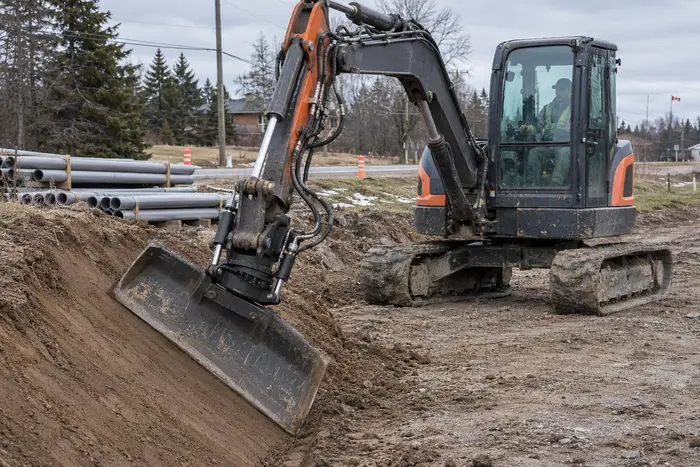
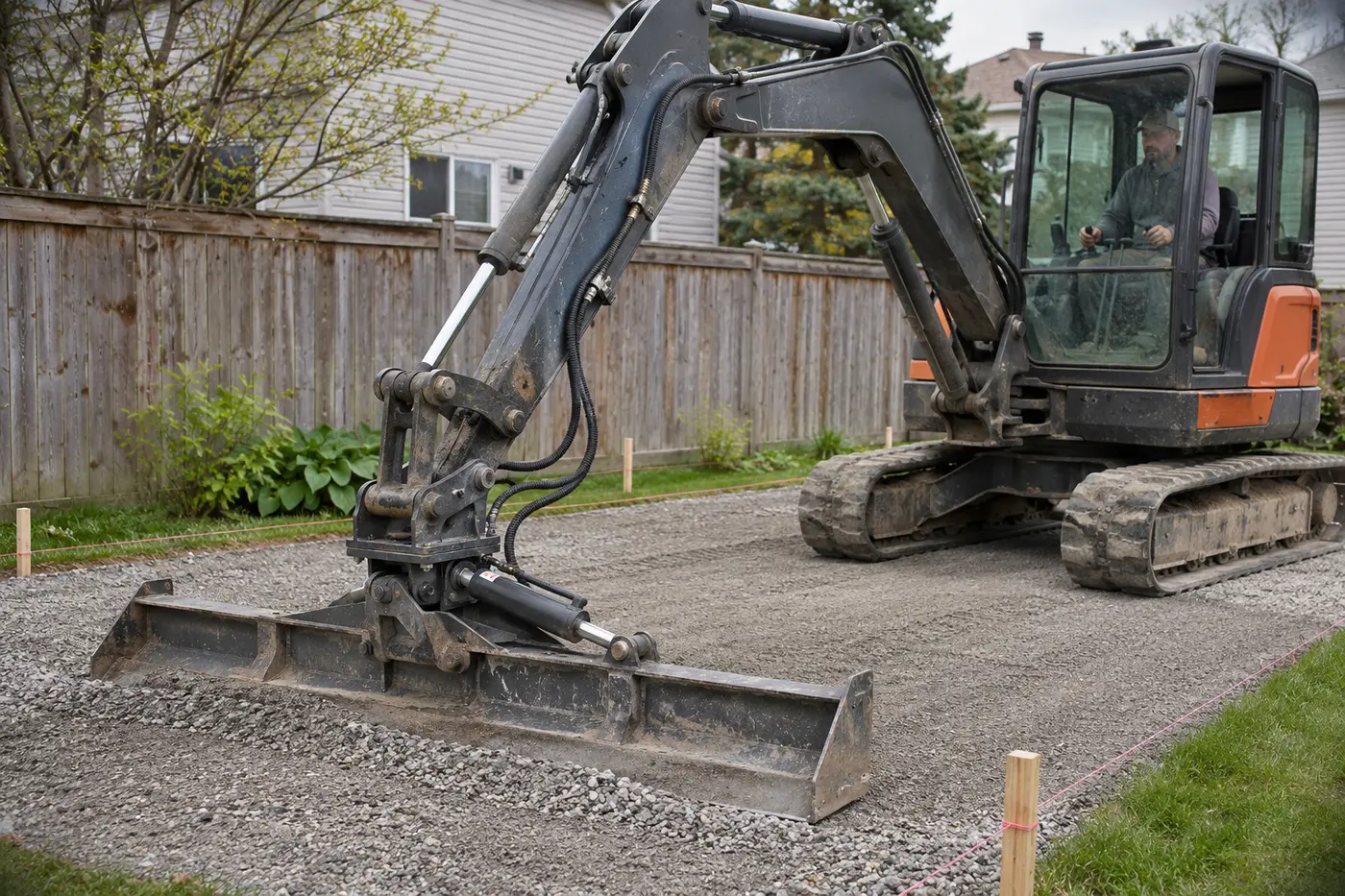
A mini excavator grading beam is a wide, flat bar or blade that attaches to the excavator's stick and lets you level and shape ground with the arm. It has a long straight edge that rides on the surface you are finishing. Instead of scooping with a bucket, you drag and float the beam to knock down high spots and fill low ones. Many beams tilt, so you can set a slope for drainage. Some have a roller or a skid that helps hold grade.
Do not confuse it with a grade beam, which is a structural concrete beam that spans foundations. A grading beam attachment is a tool for finishing soil, gravel and sand surfaces.
Can you grade with a mini excavator?
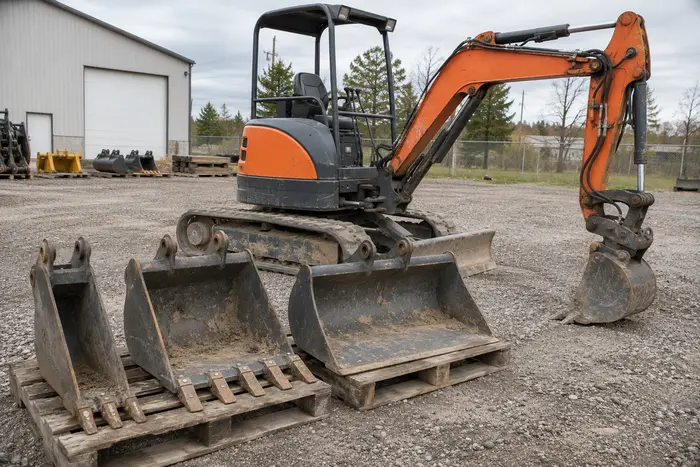
Yes, and with the right tool it works well. A smooth-edged bucket can do rough grading, but the arm's arc makes flat surfaces hard to finish. A grading beam gives you a long straight edge, so the arm's motion produces a flatter result. For driveways, patios, trench backfill, pads and landscape grades, a beam plus a steady operator gives a clean finish. For large areas, a loader or dozer blade is faster. Read what grading is in construction if you want the basics, and the mini excavator bucket types guide to compare with a grading bucket.
Types of excavator grading beams
| Type | What it does | Best for |
|---|---|---|
| Fixed grading beam | Rigid straight blade on a bracket | Simple leveling and backfilling |
| Tilting grading beam | Tilts left and right with hydraulic cylinders | Slopes, ditches, crowning |
| Beam with roller | Adds a roller to compact while grading | Gravel, sand and bedding layers |
| Beam with extension | Longer or extendable edge, on some models | Wider passes on larger sites |
A tilting grading beam needs an auxiliary hydraulic circuit and a way to control it from the seat. A fixed beam needs none. Many operators start with a fixed beam, then add a tilting unit when they need slope control. If you want to go further with a powered rotation and tilt, look at a tiltrotator, which lets any tool rotate and tilt.
How do you choose a grading beam?
- Width. Pick a beam wide enough to be useful but not so wide it overloads the machine. A wider beam finishes more per pass but needs more lifting capacity at the stick.
- Weight vs lift capacity. The beam hangs at the end of the arm. Check its weight against your machine's lift capacity at full reach.
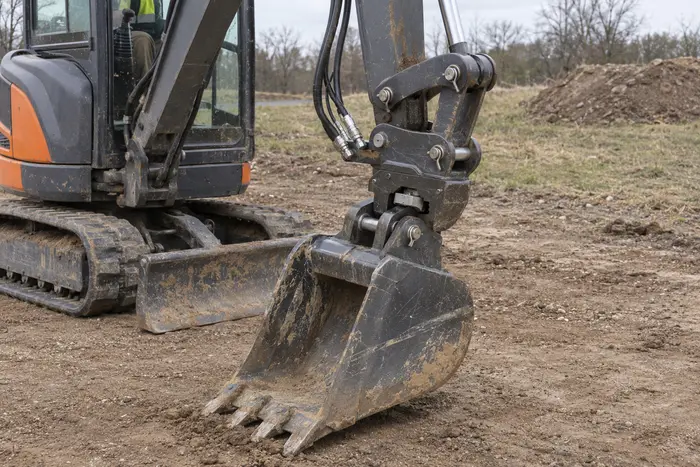
- Mounting. Match the beam to your coupler or pin pattern. See our quick coupler guide.
- Tilt option. If you need slope control, choose a tilting beam and verify your auxiliary circuit.
- Edge and wear parts. A replaceable cutting edge saves the beam body. Look at how the edge is bolted.
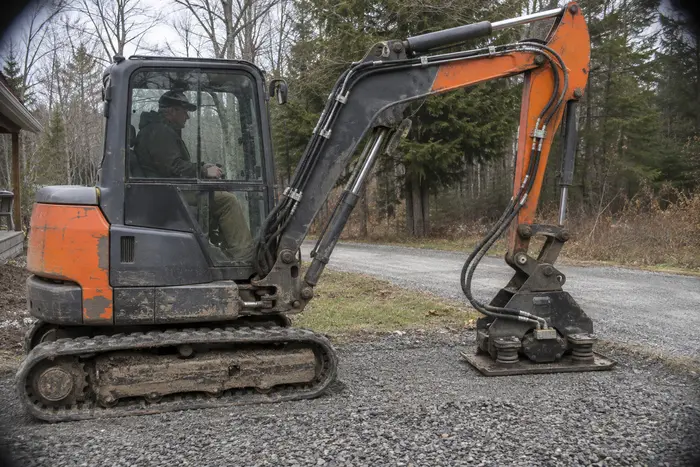
- Roller or compactor. If you finish gravel or sand, a roller helps the layer settle. Also consider a plate compactor if you need real compaction.
- Visibility and control. A tool that blocks your view of the surface is hard to use. Check that you can see the edge and the surface you are working.
Browse our excavator grading beams. For digging and cleanup, see excavator buckets. If you grade on slopes or around obstacles, a tiltrotator adds even more control.
How to grade with a mini excavator
- Plan the finished grade. Set stakes, a string line or a laser level. Decide on slope for drainage and where the water should go.
- Rough in. Use a bucket to remove high spots and fill low areas.
- Switch to the beam. Rest the edge on the surface and pull it toward the machine, moving soil from high to low.
- Work in overlapping passes. Keep the beam flat on the surface and make smooth arm movements. Avoid digging in.
- Check as you go. Use a straightedge, a level or the laser. Fix low spots by filling, not by cutting high spots deeper.
- Compact and finish. Use a roller beam or a compactor to settle the surface. Dress the final layer with the beam.
Operator tips
- Smooth, slow arm movements beat fast, jerky ones. The beam copies what you do.
- Position the machine so the stick moves in an arc that stays close to the surface for most of the stroke. Reposition often.
- Keep tracks on firm ground. A machine that rocks produces a wavy finish.
- Check for utilities before you dig or grade. In the US, call 811. In Canada, contact your provincial one-call service.
- Follow the operator manual for rated lift capacity and tool weight.
Grading beam, grading bucket or loader blade?
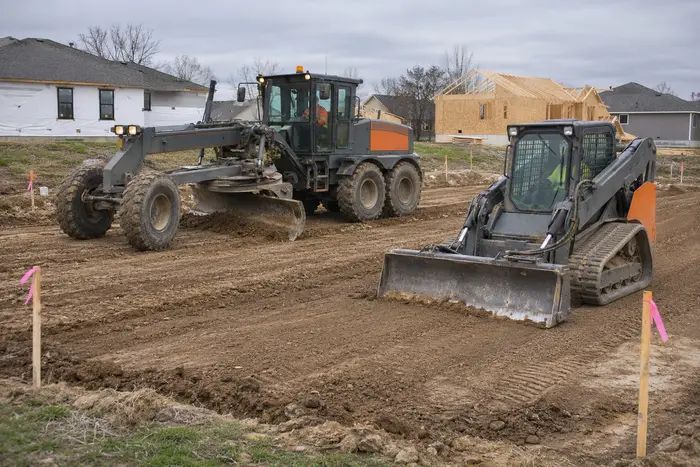
A grading bucket, with a smooth, wide cutting edge, is the usual starting point and handles many finishes. A beam finishes flatter and spreads loose material more evenly. A loader or skid steer with a dozer blade moves large areas faster. For a patio base, a trench backfill or a drainage swale, the excavator beam works well because it finishes from one position. For a large driveway, a loader blade or a grader attachment may save time. See skid steer graders if you also own a loader.
Common grading problems and fixes
- Wavy surface. Usually caused by jerky arm movements or a machine that moves while you pull. Park the tracks, slow down and work in short, even strokes.
- Beam digs in. Tilt the beam so the leading edge rides flat. Do not push the stick down into the surface.
- Low spots keep coming back. The base is soft or poorly compacted. Compact in layers before final grading.
- Water pools on the finished grade. The slope is wrong. Recheck with a level or laser and adjust before you add the final layer.
- Beam is too heavy for the machine. The stick feels sluggish and the tracks lift at full reach. Choose a lighter, narrower beam or a larger machine.
Materials: soil, gravel and sand
Different materials respond differently. Loose gravel and sand spread easily with a beam and compact well with a roller or plate. Wet clay sticks to the edge and smears, so wait for better conditions or use a smooth bucket. Topsoil is best handled light, not overworked, because over-compacting it hurts planting. Think about the final use before you choose the finish: a patio base wants firm, flat compaction, while a lawn wants loose, level topsoil.
What to tell us before you order
Send your excavator make, model and year, the coupler type, whether you have an auxiliary hydraulic circuit and how wide you want the beam. A person will check fit against the maker's specs and flag any weight or reach issues before you pay anything.
Get the right fit the first time
Send us your machine make, model and year and tell us the job. A person checks the attachment against the maker's specs, then you get a fit-checked quote with delivered pricing before you pay. The supplier ships direct, and warranty terms, if any, are written on your quote.
Questions buyers ask
What is a grading beam on an excavator?
A grading beam is a wide, straight blade or bar that mounts on the excavator stick and lets you level and shape surfaces. Many tilt hydraulically to set slope, and some have rollers. It is a finishing tool, not a digging tool.
Can you grade with a mini excavator?
Yes. A smooth-edged bucket can rough grade, and a grading beam finishes flatter because the long straight edge rides the surface. For large areas a loader or dozer blade is faster. Mini excavators grade well in tight spaces and for trench backfill.
Do I need a tilting grading beam?
Only if you need to set slopes, crowns or drainage grades quickly. A fixed beam works for flat surfaces. A tilting beam requires an auxiliary hydraulic circuit and controls in the cab. Check your machine's hydraulics before ordering.
What size grading beam fits a mini excavator?
It depends on your machine's weight class, lift capacity at full reach and coupler. A beam that is too heavy or wide can overload the arm. Send your make, model and year for a fit check against the maker's specs.
Is a grading beam the same as a grade beam?
No. A grade beam is a structural concrete beam that spans foundation supports and carries loads. A grading beam is an excavator attachment used to level and shape soil, gravel and sand surfaces. The two names are close, so describe your job clearly when you order.