Concrete guide
Skid Steer Vibratory Roller: Compaction Guide
Quick answer
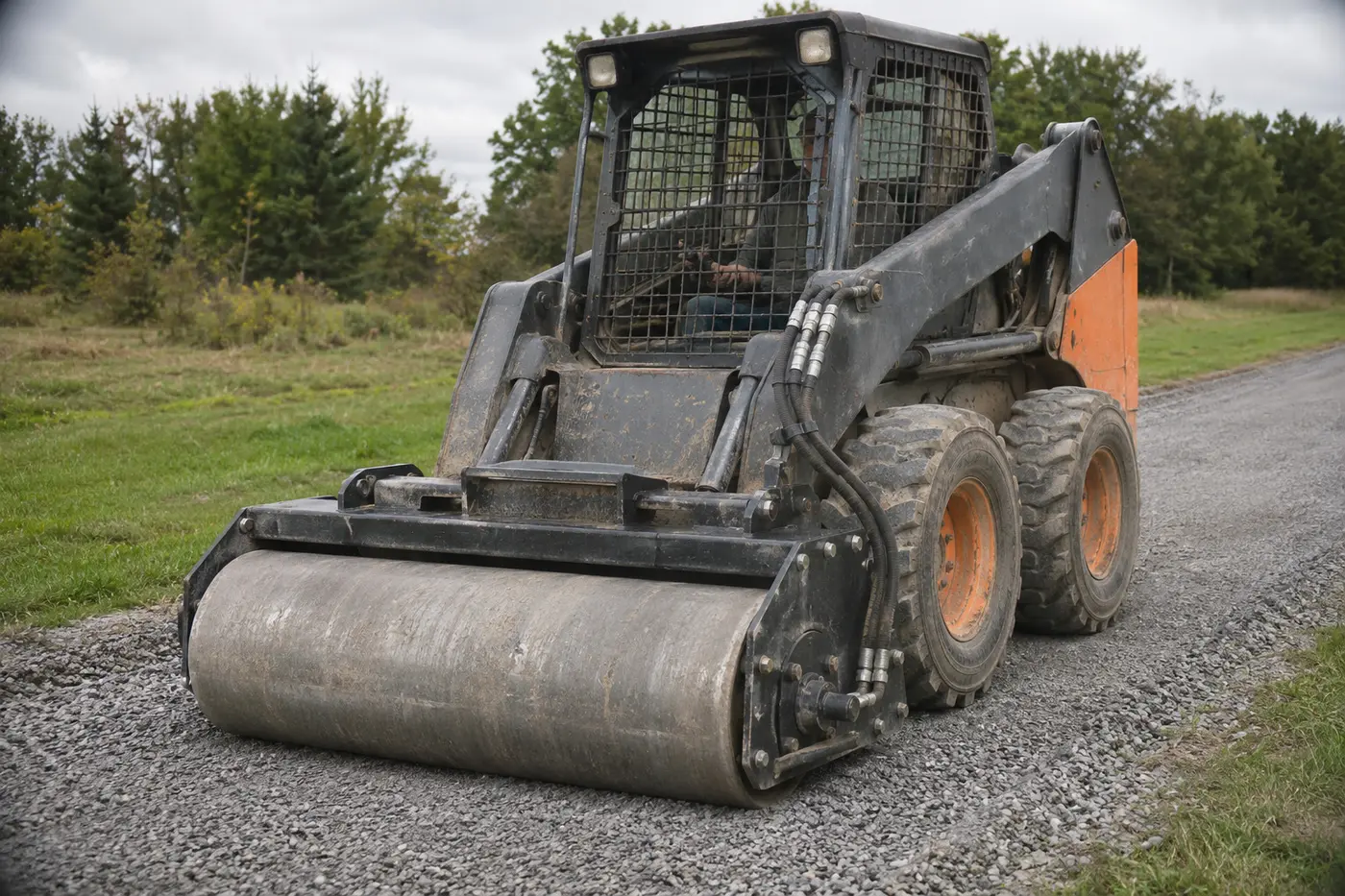
A skid steer vibratory roller is a hydraulically driven drum that compacts gravel, base material, soil and asphalt by weight and vibration. It mounts on the quick-attach plate and runs from the auxiliary hydraulics. It suits driveways, trenches, patches and small paving jobs where a full roller would not fit.
Shopping for this now? Get a fit-checked, delivered quote.
Key takeaways
- Vibration comes from rapidly rotating eccentric masses inside the drum.
- Roller-type compactors suit crushed rock bases under slabs and foundations.
- The attachment needs auxiliary hydraulics sized to the vibration motor.
- Plate compactors suit trenches and tight spots; rollers suit larger, flatter areas.
- Compact in lifts and check moisture, because dry or wet fill compacts poorly.
Compaction is what keeps a gravel driveway, patio base or trench backfill from sinking. A skid steer vibratory roller lets you do that work with the machine you already own. This guide explains how the attachment works, where it fits and how it compares with a plate compactor.
What is a skid steer vibratory roller?
It's a steel drum, or a pair of drums, in a frame that mounts to the skid steer's quick-attach plate. A hydraulic motor spins an eccentric mass inside the drum, which makes it vibrate. The weight of the drum plus the vibration packs the material tight. Some designs roll freely and the machine moves them along. Others drive the drum from a motor. See skid steer vibratory rollers to compare options.
General references list three main construction compactors: the plate, the rammer and the road roller. Roller-type compactors are used on crushed rock as the base layer under concrete or stone foundations and slabs. Road rollers may also have vibrating rollers. In plates and rollers, vibration comes from rapidly rotating eccentric masses.
How does vibration help compaction?
Static weight presses material down. Vibration shakes the particles so they settle into a tighter arrangement. In granular material such as gravel, sand and crushed stone, that shaking helps pieces lock together with fewer voids. The result is a base that carries load and resists settling. Clay and other fine soils respond differently and often need a different roller design or more care with moisture.
Because results depend on the material and its moisture, follow the material supplier's compaction guidance and the project specifications. Compact in thin layers, called lifts, rather than all at once, so the energy reaches the bottom of each layer.
Where does it make sense to use one?
- Gravel driveways and parking pads.
- Base layers under patios, slabs and sheds.
- Trench backfill in wider trenches the roller can enter.
- Small asphalt patches and repairs.
- Farm roads and lanes.
- Landscape base preparation.
For a driveway build, see how to build a gravel driveway for how compaction fits the full process.
Skid steer roller vs plate compactor: which one?
| Factor | Skid steer vibratory roller | Plate compactor |
|---|---|---|
| Area covered per hour | Larger, flat areas | Smaller or tight spots |
| Access | Needs room for the machine | Works in trenches and corners |
| Power source | Skid steer auxiliary hydraulics | Own engine or an excavator's hydraulics |
| Best material | Granular base, asphalt | Granular fill and pavers |
| Operator | Skid steer operator | Walk-behind or excavator operator |
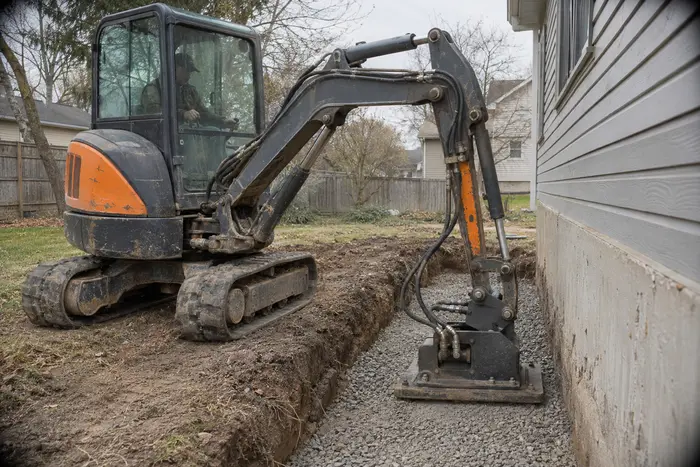
For trenches and areas a skid steer can't enter, an excavator-mounted plate compactor does the job. Browse excavator plate compactors and read the mini excavator plate compactor guide for that option.
What hydraulics does a roller need?
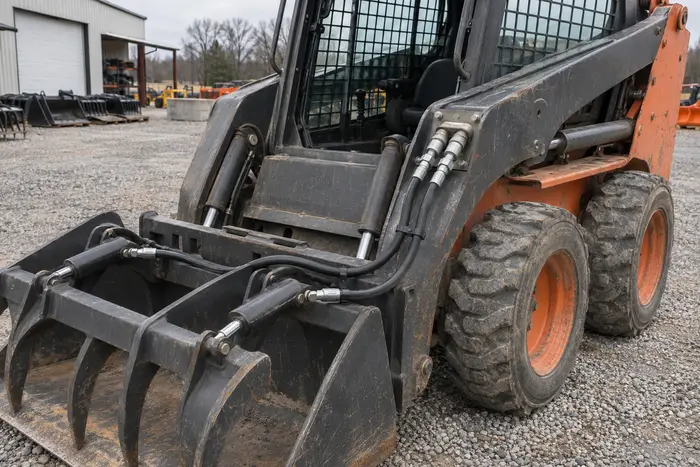
A vibratory roller needs an auxiliary circuit to run the vibration motor, and sometimes a second circuit to drive the drum. Check the flow and pressure the motor needs and compare them with your machine. Some rollers need high flow to reach full vibration. Confirm the coupler type and whether a case drain is required. For how flow works on these machines, read skid steer hydraulic flow explained. If your machine's flow falls short, the roller will vibrate weakly and compact poorly.
How do you compact with a roller?
- Prepare the base. Remove soft spots and grade it close to final shape.
- Spread material in even lifts. Thick lifts compact poorly at the bottom.
- Check moisture. Material that is too dry or too wet will not compact well.
- Make overlapping passes, starting at the edges and working toward the middle.
- Turn on vibration once the roller is moving, and shut it off before you stop, to avoid pressing a divot.
- Check the result with a probe or a proof roll, and follow any project spec.
Work on stable ground. A heavy attachment on a soft edge can shift the machine. Keep to slopes the operator manual allows.
What should you check before buying?
- Drum width against the width of the work and the machine.
- Attachment weight against the machine's rated operating capacity.
- Hydraulic flow, pressure and coupler type.
- Whether the drum is smooth, or padded for soil work.
- Scraper bars that keep material off the drum.
- Service access to bearings and the vibration motor.
How do you maintain one?
Hose off the drum after use so asphalt or clay doesn't build up. Grease the bearings on the schedule in the manual. Look at hydraulic hoses and fittings for rubbing and leaks. Check the vibration motor mounting and the isolators that protect the frame. Store the attachment on a flat, dry surface. Watch for unusual noise or heat from the bearings, which can mean they need service.
When is a roller the wrong tool?
A skid steer roller is not a replacement for a full-size road roller on large paving projects. It also isn't suited to deep soil compaction, where a heavier roller or specialized equipment is used. For small jobs in tight spaces, a walk-behind plate or rammer is better. When unsure, check the project specification, and ask a person about fit for your machine and material.
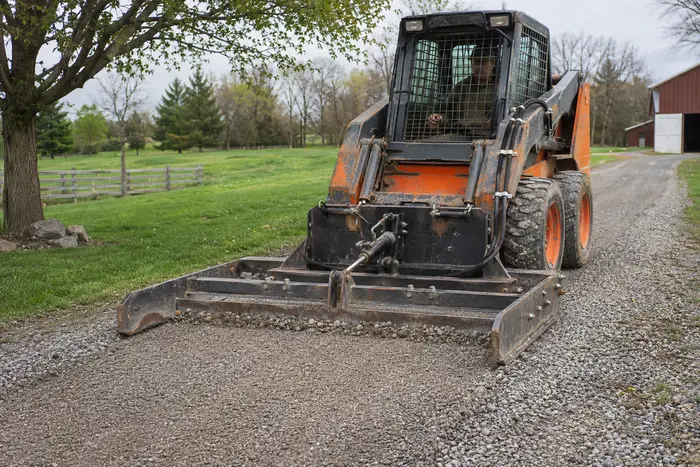
For other base work, a land plane or box grader can level material before you compact. A roller finishes the job but won't fix a poorly graded base.
How does moisture affect compaction?
Every granular material has a moisture range where it packs best. Too dry, and particles don't slide into place. Too wet, and water fills the voids and the material pumps or ruts under the drum. A simple field check is to squeeze a handful. It should hold together a little and not drip water. If it crumbles and dusts, it is dry. If it smears or squirts water, it is wet. Spray a dry base lightly and let it settle, and let a wet base drain or dry before you compact.
Ask your gravel supplier about the material's recommended lift thickness and moisture. They know the product. Compaction for a driveway differs from the compaction under a structural slab, so follow the project requirements when a building or inspection is involved.
What safety points apply?
Keep the machine on stable, level ground, and stay away from trench edges and fresh fill that could shift. Wear hearing protection, since vibration makes noise. Shut off the vibration before you stop or turn sharply. Keep people clear of the machine and drum. Inspect hoses for wear because a burst hose under pressure is dangerous. Follow the operator manual's limits on slopes and attachment weight, and use the seat belt and restraint bar every time.
Get the right fit the first time
Rollers depend on your machine's hydraulics, mount and rated capacity. Send us the make, model and year and a person will check fit against the maker's specs. You approve a delivered price before you pay, and the supplier ships direct. Get a fit-checked quote or call 1-888-245-1555.
Questions buyers ask
What is a skid steer vibratory roller used for?
It compacts gravel, base rock, soil and small asphalt patches using a vibrating steel drum. Typical jobs are driveways, patio and shed bases, farm lanes and wider trench backfill. It runs from the skid steer's auxiliary hydraulics.
Is a skid steer roller better than a plate compactor?
It depends on the job. A roller covers flat, open areas faster. A plate compactor works better in trenches, corners and tight spots. Many crews keep both. Excavator-mounted plates handle trenches a skid steer can't enter.
What hydraulics does a skid steer vibratory roller need?
It needs an auxiliary circuit to run the vibration motor, and some designs need a second circuit for drum drive. Confirm the motor's flow and pressure range, coupler type and case drain needs with your machine's specifications.
Can a skid steer roller compact asphalt?
Smooth drum vibratory rollers are used on small asphalt patches and repairs. Follow the asphalt supplier's temperature and compaction guidance, and use water or a release agent on the drum if the maker recommends it.
How do you get the best compaction with a roller?
Spread material in thin lifts, keep moisture suitable, make overlapping passes and start vibration after the roller is moving. Shut it off before stopping. Check the result against project requirements or a probe, and compact again if needed.