Excavator guide
Mini Excavator Plate Compactor: Buying Guide
Quick answer
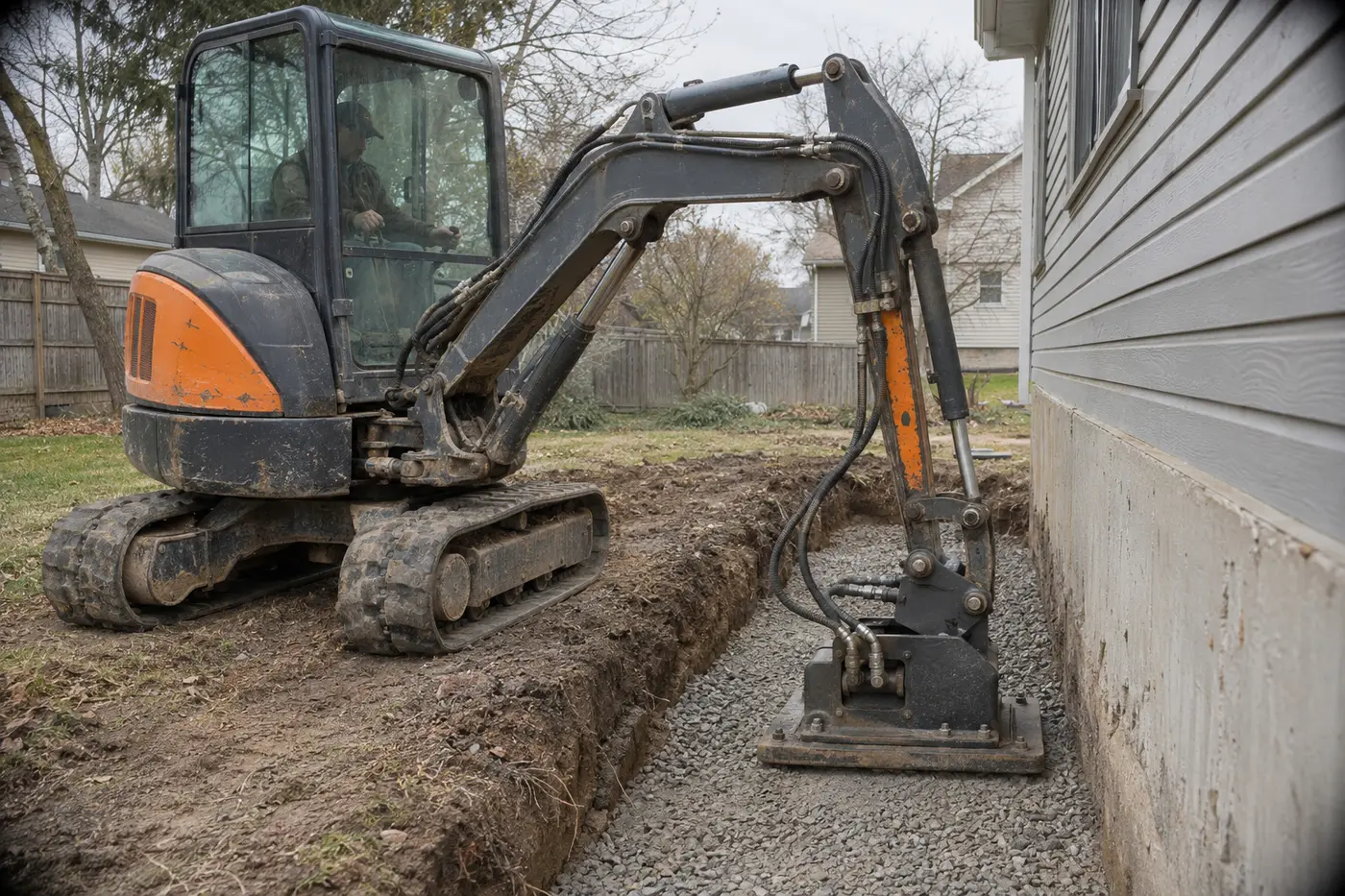
A mini excavator plate compactor is a hydraulic vibrating plate that mounts on the excavator's stick and compacts backfill in trenches, around footings and under pads. Pick one that matches your machine's weight, hydraulic flow and coupler, and compact in thin layers at the right moisture for a firm, settle-free fill.
Shopping for this now? Get a fit-checked, delivered quote.
Key takeaways
- The attachment vibrates a baseplate using spinning eccentric weights powered by auxiliary hydraulics.
- It reaches into trenches and tight spots where a walk-behind plate cannot go.
- Machine weight, hydraulic flow and coupler type must match the attachment.
- Compact in thin lifts at suitable moisture; soil type decides the method.
- Follow the operator manual, and keep people out of the trench and swing area.
Backfilling a trench is only half the job. If the fill is not compacted, it settles, and the surface above it sinks. A walk-behind plate is the usual answer, but not when the trench is deep or narrow. A plate compactor on a mini excavator reaches those places from above. This guide explains how it works, how to match one to your machine and how to use it.
What is a mini excavator plate compactor?
It is a hydraulic compaction attachment that mounts on the stick of a mini excavator. It has a heavy baseplate that sits on the soil and a vibration unit above it. The vibration comes from rapidly rotating eccentric masses, which are off-balance weights spun by a hydraulic motor. The shaking packs soil particles closer together. The operator holds the plate on the fill with the excavator's down force and moves it along the surface.
Unlike a ride-on or walk-behind plate, it can reach into a trench, along a footing or over a slope without anyone standing in the hole. Walk-behind plates have a large vibrating baseplate suited to creating a level grade, and small ones tend to drift forward from the vibration. The excavator version does not drift, because the machine holds it in place.
Where is it used?
- Utility trenches. Compact backfill over pipe and cable runs.
- Footings and foundations. Compact around walls and under pads.
- Retaining walls. Compact behind walls in lifts.
- Driveway and path bases. Compact gravel and crushed stone before paving or pavers.
- Slopes and embankments. Reach areas where a walk-behind unit is unsafe.
What do you need to check before you buy?
| Check | Why it matters |
|---|---|
| Machine weight | The excavator must be heavy enough to hold the plate down and carry its weight at reach |
| Hydraulic flow and pressure | The vibration motor needs enough oil to reach working speed |
| Auxiliary circuit | You need a tool circuit with the right fittings and, often, a case drain or free-flow return |
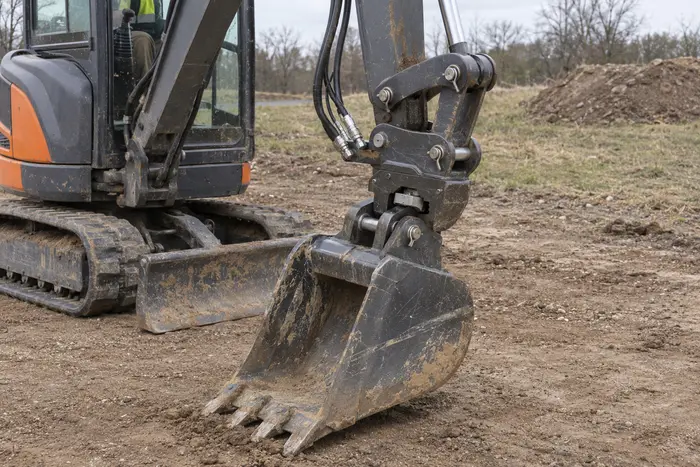
| Coupler or mounting | A quick coupler pattern or pin-on bracket must fit the stick |
| Plate size | A wider plate covers more but needs more power |
| Vibration type | Check how the unit is isolated so shock does not travel into the stick and the carrier |
All movement on an excavator is hydraulic, which is why the flow and circuit matter so much. Read about quick couplers and the attachment buyer's guide for background, and browse plate compactors and quick couplers.
What soils compact with a plate?
Granular soils, such as sand, gravel and crushed stone, respond well to vibration. The shaking helps the particles settle together. Cohesive soils, such as clay, do not compact well with vibration alone. They usually need an impact or kneading action and tight moisture control. A plate compactor can still help on mixed soils, but it is not the right tool for heavy clay. Ask the engineer, the inspector or the material supplier what method your project calls for.
How do you compact a trench with a mini excavator plate?
- Check utilities and spec. Know what goes in the trench and what compaction your project requires.
- Prepare the base. Remove standing water and loose debris.
- Place backfill in thin layers. Thin lifts compact better than deep ones. Do not try to compact a full trench in one go.
- Check moisture. Soil that is too dry or too wet will not compact well.
- Position the plate. Set it flat on the surface and apply steady down force.
- Make overlapping passes. Work slowly across each layer.
- Test the result. Walk the surface, check for pumping or yield, and use density testing if the job requires it.
- Repeat with the next layer. Continue until you reach grade.
Keep the plate off pipes and utilities until you have enough cover, and follow the pipe maker's guidance.
How does it compare with other compaction tools?
- Walk-behind plate. Cheaper and good for open ground, but it puts someone near the trench edge.
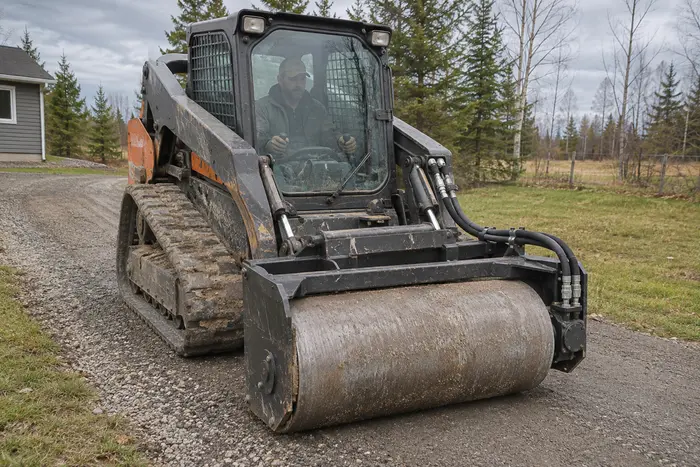
- Vibratory roller. Better for large flat areas. See vibratory rollers and the roller guide.
- Bucket tamping. A bucket pressed on the fill gives some compaction in a pinch, but it is not a substitute for a real compactor on a spec job.
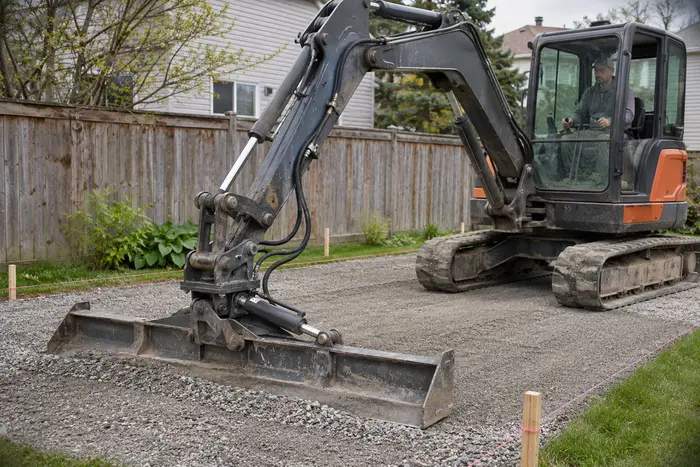
- Grading beam. Helps finish a surface. See grading beam guide.
How do you stay safe?
- Keep people out of the trench while the machine works above.
- Do not swing the plate over anyone. Plan the swing path.
- Check trench walls for stability, and use shoring or sloping as required by local rules.
- Wear hearing and eye protection. Vibration is loud.
- Check hoses, fittings and the coupler before each shift.
- Stay inside the machine's rated lifting and operating capacity.
Follow the operator manual for both the attachment and the carrier. Call before you dig so buried utilities are marked: 811 in the US, or your provincial one-call service in Canada.
What problems come up with plate compactors?
| Problem | Likely cause | What to do |
|---|---|---|
| Plate bounces and does not pack | Soil too wet or too dry, or lifts too thick | Adjust moisture and place thinner layers |
| Vibration feels weak | Low hydraulic flow or a restriction in a hose | Check flow against the spec and inspect hoses and couplers |
| Hydraulic oil runs hot | Mismatched circuit or a clogged cooler | Rest the machine, clean the cooler and confirm the circuit matches |
| Stick or couplers wear fast | Vibration passing into the machine | Check the isolation mounts and tighten pins and bolts |
| Soil settles later anyway | Poor compaction, wrong soil or water in the trench | Recheck the specification and drainage and compact in thinner lifts next time |
How do you look after the attachment?
Vibration shakes everything, so inspection matters. Check bolts, pins and the mounting bracket at the start of each shift, and tighten as the manual says. Look at the isolation mounts or rubber pads for cracks. Inspect the hydraulic hoses for rubbing and leaks, and cap the couplers when the tool is off the machine. Keep the baseplate clean and free of packed soil, because buildup changes the contact and the way the plate works. If the vibration unit is sealed, leave service to a qualified technician.
When you finish a job, store the compactor flat or on a stand, and wipe it down before the next use. A little care keeps the tool working consistently and protects the carrier's stick and pins.
Is it worth buying instead of renting?
If you backfill trenches or prep pads every week, owning one can save time and keeps people out of holes. If you only compact a few jobs a year, renting a compactor or hiring the work may make more sense. Either way, confirm your machine's hydraulics first. A good attachment on the wrong circuit is a bad purchase.
Get the right fit the first time
Compactors depend on your excavator's weight and hydraulic circuit. Send us the make, model and year of your machine. A person checks fit against the maker's specs, you see the delivered price on your quote before you pay. The supplier ships direct, and warranty terms, if any, are written on your quote. Get a fit-checked quote or call 1-888-245-1555.
Questions buyers ask
What is a mini excavator plate compactor?
It is a hydraulic vibrating plate that mounts on a mini excavator's stick. Eccentric weights driven by a hydraulic motor shake the baseplate to compact soil. It reaches into trenches and tight spaces where a walk-behind plate cannot safely go.
What do I need to run a plate compactor on a mini excavator?
You need an auxiliary hydraulic circuit with enough flow and pressure, the correct fittings and return line, a coupler or bracket that fits the stick, and enough machine weight to hold the plate down. Check the attachment's specs against your excavator.
Can a plate compactor compact clay?
Vibration works best on granular soils like sand, gravel and crushed stone. Clay is cohesive and does not compact well with vibration alone, and it needs tight moisture control and other methods. Ask your engineer or inspector what your project requires.
How thick should each lift be when compacting?
Use thin layers, since thin lifts compact better than deep ones. The exact thickness depends on the soil, the moisture and the compactor, so follow the project specification and the manufacturer's guidance rather than a general rule.
Is it safe to use a plate compactor in a trench?
Operating from above the trench is safer than a walk-behind plate, but keep people out of the hole and swing area, check wall stability and shoring, wear hearing and eye protection and follow the operator manual. Call before you dig.