Landscaping guide
Skid Steer Tree Spade: How to Move Trees Safely
Quick answer
A skid steer tree spade is a hydraulic blade set that cuts a root ball and lifts a whole tree for transplanting. Pick the spade size by tree trunk diameter, then confirm the loaded spade and tree stay within your loader's rated operating capacity, with matching hydraulics and mounting.
Shopping for this now? Get a fit-checked, delivered quote.
Key takeaways
- Spade size is set by the blade circle and sets the tree size you can move.
- Root balls are heavy; stay inside rated operating capacity.
- Dig the new hole first and call before you dig.
- Dormant seasons are usually best for transplanting.
What is a skid steer tree spade?
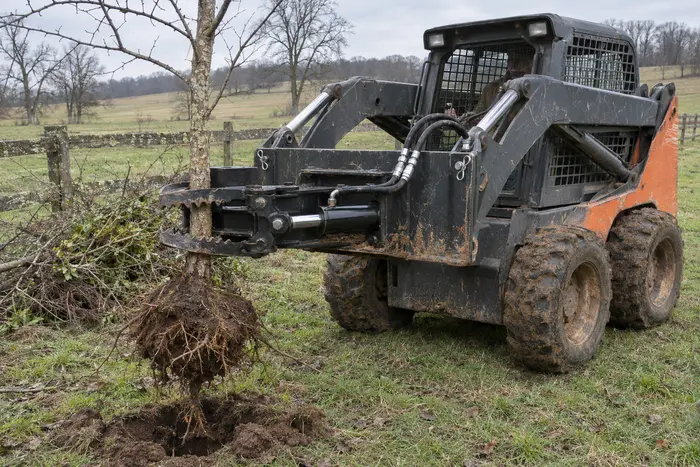
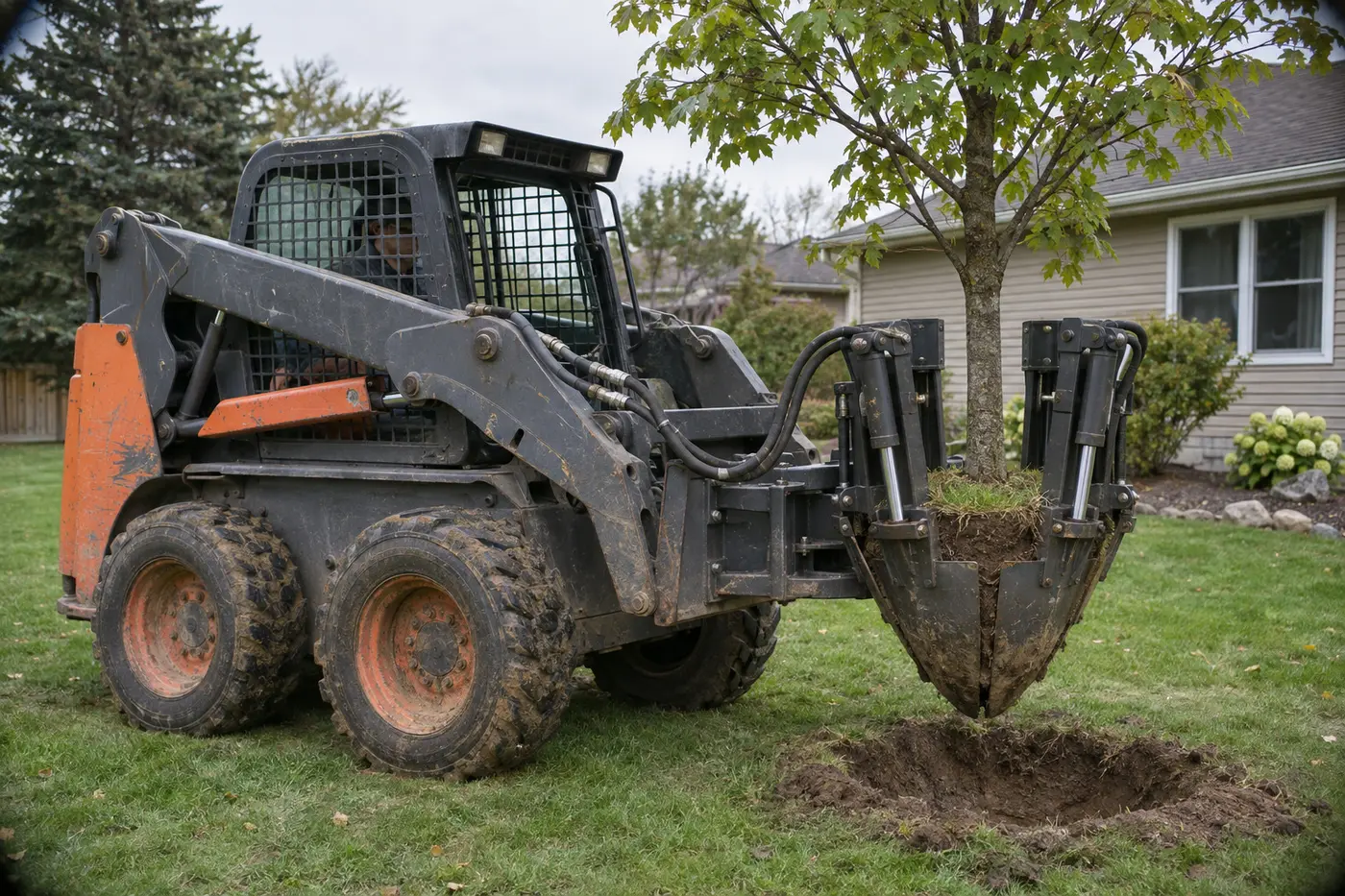
A skid steer tree spade is a set of hydraulic blades that mounts on the loader's quick attach plate. The blades close around a tree, cut a cone-shaped root ball, and lift the whole tree out with soil attached. You drive to the new spot, drop the tree into a prepared hole, and open the blades. A trained operator can move a tree far faster than a crew digging and wrapping a root ball by hand.
A tree spade is a specialized machine for transplanting large plants. A typical unit uses a number of blades, often three or four, that encircle the tree and dig into the ground to lift the tree, roots and soil together. Designs vary in blade shape, root ball diameter and depth, and cone angle, so they suit different soils and tree sizes.
How big a tree can a tree spade move?
Tree spades are sized by the diameter of the circle the blades form. A bigger circle makes a bigger root ball and carries a bigger tree. The University of Minnesota Extension publishes a handy sizing reference for tree spades:
| Tree spade size | Deciduous tree trunk diameter | Evergreen tree height |
|---|---|---|
| 44 inches | 2 to 3 inches | 5 to 7 feet |
| 66 inches | 3 to 5 inches | 7 to 10 feet |
| 92 inches | 6 to 8 inches | 12 to 15 feet |
These are general extension figures for tree spades in the nursery and landscape trade. A skid steer usually carries a smaller spade than a truck-mounted one. A big loaded root ball is heavy, and the loader's rated operating capacity and tipping load set the real limit. Always follow the loader and attachment manuals when deciding what you can lift and carry. The same extension page strongly recommends hiring an experienced tree spade contractor, so weigh that before doing it yourself.
How do you choose a skid steer tree spade?
- Carrier capacity. A root ball full of wet soil weighs far more than most people expect. The loaded spade plus the tree must stay inside the loader's rated operating capacity at the working lift height. A track loader or a larger frame carrier is usually more stable under load.
- Blade circle and tree size. Match the spade to the trees you plan to move, using extension sizing like the table above. A spade that is too small cuts too much root. Too large and your loader will not lift it.
- Hydraulic requirements. The blades close with hydraulic cylinders. Check flow, pressure and coupler type against your machine. Our hydraulic flow guide explains the basics.
- Blade design. Straight blades and curved blades hold the root ball differently. Soil type matters, since sandy soil crumbles and clay holds. Ask what the maker recommends for your soil.
- Mounting and visibility. The spade sits at the front of the loader and blocks a lot of sight. Check that you can still see the work and the path ahead. Mounting is through a universal quick attach plate in most cases.
- Safety features. A stable carrier, a secure blade closing lock and good lighting for early or late work help.
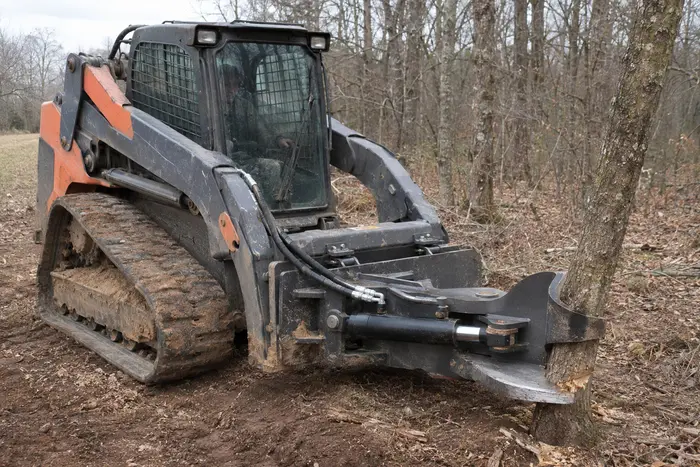
Our skid steer tree spades category lists current options. If you only need to remove a tree, look at the tree shears or the post and tree pullers. Our tree puller guide explains when pulling beats moving.
How to move a tree with a tree spade
- Plan the new site. Pick a spot with enough space and sun for the species. Dig or spade the new hole first so the tree spends minimal time out of the ground.
- Check utilities. Call 811 in the US or your provincial one-call service in Canada before digging at either location.
- Prepare the tree. Water the tree thoroughly before the move so the root ball holds together. Tie up low branches if needed to protect the loader and the tree.
- Set the spade. Center the blades on the trunk and keep them straight. Lower the blades, drive them into the ground and close them to cut the root ball.
- Lift and carry. Raise the tree just enough to clear the ground. Drive slowly on level ground, with the load low and the machine stable.
- Plant. Lower the tree into the new hole, open the blades and back away slowly. Extension guidance is to set a spaded tree two to three inches above the original grade to allow for settling. Rough up the hole sides, work loose soil into the gaps and water well.
- Aftercare. Water consistently during the first seasons, mulch around the base (not against the trunk) and watch for stress.
When to transplant
Spades can move trees in most seasons, but many trees move most easily when dormant, in early spring before buds open or in fall after leaf drop. Summer and early fall digs need a larger root ball and extra care. Evergreens have their own timing. The local extension service for your region gives the best window for species and climate. Avoid moving trees during extreme heat, drought or hard frost.
Tree spade vs digging by hand or a balled-and-burlapped tree
A tree spade is fast and leaves a clean, shaped root ball. It works well when you need to move several trees, or move mature plants on site. Hand digging and wrapping suits small trees and tight spots. Buying a balled-and-burlapped tree from a nursery brings a tree grown for transplanting, which often has a denser root system. A spade lets you relocate what you already have. Each approach has a place. Our landscaping attachments guide shows where a spade fits with other tools.
Is a tree spade worth buying?
It pays off if you move trees often: nursery work, landscaping crews, property clearing where good trees are in the way of a building site. For a few trees, renting or hiring a spade operator can be smarter. Check the fit with your loader before you commit, because a spade that exceeds your carrier's capacity is unsafe and cannot be used.
Care after transplanting
The move is only half the job. A spaded tree has lost part of its root system and needs steady water while it regrows. Water deeply and regularly through the first growing seasons, rather than giving it small sips every day. Add a layer of mulch around the base to hold moisture and moderate soil temperature, but keep mulch off the trunk. Stake only if the tree cannot stand on its own, and remove stakes when it can. Watch for wilting, leaf scorch and early leaf drop. They signal stress. Your regional extension service is the best place to find species-specific aftercare advice.
Get the right fit the first time
Send us your machine make, model and year and tell us the job. A person checks the attachment against the maker's specs, then you request a fit-checked quote with delivered pricing before you pay. The supplier ships direct, and warranty terms, if any, are written on your quote.
Questions buyers ask
Can a skid steer move a tree?
Yes, with a tree spade attachment. The blades cut a root ball and lift the tree so you can move and replant it. The loaded spade and tree must stay within the loader's rated operating capacity and be driven slowly on level ground.
What size tree can a skid steer tree spade move?
It depends on the spade size and the loader. Extension references pair a 44-inch tree spade with 2 to 3 inch trunk diameters and larger spades with bigger trees. A skid steer generally limits you to smaller spades, so check your carrier's capacity.
How much does a root ball weigh?
It varies with root ball size, soil type and moisture, and it is heavier than most people expect. Wet clay is much heavier than dry sand. Always check the loader's rated operating capacity against the full loaded weight of the spade and tree.
When is the best time to use a tree spade?
Many trees move most easily when dormant, in early spring before bud break or in fall after leaf drop. Check your regional extension service for the best window for your species and climate, and avoid heat, drought and hard frost.
Do I need a high-flow skid steer for a tree spade?
Tree spade blades close with hydraulic cylinders, so many units do not need the high-flow circuit that rotating heads do. Requirements still vary by model. Check the maker's flow, pressure and coupler requirements against your machine. A person can confirm fit if you send your make, model and year.