Skid steer guide
Skid Steer Pallet Forks: How to Choose and Use Them
Quick answer
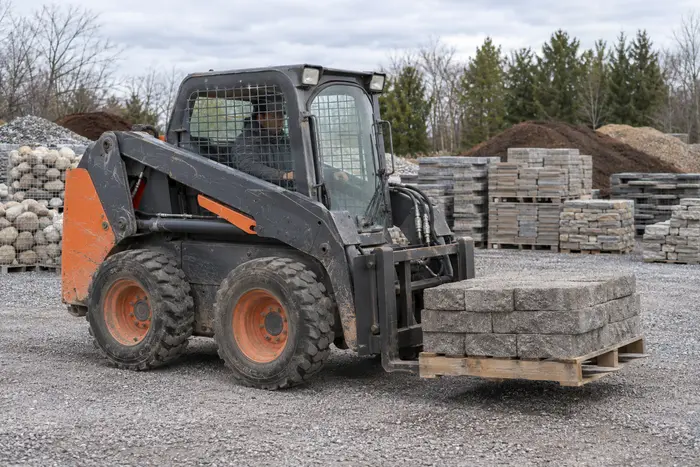
Skid steer pallet forks mount on the quick attach plate and turn the machine into a small forklift for pallets, lumber, block and bales. Choose by fork length, frame type, rated capacity and options like side shift. The rated load must stay under both the fork rating and the machine's rated operating capacity.
Shopping for this now? Get a fit-checked, delivered quote.
Key takeaways
- Forks must carry at least two-thirds of the load length to be stable.
- Capacity is rated for the pair at a stated load center, so check the rating, not just the size.
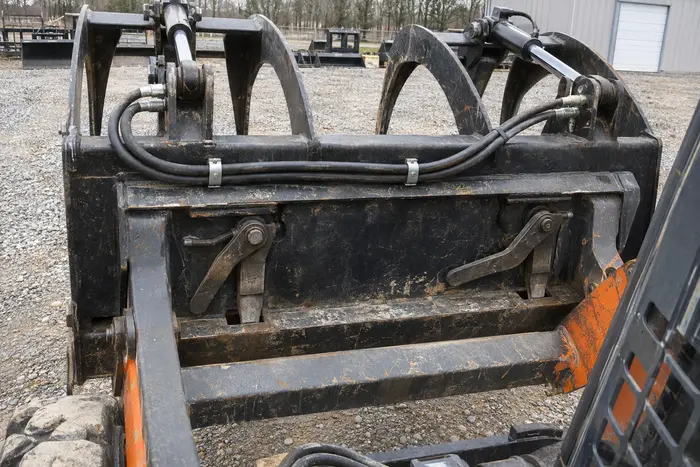
- A fork frame with a back rack stops loads sliding toward the cab.
- Side shift and hydraulic tine positioning cut the time spent lining up.
- The skid steer's rated operating capacity is usually the limit you hit first.
Pallet forks are among the most common skid steer attachments. They move pallets, bags of stone, lumber, fence rolls and anything else that fits on a fork. Used well, they save hours of hand work. Used badly, they tip machines. This guide covers how to pick skid steer pallet forks and how to use them without drama.
What are skid steer pallet forks?
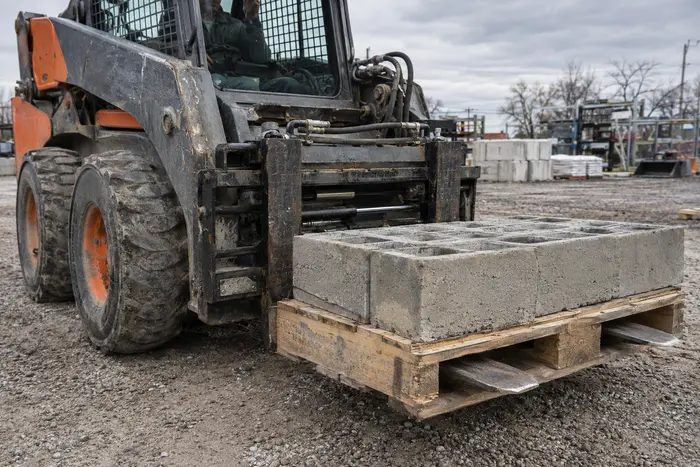
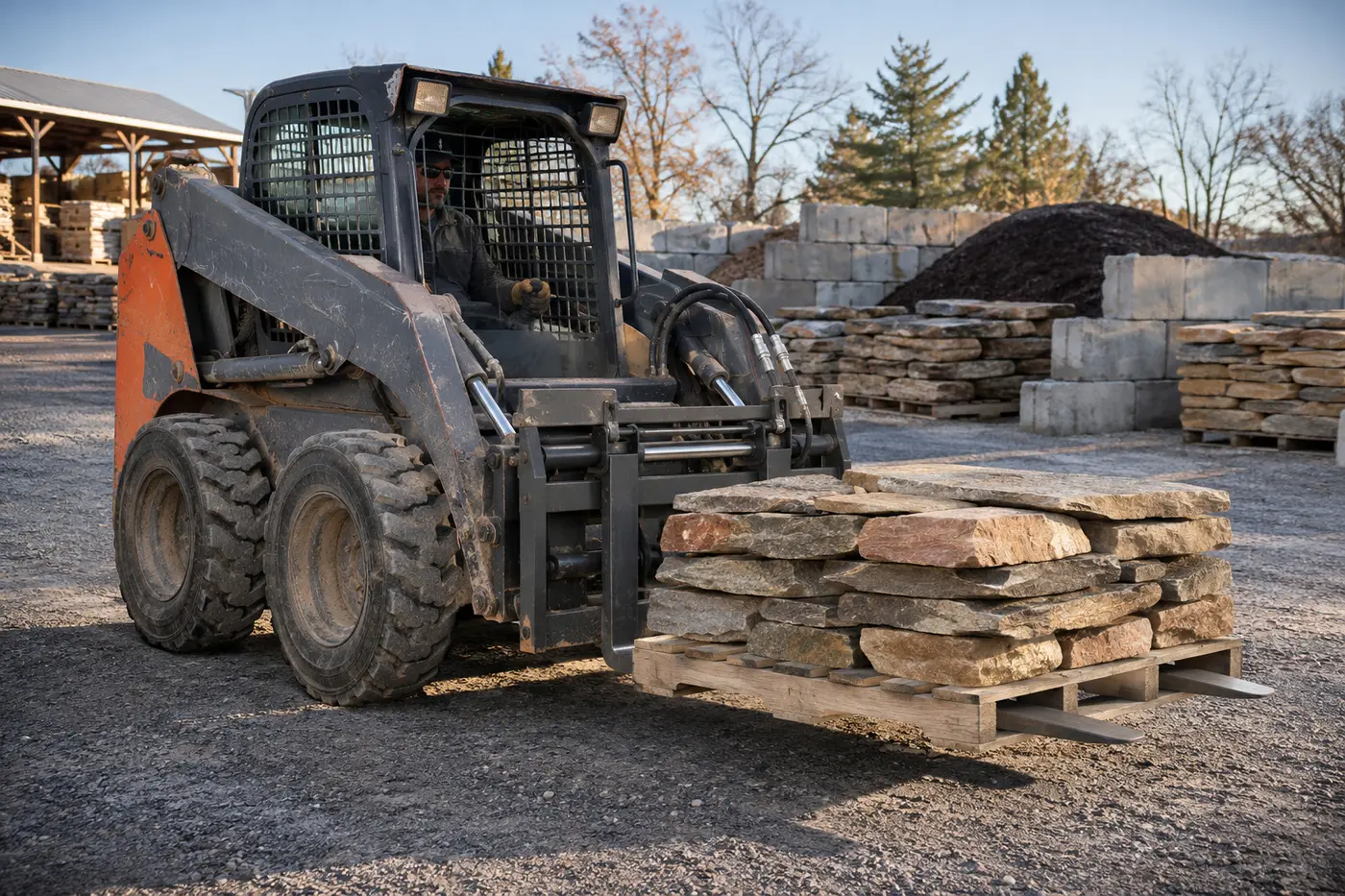
A set of pallet forks has a frame that mounts on the skid steer's quick attach plate and two or more tines (the forks). Fork frames come in a few types, and the tines slide across the frame so you can match the pallet width. They let a skid steer do some of the work of a forklift. A skid steer has good maneuverability and traction compared to a rough terrain forklift, but it is usually rated to lift less than a forklift of similar size, so load weight needs more attention.
What types of fork frames are there?
| Frame type | What it is | Good for |
|---|---|---|
| Standard frame | Plain carriage with a back rack and sliding tines | General pallets, lumber, block |
| Side-shift frame | Carriage that slides left and right on hydraulics | Tight lineups, loading trailers and racks |
| Hydraulic positioning frame | Tines open and close with hydraulics | Mixed pallet sizes without leaving the seat |
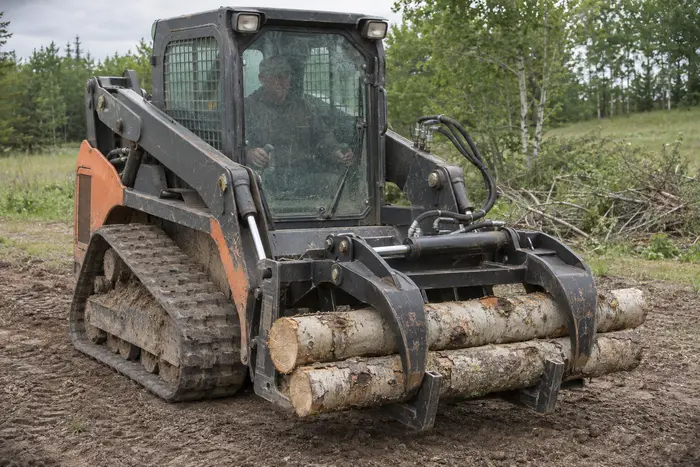
| Fork with grapple | Top clamp holds the load against the tines | Brush, logs, uneven or loose loads |
| Fork with bucket combo | Fork attachment that also scoops | Mixed jobs with less switching |
How long should the forks be?
Fork length matters for stability. A common rule of thumb is that forks should reach at least two-thirds of the length of the load. Forks that are too short let the load tip off the ends. Forks that are too long can punch into the next pallet or the wall behind it. For standard pallets, many buyers choose a fork length close to the pallet depth. A fork frame with extensions or longer tines handles lumber and long loads. Our category pages show common lengths, including skid steer pallet forks and mini skid steer pallet forks.
How do you read a fork capacity rating?
Capacity is where a lot of people get burned. Forks are rated by the pair, at a stated load center. The load center is how far out from the heel of the fork the weight sits. A rating makes sense only with that distance, because the farther out the load sits, the less it can safely weigh. If you stack a pallet that overhangs the forks, you have lengthened the load center and cut the real capacity.
Standard forklift forks are built to carriage classes defined by the Industrial Truck Association. There are five classes, each tied to a carriage height and a maximum lifting capacity. For example, Class 2 is commonly listed at roughly 2,200 to 5,500 lb and Class 3 at roughly 5,500 to 11,000 lb. These classes apply to hook-type forks that hang on a carriage. Many skid steer fork frames use a different mounting arrangement, so always read the manufacturer's rating for the frame and tines together. Our pallet fork weight capacity guide goes deeper on the numbers.
Then check the skid steer. The machine has a rated operating capacity, and on most skid steers that is the lower number. Skid steer tines will not carry what the machine cannot lift.
How do you choose skid steer pallet forks?
- Start with the machine. Find your skid steer's rated operating capacity, quick attach type and hydraulic options.
- Pick the frame. A standard frame handles most work. Add side shift if you load trailers or racks. Add a grapple or top clamp for loose or odd-shaped loads.
- Choose the tine length. Match the loads you carry most. Pallets, lumber and bales all call for different lengths.
- Check the rating. Make sure the pair's rated capacity comfortably exceeds your heaviest load at the real load center.
- Look at the back rack. A tall, sturdy back frame keeps loads from sliding toward the cab.
- Confirm the quick attach. Most skid steer frames use a universal quick attach plate. Check yours, or see skid steer quick attach plate types.
How do you use pallet forks safely?
Handle every load as if it can fall. Follow the operator manual for your machine and the attachment, and stay inside the rated operating capacity.
- Wear the seat belt and keep the restraint down.
- Approach square to the load and set the forks fully under it before you lift.
- Lift just enough to clear the ground. Carry loads low, tilted slightly back.
- Drive slowly across rough ground and avoid turning sharply with a raised load.
- Keep people out of the area in front of and under the load.
- Do not lift people on forks. Use a purpose-built work platform instead.
- Check for loose or damaged pallets before you pick them up.
- On a slope, travel with the load facing uphill and keep it low.
What else are pallet forks good for?
Besides pallets, forks move stacks of lumber, rolls of fence, bags of landscape stone, utility pipe, culvert and sod pallets. Forks can handle some bales, although a bale spear or bale handler does that job better. Do not use forks to tow or push trailers. If you move round or large square bales, see our guide to moving round bales.
Do you need forks, or just a bucket with a strap-on fork?
Some owners clamp a set of forks onto the bucket lip. That is fine for light, occasional pallet work, and it is cheap. It has limits. The load sits farther out from the loader, the clamp can slip, and the bucket was never built to hold a point load. If you move pallets weekly, a proper frame is safer and faster. It gives you a rack behind the load, firm tine locks, and rated capacity numbers you can check.
Consider how often you switch between tools, too. A quick attach plate lets you swap a bucket for forks without hand tools on most machines, and that habit alone encourages safe use because you grab the right tool for each job.
How do you maintain pallet forks?
- Check the tines for bending, cracks and heel wear. A fork with a visible bend should be replaced.
- Check the tine locks. They hold the tines in place on the frame.
- Grease the pivot points on any hydraulic frame.
- Inspect the back rack welds and mounting pins.
- Replace worn quick attach latch parts before they fail.
Get the right fit the first time
Forks, frames and quick attach plates have to match your skid steer. Send us the make, model and year and the heaviest load you plan to carry. We will confirm fit against the manufacturer's specs, then give you a delivered price to approve before you pay. Start with a fit-checked quote.
Questions buyers ask
How much weight can skid steer pallet forks lift?
It depends on the forks and the machine. Forks have a rated capacity for the pair at a stated load center, and the skid steer has its own rated operating capacity. The lower of the two is your limit, and a load that overhangs the tines reduces it further.
Do skid steer pallet forks come with side shift?
Yes, side-shift frames are a common option. A hydraulic cylinder slides the whole carriage left and right so you can line up with pallets and racks without repositioning the machine. They need auxiliary hydraulics and a bit more weight, but save time on trailer and rack loading.
How long should pallet forks be on a skid steer?
Forks should reach at least two-thirds the length of the load for stability. For standard pallets, tines near the pallet depth work well. Longer tines suit lumber and long loads. Too much length can poke through a load into whatever sits behind it.
What are pallet forks with a grapple?
A fork-and-grapple attachment adds a hydraulic top clamp that holds the load down on the tines. It is useful for brush, logs, irregular loads and anything that may slide or roll. It needs auxiliary hydraulics and generally costs more and weighs more than plain forks.
Can a mini skid steer use pallet forks?
Yes. Mini skid steers have smaller and lighter fork frames sized for their lower lift capacity. Check the rated capacity of the machine and the forks carefully, because the limit is much lower than on a full-size skid steer and shifts quickly with load center.