Skid steer guide
Skid Steer Broom Attachment: Sweeper Buying Guide
Quick answer
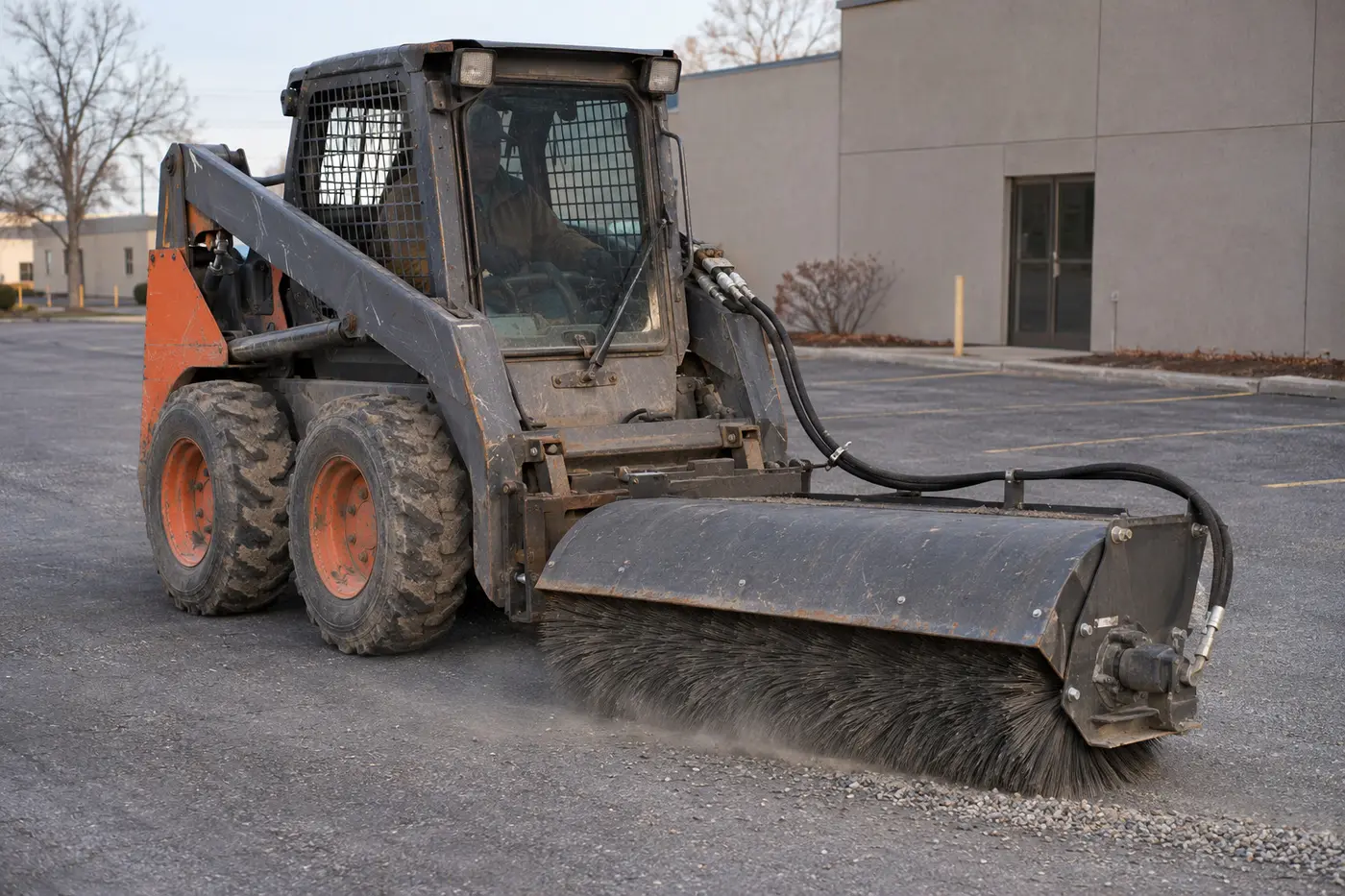
A skid steer broom attachment is a hydraulically driven rotating brush that sweeps dirt, debris, gravel and light snow. Angle brooms pivot to throw material to one side, while bucket brooms collect it. Match the broom width, bristle type and hydraulic flow to your machine and the surface you sweep.
Shopping for this now? Get a fit-checked, delivered quote.
Key takeaways
- Angle brooms push material to the side; bucket brooms collect it.
- Bristle type matters: poly for general debris, wire for tougher cleanup, blends for mixed work.
- The broom needs auxiliary hydraulics, so check flow and couplers.
- Broom width should leave a little extra beyond the tires for clean passes.
- Replace worn bristles before the core is exposed.
A skid steer broom attachment turns a loader into a sweeper. It clears parking lots, shop floors, driveways, loading docks, construction sites and barn aisles. It also moves light snow. This guide explains the main types, how to choose one, and what to ask before ordering.
What is a skid steer broom?
A skid steer broom, or sweeper, is a cylindrical brush that spins on a horizontal axis. A hydraulic motor drives it from the machine's auxiliary circuit. The brush flicks dirt and debris away from the surface. Depending on the design, the attachment either pushes material to the side or sweeps it into a collection bucket.
The attachment mounts on the machine's quick-attach plate. If your skid steer uses a universal plate, most brooms built for that standard will mount. You still need to confirm hydraulic flow and the coupler type before you buy. Browse skid steer brooms and sweepers for options.
Angle broom or bucket broom: which is better?
The angle broom is the common choice for open-surface cleaning. The frame pivots left or right, usually by manual pins or a hydraulic cylinder, so the brush throws material to the side as you drive forward. It is quick for long runs and wide lots.
A bucket broom, sometimes called a pickup broom, sweeps debris into a bucket that rides in front. You dump when full. It suits places where you can't leave debris on the ground: a finished lot, an interior floor, a worksite near a drain. It handles less material per pass but leaves a cleaner surface.
| Type | How it works | Best for | Trade-off |
|---|---|---|---|
| Angle broom | Pivots to sweep debris sideways | Lots, roads, large pads, light snow | Leaves a windrow you must collect or accept |
| Bucket broom | Brush feeds a collection bucket | Finished surfaces, interior floors, tight spots | Smaller capacity, more dumping |
| Pickup broom with hopper | Brush sweeps into a large hopper | Contractors who must remove debris on the spot | Heavier and more expensive to run |
How do bristle types differ?
Bristles are the main wear item and the main choice after the type of broom. Polypropylene (poly) bristles are the general-purpose standard. They clean dirt, gravel, wet leaves and light debris without scratching most surfaces. Wire bristles are tougher on caked mud, rust and old asphalt patches but can scar finished surfaces. Blends combine poly and wire for jobs that mix both conditions.
Think about the surface first. Concrete and asphalt tolerate more than pavers, sealed floors or newly poured slabs. Ask the supplier about bristle density and fill pattern too, because a full brush sweeps cleaner and lasts longer than a thin one.
What size broom does your skid steer need?
Width is the main sizing question. A broom a little wider than the machine's tires, or its overall width, lets you sweep a clean pass without leaving a tire track in the debris. Very wide brooms on a small machine can overload the front axle and make the machine feel nose heavy. Check the broom weight against the machine's rated operating capacity, and stay inside it.
If you run a compact machine, look at mini skid steer brooms and sweepers, which are narrower and lighter. If you are weighing machine size, the skid steer sizes and frame classes guide covers how frame size affects what you can run.
What hydraulic setup does a broom need?
A broom is driven by the auxiliary hydraulics, so confirm the flow and pressure the broom's motor needs. Standard-flow machines run most brooms, and high flow isn't normally required. Check the coupler type, which on most machines is flat-face, and whether the hose length is enough for the angle range. A weak or mismatched circuit will turn the brush too slowly to sweep well.
Some broom motors need a case drain line and others do not. Ask the manufacturer to confirm. If the motor needs a case drain and your machine has no case drain port, running it can damage the motor's shaft seal. See what is a case drain on a skid steer for the basics.
How to choose a skid steer broom: a checklist
- Decide where you sweep: dirt, gravel, asphalt, concrete, interior floor.
- Pick angle, bucket or hopper style based on where the debris can go.
- Choose bristle type and fill for the surface and debris.
- Pick a width that clears the tires without overloading the machine.
- Confirm the quick-attach plate and hydraulic couplers.
- Confirm the broom's weight against the machine's rated capacity.
- Ask about replacement bristle sections and how long a change takes.
Can a broom clear snow?
Yes, for light, dry snow. An angle broom can clear a sidewalk or loading dock without scraping the surface. For deep or wet snow, a pusher, blade or blower does the job better. See snow removal with a skid steer for how the options compare.
How do you maintain a broom?
Check the bristles each shift. Worn bristles lose reach and sweep poorly, and a brush worn down to the core can damage the surface. Rotate or replace bristle sections as the maker advises. Grease pivot points. Check hoses for rubbing at the angle joint. After sweeping wet debris, hose off the brush so mud does not harden in the bristles. Store the broom off the ground to keep bristles from flattening.
Operating tips are simple. Keep the brush contact light and consistent. Too much downpressure bends bristles and wastes them. Sweep at a steady speed. Wear eye and hearing protection and keep bystanders clear, because brooms throw gravel.
Where do you use a broom besides lots?
Farm and equestrian operations use brooms for barn aisles and arenas. Landscape crews use them to clean pavers after sanding. Contractors sweep slabs before pours and clear fine dust from work zones. Municipal and property crews use them on walkways in spring and fall. A broom also cleans rubber and debris from a loading dock. The same attachment on one machine can serve all of these tasks, which is why it earns its keep for crews who already own a skid steer.
How do you sweep well?
Sweep in overlapping passes at a steady, modest speed. Angle the broom so the debris flows away from the area you have already cleaned, and set the pivot so the windrow lands where you want it. On a lot, work from the high side to the low side so debris does not roll back. On gravel, keep the brush contact light so you don't throw stone. Dust control matters near buildings, and a water kit on some brooms cuts airborne dust on dry days. Watch for manholes, drains and curbs, which can catch a rotating brush.
Get the right fit the first time
A broom has to match your machine's quick attach, auxiliary flow and rated capacity. Send us the make, model and year and a person will check fit against the maker's specs. You approve a delivered price before you pay. Get a fit-checked quote or call 1-888-245-1555.
Questions buyers ask
What is a skid steer broom attachment used for?
It sweeps dirt, gravel, leaves, light snow and job-site debris from lots, shop floors, drives and slabs. A hydraulic motor spins the brush. Angle brooms push debris sideways, while bucket brooms collect it so you can dump it elsewhere.
What bristles should I choose for a skid steer broom?
Poly bristles suit general debris and delicate surfaces. Wire bristles handle packed mud or old asphalt but can scar surfaces. A poly and wire blend covers mixed work. Choose by surface and debris, not by what lasts longest.
Does a skid steer broom need high-flow hydraulics?
Usually not. Most brooms run on standard auxiliary flow. You still need to confirm the motor's flow and pressure range, the coupler type and the hose length against your machine. A person can check that for you.
How wide should a skid steer broom be?
A little wider than the machine's tires so you sweep a clean path. Don't go so wide that the attachment's weight overloads the machine. Check the broom weight against the skid steer's rated operating capacity.
Can a skid steer broom remove snow?
It can clear light, dry snow from walkways and docks without scraping the surface. For deep, wet or heavy snow, use a pusher, blade or blower. A broom is best for finishing a surface after the heavy clearing is done.