Equipment basics guide
Bale Spears and Bale Handlers: Buying Guide
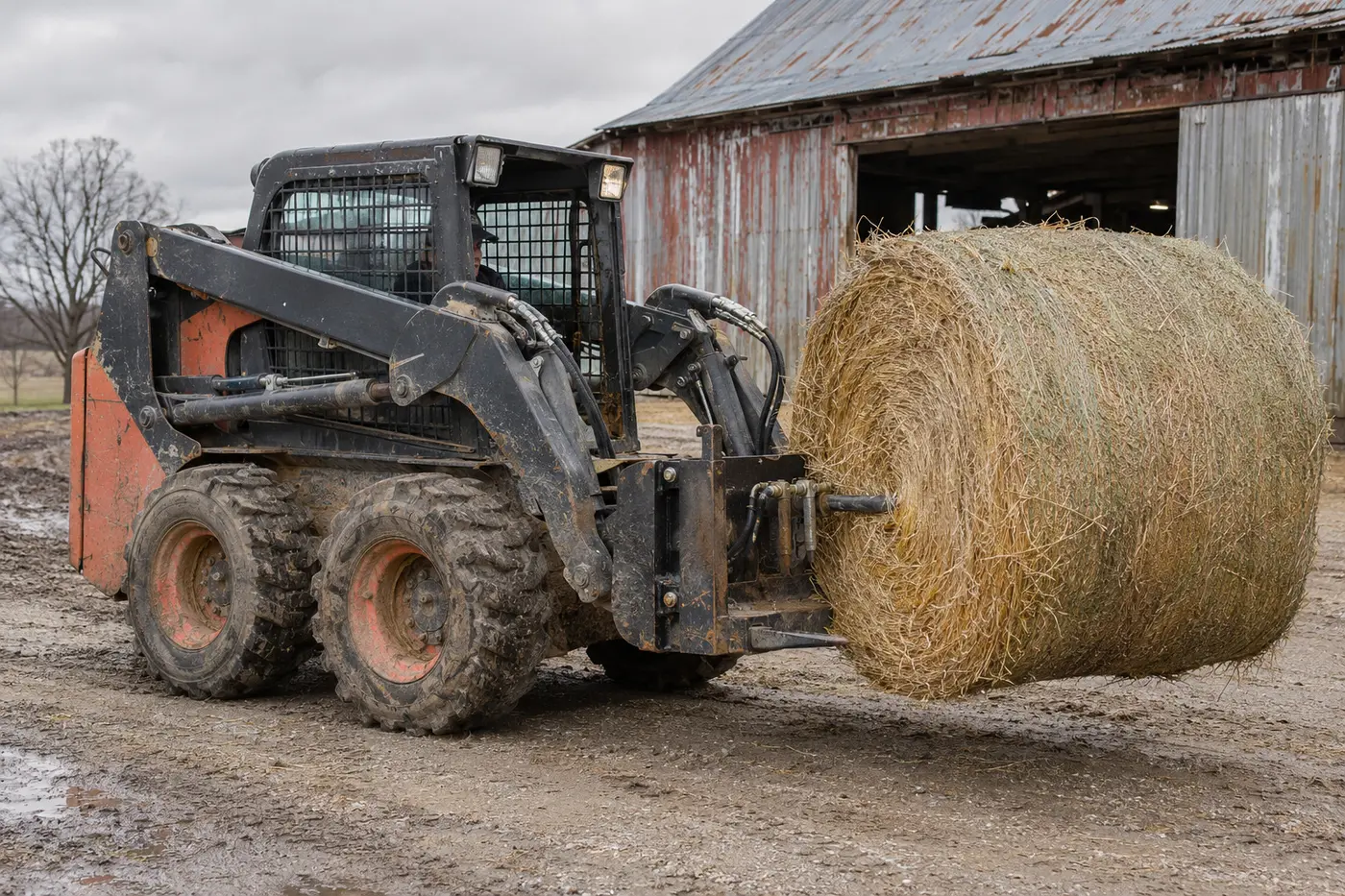
Quick answer
A bale spear is a pointed steel spike that mounts on a loader, skid steer, tractor or forklift to pierce and lift round bales. Choose it by bale weight, spear length and quick-attach fit. Stabilizer spears reduce spinning. For wrapped or fragile bales, a bale handler or grapple may be a better choice.
Shopping for this now? Get a fit-checked, delivered quote.
Key takeaways
- A spear pierces the bale; a handler squeezes it between arms.
- Spear length and thickness must suit the bale size and weight.
- Stabilizer spears keep the bale from spinning and sliding.
- Stay within the machine's rated operating capacity.
If you move round bales, a bale spear is one of the lowest-cost, simplest tools you can add to a loader. It is a long steel spike that you push into the bale and lift. It works with a skid steer, a tractor loader or a telehandler, and it can be mounted as a stand-alone attachment, bolted into a bucket or fitted to forks. This guide covers how to choose one, and when to step up to a bale handler.
What is a bale spear?
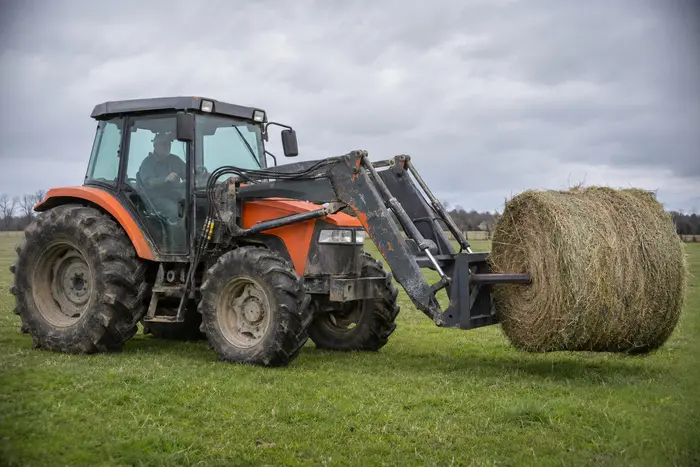
A bale spear is a tapered, hardened steel rod fitted to a mounting frame or plate. You drive it into the center of a round bale, lift, and carry the bale to a trailer, rack or feeding area. Some designs have one main spear, and others add short stabilizing spikes beside the main one to keep the bale from spinning. See our category pages for skid steer bale spears and telehandler bale spears.
Types of bale spears
Single spear
The simplest design. It is cheap and quick, but the bale can spin on the spear as you move. Good for short, careful moves.
Stabilizer or multi-spike spear
Short spikes beside the main spear dig into the bale and stop it from rotating. This design is safer and neater when you travel or stack.
Bucket-mounted spear
A spear that bolts or clamps into a loader bucket. It is a low-cost way to turn a bucket into a bale mover, but check that it is compatible with your bucket and that you stay within the bucket's rated capacity. Look at our bucket forks for tractor loader guide for related options.
Fork-mounted spear
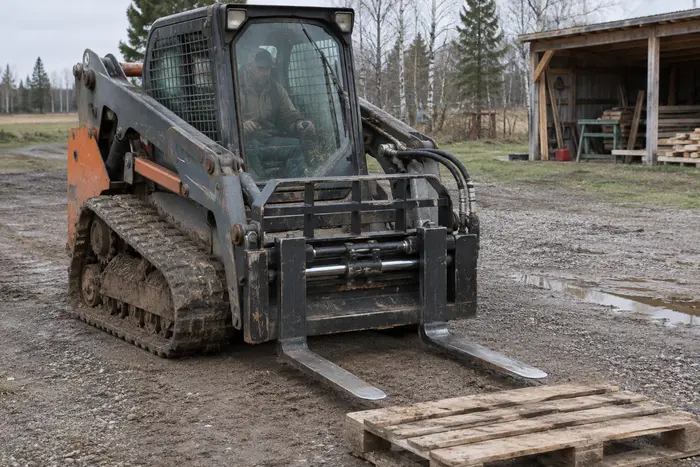
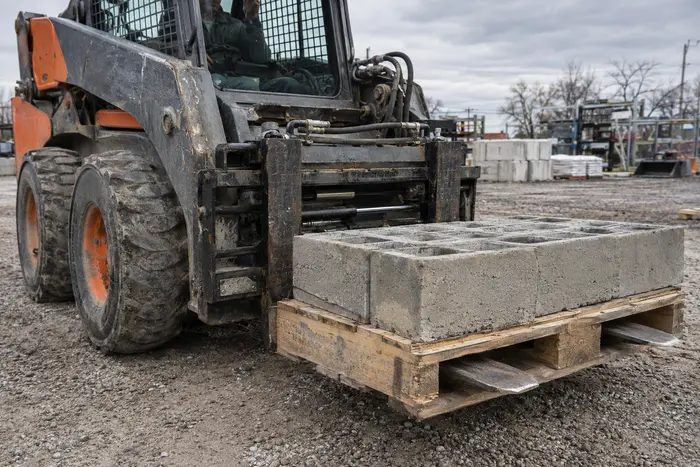
A spear that slides onto pallet forks, handy if you already have forks. Forklift owners search for this type. Never assume forks can carry the bale: a round bale's load center often sits further forward than a standard pallet's, so usable capacity drops. Check the load chart.
Bale handler (grapple style)
Instead of piercing, a handler squeezes the bale between two arms. It does not damage the bale, and it suits wrapped silage bales and expensive hay. See bale handlers for those tools.
| Tool | How it holds | Best for |
|---|---|---|
| Single spear | Pierces the bale | Light, short moves |
| Stabilizer spear | Pierces and resists spin | Daily hay handling |
| Bucket-mounted spear | Spear fixed to a bucket | Occasional use, low cost |
| Bale handler | Squeezes between arms | Wrapped or fragile bales |
How to choose a bale spear
- Know your bale weight and size. Bale weight varies with material, moisture and size. Weigh a sample or get the producer's figure. A wet or silage bale can be much heavier than dry hay.
- Check the machine's rated operating capacity. A bale hangs well forward on the spear. Many loaders can carry less there than a plain bucket figure suggests. Look up your capacity and keep a margin. Our guide on how much a skid steer can lift explains why.
- Choose the spear length. It must be long enough to reach the bale center without being so long that it pokes out the far side or flexes. Use the maker's guidance for your bale size.
- Pick a spear diameter and steel grade. Heavier bales and wet material need thicker, harder spears. A bent spear is a safety risk.
- Match the mounting. Check the quick-attach plate, bucket or fork dimensions, or three-point hitch category.
- Consider a nut or retainer. Some spears have a retaining nut so the spear does not slide out of the mount.
- Add a stabilizer. If you carry bales more than a short distance, stabilizers help.
How to move bales safely
- Approach the bale squarely and push the spear in at the center, not near the edge.
- Lift slowly and tilt the spear slightly back so the bale rides on the spear and not on the tip.
- Carry the bale low and drive slowly, especially on slopes and uneven ground.
- Never carry a bale high while driving. Raise it only when you are ready to place it.
- Keep people away from the front of the machine and from under a raised bale.
- Do not use a spear to lift anything other than bales, and never lift people.
- Stay within the machine's rated operating capacity and follow the manual.
Our guide on how to move round bales goes through the process, including loading trailers and stacking.
Spear or handler: which one?
Spears are cheaper and simpler, and they fit most loaders. The cost is a hole in every bale, which lets moisture in and can matter for wrapped or silage bales. A handler costs more but protects the wrap and holds the bale more securely. If you handle a few dry hay bales, a spear is plenty. If you move wrapped bales, sell bales or work every day, a handler can pay back in less waste.
Using spears on a forklift or telehandler
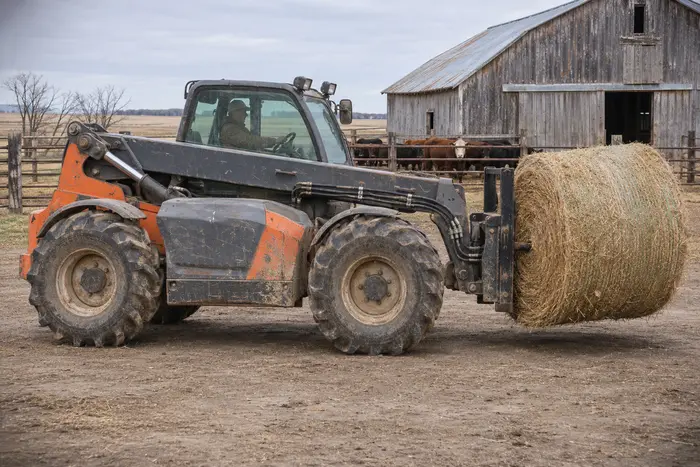
Telehandlers and forklifts can carry spears on forks or via a carriage. The same rules apply, and capacity charts matter even more at height and reach. Read the load chart before you lift a bale, and read our telehandler attachment guide to see how ratings change with reach.
Care and replacement
Inspect the spear for bends, cracks and wear at the tip and base each time you use it. A bent spear is weakened and should be replaced. Check the welds and mounting bolts. Keep the tip clean and rust-free so it pierces easily. If a spear sleeve or retaining nut wears out, replace it rather than forcing the old one. Never straighten a bent spear with heat or a hammer, since that can weaken the steel.
If you are not sure which style fits your operation, tell us the bale size, what the bales are made of, and how many you move in a typical week. We will check which spear or handler suits your machine and bale weight.
Storing and stacking bales
Where you set the bale matters as much as how you lift it. Place bales on a firm, well-drained pad to limit moisture. Stack in a way that lets rain shed, and leave space between rows. When stacking high, use a machine rated for the height and reach, and keep spectators away from the stack in case a bale slips.
Fatigue leads to mistakes, so the last bales of a long day deserve the same care as the first. Carry bales low, look behind you and keep bystanders clear, however routine the job feels.
Get the right fit the first time
Send us the make, model and year of your machine and the job you have in mind. A person checks fit against the maker's specs, and you approve a delivered price before you pay. Get a fit-checked quote.
Questions buyers ask
what is a bale spear used for
A bale spear pierces round bales so a loader, tractor, skid steer or forklift can lift and move them. It is a simple, low-cost way to handle hay and straw. Stabilizer designs stop the bale from spinning and are safer for carrying.
what length bale spear do i need
Choose a length that reaches the bale center without poking far out the back, following the maker's guidance for your bale size. Also match thickness and steel grade to bale weight, since wet and silage bales can be much heavier than dry hay.
can you put a bale spear on a skid steer
Yes. Skid steer bale spears mount on the quick-attach plate. Check the machine's rated operating capacity, since the bale hangs forward, and use a stabilizer spear for carrying. Follow the operator manual for both machine and attachment.
is a bale spear better than a bale handler
A spear costs less and fits most loaders, but it leaves a hole in each bale. A handler squeezes the bale between arms, protecting wrap and reducing waste, and costs more. Dry hay in small volumes suits a spear; wrapped or daily handling suits a handler.