Tractor guide
Bucket Forks for a Tractor Loader or Skid Steer
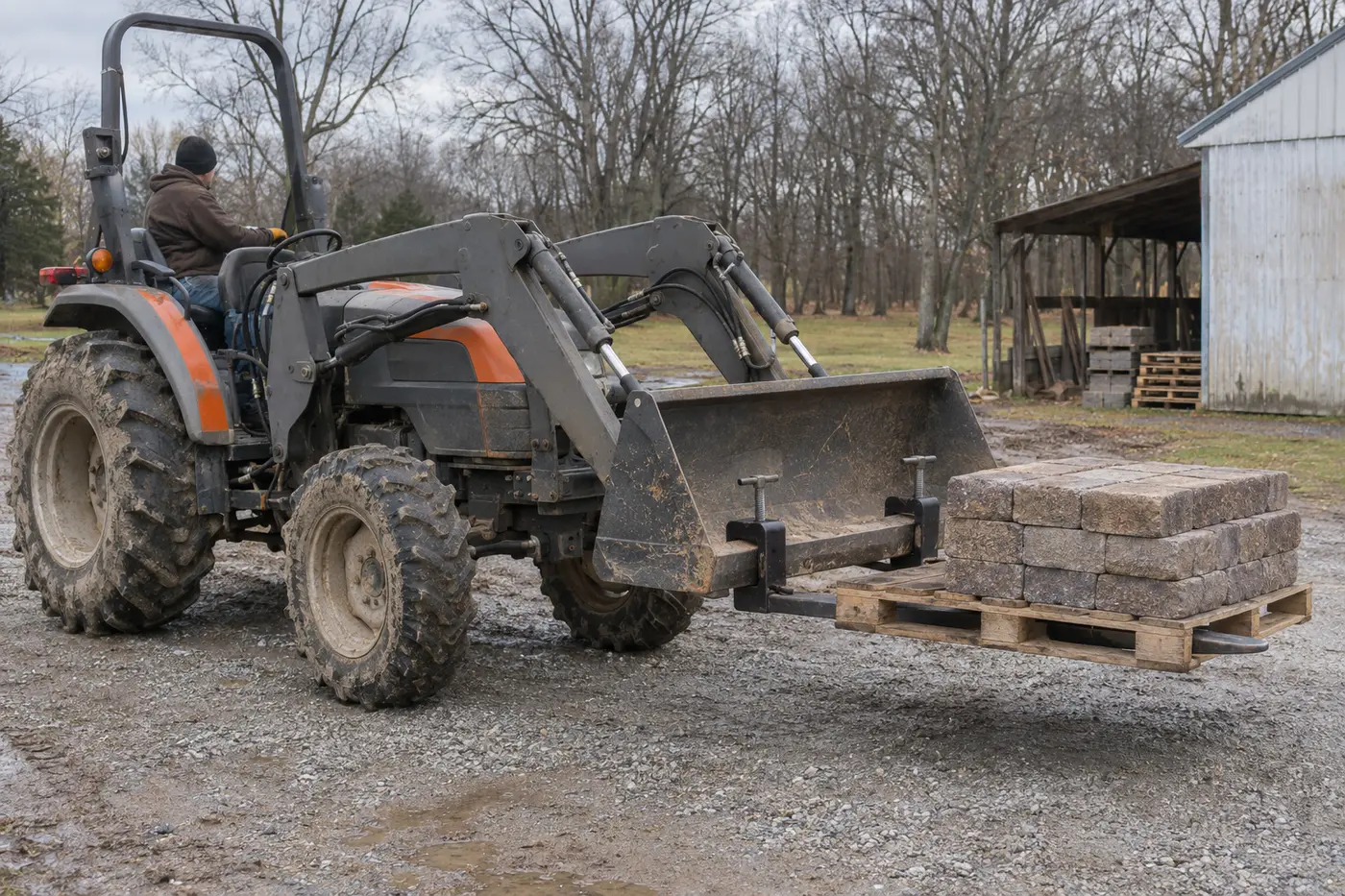
Quick answer
Bucket forks for a tractor are a set of tines that clamp or hook onto your loader bucket, turning it into a pallet handler. They usually cost less than a full carriage fork set but give up lift capacity and visibility. Match the fork rating to the loader's rated lift, not to the forks' own label.
Shopping for this now? Get a fit-checked, delivered quote.
Key takeaways
- Bucket forks attach to the bucket; pallet forks attach to the carriage.
- Your loader's rated lift at the load center is the limit, whatever the forks say.
- Check bucket width, lip shape and clamp style before ordering.
- Never lift people or use forks as a work platform.
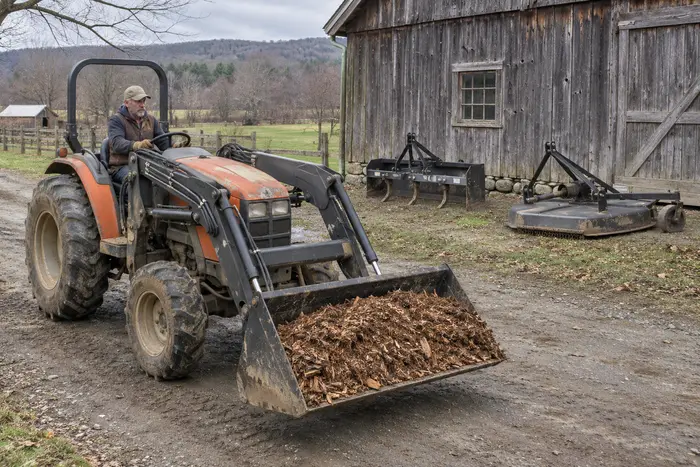
If you search for bucket forks for tractor loaders you will see two styles: clamp-on and hook-over. Both turn your front-end loader bucket into a fork. Both are a compromise compared with a dedicated carriage fork set. Here is how to pick the right one and use it safely.
What are bucket forks?
Bucket forks are a set of two tines on a frame that fastens to a bucket. The bucket stays on the loader. You get a pallet-and-bundle tool without removing the bucket or changing quick-attach plates. People call them clamp-on forks, slip-on forks or hook-over forks.
Clamp-on vs hook-over bucket forks
| Type | How it attaches | Good for | Watch for |
|---|---|---|---|
| Clamp-on | Clamps and pins or chains to the bucket lip | Rough use, different buckets | Needs a tight clamp; check it each time |
| Hook-over | Hooks over the bucket edge and sits on the floor of the bucket | Quick on and off | Needs a bucket with a clean, flat lip |
For a tractor with a simple loader, clamp-on is the usual choice because it grips more positively. For a skid steer with a general-purpose bucket, hook-over styles are common. Both want a clean bucket lip. A worn or bent edge makes any mounting method sloppy.
Bucket forks vs full pallet forks
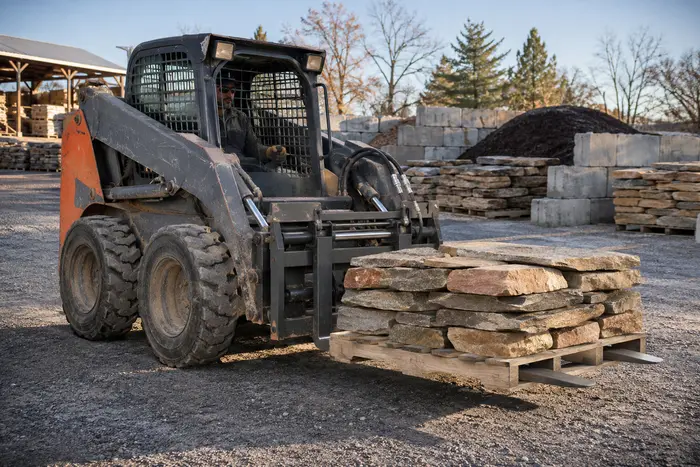
Bucket forks are a budget path. They add the weight and the leverage of the bucket, which sits behind the tines. That reduces how much you can safely lift and limits how close you can get to the load. A carriage fork frame mounts to the loader's quick-attach and gets the load closer to the machine. Read our skid steer pallet forks guide for that style.
- Choose bucket forks if you pick up pallets occasionally and want a low-cost add-on.
- Choose carriage forks if you move material most days or work on uneven ground.
How to size bucket forks
- Find your loader's rated lift capacity from the operator manual. Use the rating that applies at the load center, not a number from a sales sheet.
- Check the fork rating. It cannot exceed what your loader and bucket can safely carry together.
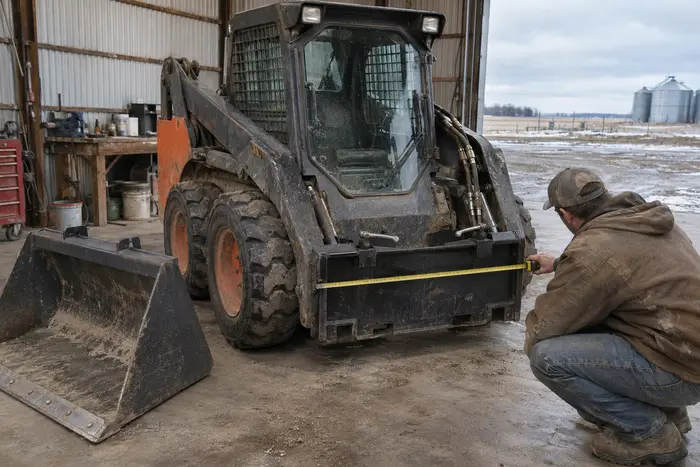
- Measure bucket width and lip thickness to confirm the clamp or hook fits.
- Pick tine length to match what you carry. Long tines suit full pallets, short tines suit bundles and brick.
- Confirm the forks will clear your loader arms, hoses or bucket cylinders when dumped.
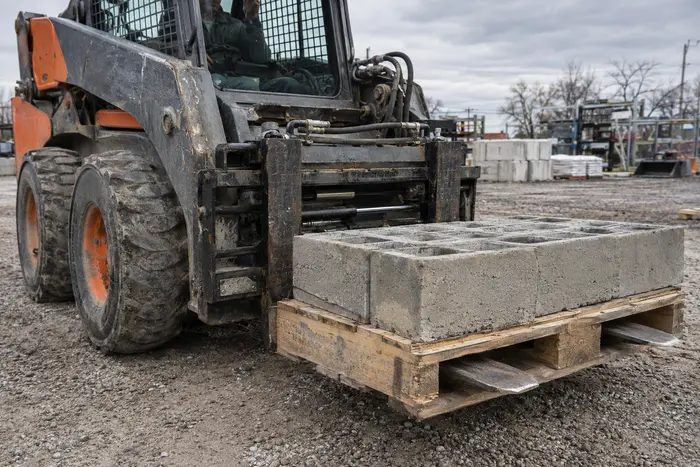
Do not guess on capacity. The weight of a pallet of wet concrete block or fence posts is easy to underestimate. If you are not sure, treat the lift as heavy and ask a person to confirm the numbers.
Euro brackets and fit
Some tractor loaders use a euro-style bracket rather than a skid-steer quick-attach plate. Others use a tractor-specific mount. A set of forks only fits if the bracket matches. Our guide to checking attachment fit walks through the measurements. For tractors that use a skid-steer adapter, mounting plates bridge the difference.
3-point hitch forks
You will also see pallet forks for tractor three-point hitches. These hang off the back of the tractor instead of the loader. They are good for carrying loads over rough ground and act as a counterweight to the front end. They have a lower lift height, so they suit moving, not stacking.
Safe use
- Stay within the rated operating capacity of the machine. Follow the operator manual.
- Keep loads low while you travel. Tilt the forks back slightly.
- Do not lift people on forks or on a pallet. Use a rated work platform where one exists.
- Drive straight up and down slopes. Do not turn with a raised load.
- Inspect clamps, pins and tines before each use.
Our skid steer pallet forks category covers carriage-mounted sets if you decide bucket forks are not enough. Fork extensions exist for longer loads, but they push the load center out and cut capacity, so use them only where the fork maker rates them for your tines.
When bucket forks are the wrong tool
If your pallets are heavy or the ground is soft, a carriage fork set is the right tool. If you rarely lift, a rental can be cheaper than owning. If your bucket lip is bent or has a cutting edge bolted on, test the mount before you trust it.
Pre-use checklist for bucket forks
- Look over the bucket lip for cracks, bends and heavy wear.
- Seat the forks fully and tighten all clamps or retention pins.
- Pull each tine to confirm it is locked on the frame and not loose.
- Check that the loader's hoses and cylinders clear the forks when you roll the bucket back.
- Raise the load a short distance, then stop and check balance before you drive.
Common problems and how to avoid them
- Forks slide on the bucket. Usually a worn lip or loose clamp. Fix the mounting before you lift anything.
- The load tips forward. The bucket's weight and shape move the load away from the machine. Keep loads light and tilt back.
- You cannot see the tines. With the bucket in the way, visibility is limited. Use a spotter and go slowly.
- Tines too short. A pallet that overhangs becomes unstable. Pick a tine length to suit your common loads.
A note on materials
Forks are tools that spend their lives under load. Look for solid steel tines, clean welds and a frame sized for the stated rating. Avoid second-hand sets with cracks or sections that have been welded without documentation. A cracked tine is a failure that can drop a load.
Match the forks to the work
| Typical job | Tine length | Note |
|---|---|---|
| Full pallets of block or bagged material | Long | Support the full pallet so it does not sag |
| Bundles of lumber or pipe | Medium | Spread the tines wide for stability |
| Brick cubes and small stacks | Short | Less overhang, easier to see |
| Round bales | Use a spear instead | See bale spears |
Set the tine spacing so the load is supported under its heaviest part. Wide enough to stay stable, narrow enough to fit inside the pallet openings. If a pallet will not fit, do not force the tines. Reposition the load instead.
One more point on storage. Take bucket forks off when you are digging or loading loose material, and store them off the ground so the tines do not bend or rust. Keep the clamps and pins together with the set so you can find them next season.
Get the right fit the first time
Fit problems are the expensive mistakes, and they are easy to avoid. Send us your machine make, model and year and what you plan to do with it. A person checks the fit against the maker specs, and you see the delivered price before you pay. When you are ready, get a fit-checked quote.
Questions buyers ask
What are bucket forks for a tractor?
Bucket forks are two tines on a frame that clamp or hook onto your loader bucket. They let you handle pallets, brick and bundles without changing attachments. They carry less than a carriage fork set because the bucket adds weight and leverage.
Are clamp-on forks safe?
They are safe when they fit the bucket, are properly secured and are used inside the loader's rated lift capacity. Check clamps and pins each time. Never lift people, and keep loads low and tilted back while you travel.
Can I put pallet forks on a tractor loader?
Yes. Use clamp-on bucket forks, or carriage forks if the tractor loader has a compatible quick-attach. Match the fork rating to the loader's rated lift at the load center and confirm the bracket style first. Ask for a fit check if you are not certain about your setup.
What size forks do I need?
Pick tine length for what you carry: long for full pallets, short for bundles. Then make sure the combined loader, bucket and fork load stays inside the loader's rated capacity. Ask for a fit check if you are not sure.
Do pallet forks for a 3-point hitch work?
They do for moving loads across a property. They hang on the rear hitch, act as a counterweight and have low lift height. They are not made for stacking or high lifts, so choose by task.