Excavator guide
Mini Excavator Root Rakes and Tree Grubbers
Quick answer
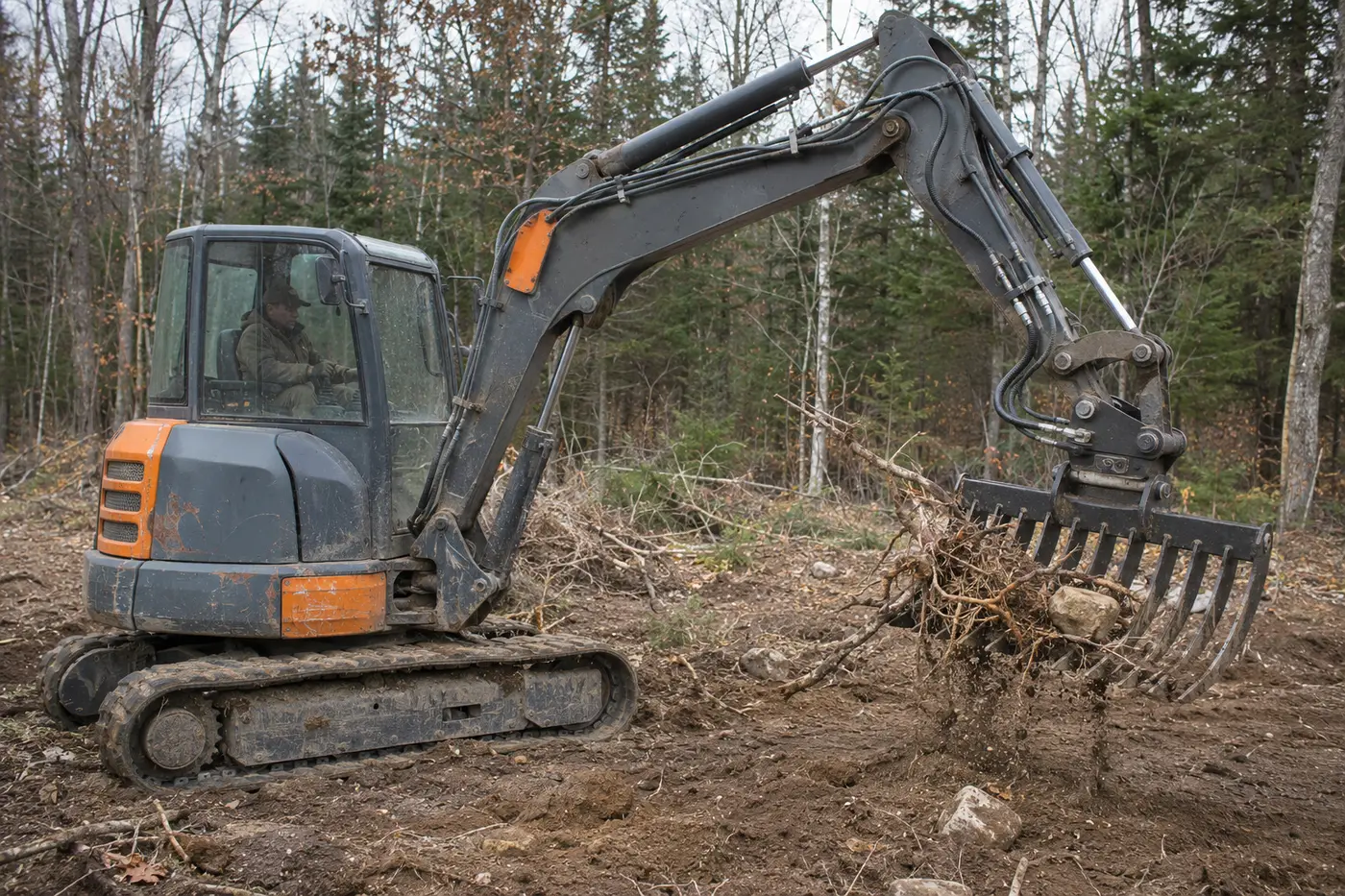
A mini excavator root rake is a tined bucket-style attachment that pulls roots, stumps, rocks and brush out of the ground while letting soil fall through. It speeds lot clearing and site prep. Pair it with a thumb for better grip, and match the rake's weight to your machine's lift capacity.
Shopping for this now? Get a fit-checked, delivered quote.
Key takeaways
- Tines let soil fall through, so you move debris, not dirt.
- A thumb or grapple adds grip for logs and large roots.
- Tine spacing and width must match your machine and ground.
- Check the excavator's lift chart before you load the rake.
Clearing land with a mini excavator is slow if all you have is a bucket. A bucket scoops dirt along with every root and rock. A root rake does the opposite: it keeps the debris and drops the soil. This guide explains what root rakes and tree grubbers are, how they differ, and how to choose and use one on a compact excavator.
What is a mini excavator root rake?
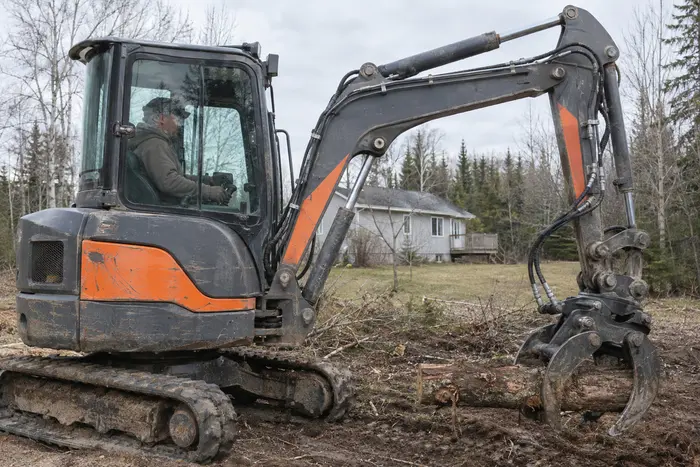
A root rake is a heavy steel attachment with long, strong tines, set in a frame that mounts on the excavator's stick through a quick coupler or pins. As you pull it through the ground, the tines catch roots, stumps, rocks and brush while loose soil falls through the gaps. It is also called a brush rake or land clearing rake. See the excavator root rakes and tree grubbers categories.
Root rake vs tree grubber vs grapple
| Tool | What it does best | Limits |
|---|---|---|
| Root rake | Sorts roots and debris from soil, cleans lots, piles brush | Not for digging trenches |
| Tree grubber | Pulls small trees and stumps by gripping and levering | Limited to the grubber's stated size |
| Root grapple | Grips and lifts logs, roots and debris with clamping arms | Heavier and costlier |
| Bucket with thumb | All-round digging and picking | Lets debris and soil mix |
If you want to compare gripping tools, read our root grapple vs root rake guide. It shows when clamping arms win.
What jobs suit a root rake?
- Lot and building site clearing. Remove roots and rocks after trees are felled.
- Pasture and field renovation. Clean up fence lines, brushy corners and rocky ground.
- Brush piling. Gather limbs and trunks into piles for chipping or burning where permitted.
- Stump and root removal. Loosen and lift root balls after grubbing.
- Seedbed and lawn prep. Clean debris out of the topsoil before grading.
Tine spacing and width
Tine spacing is a key choice. Narrow spacing catches smaller roots and stones but lets less soil fall through. Wide spacing sifts soil quickly but misses small debris. Choose spacing for the main material you are removing. Width matters too: a wider rake covers more ground per pass but needs more lift capacity and may be harder to maneuver in tight sites. For a compact excavator, a narrow or moderate width is usual. Check our guide to mini excavator sizes and weight to see what each class can handle.
Do you need a thumb?
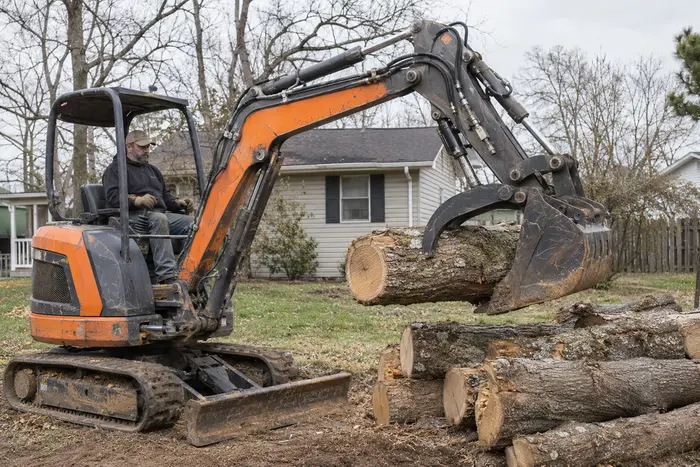
A thumb is a hydraulic or manual arm that closes against the bucket or rake to grip material. With a root rake, a thumb is optional but useful: it lets you pick up logs and big roots, then use the rake to sort. Some root rakes are made to work with a thumb and have tines that interlock with it. Our mini excavator thumb guide explains manual and hydraulic types, and thumbs are in the catalog.
How to choose a root rake
- Match the machine class. The rake must suit your excavator's size, breakout force and lift capacity. Check the lift chart at the reach you will use.
- Pick the mounting. Choose a direct pin-on or a quick coupler, and confirm pin sizes and spacing. See quick coupler types.
- Select tine spacing and length. Match them to your roots and rocks.
- Consider rake weight. A heavy rake reduces what you can carry.
- Look at tine strength and replaceability. Hardened or replaceable tines last longer.
- Add a thumb if needed. Check if the rake accepts one.
- Check the shape. Some rakes curve forward to hold debris; others are flatter for sifting.
How to use a root rake
- Fell trees and cut them into manageable lengths first.
- Loosen stumps and roots with a grubber or bucket if needed.
- Set the rake tines into the soil at a shallow angle, then curl and drag toward the machine.
- Shake the rake to let soil fall through before you lift the debris.
- Place debris in piles away from the work area.
- Work in strips, and clean up the loose soil with a bucket or skid steer.
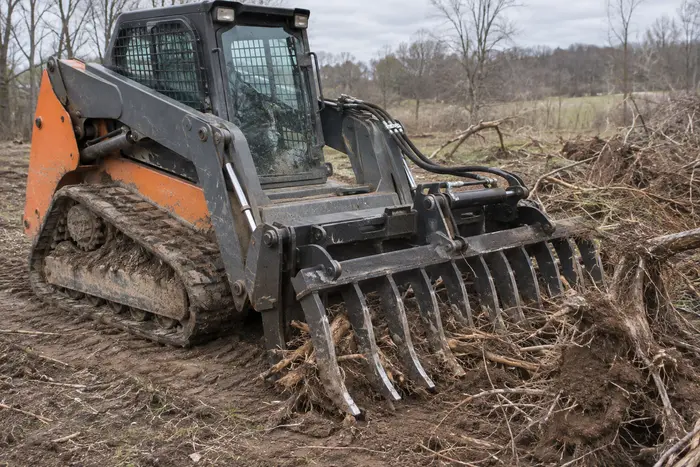
A skid steer with a grapple makes a good partner for hauling away piles. See how to clear brush with a skid steer for the support side of the job.
Safety
- Know where buried utilities and pipes are before you dig.
- Keep people outside the swing radius and the fall zone of piled logs.
- Never exceed the lift chart's capacity for your reach.
- Work on stable ground, and avoid steep slopes.
- Beware of rolling logs, kickback from stumps and flying rocks.
- Follow the operator manual for the excavator and the attachment.
Maintenance
Check tines for bends, cracks and wear, and repair or replace them before they fail. Inspect welds, pins and bushings, and grease pivot points. Keep the mounting pins tight, and clean soil and debris from the coupler. A bent tine will not sort properly and can stress the stick and boom.
Is it worth buying?
If you clear land or prepare sites regularly, a root rake can pay back through faster, cleaner work. For a one-off lot, rental or a contractor may cost less. If you also run a skid steer, a root rake and a grapple together cover many clearing jobs. See excavator grapples if you need a gripping tool as well.
Pairing the rake with other tools
A root rake is rarely the only tool on a clearing job. Use a saw or shear to fell trees, a grubber for stubborn stumps, and a skid steer with a grapple or bucket to move the piles. Once the lot is clean, a power rake or box grader finishes the surface. Planning the sequence in advance keeps the machines busy and cuts handling.
If you only buy one clearing attachment for your excavator, choose according to the work you do most: a rake for sorting, a grapple for lifting, or a grubber for trees.
Ground conditions and technique
Root rakes work best in loose or moderately firm ground. Rock ledges and heavy clay can make raking slow, and very wet ground clogs the tines with mud. Work with the grain of the ground, take shallow passes, and let the soil fall through before moving the pile. Patience beats force, because forcing the rake bends tines and strains the stick.
Before you buy, tell us your excavator's make, model and year, plus the kind of material you clear. A person can then confirm the rake's weight, pin sizes and coupler fit against your machine, which avoids the most common surprises.
Get the right fit the first time
Send us the make, model and year of your machine and the job you have in mind. A person checks fit against the maker's specs, and you see the delivered price on your quote before you pay. The supplier ships direct, and warranty terms, if any, are written on your quote. Get a fit-checked quote.
Questions buyers ask
What is a root rake on a mini excavator?
It is a tined attachment that mounts on the stick and pulls roots, stumps, rocks and brush out of the ground while loose soil falls through. It cleans lots and fields faster than a bucket, which scoops soil along with debris.
What is the difference between a root rake and a root grapple?
A root rake sorts debris from soil using open tines. A root grapple has clamping arms that grip and lift logs and roots. Grapples hold material more securely; rakes are lighter and better for sifting soil.
Do I need a thumb with a root rake?
Not always, but a thumb helps you pick up logs and big roots, and some root rakes are built to work with one. Check that the rake accepts a thumb and that your excavator can carry the combined weight.
What size root rake fits a mini excavator?
Choose by your machine's class, lift chart and breakout force, not width alone. A wider rake covers more but needs more lift capacity. Send us your excavator's make, model and year and a person will confirm fit.