Excavator guide
How to Operate a Mini Excavator: Controls and Beginner Tips
Quick answer
How to operate a mini excavator: do a walk-around, buckle in, warm up the machine, then learn the two joysticks: one swings and moves the stick, the other lifts the boom and curls the bucket. Dig in short, steady strokes, keep the load low when you travel, and park with the bucket on the ground.
Shopping for this now? Get a fit-checked, delivered quote.
Key takeaways
- Read the operator manual and inspect the machine before every shift.
- Know if your machine uses ISO or SAE joystick patterns.
- Dig with smooth, small movements. Jerky inputs waste fuel and spill dirt.
- Call your utility locating service before you dig anywhere.
- Park on level ground with the bucket down, then shut down and remove the key.
A mini excavator is easier to learn than most people expect, and harder to use well than they hope. The controls take an afternoon. The feel takes weeks. This guide on how to operate a mini excavator covers the pre-start check, the controls, the basic dig cycle and the safety rules that keep you and the machine out of trouble. It is a starting point, not a substitute for the operator manual or hands-on training.
What do you check before you start?
Do a walk-around every time. It takes a few minutes and catches the problems that stop a job.
- Read the operator manual for your machine. It has the control layout, capacities and service points.
- Check engine oil, hydraulic oil, coolant and fuel.
- Look for hydraulic leaks, damaged hoses and loose or missing pins.
- Inspect the tracks, rollers and sprockets for damage and debris.
- Check the bucket, teeth and quick coupler. Make sure locks are engaged.
- Check the area for people, pets, overhead lines and underground utilities.
- Call your local utility locating service before you dig. Dig sites must be cleared first.
How do you get on and start the machine?
- Climb on using three points of contact, facing the machine.
- Adjust the seat and buckle the seat belt.
- Lower the safety lever or lock-out lever only when you are seated and ready. This lever disables the controls when raised.
- Start the engine. Let it warm up so the hydraulic oil comes to temperature.
- Test each function slowly with the bucket close to the ground, so you can feel how the machine responds.
What are the mini excavator controls?
A mini excavator has two joysticks that control the four digging functions: swing, boom, stick (also called the dipper) and bucket. Two travel levers or pedals drive the tracks. A blade lever raises and lowers the dozer blade at the front. A boom-swing control, often a pedal or a thumb switch, moves the boom left and right of the house.
There are two common joystick patterns. The ISO pattern, sometimes called excavator controls, is the usual default on excavators. The SAE pattern, often called backhoe controls, matches the layout many operators learned on backhoe loaders in North America. They differ by one swap: which hand controls the boom and which controls the stick. Many machines let you switch between them.
| Movement | ISO (left / right hand) | SAE (left / right hand) |
|---|---|---|
| Swing left or right | Left joystick, left or right | Left joystick, left or right |
| Stick (dipper) out or in | Left joystick, forward or back | Right joystick, forward or back |
| Boom down or up | Right joystick, forward or back | Left joystick, forward or back |
| Bucket curl or dump | Right joystick, left or right | Right joystick, left or right |
Check the decal in your cab, because some machines have switches or different layouts. Learn which pattern you have before you touch anything. Mixing them up is a classic beginner mistake.
How do you dig with a mini excavator?
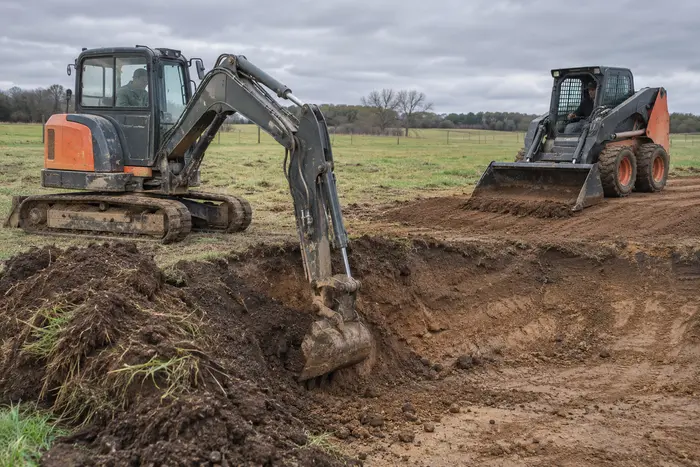
A dig cycle has four parts: dig, swing, dump, return. Practice each separately before you link them.
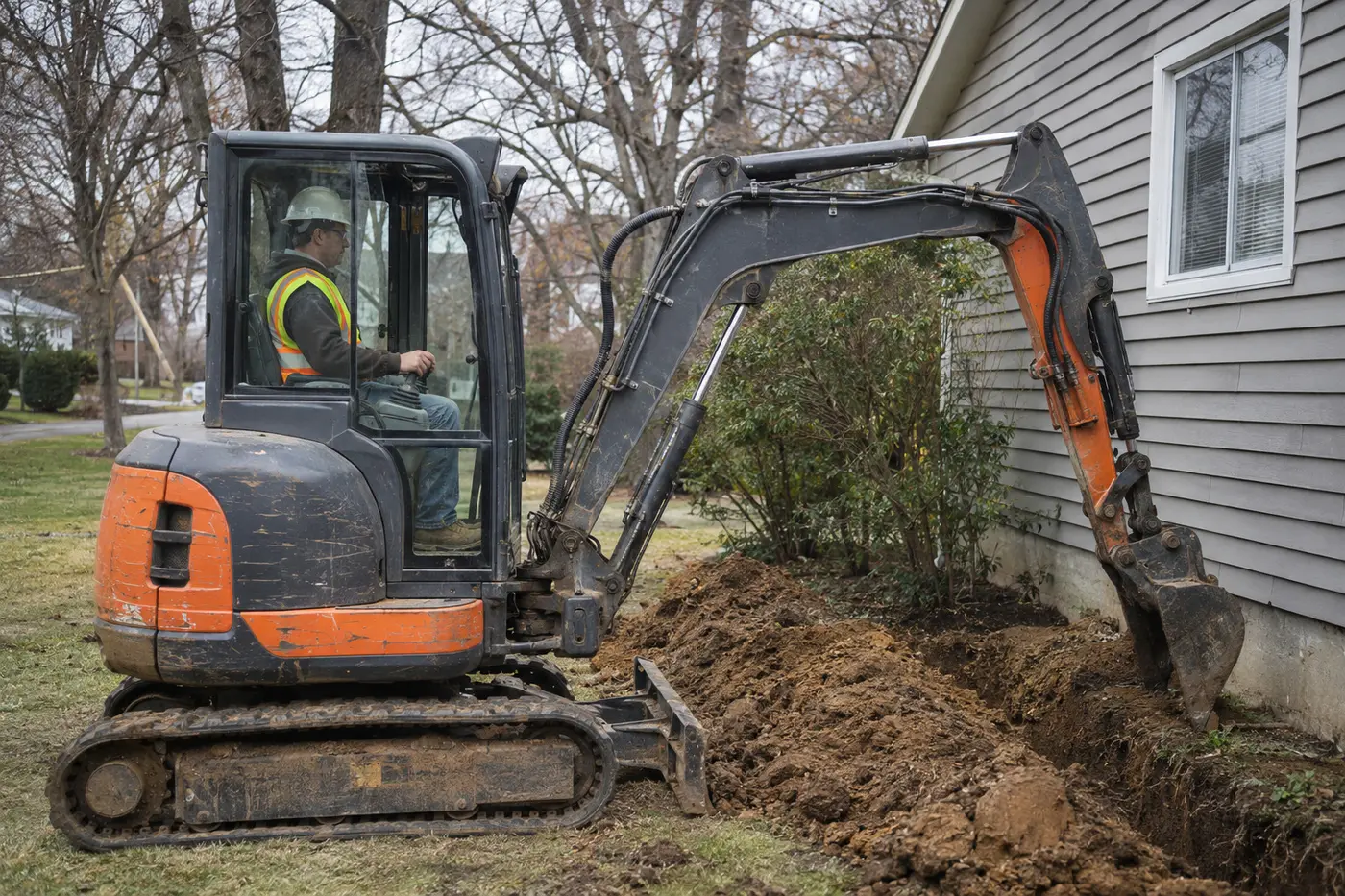
- Position. Park the tracks parallel to the trench or hole. Lower the blade to the ground behind or ahead of you to stabilize the machine.
- Reach. Extend the boom and stick out, and lower the bucket so the teeth touch the ground.
- Dig. Curl the bucket as you pull the stick toward you. Keep the strokes smooth and shallow at first. Do not force the bucket into hard ground.
- Lift and swing. When the bucket is full and curled, raise the boom slightly and swing to your dump spot.
- Dump. Extend the stick, uncurl the bucket and release the load.
- Return. Swing back and repeat.
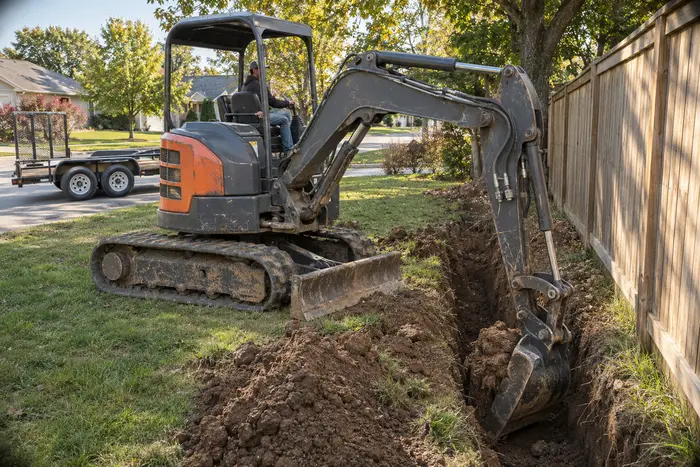
Dig in layers rather than straight down. For a trench, work backward along it so you never stand on the edge. For tight spaces, use the boom swing to offset the digging and keep the tracks clear of walls and edges.
How do you travel and turn?
- Travel with the bucket low and tucked, just above the ground.
- Know where the tracks and the blade are. The blade usually goes at the front when you drive forward.
- Take slopes straight up or down, not across. Do not turn on a slope.
- Drive slowly over uneven ground and keep clear of edges, trenches and soft soil.
- A boom-swing control lets you offset the arm while the tracks stay put.
What attachments can you use?
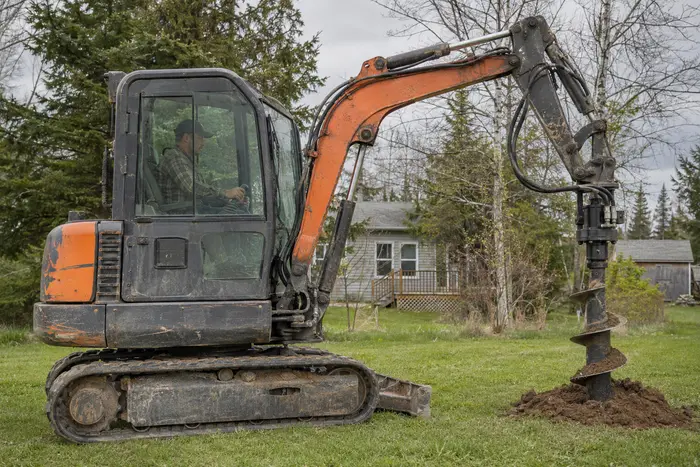
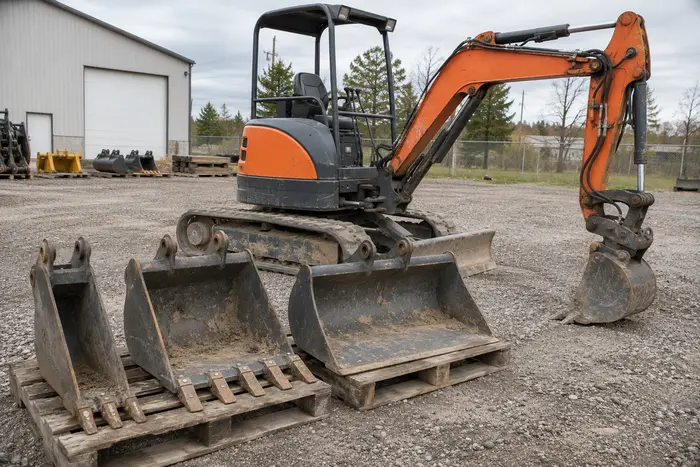
The bucket is the starting point. A quick coupler lets you swap tools without leaving the seat or with minimal hand work. Browse excavator quick couplers and thumbs for gripping logs and rocks. For buckets, see mini excavator bucket types. Always check the machine's rated lifting capacity before you add a heavy attachment.
What safety rules matter most?
- Follow the operator manual and the rated capacities for your machine.
- Keep bystanders outside the swing radius of the machine at all times.
- Wear your seat belt, a hard hat, eye protection and sturdy boots.
- Do not dig under a bank or wall that could collapse. Keep the machine away from trench edges and follow local trench rules.
- Stay clear of overhead power lines.
- Never use the machine to lift people. Use equipment designed for it.
- Keep the load low and close to the machine when you lift it.
- Do not climb on or off while the machine is moving.
How do you shut down?
- Park on firm, level ground, away from traffic and the edge of a trench.
- Lower the bucket flat on the ground, and the blade as well.
- Raise the lock-out lever to disable the controls.
- Let the engine idle a short while, then switch it off.
- Remove the key, and lock the machine if you leave it on a site.
What beginner mistakes should you avoid?
- Moving the controls too fast. Smooth, small inputs give better results.
- Over-reaching. The farther out the bucket, the less the machine can lift and the easier it tips.
- Working at the edge of a hole. Soil gives way.
- Forgetting the blade. The dozer blade steadies the machine and helps with backfill.
- Digging before the locates are done.
Spend your first hours in open ground practicing swing control and bucket curl without digging deep. For more on the machine itself, see parts of an excavator.
Get the right fit the first time
Buckets, couplers and thumbs have to match your machine's size class and pin pattern. Send us your make, model and year. We will confirm fit against the manufacturer's specs and give you a delivered price to approve before you pay. Start with a fit-checked quote.
Questions buyers ask
How do you operate a mini excavator for beginners?
Read the manual, do a walk-around, buckle in and warm the machine. Learn the two-joystick controls, then practice swing, boom, stick and bucket separately in open ground. Dig in small, smooth strokes, keep the load low when you move, and park with the bucket flat on the ground.
What are the mini excavator controls?
Two joysticks control swing, boom, stick and bucket. Two track levers or pedals drive the machine. A blade lever raises and lowers the dozer blade, and a pedal or switch swings the boom left and right. The ISO and SAE patterns differ in which hand moves the boom and stick.
What is the difference between ISO and SAE excavator controls?
They differ in one swap. In ISO, the left joystick handles swing and stick, and the right handles boom and bucket. In SAE, the left handles swing and boom, and the right handles stick and bucket. ISO is the usual excavator default. SAE, also called the backhoe pattern, suits operators who learned on backhoe loaders.
Do you need training to run a mini excavator?
Yes, in most workplaces. Operators need training on the machine, the controls and site hazards, and employers have their own rules and local regulations. Even on your own property, take a hands-on lesson or practice in a safe open area before you dig near buildings or utilities.
How do you avoid tipping a mini excavator?
Keep loads low and close to the machine, avoid reaching far out, and stay off steep slopes and soft edges. Use the blade to steady the machine, and travel straight up or down slopes. Stay within the rated lifting capacity in your operator manual.