Skid steer guide
Manure Forks for Skid Steers and Tractors: Buying Guide
Quick answer
A manure fork is a loader attachment with long tines that scoops manure, bedding and compost while letting fine material fall through. Many include a hydraulic grapple on top to hold the load. Match the fork's width, tine spacing and weight to your skid steer or tractor loader and its rated lift capacity.
Shopping for this now? Get a fit-checked, delivered quote.
Key takeaways
- Tines let you leave fine material behind and carry the bulk, which saves weight and cleanup.
- A grapple on top holds loose, stringy material so it does not slide off.
- Tine spacing and length decide what the fork can carry and what falls through.
- Match mount, width and weight to your loader's quick-attach and rated capacity.
A manure fork is a loader attachment with long, curved tines that lifts manure, straw, bedding, compost and other loose material. It is the powered version of a hand pitchfork. You use it on a skid steer or on a tractor with a front loader to clean stalls, turn compost piles and move bulky bedding. This guide explains the types, how to pick one, and what to check before you order.
What does a manure fork do?
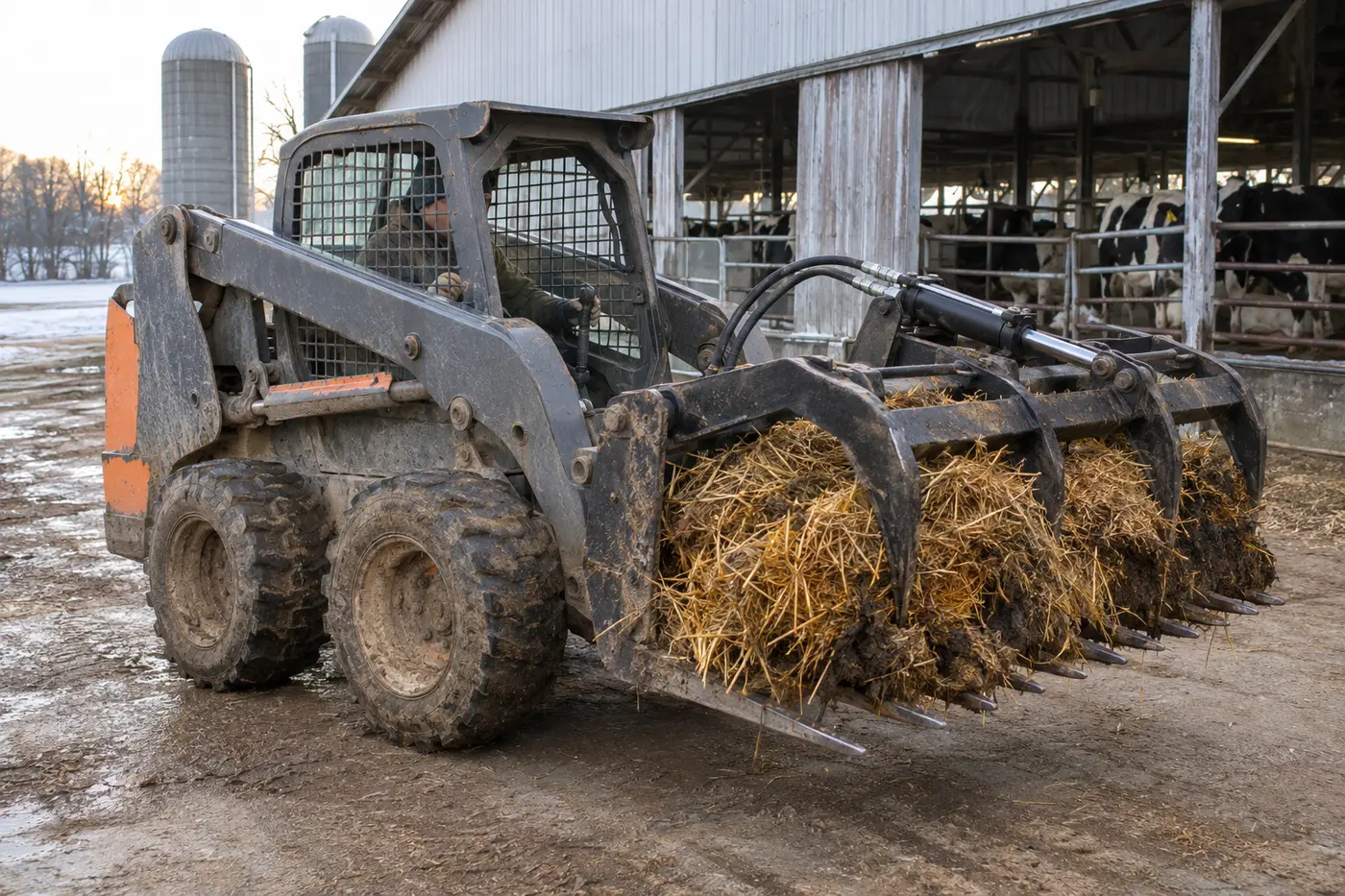
A manure fork lets you scoop a load, shake it, and leave soil, fines and dust on the ground while you carry the coarse material away. That matters in a barn or paddock, where a solid bucket would pick up dirt, lift heavy load and be hard to clean. The tines also pull apart clumps of bedding and compost, so the pile breaks up as you work. With a grapple, the same fork can clamp down on stringy material that would otherwise fall through or slide off.
Types of manure forks
| Type | How it works | Best for |
|---|---|---|
| Open fork (no grapple) | Tines scoop and carry | Light jobs and loose compost |
| Fork with grapple | Hydraulic top jaw clamps the load | Wet or stringy manure, bedding, brush |
| Bucket-style fork with tines | Solid back with tines at the edge | Mixed material, stalls and yards |
| Fork and bucket combination | Tines on a bucket frame | General farm cleanup and loading |
Many buyers choose a fork with a grapple because it holds the load and cuts spills. The extra hydraulic circuit is the trade-off, so check what your machine can supply. Our manure forks category shows the common styles for skid steers.
Skid steer or tractor loader?
A skid steer is a strong match for a manure fork because it turns on the spot, has a stable, low frame and offers auxiliary hydraulics for a grapple. A tractor loader is also common on farms, and many manure forks are made for tractor loaders with their own quick-attach styles. The mounting plate is where the difference shows: a skid steer fork usually uses the universal skid steer quick attach plate, while tractor loader tools may use other styles. If you have both machines, check whether an adapter or plate swap is possible. See skid steer quick attach plate types for the standards.
How to choose a manure fork
- Width. Pick a width that matches the machine and the aisles you work in. A wider fork carries more but is harder to turn in a stall.
- Tine spacing and length. Close spacing holds finer material. Wide spacing lets more fall through. Longer tines carry bigger loads but need more room to lift.
- Grapple or no grapple. If you handle wet, stringy or bulky material, choose a grapple. If you work with dry bedding, a simple fork may do.
- Weight. A heavy fork leaves less capacity for the load. Compare the fork's weight to the loader's rated operating capacity.
- Construction. Look at tine steel, the back frame and the grapple pivot. Replaceable parts are a plus.
- Hydraulic needs. A grapple needs an auxiliary hydraulic circuit. Check the coupler type and the flow range.
- Mount. Confirm the plate matches your machine.
If you are unsure how a machine's capacity works, read how much a skid steer can lift.
Manure fork vs bucket
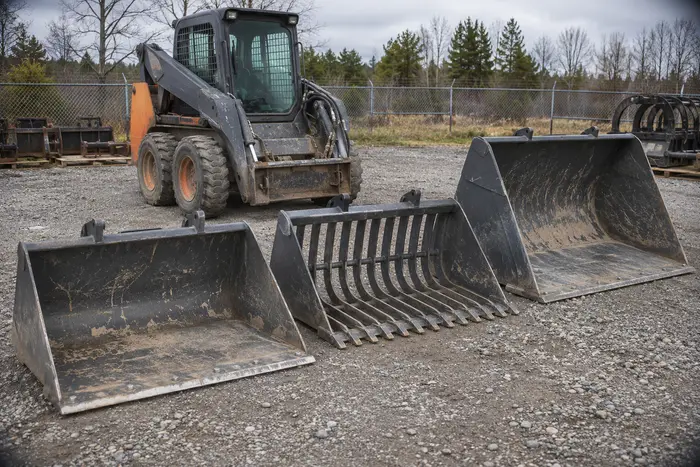
A solid bucket is better for fine, dry or loose material such as sand or soil. A fork is better for bulky, stringy or wet material that sticks. In a barn, a fork often wins because it leaves bedding behind and takes manure. If you move a mix of materials, you may want both. Learn more in loader bucket types and browse skid steer buckets.
How to use a manure fork
- Inspect the tines and grapple. Look for bent tines, cracks and leaks.
- Lower the fork to the ground and drive into the pile with tines level.
- Tilt up slowly as you drive forward to roll material onto the tines.
- Close the grapple if fitted, and raise the load just high enough to travel.
- Drive to the spreader, pile or truck with the load low.
- Open the grapple and tilt forward to release. Shake gently to clear the tines.
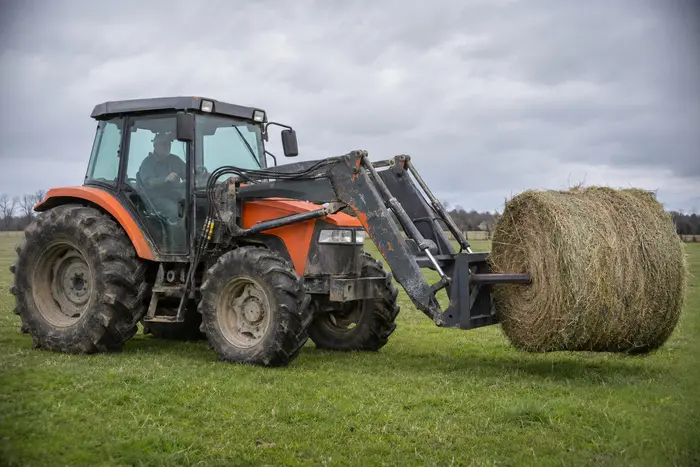
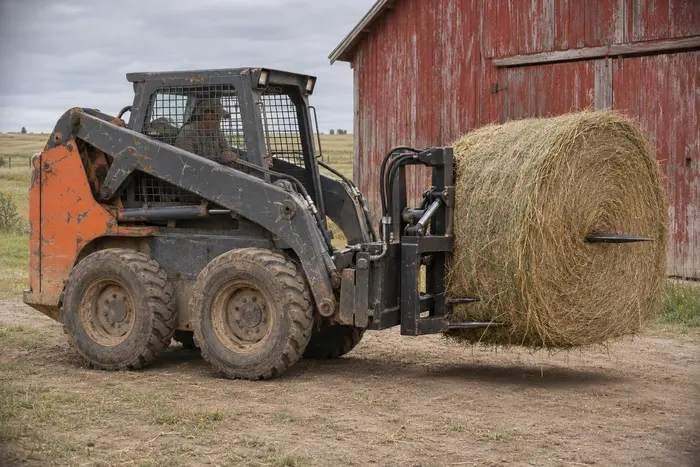
Keep the load low while moving, and do not lift the load over people. A fork loaded with wet manure is heavy, and its center of gravity is farther forward than it looks. If you are using round bales or other farm loads, check the how to move round bales guide for a safer method.
Care and cleaning
- Wash after use. Manure is corrosive. Rinse tines and the grapple, and dry them.
- Grease pivots on the schedule in the manual.
- Check welds and tines for cracks and bends.
- Look at the hoses and fittings for wear.
- Store off the ground to limit rust.
A tine that is bent or cracked should be repaired or replaced before use. A sharp or damaged tine is also a hazard around animals and people.
Related farm tools
If you run a farm, you might also need bale spears, grapples and pallet forks. Our farm and acreage attachments guide shows how they fit together.
Common problems and fixes
- Material falls through. The tine spacing is too wide for what you carry. Use a grapple, a tighter fork or a bucket for fine material.
- Load slides off the front. You tilted forward too soon or lifted too fast. Keep the fork tilted back during travel and use the grapple.
- Machine feels nose heavy. The fork and load weigh too much for the machine at that reach. Take smaller loads or add counterweight as the manual allows.
- Tines bend. The fork hit a hard surface or lifted a load that was too dense. Replace them and avoid prying with the tines.
- Grapple will not hold. Check hydraulic pressure and hoses, and look for debris around the pivot.
Using a manure fork around animals
Animals move without warning, so treat any loader work near stalls as high risk. Keep animals out of the work area when you can. Work slowly in tight aisles. Check the tines and the hoses for sharp edges and leaks. Do not carry a load over a person or an animal. If you work in a barn, ventilate it, because diesel exhaust and dust build up fast in a closed building.
Get the right fit the first time
Send us your machine's make, model and year, and tell us whether you want a grapple. A person checks the fit and the hydraulic needs against the maker's specs, you approve a delivered price before you pay, and the supplier ships direct. Get a fit-checked quote.
Questions buyers ask
What is a manure fork used for?
It scoops manure, bedding, compost and other loose material, letting fines fall through the tines. It is used in barns, paddocks and compost areas on a skid steer or a tractor loader. A grapple version clamps stringy or wet loads so they stay put.
Do I need a grapple on a manure fork?
If you handle wet, stringy or bulky material, a grapple helps hold it. For dry bedding or loose compost, a simple fork can work. A grapple needs an auxiliary hydraulic circuit, so check what your loader provides.
Can I use a manure fork on a tractor loader?
Yes, if the fork has the right mounting plate for your loader's quick-attach and the weight is within the loader's lift capacity. Many forks are made for tractors, and skid steer forks may need an adapter. Check the mount before you order.
What tine spacing should a manure fork have?
Closer spacing holds finer material such as bedding. Wider spacing lets more fall through, which suits coarse manure and brush. Pick based on what you carry, and ask the maker about spacing options for your use.
How do I clean and maintain a manure fork?
Wash off manure after use, since it is corrosive. Grease the pivots, check tines and welds for bends and cracks, and inspect hoses on a grapple. Replace damaged tines and store the fork off the ground to reduce rust.