Land clearing guide
How to Dig a Pond With a Mini Excavator or Skid Steer
Quick answer
To dig a pond, first confirm soil that holds water and an adequate water source, get permits, then strip topsoil, dig to a planned depth with gentle slopes, and compact clay in thin layers. Extension guidance suggests an average depth of 6 to 8 feet for farm ponds. Small garden ponds need far less.
Shopping for this now? Get a fit-checked, delivered quote.
Key takeaways
- Soil that holds water matters more than machine size.
- Extension guidance suggests 6 to 8 feet average depth for fish or farm ponds.
- Build side slopes of at least 3:1 and compact in 6 to 8 inch layers.
- Check permits and call before you dig.
Digging a pond with a mini excavator or a skid steer is a real project, not a weekend dig. The machine does the moving. The success depends on planning: soil, water, depth, slopes and permits. This guide follows university extension advice for farm and recreation ponds. A small backyard water feature needs far less, but the same principles apply. If the pond is large or holds a dam, hire an engineer or call your local conservation office.
Step 1: Check the site and the soil
Extension guidance says clay or silty clay soils are excellent for ponds and sandy clays are usually satisfactory, while coarse sands and sand-gravel mixtures do not hold water well. Dig test holes before you commit, or have your conservation district help assess the soil. Porous soil leaks, and fixing a leaking pond is hard.
Then think about where the water comes from. Guidance suggests about 15 acres of watershed for every acre of pond surface, though heavy clay pasture may need less and sandy, wooded land may need far more. If the drainage area is too small, the pond may not fill or may drop in a dry spell. Springs, wells or a small stream can supplement but may trigger permit rules.
Step 2: Permits and utilities
Get permits before you hire anyone or start digging. In the US, if wetlands or streams are involved, a federal permit may be required. In the US, sites that disturb one or more acres can need a construction stormwater permit and an erosion control plan. Rules differ by state, province and county, so call your local conservation or environmental office. Call your local utility locating service before any dig. See also our overview of grading in construction.
Step 3: Plan depth, slopes and volume
Extension guidance recommends a minimum average depth of 6 to 8 feet, with water at least 4 feet deep at an easily fishable distance from shore. Many farm ponds have 10 to 15 feet at the dam. Ponds that must hold water all year for irrigation or firefighting need more depth, as do ponds with extra seepage. When average depth falls below 3 feet, shallow water can bring weed problems and fish kills.
For side slopes, the same guide calls for at least 3:1 (three feet horizontal for every foot of drop) below the waterline for safety and easy maintenance. A rough capacity check from the guide: surface area in acres times 0.4 times the maximum depth in feet at the dam gives acre-feet.
Which machine do you need?
| Machine | Good for | Limits |
|---|---|---|
| Mini excavator | Digging, shaping slopes, setting pipe, small ponds | Slow on large volumes |
| Skid steer or track loader | Moving spoil, spreading, grading, backfill | Poor at deep digging |
| Dozer or large excavator | Large ponds and dams | Needs a bigger machine and operator |
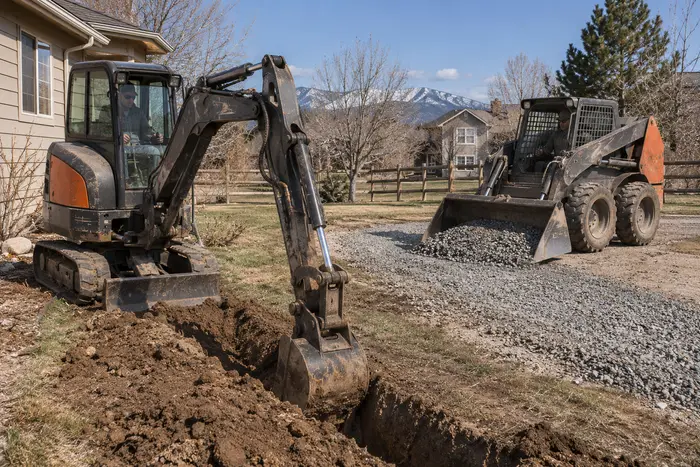
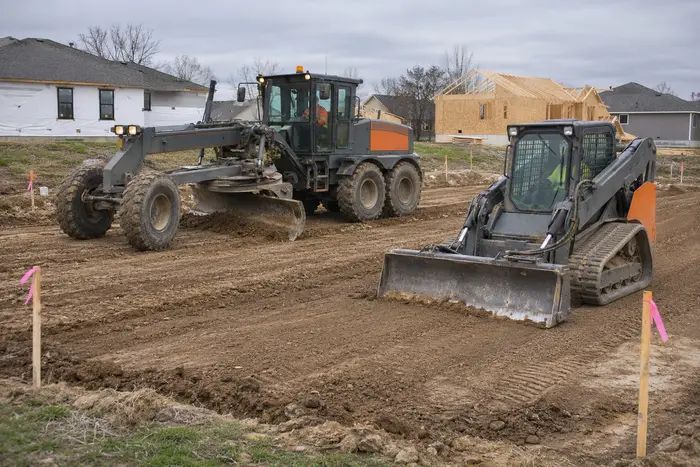
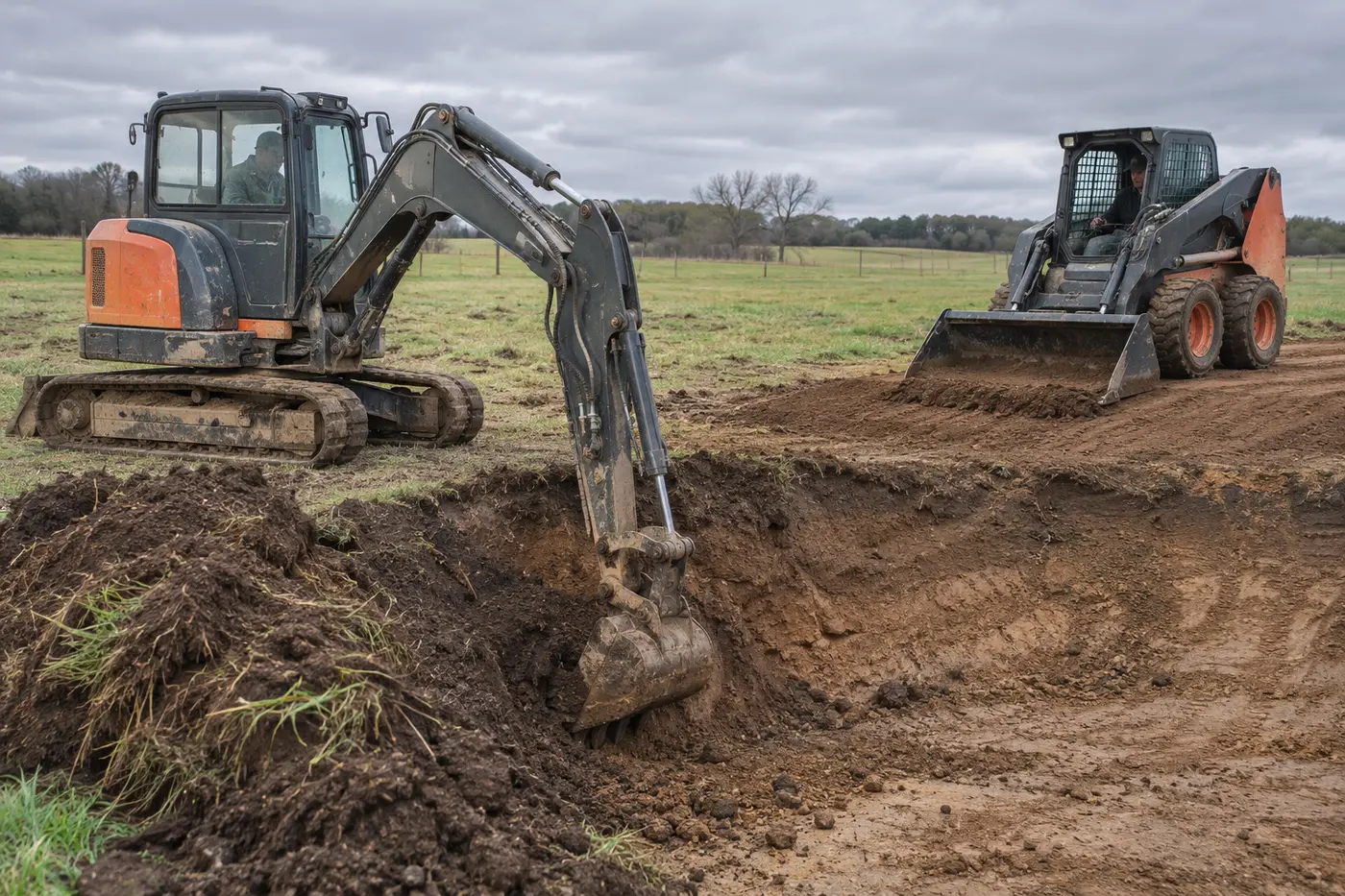
A mini excavator digs and a skid steer hauls and spreads, so many small jobs use both. A larger pond or any pond with a dam usually needs larger machines and an experienced operator. See our guide on mini excavator vs skid steer and the excavator bucket and skid steer bucket categories.
Step 4: Clear and strip the site
- Clear trees, brush, stumps and roots from the pond area and the dam footprint. Remove floating debris that could block the spillway.
- Strip topsoil and stockpile it for finishing the banks.
- Mark the outline, depth stakes and the dam line.
- Dig in stages, starting at the deepest part and working outward.
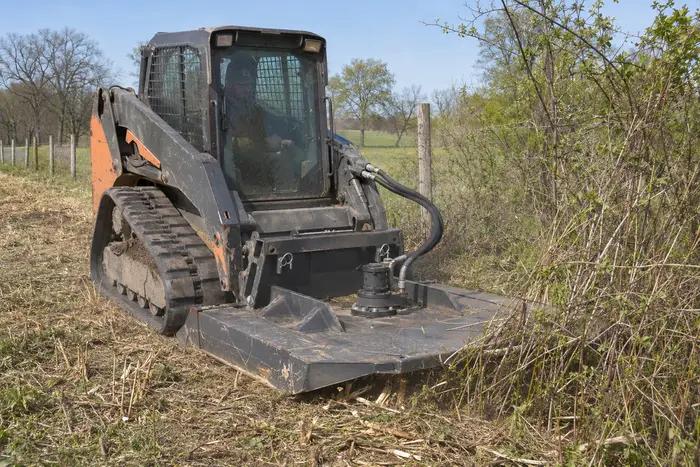
For clearing help, see how to clear brush with a skid steer.
Step 5: Dig and build the dam properly
If your pond uses an earth dam, the dam is the part that fails if you cut corners. The extension guide calls for a cutoff trench excavated at least 12 inches into impervious material beneath the dam, with a bottom no less than 8 feet wide and sides no steeper than 1:1. Trench excavation is hazardous, because cave-ins can occur if walls are not sloped. Build the core from the best available clay, in thin layers of 6 to 8 inches, with heavy equipment or a sheepsfoot roller. The soil must be neither too wet nor too dry to compact. Overbuild the dam by about 5 percent for settling, use slopes of at least 3:1, and give a top width of at least 16 feet if vehicles will drive on it.
The area around the spillway pipe is often the weakest point, and it needs careful hand-guided compaction with at least 2 feet of material over the pipe. Ask an engineer or conservation technician to review any dam.
Step 6: Shape the banks and finish
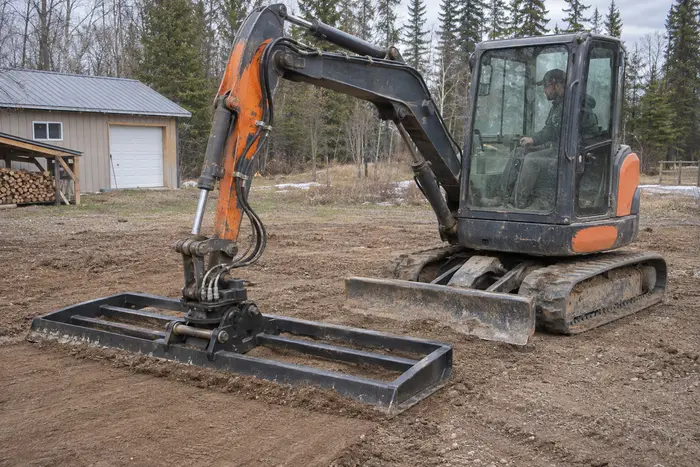
Spread topsoil on the banks and seed or plant right away to hold the soil. Keep trees and large shrubs off the dam, since roots can open seepage paths. A grading or finishing pass with a box grader or landscape rake helps smooth the banks.
How do you dig a pond deeper or fix a shallow one?
Drain it if possible, let the bottom dry enough for machine access, and dig out soft sediment first. Be careful not to cut through a clay liner or seal. If the pond has a dam, do not dig into its base. Get advice before you deepen a leaking or older pond.
Safety
- Never work on a steep bank or unstable edge.
- Keep the machine on firm ground and track across slopes carefully.
- Do not stand in a deep trench or beside a wall that can collapse.
- Stay clear of the swing radius and the bucket path.
- Follow the operator manual and rated operating capacity for every machine.
Last, plan the outlet and the overflow. Even a small pond needs a safe path for excess water in heavy rain. Ask your conservation office or an engineer about a spillway sized for your watershed, because overtopping is a common cause of dam failure.
Costs and timing
Pond projects vary widely, so we do not quote figures. Soil, size, haul distance, machine time and permits all move the total. Get written bids if you hire out, and ask what is included: clearing, stripping, dam work, spillway pipe and seeding. Dig in the dry season if you can, because wet ground slows machines and makes compaction harder.
If the project looks bigger than you expected once the stakes are in, that is a good moment to call in help. A short site visit from a conservation technician or engineer costs little compared with rebuilding a failed dam.
Get the right fit the first time
Send us the make, model and year of your machine and what you plan to do with it. A person checks fit against the maker's specs, and you approve a delivered price, freight included, before you pay. The manufacturer ships direct. Start here: get a fit-checked quote.
Questions buyers ask
how deep should a pond be
Extension guidance suggests a minimum average depth of 6 to 8 feet for farm and fish ponds, with water at least 4 feet deep at fishable distances. Many have 10 to 15 feet at the dam. Small garden ponds need less, so match depth to use.
how to dig a pond with a mini excavator
Test the soil for clay, get permits, clear and strip topsoil, then dig from the deepest point outward with slopes of at least 3:1. Use a skid steer to move spoil. If you build a dam, compact clay in thin layers and get engineering advice.
what soil is best for a pond
Extension guidance says clay and silty clay hold water best, and sandy clays are usually satisfactory. Coarse sands and sand-gravel mixtures leak. Dig test holes or ask your conservation district to assess the soil before you start.
do you need a permit to dig a pond
Often yes. Wetlands, streams and land disturbance of one acre or more can trigger permits, and rules vary by state, province and county. Call your local conservation or environmental office before you hire anyone or break ground.