Equipment basics guide
How to Operate a Backhoe Loader: Controls and Steps
Quick answer
To operate a backhoe loader, walk around the machine, buckle in, lower the front bucket and set the stabilizers. Raise engine speed, then work the boom, dipper, bucket and swing in smooth cycles. Locate utilities first, keep people out of the swing radius and follow your operator manual.
Shopping for this now? Get a fit-checked, delivered quote.
Key takeaways
- Set the stabilizers and lower the loader bucket before digging.
- Know your control pattern before you move the hoe.
- Locate buried utilities before every dig.
- Keep people out of the swing radius and trench.
- Dig in smooth cycles and layers, not big jerky bites.
To operate a backhoe loader, do a walk-around, buckle in, lower the front loader bucket, set the stabilizers, then work the boom, dipper arm, bucket and swing with the engine at working speed. A backhoe is two machines in one: a loader on the front and a digging arm on the back. Each end has its own controls and its own rules.
Read your operator manual before you start. This guide gives the general sequence and common safety practice. It does not replace training.
What is a backhoe loader?
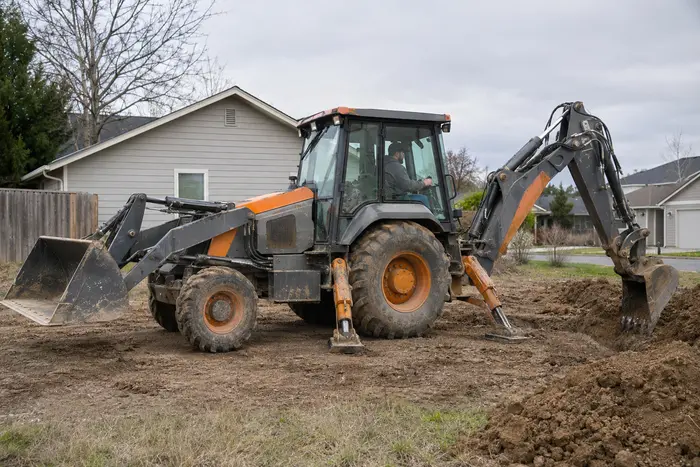
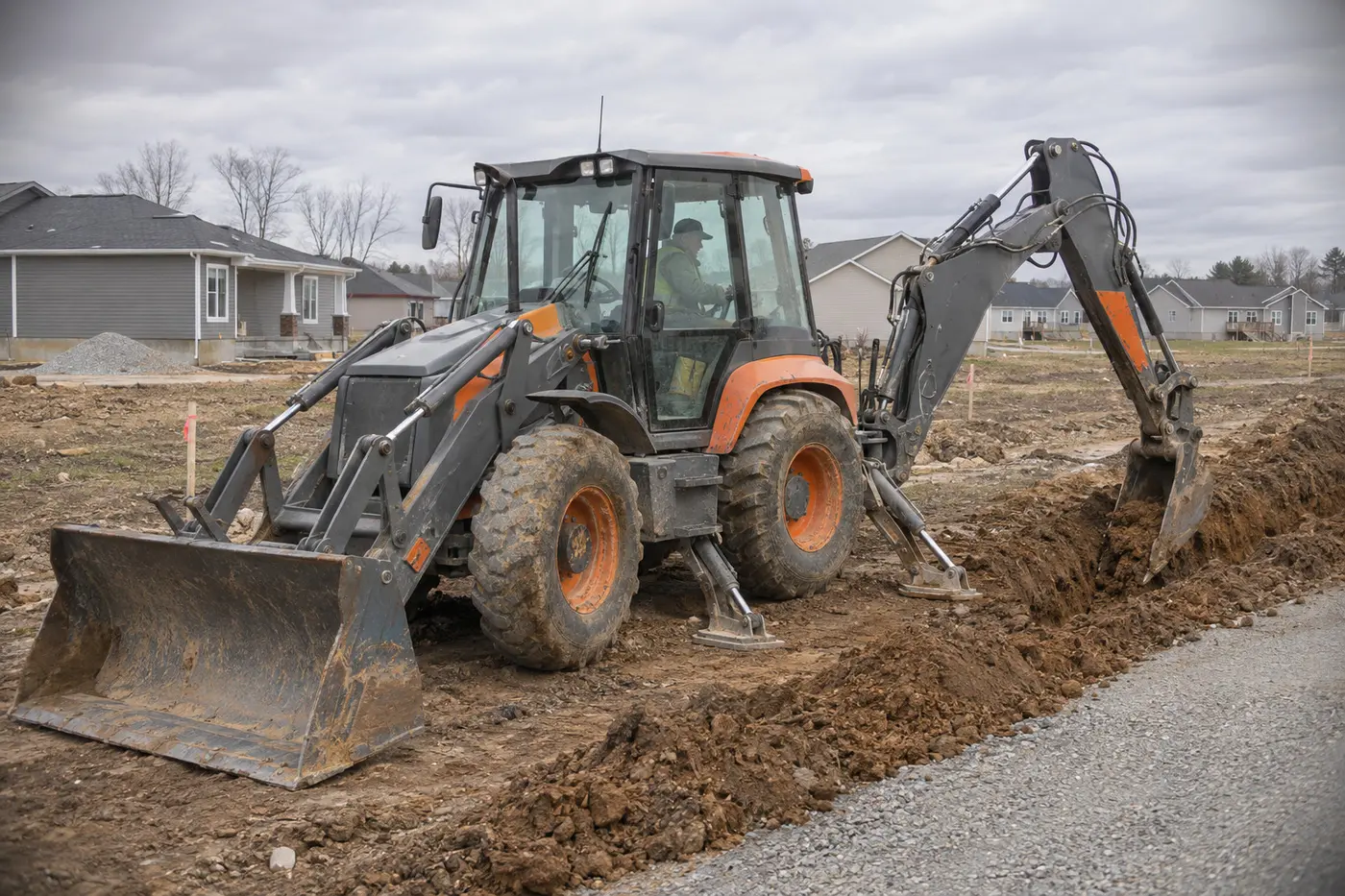
A backhoe loader is a tractor-like machine with a loader bucket on the front and a backhoe on the back. Because it is relatively small and versatile, it is common in urban work and small construction jobs. Many backhoes have a seat that swivels to face the rear when you work the hoe. Digging on tires makes the machine rock, and the swinging weight of the backhoe could tip it, so most backhoe loaders use hydraulic outriggers or stabilizers at the rear when digging and lower the loader bucket for added stability.
Parts of the backhoe you need to know
| Part | What it does |
|---|---|
| Boom | The first, long arm that rises from the swing frame. It raises and lowers the dipper. |
| Dipper (stick) arm | The second arm. It brings the bucket in toward the machine and out. |
| Backhoe bucket | Digs, scoops and dumps. Tilts with a curl motion. |
| Swing | Rotates the boom left and right, so you can dig on one spot and dump to the side. |
| Stabilizers or outriggers | Legs at the rear that lift and level the machine for digging. |
| Front loader | The bucket at the front for loading, carrying and backfilling. |
Our guide on the parts of a backhoe loader shows each one in more detail.
Backhoe controls: levers, pedals and patterns
Backhoe controls differ by maker and by year. Most machines use two joysticks or two levers for the hoe, with pedals for the swing or auxiliary functions. Many machines let you pick between a traditional backhoe pattern and an excavator-style pattern. The two patterns move the same functions with different lever motions. Check the control decal in the cab and the operator manual so you know which one your machine uses.
- Left and right hoe controls. Together they move the boom, dipper, bucket and swing.
- Stabilizer levers. Raise and lower each leg. Some machines combine them in one control.
- Loader joystick or levers. Lift, lower, tilt and sometimes control auxiliary functions.
- Throttle, parking brake and transmission. Know where they are before you move.
Before you dig: the pre-start check
- Walk around the machine and look for leaks, damage and loose parts.
- Check engine oil, hydraulic oil, coolant and fuel.
- Look over tires, pins, bushings and bucket teeth.
- Test the lights, alarms, horn and brakes.
- Check that the seat belt and any guards are in good order.
- Locate underground utilities. Call your local utility locate service before you dig.
How to operate a backhoe, step by step
- Drive to the dig spot. Carry the loader bucket low. Park on firm, level ground if you can.
- Put the loader bucket on the ground. Press it down slightly. It adds stability.
- Set the stabilizers. Lower both legs until the rear tires are just off the ground or the machine is level, as the manual says.
- Swivel the seat to face the hoe, if your machine has that feature.
- Raise engine speed to working range for smooth hydraulics.
- Extend the boom and dipper. Bring the bucket out over the dig location.
- Curl and pull. Lower the bucket into the ground, curl it, then pull in with the dipper to fill.
- Lift and swing. Raise the boom, swing to the spoil pile or truck, and dump.
- Return and repeat. Aim for smooth, repeated cycles, not jerky ones.
- Finish and stow. Raise the stabilizers, return the hoe to the travel position and lock it, then lift the loader bucket.
Digging a trench the right way
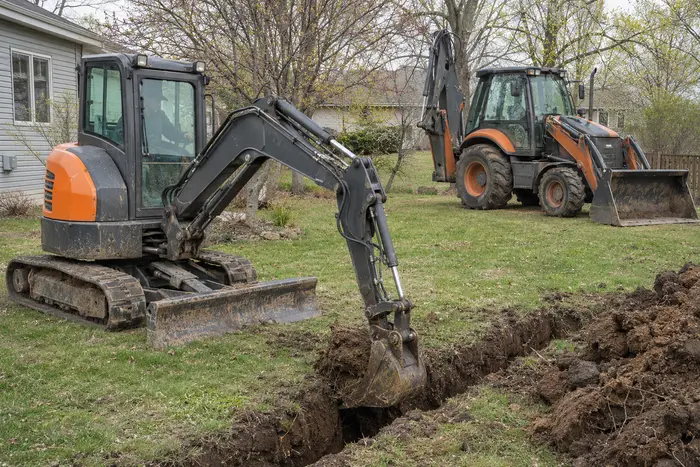
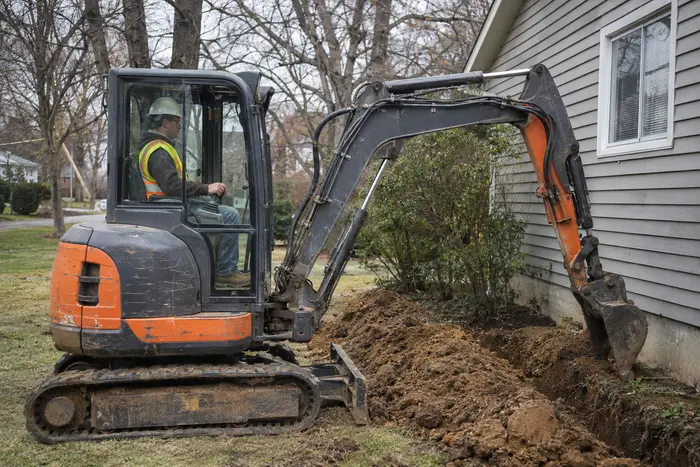
Mark the line and check for buried utilities. Start at one end and work along the line, keeping the bucket in line with the trench. Place spoil to one side, well back from the edge. Trenching is high risk work. OSHA's trenching guidance is summed up as slope it, shore it, shield it. Do not enter a trench unless it is protected and inspected as your local rules require. Never put yourself or others in an unprotected trench.
Using the front loader
The loader bucket handles backfill, loading trucks and moving material. Keep the load low when traveling. Do not overload the bucket. Check the machine's rated operating capacity in the manual. Approach piles square, scoop with the bucket flat and tilt back. Lift only as high as needed to dump.
Attachments for a backhoe
Backhoe buckets are replaceable. Powered attachments such as breakers, grapples, augers and even stump grinders can be fitted to the hoe. Quick couplers make changing easy. See our backhoe attachments for skid steers if you want to add a digging arm to a loader, or browse excavator buckets for related tooling. Our guide on backhoe vs excavator compares the two machine types.
Safety rules for backhoe operation
- Wear your seat belt and use ROPS or cab protection as equipped.
- Do not swing the boom or loader over people. Keep spotters and bystanders outside the swing radius.
- Stay clear of overhead lines. Know the clearance rules where you work.
- Keep the machine on firm ground. Avoid unstable edges, slopes and soft ground.
- Never use the bucket to lift people.
- Lower the bucket and shut down before leaving the seat.
- Follow lockout steps before maintenance.
Daily care after the shift
When you finish, park on level ground, lower the loader bucket to the ground and rest the hoe on its stand or in the travel lock position as the manual shows. Grease the pivot points on the schedule the maker lists. Wipe down hydraulic cylinder rods so dirt does not get pulled into seals. Look over the bucket teeth, cutting edge and pins for wear or cracks. Fix small leaks early. Keep a log of hours and service so you catch problems before they become breakdowns.
Keep the cab clean and the glass clear. Good visibility is a safety tool, especially when you work around people, vehicles and other machines.
Common beginner mistakes
- Forgetting to set the stabilizers and rocking the machine.
- Starting to dig without locating utilities.
- Swinging too fast with a full bucket.
- Piling spoil right at the trench edge.
- Digging too deep in one pass instead of working in layers.
Get the right fit the first time
Send us the make, model and year of your machine and what you plan to do with it. A person checks fit against the maker's specs and sends a delivered price for you to approve before you pay, and the supplier ships direct. Ready when you are: get a fit-checked quote.
Questions buyers ask
How do you operate a backhoe for beginners?
Walk around the machine, buckle in, lower the front bucket and set the stabilizers. Raise engine speed, then use the hoe controls to move the boom, dipper and bucket in smooth cycles. Locate buried utilities first and follow your operator manual. Get hands-on training before real work.
What are the controls on a backhoe?
Most backhoes have two joysticks or levers for the hoe that move the boom, dipper, bucket and swing, plus stabilizer levers and a front loader control. Some machines offer a choice between a backhoe pattern and an excavator pattern. Check the decal in the cab and the manual.
Why do you put the stabilizers down on a backhoe?
Digging on tires makes the machine rock, and the swinging boom could tip it. Stabilizers or outriggers at the rear plant the machine, and the loader bucket is lowered for extra stability. Always set both before digging, and raise them again before driving.
What is the difference between backhoe controls and excavator controls?
Backhoe controls and excavator controls move the same functions, but the lever motions can be different. Many machines allow you to switch between a backhoe pattern and an excavator pattern. Always check the control diagram in your cab before you start and practice in an open area.
Is a backhoe hard to operate?
It takes practice. A backhoe has two sets of controls and several linked motions. Learn each function slowly, practice smooth digging cycles and follow safety rules around utilities, trenches and bystanders. Training from an experienced operator speeds learning.