Landscaping guide
How Much Does a Yard of Dirt Cost? What Sets the Price
Quick answer
How much does a yard of dirt cost? It depends on the type (fill dirt, screened topsoil or blended mix), your region, the haul distance and whether delivery is included. Fill is generally cheaper than screened topsoil. Get quotes per cubic yard and per load, with delivery itemized, from two or three local suppliers.
Shopping for this now? Get a fit-checked, delivered quote.
Key takeaways
- One cubic yard is 27 cubic feet.
- Price depends on dirt type, local supply, haul distance and delivery.
- Fill dirt is generally cheaper than screened or blended topsoil.
- Order 10 to 20 percent extra to cover settling and spillage.
- Get itemized local quotes; national averages are only a starting point.
"How much is a yard of dirt?" is a common landscaping question, and it has no single answer. Dirt is a local commodity. The price you pay depends on what you buy, where you are and how far it has to travel. This guide shows what moves the price and how to work out the yards you need, so you can compare quotes with confidence. We do not quote our own prices on this page, and any figures you see online are broad averages worth checking against local suppliers.
What is a yard of dirt?
A yard of dirt means one cubic yard, a cube three feet on each side. One cubic yard equals 27 cubic feet. Suppliers sell by the cubic yard or by the ton. Because the weight of dirt changes with type and moisture, a yard can weigh very different amounts from one load to the next, which is why it is worth asking how the supplier measures what you receive.
What drives the cost of a yard of dirt?
| Factor | How it affects the price |
|---|---|
| Type of dirt | Fill dirt is generally cheaper than screened topsoil or blended garden mix |
| Quality and screening | Screened, compost-amended and certified mixes cost more to produce |
| Quantity | Larger orders often bring a lower per-yard rate than small ones |
| Haul distance | Delivery is often a major part of the total, especially far from the pit |
| Delivery fees and minimums | Some suppliers charge a flat fee or a minimum load |
| Season and local demand | Spring demand and local shortages can raise prices |
| Pickup vs delivered | Loading your own truck at the yard is usually cheaper per yard |
Fill dirt vs topsoil: which do you need?
Fill dirt is subsoil without much organic matter. It is used to raise grade, backfill and build a base. It is not meant for growing grass or plants. Topsoil is the upper layer with organic matter and is used for lawns, beds and gardens. Screened topsoil has had rocks and debris removed, and blended mixes may add compost or sand. Pick the grade that suits the job. Paying for premium topsoil under a gravel pad wastes money, and filling a garden bed with subsoil will disappoint you.
How many yards of dirt do you need?
Work out volume first, then price. A standard method from a topsoil calculator:
- Measure length and width in feet, and multiply to get area in square feet.
- Convert the depth you need from inches to feet by dividing by 12.
- Multiply area by depth in feet to get cubic feet.
- Divide cubic feet by 27 to get cubic yards.
- Add an overage, typically 10 to 20 percent, to cover settling and spillage.
Example: a 20 ft by 10 ft bed at 6 inches deep is 200 sq ft times 0.5 ft, or 100 cubic feet. Divide by 27 for about 3.7 cubic yards, then add overage. Always round up.
How is dirt priced: by the yard, by the ton or by the load?
All three exist. By the yard is easiest to compare. By the ton depends on moisture, so wet dirt weighs more and costs more per yard. By the load is common for dump trucks, where a truck holds a set range of yards. Ask each supplier how they measure and what a standard load is, so you can compare apples to apples.
How to get an honest quote
- Say the exact type you need and what it is for.
- Give the delivery address so haul distance is priced in.
- Ask for price per cubic yard, delivery fee, tax and any minimum, itemized.
- Ask how they measure the load, and whether they screen the material.
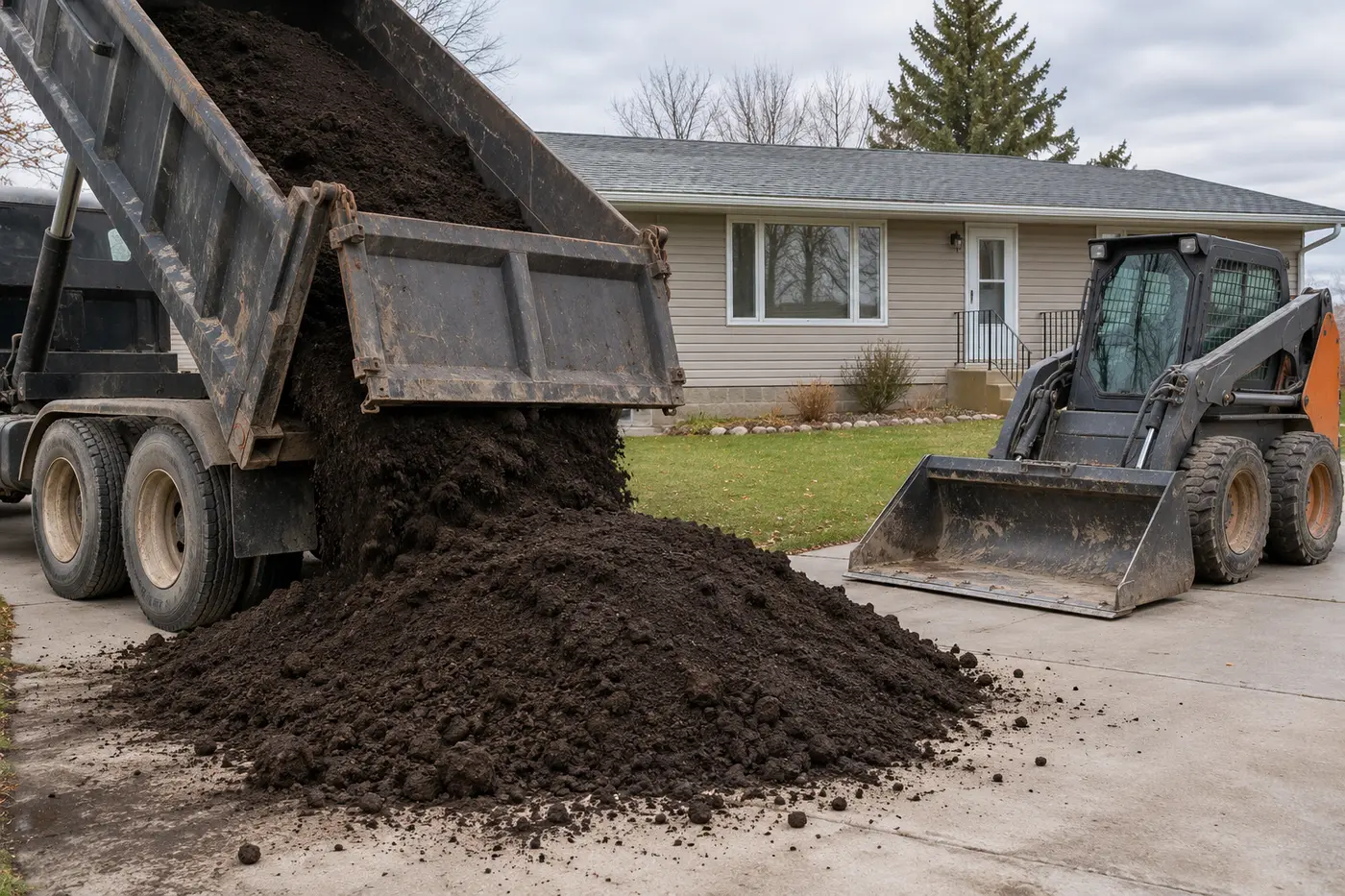
- Check how the truck will drop it, and where, so it does not block access or damage pavement.
- Compare two or three local suppliers.
Moving the dirt once it arrives
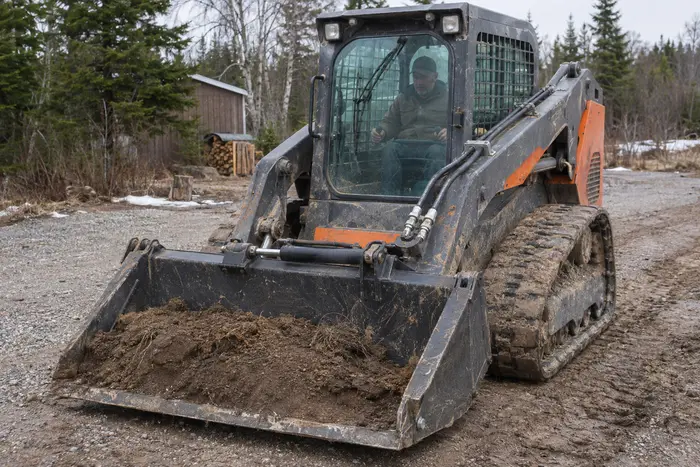
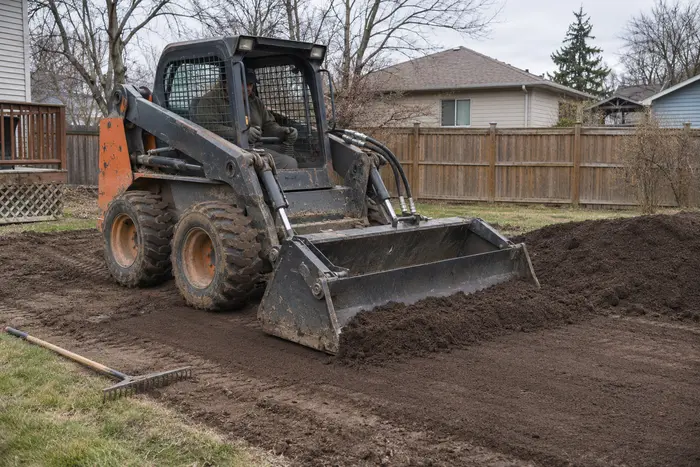
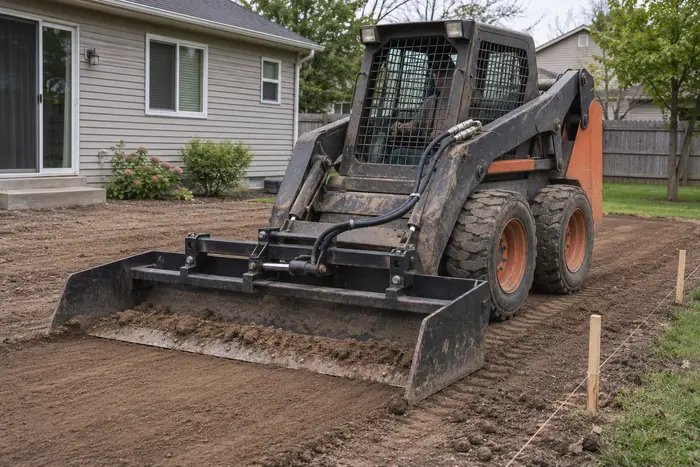
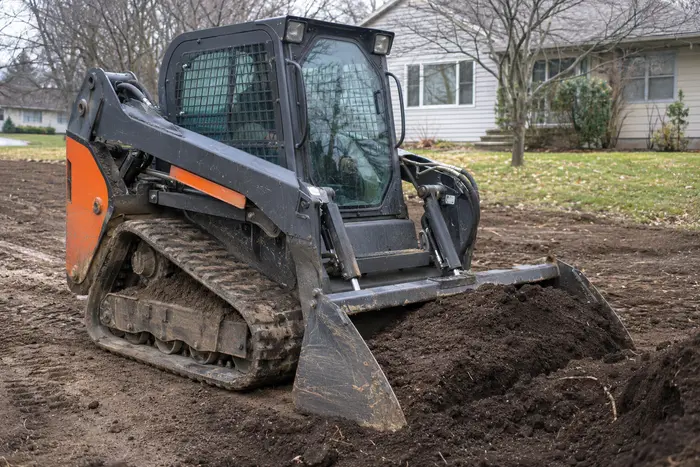
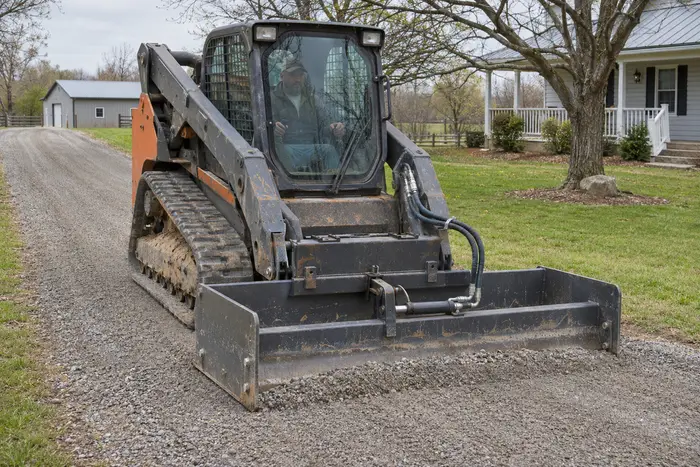
Delivery is often a pile at the curb. Moving it is the next job. A skid steer with a bucket moves yards quickly, and a landscape rake or power rake spreads and finishes it. A land plane or box grader handles larger areas. For help sizing your order to your site, read how much topsoil do I need, and see how to level ground with a skid steer for the spreading step.
Ways to cut your dirt cost without cutting quality
- Use fill for the bulk of the depth and a thin layer of topsoil on top.
- Pick up yourself if you have the truck and the means to load.
- Combine orders with a neighbor to meet a larger-quantity rate.
- Reuse soil from your own excavation after screening it.
- Order once, with accurate math, to avoid a second delivery fee.
Questions to ask about quality
Ask what is in the dirt. Is it screened? Does it contain rocks, clay lumps, roots or debris? Is the source local, and has it been tested if you are growing food? Reputable suppliers will tell you. If you are putting down a lawn, ask for a loam with good organic content. For a foundation backfill or road base, ask for a material with the compaction qualities your engineer or inspector specifies.
A note on equipment safety
Dirt piles can slump and bury people. Do not climb on or undercut a pile, and keep equipment on stable ground. Follow your machine's operator manual and rated operating capacity when moving material.
Dirt types you will hear about
- Fill dirt: general subsoil for filling low spots and building up grade. Often contains some clay, sand or small stones.
- Topsoil: the upper layer, darker and richer in organic matter. Used for lawns and beds.
- Screened topsoil: topsoil put through a screen to remove rocks, roots and clumps. Easier to spread and finish.
- Garden or planting mix: topsoil blended with compost or sand for beds and raised planters.
- Clean fill: soil free of debris and contaminants, often required for certain backfill jobs.
How much does a yard of dirt weigh?
Weight is not fixed. It changes with the material and its moisture. Dry sandy soil weighs less than wet clay. Suppliers who sell by the ton will convert to yards using their own density figure, and the topsoil calculator guidance recommends checking density with your supplier rather than assuming a number. That matters for hauling too: a trailer or truck has a weight limit, and a full load of wet dirt can exceed it even when the volume looks small. Use the vehicle's rated payload, not the look of the pile.
Delivery details that change the bill
Ask about the truck type. A tandem dump truck carries more than a small single-axle truck, so it often costs less per yard to deliver, but it needs more room to get in and drop. Ask whether the driver will spread or only dump, whether there is a wait-time charge and what happens if the truck cannot reach the spot. Protect driveways, curbs and lawns where the truck will travel, and mark any buried lines or septic systems.
Get the right fit the first time
Send us your machine's make, model and year, and a person will check fit against the maker's specs. You approve a delivered price before you pay, and the manufacturer ships direct. Get a fit-checked quote.
Questions buyers ask
How much does a yard of dirt cost?
It depends on the type of dirt, your region, the haul distance and delivery. Fill dirt is generally cheaper than screened topsoil. Get itemized quotes per cubic yard from two or three local suppliers, with delivery, tax and minimums listed separately.
How much does a yard of dirt cost delivered?
Delivered cost adds trucking to the material price, and trucking depends on distance and load size. Many suppliers charge a delivery fee or set a minimum load. Ask for the per-yard price and the delivery fee separately so you can compare.
How much does a yard of topsoil cost?
Topsoil costs more than fill dirt because it is screened and has organic matter. The price varies by local supply, quality and quantity. A local supplier quote is more reliable than a national average, so ask for a price per cubic yard.
How much should a yard of dirt cost?
There is no fixed amount. A fair price reflects the type of dirt, local supply, haul distance and delivery. Compare two or three itemized quotes. A quote far below the others may mean lower quality or hidden fees.
How many cubic feet are in a yard of dirt?
One cubic yard is 27 cubic feet. To find yards needed, multiply length by width by depth in feet to get cubic feet, divide by 27, and add 10 to 20 percent for settling and spillage.