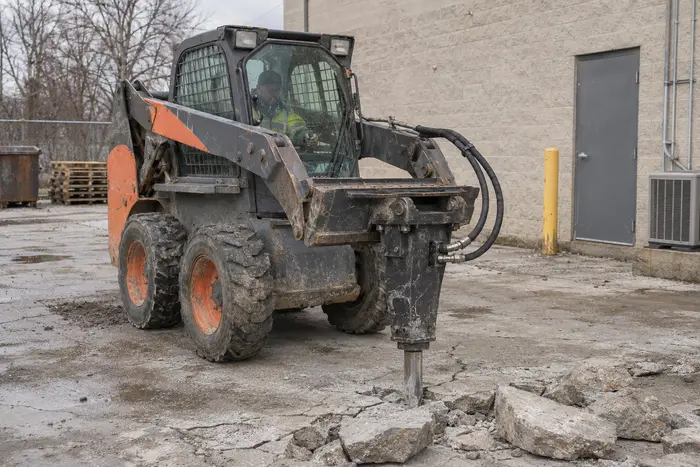
Excavator guide
Hydraulic Hammer for Mini Excavator: How to Choose One
Quick answer
A good hydraulic hammer for mini excavator work is matched to the machine's weight class, auxiliary flow and relief pressure, and fitted with the correct mounting bracket and tool point for the material. Too small and it wastes your day. Too big and it overloads the boom, stick and pins.
Shopping for this now? Get a fit-checked, delivered quote.
Key takeaways
- Match the hammer to the excavator's weight class, not the biggest hammer you can pick up.
- Check the hammer's flow and pressure range against the machine's auxiliary circuit.
- Confirm the mounting bracket or coupler pattern before you order.
- Choose the tool point for the material: moil, blunt, chisel or wide chisel.
- Never use a hammer to pry, and keep the tool square to the work.
A hydraulic hammer turns a mini excavator into a demolition and rock tool. It also punishes a bad match. A hammer that is too heavy for the carrier cracks welds and wears out stick bushings. A hammer that is too light barely dents the work. This guide shows how to size a hydraulic hammer for a mini excavator and what to check before you buy.
What is a hydraulic hammer, and how does it work?
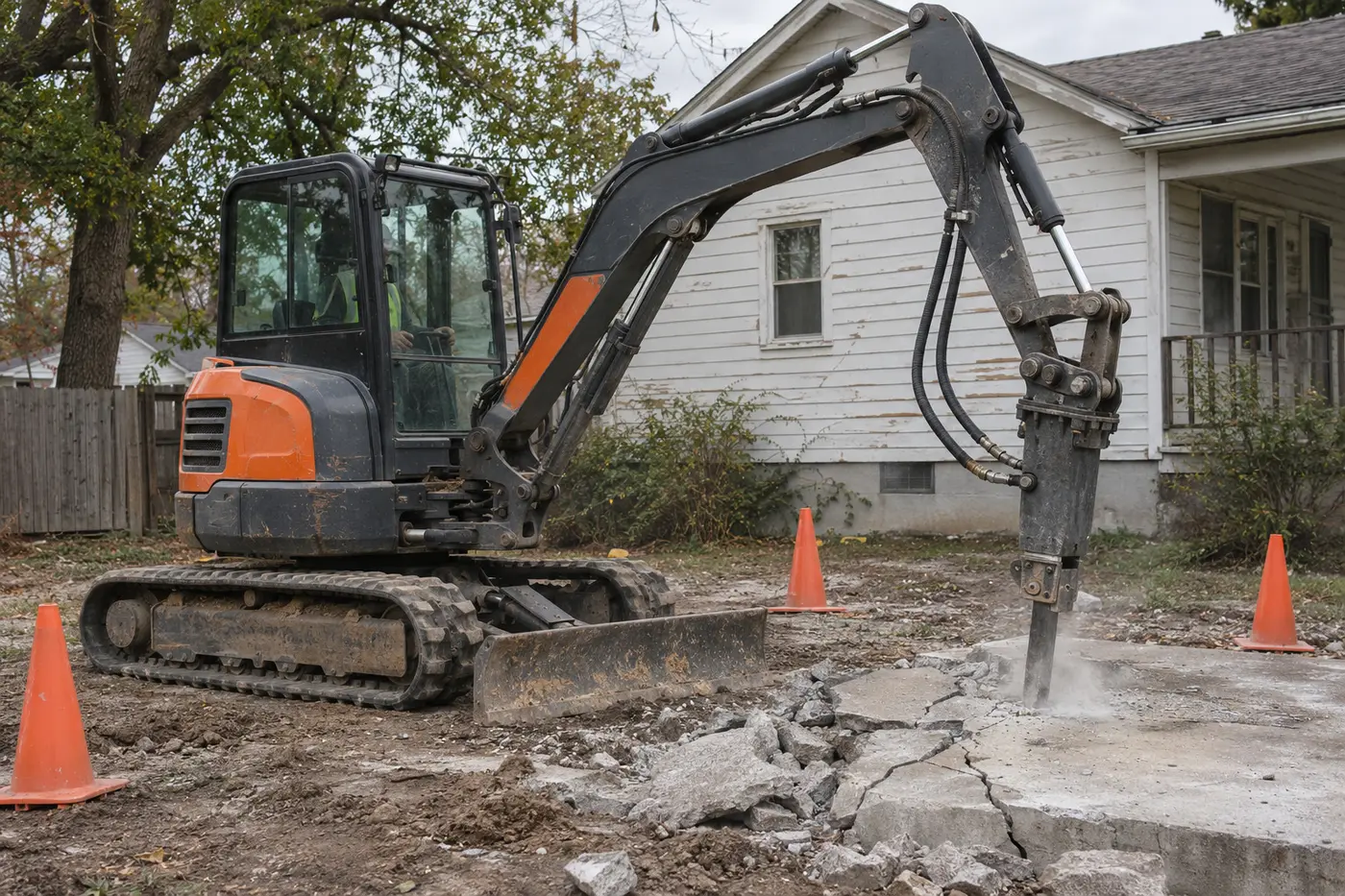
A hydraulic hammer, also called a hydraulic breaker, is a percussion tool fitted to the end of an excavator arm. It runs on the machine's auxiliary hydraulic circuit. Oil drives an internal piston that strikes a steel tool point, and the tool transfers that energy into rock or concrete. Operators call them hammers, breakers or hoe rams. They are used on jobs too large for a hand-held jackhammer, or where blasting is not an option.
How do you size a hydraulic hammer for a mini excavator?
Start with the carrier. A compact excavator is generally described as a machine up to about 8.5 tonnes operating weight, and the smallest are called micro excavators at under one tonne. Within that range, the weight class sets the safe hammer size. Four things decide the match.
- Carrier weight class. Every hammer maker publishes a range of carrier weights each model is built for. Stay inside it. The hammer, bracket and tool together should sit well within the lifting capacity of the boom and stick at full reach.
- Auxiliary flow. The hammer needs oil flow in a set range to cycle properly. Too little flow and the blow rate drops. Too much and you cook the oil.
- Working and relief pressure. The machine's auxiliary relief setting must fit the hammer's rated pressure. A mismatch can damage seals or leave the hammer weak.
- Return line. Most hammers need a free return to the tank. Back pressure from a restricted line causes heat and seal wear.
The maker's data sheet and your excavator's operator manual give the numbers. We do not guess at them on this page. When we confirm fit, we check both sides against the manufacturer's specs.
What mounting do you need?
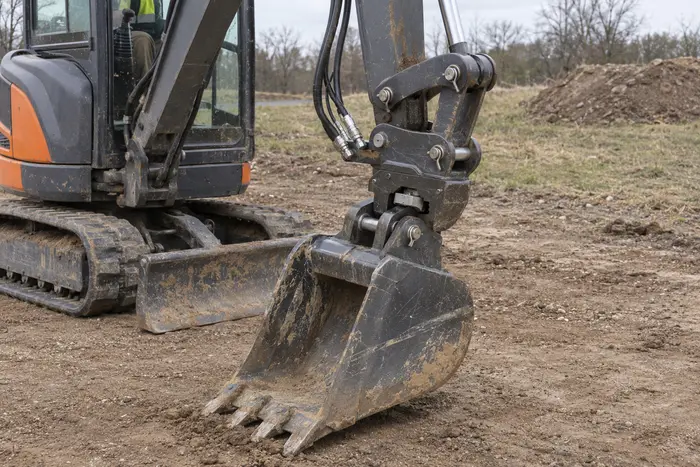
The hammer must connect to the stick the same way your other attachments do. Most mini excavators use either a direct pin-on connection or a quick coupler. Many hammers ship with a bracket plate that suits one pin pattern, so a hammer built for a pin-on stick will not drop onto a coupler unless the bracket matches. Check the pin diameter, the spacing between pins, and the width of the stick ears. Our excavator quick couplers are the common way to switch between a bucket, a hammer and other tools quickly.
Which tool point should you choose?
The point is the part that wears. Pick it for the material, and keep spares on hand.
| Tool point | Best for | Notes |
|---|---|---|
| Moil (pointed) | Rock, thick concrete, frozen ground | Concentrates force; the most common point |
| Blunt | Oversize rock, boulders, slag | Spreads the blow; cracks large pieces |
| Chisel | Trenches, slots, asphalt, cutting lines | Cuts a line instead of a hole |
| Wide chisel or spade | Pavement, thin slabs, clay | Lets you cut a wider area per strike |
If you do mixed work, a moil point and a chisel cover most jobs.
How do you use a hydraulic hammer safely?
Hammering puts shock into the machine, so technique counts as much as size. Follow the operator manuals for the machine and the hammer, and treat these as the basics:
- Keep the tool square to the surface. Angled strikes bend tools and damage the bushings.
- Do not hammer in one spot for long. If the material does not break in a short time, move the point and try a new spot.
- Never use the hammer to pry, lift or drag material. It is not built for side loads.
- Do not run it with no material under the tool. Blank firing damages the internals.
- Keep bystanders well back. Chips and dust fly. Wear eye, ear and head protection.
- Grease the tool bushing at the intervals the manual lists, and grease it with the tool pushed up, not hanging.
- Do not hammer underwater unless the hammer is built for it.
What are the signs of a bad match?
Pay attention in the first hour. A mismatch usually shows itself fast.
- The machine bounces or rocks. The hammer is too heavy, or you are hitting too hard against a hard surface with the stick too far out.
- The blow rate sounds weak or irregular. Flow may be too low, or the relief pressure may be set wrong.
- Hot oil and hot hoses. Back pressure in the return line, or too much flow, is overheating the system.
- Pins and bushings wear fast. Check for slop at the stick tip after a few days of use.
- Cracks near the boom foot or stick. Stop right away. That is fatigue from a hammer that was too big or used badly.
If you see any of these, stop and fix the cause before you keep going. Boom and stick repairs can cost more than the hammer.
How is a hammer different from a concrete crusher or pulverizer?
A hammer breaks material by repeated impact. A crusher or pulverizer squeezes it with jaws. Impact tools are the right call for rock, thick slabs and frozen ground. Jaw tools are quieter and produce less vibration, which helps in occupied areas, and they work well on reinforced concrete when you want the steel separated. If you do a lot of building demolition, it is worth looking at both. See excavator concrete crushers for the alternative.
What else should you check before you buy?
- Weight and offset. A heavy hammer shifts the machine's balance. Test it near the ground first and watch for tipping at full reach.
- Auxiliary plumbing. You need a hydraulic line, a foot or thumb control and a return line. Some machines need a kit added.
- Hose and fittings. Pressure rating and thread type have to match.
- Warranty and parts. Wear parts like bushings, retaining pins and the tool itself will need replacing. Ask about parts availability.
Browse excavator breaker hammers to compare types and sizes, and read our mini excavator attachments buyer's guide for the other tools worth owning.
Should you rent, buy new or buy used?
Rent if you have one demolition job a year. Buy new if you break rock or concrete regularly and want a hammer with known hours and condition. Used hammers can be a decent deal, but inspect them carefully. Ask for service records, check the tool bushing for slop, look for oil weeping at the seals, and have the hammer tested under load if you can. A tired hammer can cost more in repairs than it saved on the purchase.
Get the right fit the first time
A hammer that is off by a size or two will give you problems. Send us your excavator's make, model and year, plus the work you plan to do. A person will check fit against the maker's specs, and your quote shows one delivered price, freight to your address included. Start with a fit-checked quote.
Questions buyers ask
What size hydraulic hammer do I need for my mini excavator?
Pick the hammer whose published carrier weight range includes your excavator's operating weight, then confirm that your auxiliary flow and relief pressure fall inside the hammer's range. Going larger than the range overloads the boom and stick. Going smaller makes the hammer slow and inefficient.
Can any mini excavator run a hydraulic breaker?
Only if it has an auxiliary hydraulic circuit with enough flow and a suitable return line. Many machines have this from the factory. Some need a kit added. Check the operator manual and the hammer maker's flow and pressure requirements before you buy.
What is the difference between a hydraulic hammer and a hydraulic breaker?
There is no real difference. Hydraulic hammer, hydraulic breaker, hoe ram and pecker all describe the same tool: a percussion hammer powered by an excavator's auxiliary hydraulic circuit. People use the terms interchangeably, and different regions favor different names.
How do I keep a hydraulic hammer from wearing out fast?
Keep the tool square to the surface, never pry with it, and avoid blank firing. Grease the tool bushing on schedule with the tool pressed in. Replace worn bushings and retaining pins before the tool and housing take damage.
Is it worth buying a used hydraulic hammer for a mini excavator?
It can be, if you check it carefully. Ask for service records, test it under load, and inspect the bushings and seals. Heavy wear on those parts is a warning sign. If you only need a hammer for one job, renting is usually the safer choice.