Skid steer guide
Best Attachment for Moving Trailers With a Loader
Quick answer
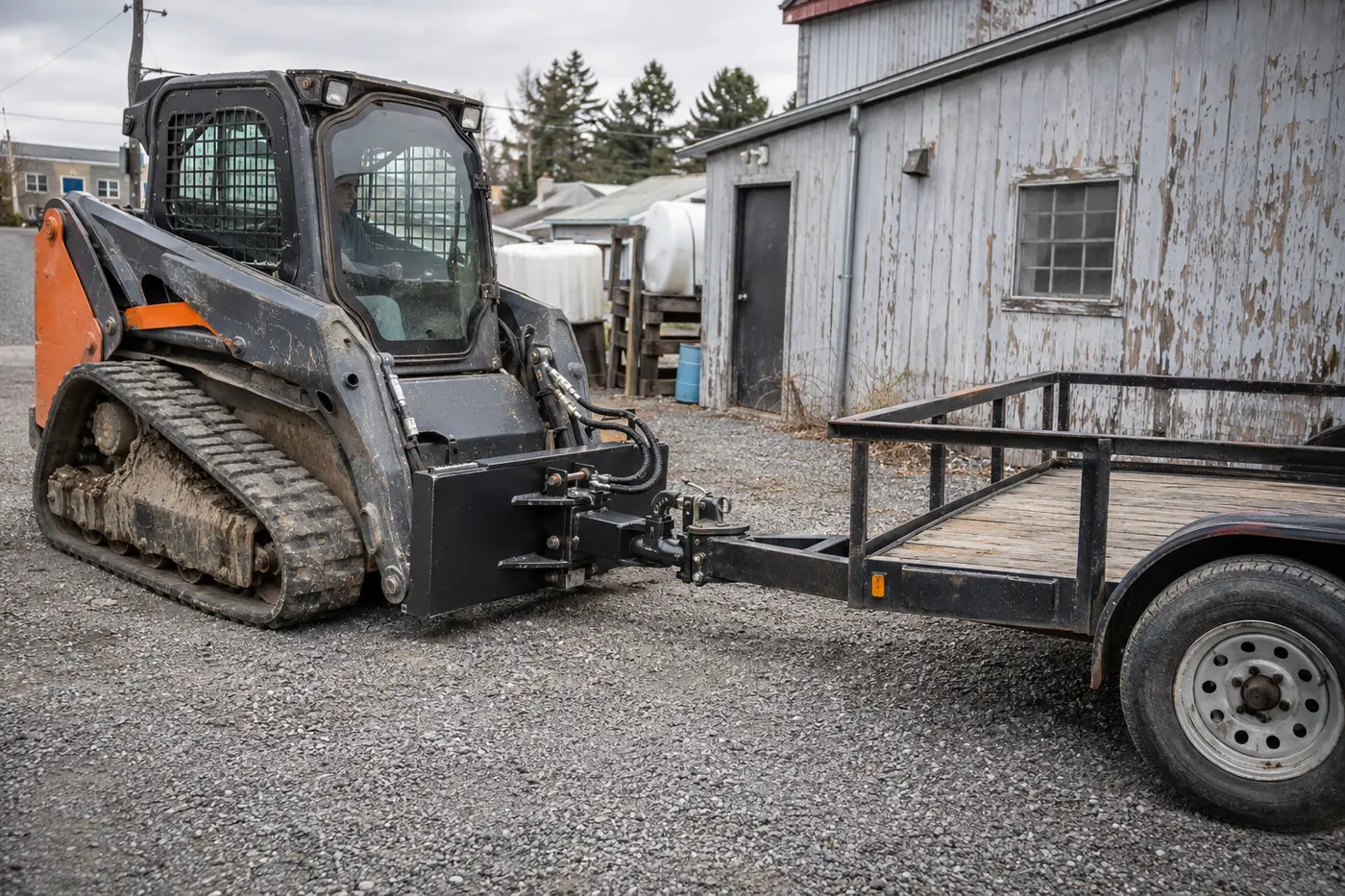
The best attachment for moving trailers with a loader is a trailer mover: a hitch or dolly attachment that lifts or couples the trailer tongue so the loader can tow it in the yard. Match the hitch type to the trailer, and stay inside the loader's rated capacity and the trailer's rating.
Shopping for this now? Get a fit-checked, delivered quote.
Key takeaways
- A trailer mover attachment saves a separate yard tractor.
- Match the coupling to the trailer: ball, pintle, fifth wheel or kingpin.
- Check tongue weight against the loader's rated operating capacity.
- Use it for yard and lot moves, not for public roads.
Every shop, farm and dealer lot has the same problem: trailers that need to move a few feet and no truck handy. A trailer mover attachment turns your loader into a yard spotter. This guide covers moving trailers with a skid steer, a telehandler or a forklift, which hitch types exist, and the limits you should respect.
What is a trailer mover attachment?
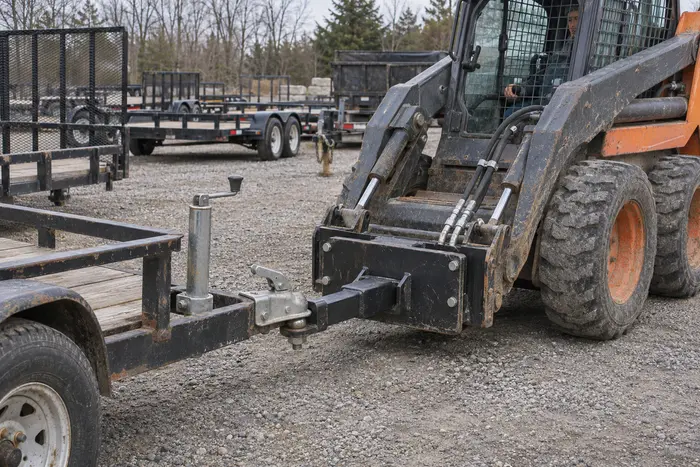
It is a coupling attachment that mounts on the loader's quick-attach plate or forks. It lifts the front of the trailer or hooks to its tongue, so the loader can push, pull and place it. Some units use a ball or pintle coupler for utility trailers. Larger ones are built for heavy trailers and use a kingpin cradle. See the options in the skid steer trailer movers and mini skid steer trailer movers categories.
Which hitch type do you need?
| Trailer type | Hitch to look for | Notes |
|---|---|---|
| Utility, dump and equipment trailer | Ball or pintle coupler | Check the ball size on the trailer coupler |
| Gooseneck trailer | Gooseneck ball mount | Needs more lift and stability |
| Semi trailer | Kingpin or fifth-wheel style attachment | Heavy; needs a large machine |
| Parked trailer with no tongue access | Fork-style dolly | Lift only at points the trailer maker approves, and check the frame can take it |
| Camper or small trailer | Mini mover or ball mount | Light duty; mind the tongue weight |
The trailer's coupler is the first thing to measure. A ball attachment only works if the ball size matches the coupler. A pintle needs a lunette ring on the trailer. If you are unsure, check the trailer's tag or the manual before you order.
Can you move a semi trailer with a skid steer?
This is the most common question, and the honest answer is: only if the machine and attachment are built for it, and only inside a yard. A fully loaded semi trailer is far heavier than most skid steers are designed to pull or support. Even an empty one has a heavy front end. Do not guess. Check the trailer's weight, the attachment's rating, and the loader's rated operating capacity, which is the maximum load the loader can carry safely. Follow the operator manual for each.
Many operators who move semi trailers use a purpose-built yard unit or a large machine with an attachment rated for that job. If you are a smaller shop moving light trailers, a skid steer mover suits better.
What can a forklift or telehandler do?
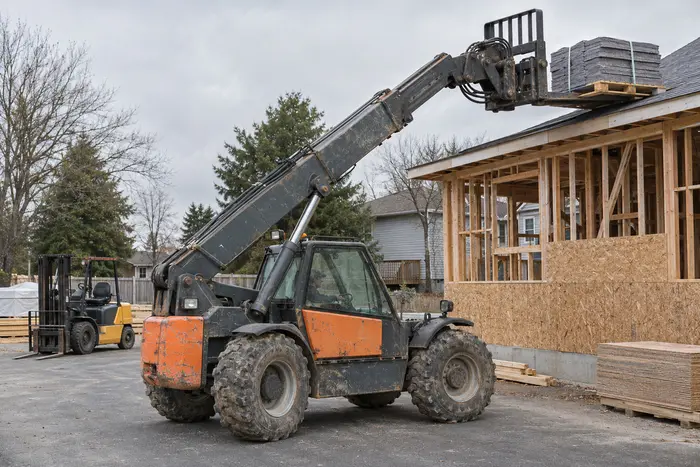
Forklifts and telehandlers can move trailers with fork-mounted tow bars or trailer-lifting cradles, or by lifting the trailer tongue directly on the forks. The same rule applies: the rated capacity decreases as the load moves forward and higher, and a trailer tongue is both. Keep it as low as possible and travel slowly. Our telehandler vs forklift guide explains how their ratings work.
How to choose a trailer mover
- Weigh the trailer. Know the loaded and empty weight, and the tongue weight.
- Check your loader's rated operating capacity. The attachment adds weight in front of the machine.
- Match the coupler. Ball, pintle, gooseneck or kingpin.
- Check the quick-attach plate. Confirm the mount fits your machine.
- Look at the surface. Soft or sloped ground reduces traction and stability.
- Consider tires or tracks. Machines that grip well are easier to control with a trailer. See skid steer wheels vs tracks.
- Ask about brakes. A trailer with brakes helps, but a loader has no way to apply them. Plan your stops.
Safety rules for moving trailers
- Stay in the yard. A loader with a trailer is not a road vehicle.
- Chock wheels and set the landing gear before you couple or uncouple.
- Keep people out of the pinch zone between the loader and the trailer.
- Move slowly and turn gently. A trailer can swing the machine around.
- Never exceed the loader's rated operating capacity or the attachment's rating.
- Use a spotter when you have limited visibility.
- Read the operator manuals for the machine and the attachment.
Do not mix up two different problems
Some searches about trailers and skid steers are about hauling a skid steer, not moving a trailer with one. That is a different question. To haul a machine, the trailer and tow vehicle must be rated for the machine's weight plus any attachment and cargo. Look up the machine's operating weight in its manual and compare it with the trailer's gross rating and the tow vehicle's rating. Our guide to skid steer weight and dimensions shows where to find those figures.
How much does it cost to move a trailer?
That depends on distance, trailer size and who moves it, and prices vary widely, so we do not quote a number. Within your own yard, a mover attachment avoids paying anyone at all. For long hauls, you will need a truck and a driver. Call two or three local haulers for a quote.
Maintenance and wear
Inspect the coupler, locking pin and mounting points each time you use the attachment. Look for cracks around welds, loose bolts and worn latches. Grease moving parts. Replace a worn pin or latch before it fails, since a trailer that comes loose is a real hazard.
Whatever you choose, keep the trailer low and the speed slow. Rushing, soft ground and moving more weight than the machine was meant to handle are the easy ways to get hurt. Take a minute to check the ground, the rating and the people around you before you move.
Common mistakes to avoid
- Using a ball mount on a pintle trailer. The couplers must match, or the trailer can come loose.
- Ignoring tongue weight. A heavy tongue loads the front of the loader and cuts its safe capacity.
- Moving on a slope. A trailer can roll or push the loader downhill.
- Forgetting the safety chains or latch. Secure the coupler fully before you move.
Take your time, walk the route first and plan where the trailer will end up before you start.
Finally, keep records. Note the trailer's weight and coupler type on a card near the attachment, so every operator on your site uses the right setup without guessing. A thirty-second check each time prevents the kind of mistake that costs a trailer, or worse.
One more practical point: lighting and visibility. Yards are busy and trailers are tall, so wear high-visibility clothing, use the machine's lights and horn, and agree on hand signals with anyone helping you. Never rely on the mirror alone when backing a trailer.
Get the right fit the first time
Send us the make, model and year of your loader, forklift or telehandler and the trailers you need to move. A person checks fit against the maker's specs, and your quote shows one delivered price, freight to your address included. Ready when you are: get a fit-checked quote.
Questions buyers ask
can you move a semi trailer with a skid steer
Only with a machine and attachment built for it, and only in a yard. A loaded semi trailer is usually far beyond a skid steer's design. Check the trailer weight, the attachment rating and the loader's rated operating capacity first, and follow each manual.
what is the best attachment for moving trailers
A trailer mover with the right coupler: ball or pintle for utility trailers, gooseneck mount for gooseneck trailers, kingpin style for semis. Match it to the trailer's coupler and the loader's rated capacity. It is for yard moves, not public roads.
what size trailer do i need to haul a skid steer
Pick a trailer rated above the machine's operating weight plus any attachment and cargo. Find the weight in the operator manual, then compare it with the trailer's gross rating and your tow vehicle's rating. Never guess; check the tags.
how much does it cost to move a trailer
It depends on distance, trailer size and who does the move, so quotes vary widely. In your own yard a mover attachment avoids paying a hauler. For long distances, get quotes from two or three local haulers and compare what each includes.