Equipment basics guide
Log Splitter Wedge Types and How to Change One
Quick answer
A log splitter wedge is the fixed blade a hydraulic ram pushes the log into. Single-edge wedges split one round into two, while four-way and six-way wedges make several pieces in one pass. Pick by wood size and species, change it only with the machine shut down, and match it to your force rating.
Shopping for this now? Get a fit-checked, delivered quote.
Key takeaways
- The wedge is a stationary blade; the hydraulic ram pushes the log into it.
- A single-edge wedge makes two pieces. Multi-way wedges make four, six or more per pass but need more force.
- Force rating limits how thick and long the rounds can be.
- Change a wedge only with the engine off, pressure released and the ram locked out.
- Match the wedge to your unit's mount, width and ram stroke before buying.
The wedge does the real work on a log splitter. The ram supplies the push, but the wedge decides how the wood opens. Choose the wrong one and you stall on knotty rounds or waste time making pieces that are too big. This guide covers the common wedge types, how to match one to your wood and splitter, and how to swap one out safely.
What does a log splitter wedge do?
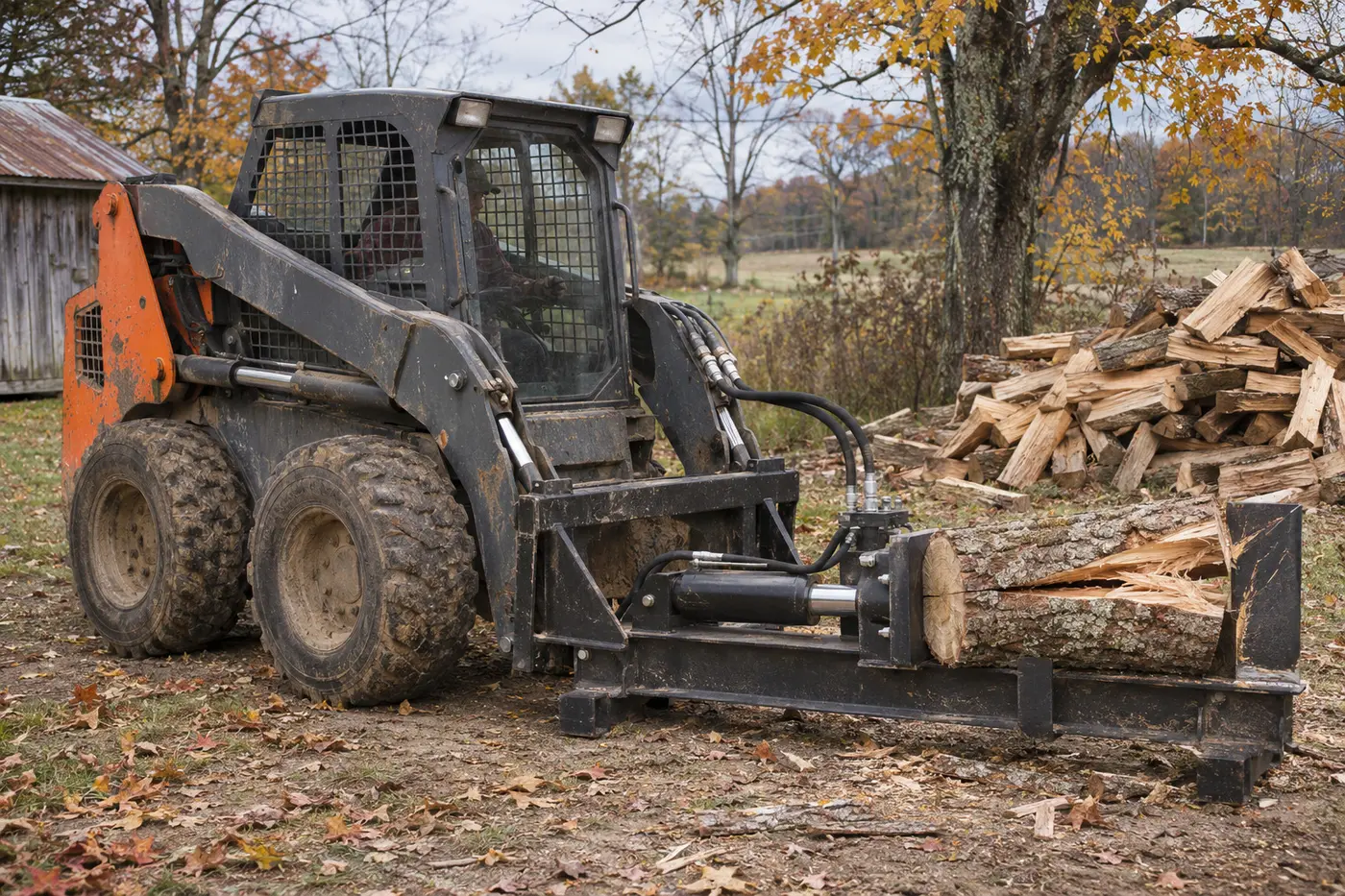
A hydraulic log splitter uses a hydraulic piston to drive a log through a stationary blade. That blade is the wedge. As the log meets the edge, the grain separates along its length. The wedge does not move. The ram and the log do.
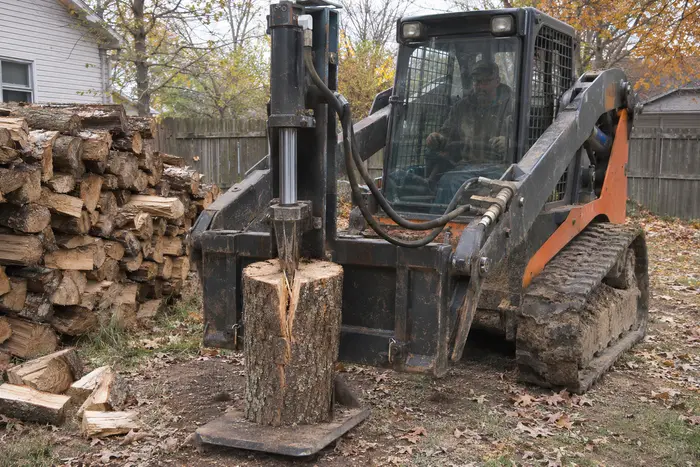
Some other splitters work differently. A cone or screw splitter pulls the log up over a wedge-shaped cone as it turns. This guide focuses on hydraulic units, including the attachments that run off a skid steer, a compact track loader or an excavator.
What are the main log splitter wedge types?
| Type | Pieces per pass | Best for | Trade-off |
|---|---|---|---|
| Single-edge (two-way) | Two | Large, knotty or twisted rounds | More passes to reach firewood size |
| Four-way | Four | Straight-grained rounds of moderate size | Needs more force; can stall in knots |
| Six-way | Six | Production splitting of clean, straight wood | Highest force demand; best on smaller rounds |
| Adjustable or multi-blade | Varies | Mixed jobs where round size changes | More parts to wear and inspect |
The names vary by maker. Look at the blade layout, not the label. The more edges the log meets at once, the more force you need to start the split.
How much force does the wedge need?
Log splitters are rated by force. Most home models are around 10 tons, and professional hydraulic models can exert 30 tons or more. A higher rating lets you split thicker or longer rounds. The wedge you choose has to sit inside that rating. A six-way wedge on a light-duty splitter can stall on large rounds, because the force is spread across many edges at once.
Attachments for loaders work the same way, but force depends on the carrier's hydraulic pressure and the cylinder size on the unit. Flow affects speed, and pressure affects force. Our hydraulic flow and pressure guide explains the difference.
How do you choose the right wedge for your wood?
- Know your species. Straight-grained softwoods open easily. Elm, sycamore and wood with heavy knots resist, and a single edge handles them better.
- Measure typical rounds. If most rounds are small, a multi-way wedge saves time. If you cut big rounds, start with a single edge and quarter them.
- Check green versus seasoned. Some species split more easily green and others once they dry. Test a few rounds before you commit to a wedge.
- Match your force rating. Stay inside the unit's rated capacity.
- Think about throughput. A multi-way wedge can mean fewer cycles, but only if the splitter can drive it without stalling.
If you split with a loader attachment, see the skid steer log splitter guide for sizing. Browse skid steer log splitters, mini skid steer log splitters and excavator log splitters to compare designs.
How do you change a log splitter wedge?
Wedge changes are simple, but the hazards are real. Anything caught between the log and the blade faces at least 10 tons of force, and many modern splitters produce 25 tons or more. Treat every step as if the machine could move.
- Shut down the engine or power source and remove the key.
- Relieve hydraulic pressure by cycling the control with the engine off, as the manual describes.
- Lock out the ram or block the beam so it cannot move.
- Let the wedge cool and wear cut-resistant gloves. Edges are sharp.
- Remove the fasteners or pins that hold the wedge. Support the wedge as the last one comes out.
- Inspect the mounting face for cracks, bent plates or elongated holes.
- Fit the new wedge square on the beam. Tighten bolts in the torque and sequence the manual lists.
- Check ram clearance by hand. Then clear the area, start the machine and run a dry cycle before splitting wood.
Always follow the operator manual for your unit. Slip-on designs, bolt-on designs and welded-on designs each have their own steps, and a welded wedge is a job for a qualified shop.
When should you replace or sharpen a wedge?
A wedge does not need to be razor sharp, but it should have a clean, square edge. Replace or repair it when you see:
- Cracks at the weld or around the bolt holes.
- A bent edge that no longer splits cleanly.
- Chips or deep gouges that catch the wood.
- A loose fit on the beam, even after tightening.
Light wear can be dressed with a grinder, keeping the original angle. A thinner edge starts a split more easily but chips sooner, so do not grind it finer than the original. Hardened steel lasts longer than mild steel, but it can chip if you hit stones or embedded metal, so check rounds for nails and wire before splitting.
What should you check before buying a replacement wedge?
- Mount type. Slip-on, bolt-on and weld-on wedges are not interchangeable.
- Width and height. The wedge must clear the ram and fit the beam.
- Material and finish. Hardened steel resists wear. Check the maker's description.
- Force rating. Make sure the new blade layout suits your cylinder and pressure.
- Safety guards. Do not remove guards or two-hand controls to make a wedge fit.
For long-term care, read the attachment maintenance guide.
How do you get cleaner splits and fewer stalls?
- Split along the grain. Stand the round so the crack or check lines up with the wedge.
- Cut rounds square. A slanted end rocks on the beam and wastes force.
- Start big rounds with a single edge. Quarter them first, then switch if you use a multi-way wedge.
- Do not fight a stall. If the log sticks, retract the ram and turn the round. Forcing it heats the oil and strains the cylinder.
- Keep the beam clean. Bark and chips under the log add friction and can jam the ram.
- Watch the oil. A splitter that slows down after an hour of work may be running hot. Rest it and check the fluid level and cooler.
Good habits matter more than a fancy blade. Many "bad wedge" complaints turn out to be uneven rounds, green wood or a low-flow hydraulic supply.
Get the right fit the first time
A wedge that fits one splitter will not necessarily fit another. Send us the make, model and year of your machine. A person checks fit against the maker's specs, you approve a delivered price before you pay, and the supplier ships direct. Get a fit-checked quote or call 1-888-245-1555.
Questions buyers ask
What are the different types of log splitter wedges?
Common types are single-edge (two-way), four-way and six-way wedges, plus adjustable multi-blade designs. A single edge makes two pieces and handles tough rounds. Multi-way wedges make more pieces per pass but need more force and work best on straight-grained wood.
How do I change a log splitter wedge?
Shut down the power source, relieve hydraulic pressure, lock out the ram, remove the wedge fasteners while supporting the blade, then fit and tighten the new wedge square. Check ram clearance and run a dry cycle. Follow your operator manual, and leave welded wedges to a qualified shop.
Is a four-way wedge better than a single wedge?
It is faster on clean, straight rounds because it makes four pieces per pass. It needs more force and can stall on large or knotty rounds. A single edge is more forgiving. Choose by wood type, round size and your splitter's force rating.
How much force does a log splitter need?
Home units are often rated around 10 tons, and professional hydraulic models can reach 30 tons or more. Higher ratings handle thicker and longer rounds. Match the rating to your wood size and wedge type, and never exceed the unit's rated capacity.
When should a log splitter wedge be replaced?
Replace it when you see cracks near welds or bolt holes, a bent or chipped edge that no longer splits cleanly, or a loose fit on the beam. Light wear can be dressed with a grinder at the original angle.