Buying advice guide
Shipping Equipment From Canada to US: Duties and Freight
Quick answer
Shipping equipment from Canada to US customers, or the reverse, is a commercial import with a customs declaration, a tariff classification and a value for duty. Many Canadian goods may qualify for USMCA preference if they meet origin rules. Confirm what your delivered price includes and use a licensed customs broker.
Shopping for this now? Get a fit-checked, delivered quote.
Key takeaways
- Cross-border attachments need a customs declaration and classification.
- USMCA needs nine data elements, not a fixed form.
- Ask whether the delivered price includes duties, taxes and brokerage.
- Confirm fit before shipping to avoid costly returns.
What happens when you ship an attachment between Canada and the US?
An attachment that crosses the border is a commercial import. It needs a customs declaration, a correct tariff classification, a value for duty and payment of any duties and taxes that apply. The goods ship by freight, and a customs broker or the carrier files the paperwork. None of this is unusual, but it adds steps that a domestic shipment does not have. Rules and tariff measures change, so treat this page as a general orientation and confirm details with a licensed customs broker before you ship.
At Attachment Outfitters, we quote by request, and orders ship direct from the supplier. Your quote shows one delivered price. Ask us what that delivered price covers, including whether duties, taxes and brokerage are part of it, so nothing surprises you at the border.
Importing into the US from Canada
Many goods from Canada qualify for preferential treatment under the U.S.-Mexico-Canada Agreement (USMCA), which entered into force on July 1, 2020. Whether a specific attachment qualifies depends on rules of origin. A good qualifies only if it meets the agreement's origin requirements. Qualifying goods can enter at reduced or zero duty, but the importer must claim the preference and support it.
U.S. Customs and Border Protection says the USMCA does not require a specific certificate of origin form, unlike its predecessor. Instead, it requires nine minimum data elements that can appear on an invoice or any other document. Those include the certifier, exporter, producer, importer, a description and HS classification of the good, the origin criteria, an optional blanket period, and an authorized signature and date. Your customs broker or the exporter can tell you whether the shipment qualifies and how to document it.
Importing into Canada from the US
The Canada Border Services Agency (CBSA) lays out a step-by-step guide for importing commercial goods. In outline: decide whether your business is importing, gather information about the goods, determine whether they can legally enter and what duties and taxes apply, find the correct tariff classification and value for duty, set up your business to import, register in the CBSA Assessment and Revenue Management system, identify your shipping method and port of entry, make a formal declaration to have the goods released, and pay duties and taxes. Many buyers hire a customs broker to handle the steps, especially for one-off shipments.
Cross-border shipping checklist
- Confirm the fit first. A wrong attachment that has to go back across the border costs far more than a few minutes of checking. Send machine details to confirm fit before ordering.
- Know who is the importer of record. The importer is responsible for the declaration and for paying duties and taxes. Decide whether that is you, a broker or another party.
- Collect the commercial invoice. It should list the buyer, seller, description, quantity, value and country of origin.
- Get the HS classification. Classification sets the duty rate and tells customs what the goods are. A broker can help.
- Check origin and any preference claim. For the US side, ask whether the shipment qualifies under USMCA and how the data elements will be documented.
- Understand taxes. Goods imported into Canada may be subject to goods and services tax and, in some provinces, other taxes. Ask a broker what applies to you.
- Plan the carrier and port of entry. Choose a freight carrier experienced with cross-border commercial loads and confirm where the shipment will cross.
- Check inspection and delivery details. Confirm who is receiving, whether a liftgate or forklift is needed, and inspect the goods on arrival.
How does freight work for attachments?
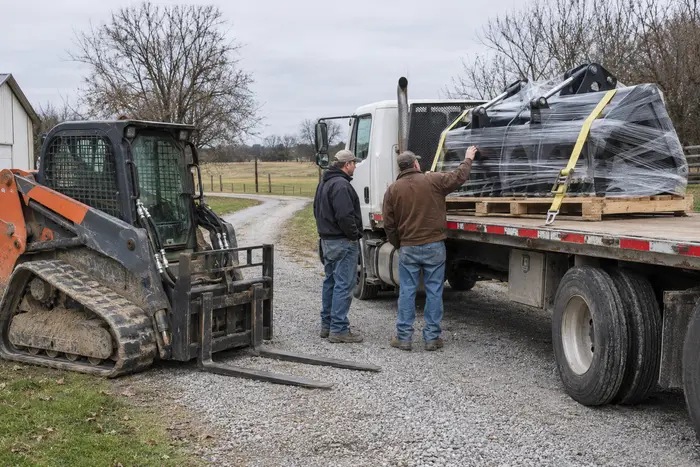
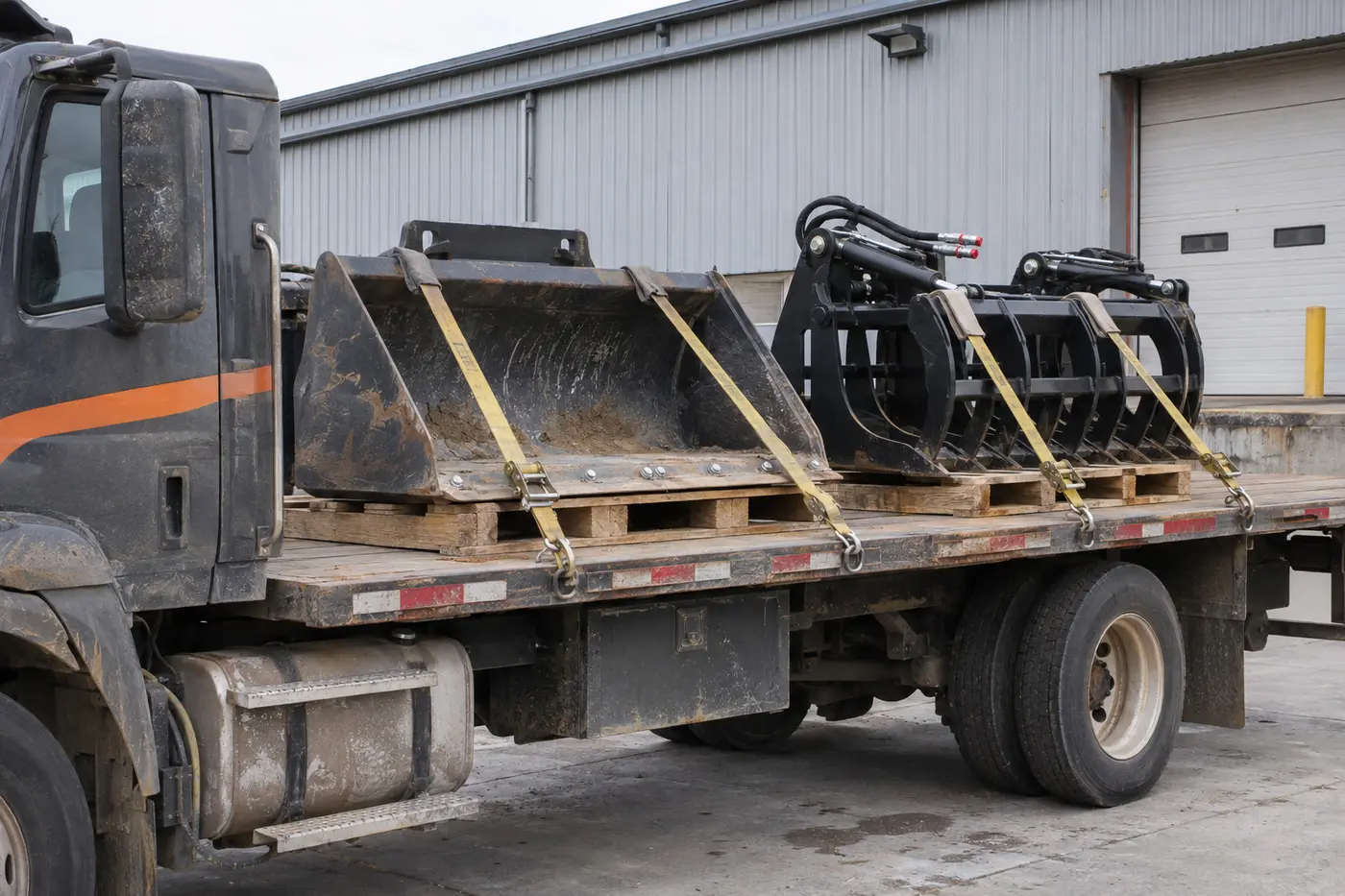
Attachments are heavy and awkward. They usually move on pallets or in crates by freight carrier, sometimes by truck line-haul with a delivery appointment. Size and weight set the rate. Factors that change freight cost include distance, weight, dimensions, liftgate or residential delivery, and the border crossing itself. Our guide on attachment freight shipping explained breaks these down. Read buying attachments online for how to protect yourself during an online purchase.
Who pays duties and taxes?
That depends on the terms of sale. Some sellers include everything in a delivered price. Others quote the goods and freight and leave duties, taxes and brokerage to the buyer. Neither approach is wrong, but you must know which one applies before you pay. Always ask, in writing, whether the price includes duties, taxes and brokerage and who will act as importer of record. If a shipment is held at the border, you want to know who is responsible for the next step.
Common cross-border mistakes
- Assuming "no duty" without checking. Origin rules decide preference. Do not assume. Ask a broker.
- Incomplete invoices. Missing descriptions or values cause delays.
- Wrong classification. It affects duty and can trigger a review.
- Ignoring tariff changes. Trade measures change. Check current rules at the time of shipping.
- Skipping fit checks. Returns across the border are costly. Confirm fit before the attachment ships.
Which attachments do customers ship across the border?
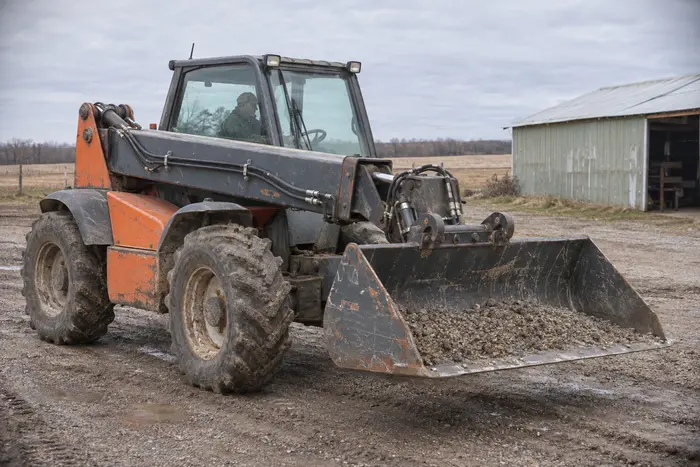
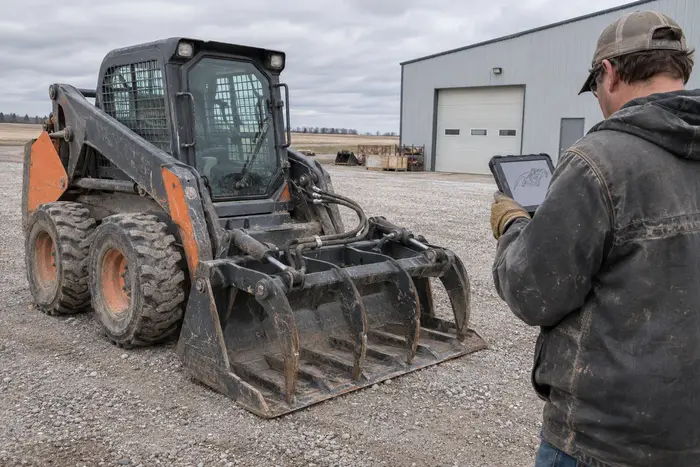
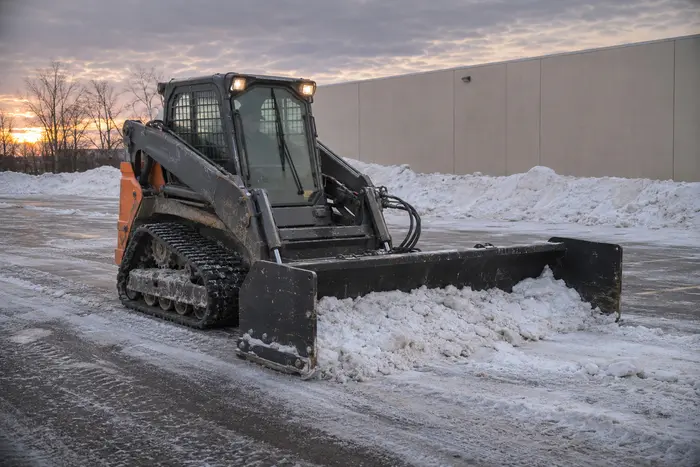
Buyers on both sides shop for skid steer, mini excavator, telehandler and tractor attachments. Typical heavy steel examples include snow pushers, grapples, excavator buckets and telehandler buckets. For winter tools, see our guide to loader attachments for Canadian snow. For any of them, a fit check before shipping matters even more across a border.
What to do when the shipment arrives
Inspect before you sign. Check the pallet or crate for damage, count the pieces and compare the packing list with what you ordered. Note any damage on the delivery receipt in writing and take photos before the driver leaves. Then test fit on your machine in a safe place, with the loader or excavator parked and shut down: check the plate, pin spacing and hydraulic couplers against the manual. If something does not match, contact us right away. Send the model, serial number if shown, and photos so any warranty question can move quickly. Warranty terms, if any, are written on your quote.
Why a fit check matters more across a border
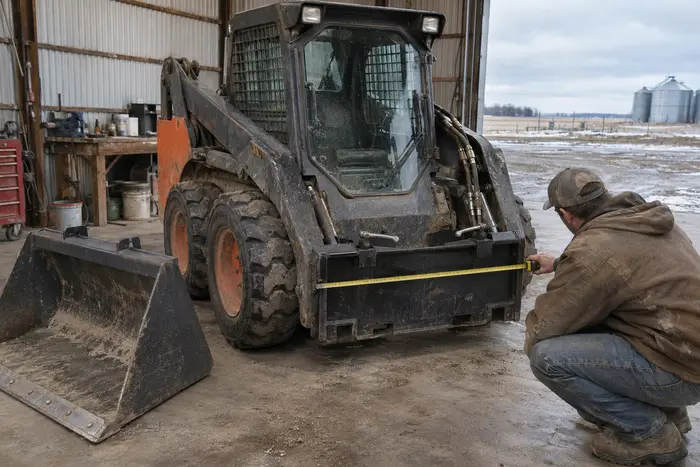
On a domestic order, a wrong-fit attachment is a nuisance. On a cross-border order, it can mean a second round of freight, a second customs declaration and extra duties or taxes. That is why we ask for your machine make, model and year first, and why a person checks the attachment against the maker's specs before we send a delivered-price quote. If a tool is not right for your machine, we would rather tell you before it ships.
Get the right fit the first time
Send us your machine make, model and year and tell us the job. A person checks the attachment against the maker's specs, then you request a fit-checked quote with delivered pricing before you pay. The supplier ships direct, and warranty terms, if any, are written on your quote.
Questions buyers ask
Do you pay duty on attachments shipped from Canada to the US?
It depends on the goods, their origin and the tariff classification. Many Canadian goods qualify for preferential treatment under the USMCA, which can reduce or remove duty, but eligibility must be supported. Tariff measures change, so check with a licensed customs broker.
Is a certificate of origin required for USMCA?
U.S. Customs and Border Protection says the USMCA does not require a specific certificate of origin form. It requires nine minimum data elements, which can appear on an invoice or other document. Your broker or the exporter can help prepare them.
What do I need to import equipment into Canada?
The CBSA describes steps including determining that the goods can legally enter, classifying them, calculating value for duty, registering for the CARM system, choosing a port of entry, making a formal declaration and paying duties and taxes. Many buyers use a customs broker.
Who is the importer of record?
The importer of record is the party legally responsible for the customs declaration and payment of duties and taxes. It may be the buyer, a broker or another party. Agree on this in writing before the shipment crosses the border.
Does the delivered price include duties and taxes?
It depends on the seller and the terms. Ask in writing whether duties, taxes and brokerage are included before you approve the price. Our quote shows one delivered price, so ask us what it includes for your shipment.