Buying advice guide
Freight Class Shipping for Heavy Attachments Explained
Quick answer
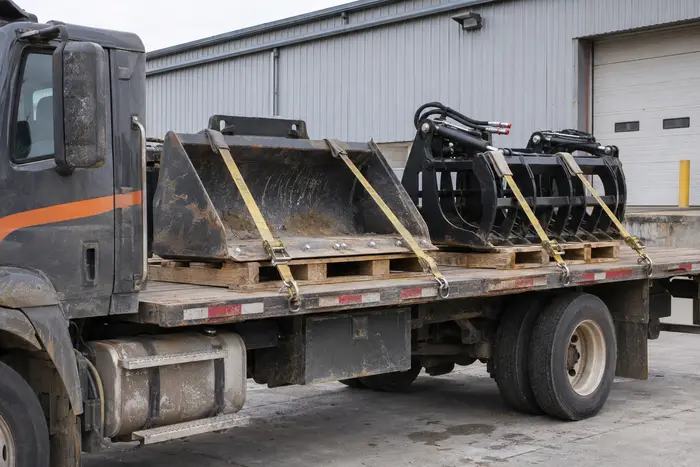
Heavy attachments ship as freight, usually less-than-truckload (LTL) on a pallet or in a crate, not by parcel. A carrier picks up from the supplier, moves it through terminals and delivers to your address. Freight class, dimensions, weight, delivery type and extras like a liftgate all shape the freight bill.
Shopping for this now? Get a fit-checked, delivered quote.
Key takeaways
- Parcel services typically cap single pieces at around 150 lb; heavy attachments ship as LTL or truckload freight.
- Freight class and shipment details (dimensions, weight, handling units) feed into the rate.
- Liftgate, residential delivery and limited-access sites are extras you need to state up front.
- Inspect the shipment at delivery and note any damage on the paperwork before the driver leaves.
- Cross-border freight adds customs paperwork; plan for it early.
A bucket, a grapple or a snow pusher is too heavy and awkward for a parcel van. It ships as freight. For a first-time buyer the terms can feel foreign: LTL, freight class, liftgate, accessorials. This guide explains how freight shipping works for heavy attachments, what shapes the cost, and what to check when the truck arrives.
What is freight shipping?
Freight is the category of shipping for pieces too heavy or large for parcel carriers. Parcel services typically cap single pieces at around 150 lb (68 kg). Above that, a shipment moves as freight, either as part of a shared truck or on a full trailer.
- Less-than-truckload (LTL). Covers freight from one parcel up to nearly a full truckload. Several shippers' freight can share one trailer.
- Full truckload. One shipment takes an entire semi-trailer. Common trailer lengths run up to 53 feet.
Most single attachments ship LTL, on a pallet, a skid or in a crate. A few large items or multi-piece orders may use a truck of their own.
How does an attachment get from the supplier to you?
With a dealer like ours, you tell us the machine, a person checks fit against the maker's specs, and your quote shows one delivered price, freight to your address included. The order ships direct from the supplier, so the attachment travels from the supplier's dock to your address instead of through a middle warehouse. Then the carrier takes over.
- Pickup. The carrier collects the packed shipment at the supplier.
- Origin terminal. LTL carriers use a hub-and-spoke network. Service terminals collect local freight and consolidate it for regional delivery.
- Linehaul. The freight moves between terminals. Transit time depends on how many times freight is sorted and how many linehauls it needs.
- Destination terminal. The freight is unloaded, checked against the paperwork and sometimes reweighed, then loaded for local delivery.
- Delivery. The driver delivers to your address and you sign.
Delivery windows depend on the carrier and the lane, so we do not promise dates here. Ask for the carrier's estimate once the shipment is booked.
What is freight class?
Freight class is a standard code carriers use to describe a shipment for pricing. It is set under the National Motor Freight Classification (NMFC) system in North America. Class depends on factors such as density, how easy the item is to stow and handle, and liability. Carriers use it with dimensions, weight and the lane to produce a rate. A dense, compact item usually rates differently from a bulky, light one.
People search for a "freight class calculator," a "freight shipping class chart" and "does freight class affect shipping cost." Yes, class is one input in the rate, and an incorrect class can lead to a re-bill after the carrier weighs and measures the shipment. That is why the dealer and the supplier need accurate dimensions and weight. For an attachment, the supplier normally provides the shipping details, but ask if you are unsure. The right class for a given item comes from the NMFC classification, so we do not list codes here.
What affects the freight cost?
| Factor | Why it matters |
|---|---|
| Weight and dimensions | Heavier and larger shipments cost more to move, and the carrier verifies them at the terminal |
| Freight class | Part of how the carrier prices the shipment |
| Distance and lane | Farther or lower-traffic lanes cost more |
| Handling units | Carriers favor the fewest handling units possible, so one pallet beats several loose boxes |
| Delivery type | Residential, limited-access and appointment deliveries can add charges |
| Liftgate | Needed if you have no dock or forklift |
| Insurance value | Carrier liability is limited; extra coverage for declared value may be available |
Carriers charge extras, called accessorials, for services outside a standard dock-to-dock delivery. Typical items include liftgate service, residential delivery notice, arrival notice and insurance. Your quote shows one delivered price, freight to your address included. Any other charge is listed on the quote before you pay.
What should you tell us about your delivery site?
- Dock or no dock. Do you have a loading dock or a forklift?
- Residential or business. This changes the type of delivery.
- Access. Narrow roads, steep driveways, gates or limited truck turnaround can stop a full-size truck.
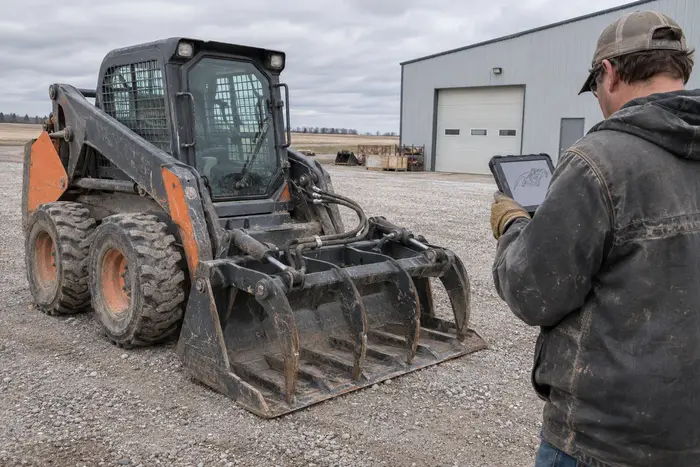
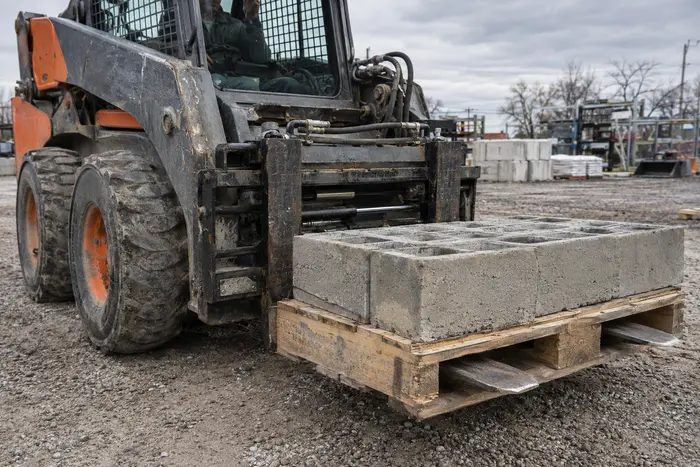
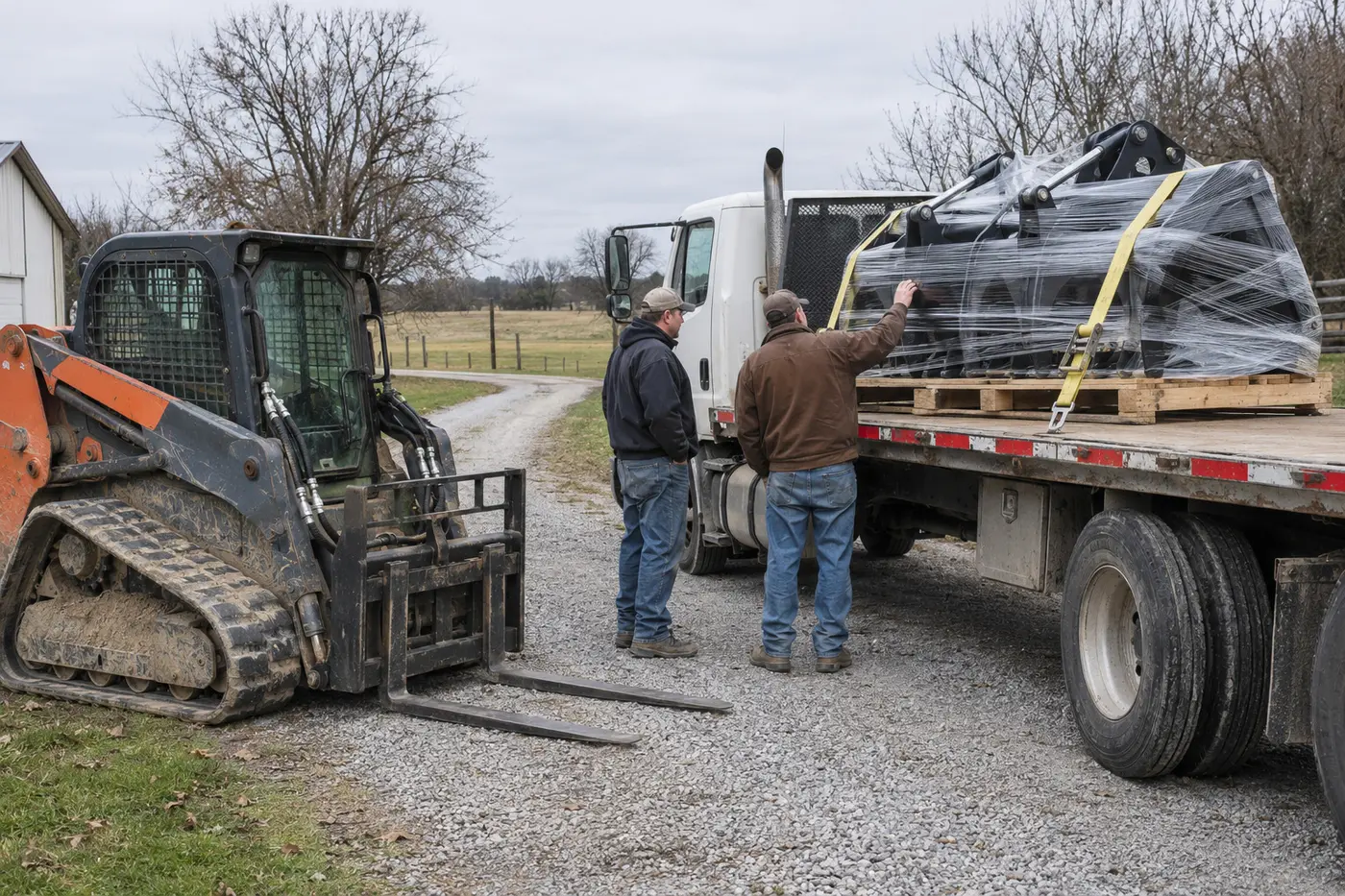
- Machine on site. A skid steer with forks can unload a pallet. Tell us whether yours can.
- Appointment needs. Some sites need a call ahead.
Clear answers up front prevent a failed delivery or a surprise charge. If you can unload the pallet with your own loader, check that the forks are rated for the weight. See our skid steer pallet forks and the pallet fork weight capacity guide.
What should you do when the freight arrives?
- Look before you sign. Check the pallet, crate and wrap for dents, tears, crushed corners or shifting.
- Count the pieces. Match them to the paperwork.
- Note damage on the delivery receipt. Write what you see before the driver leaves. If you sign clean and find damage later, a claim is harder.
- Take photos. Capture the packaging, the damage and the label.
- Unload safely. Use equipment rated for the weight. Keep people clear and follow the operator manual of your loader or forklift.
- Tell us promptly. Warranty terms, if any, are written on your quote. Contact us with photos and the order details.
What about shipping across the border?
US and Canadian shipments add customs steps, brokerage and paperwork. Duties and taxes may apply, and rules change. Our cross-border shipping guide covers the process, and buying attachments online explains what to check before you order.
How do you avoid the common freight mistakes?
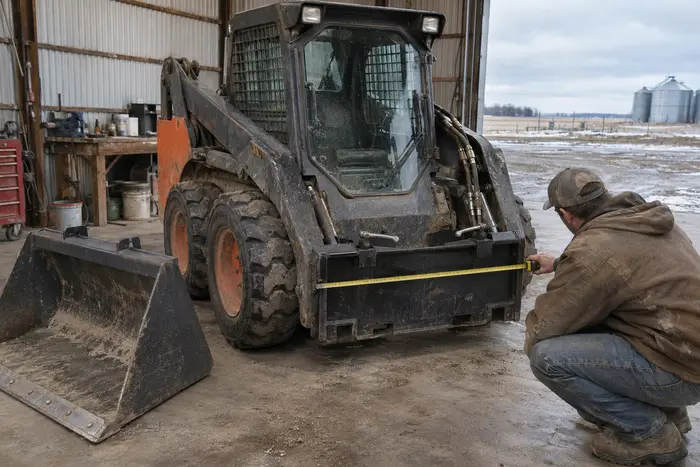
- Buying an attachment before you check that it fits. A return costs freight twice. Read how to measure attachment fit.
- Not mentioning a residential address or a limited-access site.
- Accepting freight without checking for damage.
- Forgetting that you need a way to unload.
- Assuming every freight quote includes every fee.
Browse skid steer buckets and excavator buckets to see typical items that ship by freight.
How should a heavy attachment be packed?
Carriers prefer pallets, and crates or sturdy boxes are also acceptable. Packing matters because it decides how the shipment survives several handoffs. Sharp edges, cutting teeth and hydraulic ports should be protected, and the load should be strapped and stretch-wrapped to the pallet so it cannot shift. Many carriers favor the fewest handling units possible, so one secured pallet is better than several loose pieces. If you spot weak packing at delivery, write it on the receipt.
Get the right fit the first time
Send us the make, model and year of your machine. A person checks fit against the maker's specs, your quote shows one delivered price, freight to your address included, and the order ships direct from the supplier. Get a fit-checked quote or call 1-888-245-1555.
Questions buyers ask
How are heavy attachments shipped?
Heavy attachments usually ship as less-than-truckload (LTL) freight on a pallet, skid or crate. A carrier picks up from the supplier, moves the shipment through terminals and delivers to your address. Parcel services typically cap single pieces at around 150 lb.
What is freight class?
Freight class is a standard code from the National Motor Freight Classification system that carriers use to describe a shipment for pricing. It depends on factors like density, how easy the item is to stow and handle, and liability. The right class comes from the item's NMFC classification.
Does freight class affect shipping cost?
Yes. Class is one input to the rate, along with weight, dimensions, distance and extras. An incorrect class can lead to a re-bill after the carrier weighs and measures the shipment, so accurate details matter.
What is a liftgate and do I need one?
A liftgate is a hydraulic platform on the back of a truck that lowers freight to the ground. You need one if you have no loading dock or forklift to unload the pallet. Tell the carrier in advance, because it is an extra service.
What should I do if my freight arrives damaged?
Inspect before you sign, note the damage on the delivery receipt before the driver leaves, take photos of the packaging and the damage, and contact us promptly. Signing clean and finding damage later makes a claim harder.